
Imagine, for a moment, that you are incredibly thirsty. You have just hiked to the top of a pristine, isolated mountain, and you find a natural spring flowing with the purest, coldest, most refreshing water on the face of the earth.
You want to drink it, but you do not have a glass.
Instead, you find a piece of thick, recycled cardboard lying on the ground. You fold the cardboard into a makeshift cup, dip it into the pure mountain spring, and take a massive gulp.
What does the water taste like?
It doesn’t matter how pure, expensive, or flawless the spring water is. Because you drank it through a medium of wet paper, the water is going to taste exactly like a damp cardboard box. The vessel completely hijacked the flavor of the liquid.
If you were to do this in real life, people would look at you like you were crazy. You would never ruin a perfect beverage by intentionally adding the taste of paper to it.
Yet, for the first few years of my specialty coffee journey, this is exactly what I was doing in my kitchen every single morning.
I was buying incredibly expensive, high-quality, single-origin coffee beans. I was weighing them on a digital scale. I was grinding them with a premium burr grinder. But the final product always had a strange, dry, astringent aftertaste that I simply could not get rid of.
I didn’t realize that my brewing equipment was silently sabotaging my incredibly expensive beans.
Here is the honest, highly practical story of the simple trick that made my coffee taste better, how a ten-second adjustment completely eliminated the bitter aftertaste in my mug, and why you should never let a dry piece of paper touch your morning brew.
The Mystery of the Dry Aftertaste
When you first start falling down the rabbit hole of manual coffee brewing, you usually start with a classic pour-over setup, like a glass V60 cone or a Chemex.
These methods rely on paper filters to separate the coffee grounds from the final liquid.
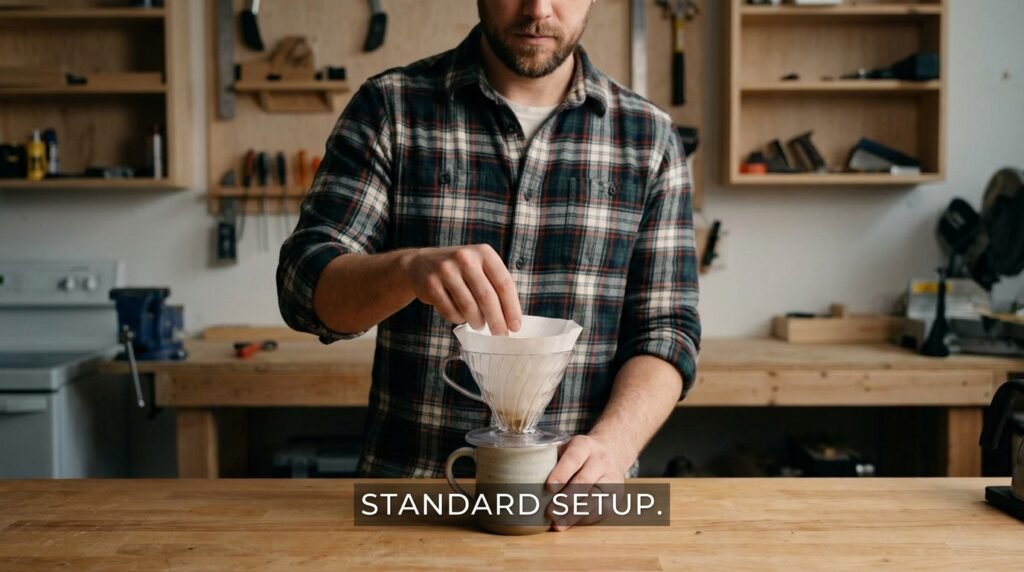
For a very long time, I treated the paper filter as a completely neutral, invisible object. I assumed it was just a physical barrier. I would open the box of filters, pull one out, drop it into the glass cone, dump my dry coffee grounds directly into it, and start pouring my hot water.
But my coffee always possessed a subtle, frustrating flaw.
Underneath the sweet notes of chocolate and berries, there was always a harsh, dry, almost woody flavor lingering at the back of my throat. It felt like my mouth was being dried out.
I blamed everything else in my kitchen. I thought my water was too hot. I thought my beans were stale. Figuring out the actual source of this harsh flavor was the massive turning point of (Why My Coffee Tasted Bitter (And How I Fixed It)).
I realized I wasn’t doing anything wrong with the coffee itself. I was simply extracting the flavor of the paper filter directly into my mug.
The “Paper Water” Taste Test
I did not believe this theory until a local barista challenged me to do a very simple, highly revealing taste test in my own kitchen.
If you do not believe that paper filters have a taste, I highly encourage you to try this tomorrow morning.
Take your standard paper coffee filter and place it into your brewing cone. Do not put any coffee grounds into it. Now, boil some water and pour it directly over the empty paper filter, letting the hot water drain into a glass below.
Pick up the glass, let the water cool for a minute, and take a sip.
The first time I did this, I was absolutely disgusted. The water tasted exactly like a wet newspaper, mixed with dust and wood shavings. It was an incredibly strong, overpowering, papery flavor.
I stood in my kitchen in complete disbelief. I realized that every single morning, for years, I had been brewing my expensive, delicate coffee beans directly through this disgusting, papery water. I was literally mixing the flavor of a cardboard box into my breakfast.
The Ten-Second Solution
The trick to fixing this massive culinary flaw is incredibly simple, and it requires absolutely no money and no new equipment.
It is called “rinsing the filter.”
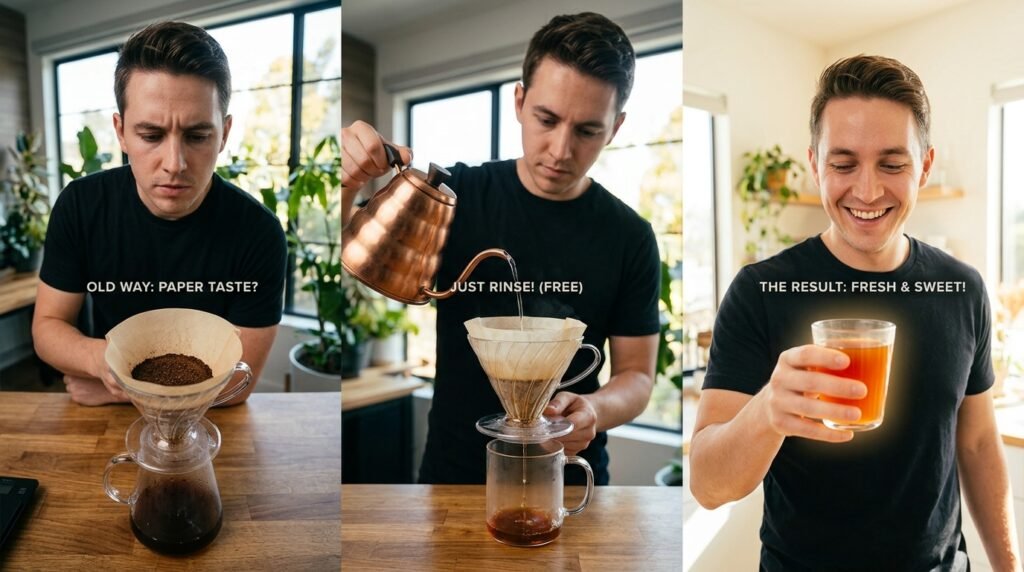
Now, every single morning, before I ever let a single coffee ground touch my brewing equipment, I place the empty paper filter into the glass cone. I take my gooseneck kettle, filled with hot water, and I heavily saturate the entire paper filter.
I pour enough hot water to completely soak the paper, ensuring that it turns translucent and sticks firmly to the sides of the glass cone.
I let that water drain completely through the filter and into my coffee mug. Then—and this is the most important step—I take the mug and I dump that “paper water” directly down the kitchen sink.
This ten-second process completely washes away the loose paper fibers, the manufacturing dust, and the woody, cardboard flavors trapped in the filter. It sanitizes the brewing medium.
The very first time I brewed a cup of coffee using a thoroughly rinsed filter, the difference was staggering. The dry, astringent aftertaste completely vanished. The coffee was suddenly incredibly clean, vibrant, and sweet. The true, unadulterated flavor of the bean was finally allowed to shine through without any interference.
The Secondary Saboteur: The Cold Mug
Rinsing the paper filter solved the flavor problem, but that same ten-second trick accidentally solved another massive issue that had been ruining my mornings.
Have you ever poured a steaming hot cup of coffee, walked to your desk, taken a sip two minutes later, and realized that the coffee was already lukewarm?
For years, I could not figure out why my coffee was losing its heat so incredibly fast. I thought my kettle was broken. I thought the ambient temperature in my apartment was too cold.
I was completely ignoring the thermal dynamics of my own ceramic mug.
Ceramic is a dense, heavy material. In the world of thermodynamics, heavy materials act as “thermal mass.” They love to absorb heat. If your ceramic mug has been sitting in your kitchen cabinet all night, its physical temperature is roughly 68 degrees Fahrenheit.
When you brew 200-degree coffee directly into a 68-degree ceramic mug, the heavy ceramic instantly attacks the liquid. It acts like a heat vampire. It aggressively absorbs the thermal energy from the coffee in order to warm itself up.
By the time the mug finally feels warm to the touch, your coffee has already dropped fifteen to twenty degrees in temperature. It crashes before you even take your first sip.
Understanding this invisible thermal theft perfectly aligns with the lessons of (How Water Temperature Changed My Coffee Completely). I learned that controlling the heat doesn’t stop when the water leaves the kettle; you have to control the environment all the way to the final sip.
The Double Benefit of the Rinse
This is where the simple trick of rinsing your paper filter becomes a brilliant, two-for-one solution.
When you pour that hot water over the empty paper filter, the water drains directly into the ceramic mug or the glass carafe sitting below it. While the hot water is washing the papery taste out of the filter, it is simultaneously pre-heating your cold brewing equipment.
I let that hot “paper water” sit inside my ceramic mug for about thirty seconds while I weigh and grind my coffee beans.
In those thirty seconds, the heavy ceramic absorbs the heat from the waste water. The mug becomes steaming hot to the touch.
When I finally dump the waste water down the sink and begin my actual coffee brew, the liquid is falling into a vessel that is already at the perfect thermal temperature. Because the mug is already hot, it does not steal any thermal energy from the fresh coffee.
My morning cup stays piping hot for significantly longer, allowing me to actually sit down, relax, and enjoy the beverage without rushing to finish it before it turns cold.
The Trap of Brown and Bleached Filters
Once I started religiously rinsing my filters, I also started paying closer attention to the actual paper I was buying at the store.
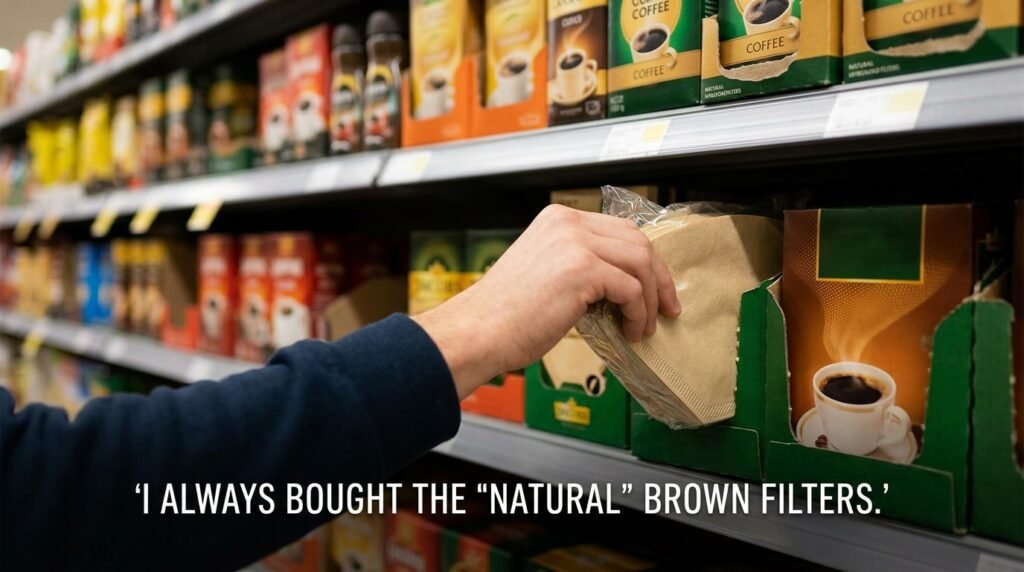
If you look at the coffee aisle, you will see two main types of paper filters: the bright white ones, and the natural, unbleached brown ones.
For a long time, I bought the unbleached brown filters because they looked more “natural,” rustic, and environmentally friendly. I assumed that because they hadn’t been processed with bleach, they were better for my coffee.
I was completely wrong.
Unbleached brown filters actually contain significantly more woody, papery residue than bleached filters. They taste aggressively like cardboard. Even if you rinse a brown filter heavily with hot water, you can still often detect a subtle, muddy earthiness in the final cup.
High-quality white paper filters are processed using an oxygen-cleansing method (not toxic bleach). This process removes the harsh paper taste almost entirely.
Once I switched to high-quality, oxygen-cleansed white filters and combined them with a heavy hot-water rinse, my coffee achieved a level of clarity I didn’t think was possible outside of a professional cafe.
The Compounding Effect of Tiny Details
When we talk about improving our daily routines, we often fall into the trap of thinking we need to make massive, expensive changes.
We think we need to buy a thousand-dollar espresso machine, or take a professional barista masterclass in Italy. We look for the complex solution and completely ignore the obvious, simple fixes staring us in the face.
But culinary excellence is rarely about one massive, expensive gesture. It is almost always about the accumulation of tiny, inexpensive, deliberate details.
Realizing that perfection hides in the details is the exact premise of (The Small Changes That Made My Coffee Much Better). You do not need a bigger budget to make great coffee; you just need a higher level of attention.
Stop Drinking the Cardboard
If you are currently spending your hard-earned money on high-quality, specialty coffee beans, you are already doing the heavy lifting. You have the right ingredients.
Do not ruin the final product by serving it through a dirty, papery medium and into a freezing cold mug.
Tomorrow morning, I challenge you to introduce a ten-second pause into your routine. Put your empty paper filter into the brewer. Pour hot water over it. Watch the paper turn translucent and stick to the glass. Let the hot water sit in your ceramic mug for a few seconds to warm the heavy clay.
Dump that water down the sink, and then brew your coffee.
It is the easiest, cheapest, and fastest adjustment you can possibly make in your kitchen. But the moment you take that first sip and taste the pure, vibrant, unadulterated sweetness of the coffee bean—without the muddy flavor of a wet newspaper—you will instantly understand.
You will never let a dry piece of paper touch your morning routine ever again.

My name is Daniel Carter, I am 35 years old, and I live in the United States. I have been passionate about aquariums for many years, and what started as a simple hobby quickly became a lifelong interest in aquatic life, fish behavior, and responsible tank care.
Through TheBrightLance, I share real experiences, practical knowledge, and honest lessons learned from maintaining different types of aquariums. I enjoy testing equipment, studying fish behavior, improving maintenance routines, and helping beginners avoid common mistakes.
My goal is to make aquarism easier, more ethical, and more enjoyable for everyone — whether you are setting up your very first tank or looking to refine your techniques.