
I actively believed that fruit and coffee were mortal enemies.
If I walked into a café and saw a menu offering a “raspberry mocha” or a “blueberry iced latte,” I would physically cringe. To me, coffee was supposed to taste dark, heavy, and rugged. It was supposed to taste like roasted nuts, dark chocolate, and toasted wood. It was a savory, comforting morning ritual.
The idea of mixing bright, sweet fruit flavors with my dark, bitter morning beverage felt like a culinary crime.
So, when I first started exploring specialty coffee shops, I intentionally avoided an entire continent.
Whenever I looked at the retail shelves, I would scan the tasting notes printed on the bags. The coffees from South and Central America always promised notes of cocoa, caramel, and almonds. I bought those immediately.
But the bags from Africa? They terrified me.
They promised bizarre, intimidating flavors. I would see labels claiming the beans inside tasted like “jasmine, peach, and bergamot” or “black currant, grapefruit, and honey.” I assumed the roasters were spraying the beans with artificial perfumes. I scoffed at them and walked away, completely convinced that African coffee was just a pretentious gimmick for people who didn’t actually like the taste of real coffee.
I was incredibly stubborn. But my stubbornness eventually collided with my curiosity.
Here is the honest, paradigm-shifting story of my experience trying coffee from Africa for the very first time, and how a single bag of light-roast beans completely destroyed my prejudice and rebuilt my palate from the ground up.
The Barista’s Challenge
My resistance finally broke on a quiet Sunday morning.
I had become a regular at a local specialty roastery. The head barista knew my order by heart: a heavy, washed Colombian or a syrupy, natural Brazilian pour-over. I was playing it incredibly safe.
On this particular Sunday, I walked up to the counter to buy a bag of beans for my house. I pointed to a familiar bag from Guatemala.
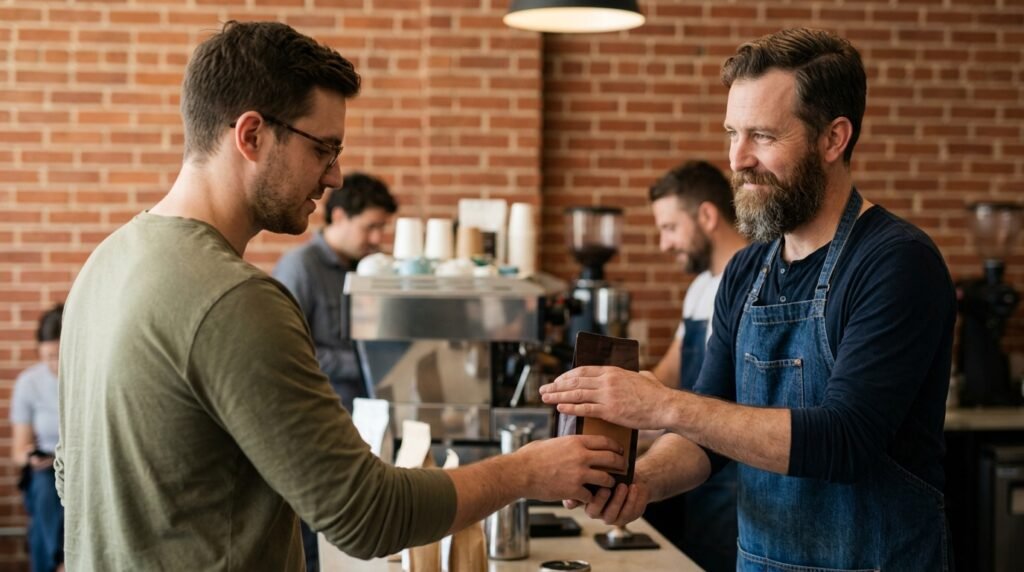
The barista shook his head and actually pulled the bag out of my reach.
“You’ve been drinking the same flavor profile for months,” he said, leaning against the espresso machine. “You are missing out on half of the coffee world. I am not letting you leave this shop with another chocolatey coffee.”
He reached behind him and grabbed a bag with a bright yellow label. He placed it in front of me. The label read: Ethiopia Yirgacheffe. Washed Process.
I immediately looked at the tasting notes. Lemon zest, Earl Grey tea, and honeysuckle.
I groaned. “I really don’t like fruity coffee,” I argued. “It just tastes sour to me.”
“You don’t like artificial fruit syrups,” he corrected me gently. “You have never tasted natural, agricultural fruit acidity in a coffee bean. This is the birthplace of the coffee plant. Just take it home. Brew it exactly like you brew your South American beans. If you hate it, bring the empty bag back and I will refund your money.”
It was an offer I couldn’t refuse. I bought the bag, feeling a mix of skepticism and slight anxiety, and drove home to conduct my experiment.
The Aromatic Warning
When I got to my kitchen, I set up my brewing station. I pulled out my digital scale, my manual burr grinder, and my ceramic V60 pour-over cone.
I broke the seal on the bag of Ethiopian beans.
The moment the bag opened, the first wall of my prejudice crumbled. I leaned in and took a deep breath, expecting to smell a harsh, chemical lemon scent.
Instead, the aroma was breathtakingly delicate. It smelled incredibly sweet, but not like candy. It smelled like a blooming garden in the spring. There was a distinct, undeniable perfume of white flowers and a very subtle hint of raw honey.
It didn’t smell like the coffee I was used to, but it smelled undeniably natural.
I weighed out 15 grams of the beans. As I poured them into my hand grinder, I noticed how small and hard they were compared to my usual beans. African coffees are often grown at extreme altitudes, making the seeds incredibly dense.
When I started turning the crank of the grinder, the physical friction released a massive wave of that floral aroma into my kitchen. It was so intense that it actually made me smile. I was starting to understand that deciding to finally trust the barista was the exact moment (Why I Stopped Buying Cheap Coffee and Never Looked Back), because cheap, mass-produced coffee could never, ever smell this vibrantly alive.
The Unfamiliar Bloom
I boiled my filtered water to 205 degrees Fahrenheit.
I placed the paper filter in the cone, rinsed it, and added the fresh, fragrant grounds. I started my timer and poured a tiny splash of water to initiate the bloom.
With my usual South American dark roasts, the bloom was often a thick, heavy, dark brown crust. But this African coffee reacted differently.
The grounds swelled rapidly, bubbling with a lively, aggressive energy. The color of the wet grounds wasn’t pitch black; it was a warm, reddish-brown. The steam rising off the carafe carried the sharp, zesty aroma of a freshly peeled lemon.
I carefully poured the rest of the water in slow, concentric circles.
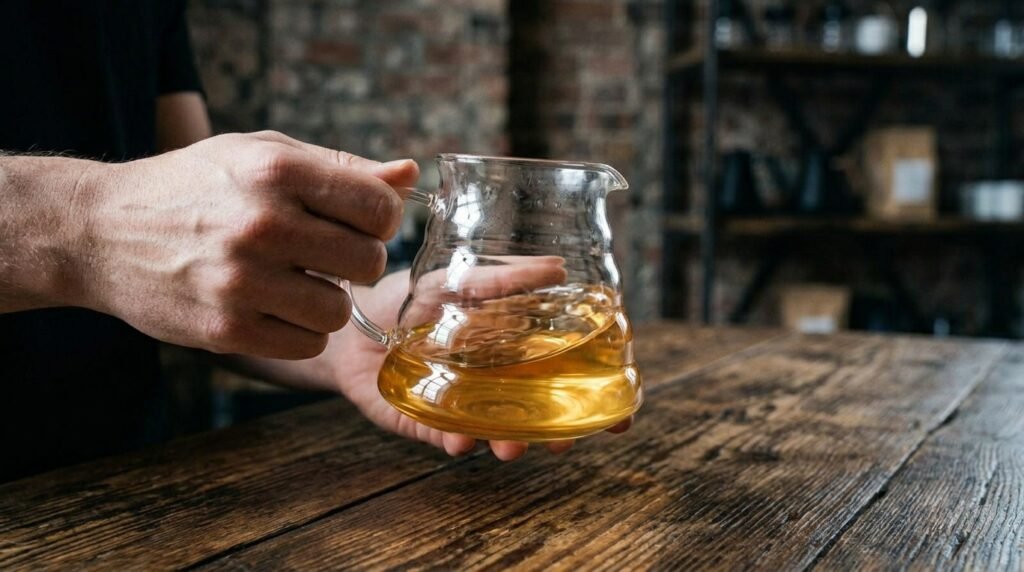
When the dripping finally stopped, I removed the filter and looked at the liquid in the glass carafe. It was translucent. It looked exactly like a strong cup of black tea. My brain, completely conditioned by years of dark, opaque coffee, screamed that I had done something wrong and brewed a weak, watery mess.
The Sip That Changed Everything
I poured the hot, ruby-colored liquid into my favorite ceramic mug. I sat down at my kitchen table, taking a deep breath.
I purposely did not bring the milk carton or the sugar bowl to the table. If I was going to test this properly, I had to drink it completely black.
I let the mug cool for two minutes. I brought it to my lips, bracing myself for a sour, unpleasant shock, and took a slow sip.
My eyes widened in pure astonishment.
There was absolutely no bitterness. None. The liquid was incredibly light-bodied and silky. It washed over my palate with the elegance of a fine tea.
And then, the flavor arrived. It wasn’t sour at all. It was vibrantly, beautifully bright. It tasted exactly like the crisp, sweet snap of fresh citrus, followed immediately by the soothing, herbal flavor of black tea.
As I swallowed, a lingering, delicate sweetness of honey and jasmine flowers remained in the back of my throat.
I put the mug down and stared at it. I was completely speechless.
It was a masterpiece of flavor. It wasn’t a dark, heavy, chocolatey hug; it was a bright, refreshing, awakening experience. The fruit notes weren’t artificial or overwhelming. They were the natural, biological expression of the seed itself.
The Science of the African Bean
I drank the entire mug in record time. As the coffee cooled down, the lemon and honey notes became even sweeter and more pronounced.
I immediately opened my laptop. I needed to understand how a coffee bean could naturally taste like flowers and citrus.
I discovered that the secret lies in the unique environment of East Africa. In countries like Ethiopia, Kenya, and Rwanda, coffee is grown at staggering altitudes, often exceeding 2,000 meters above sea level.
At these extreme heights, the air is cold, and the coffee cherries mature at a painfully slow pace. This slow maturation forces the plant to push complex organic acids and dense sugars deep into the seed.
When those high-altitude seeds are carefully washed and roasted very lightly, those organic acids translate directly into the cup as vibrant fruit and floral notes.
The realization that the dirt, the elevation, and the ancient genetics of the Ethiopian forests were the true authors of this flavor was a massive epiphany. Grasping this concept was exactly (The First Time I Understood Coffee Terroir), because it proved that coffee is a mirror reflecting the landscape where it was born.
Exploring the Rest of the Continent
That single cup of Yirgacheffe didn’t just change my morning routine; it unlocked an entire continent of flavor that I had been stubbornly ignoring.
I didn’t take the bag back to the barista for a refund. Instead, I went back the very next week and asked him what other African coffees he had in stock.
I started exploring aggressively.
I bought a bag from Kenya. I learned that Kenyan coffees, grown in bright red volcanic soil, offer an explosive, mouth-watering acidity that tastes vividly like dark blackberries, black currant, and sometimes even a savory, sweet tomato note. It was loud, intense, and incredibly complex.
I bought a bag from Rwanda. I discovered that Rwandan coffees often possess a beautiful, syrupy body with deep, sweet notes of red apple, baking spices, and dark cherry. They offered a perfect bridge between the floral elegance of Ethiopia and the heavy comfort of South America.
I even explored different regions within Ethiopia itself. While Yirgacheffe gave me lemon and tea, the Guji region gave me intense, juicy notes of ripe peaches and nectarines.
Overcoming the “Light Roast” Fear
My experience trying coffee from Africa for the first time also cured me of my fear of light roasts.
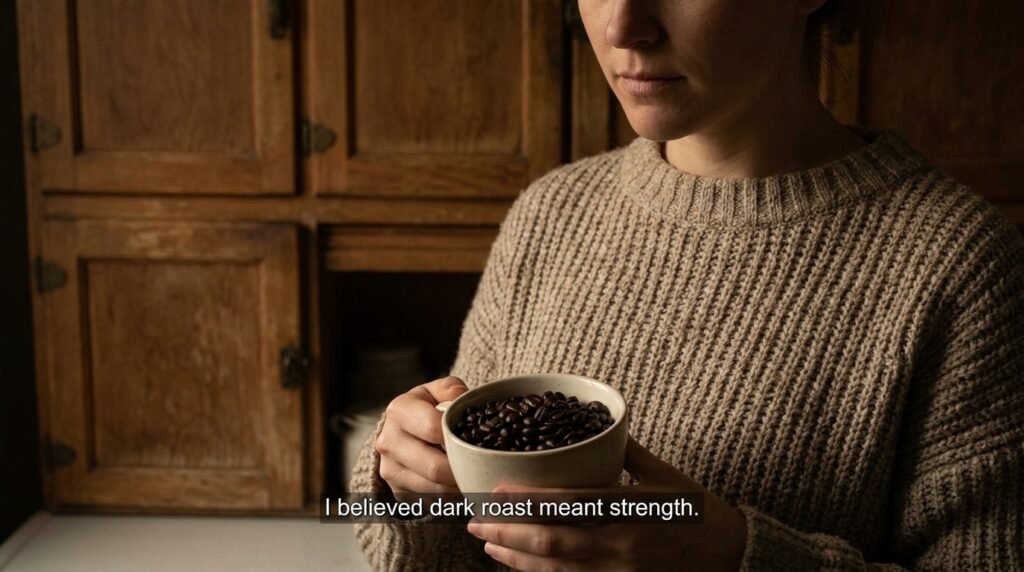
For years, I believed that a light roast meant weak coffee. I associated dark, oily beans with strength and quality.
But African coffees demanded a light touch. If a roaster took those beautiful, delicate Ethiopian or Kenyan beans and roasted them dark, all of the vibrant fruit and floral notes would literally burn away. The heat would destroy the unique terroir, leaving behind nothing but the taste of ash and carbon.
I learned to love the matte, pale brown color of lightly roasted African beans. I learned to appreciate the tea-like, translucent color of the brewed liquid.
I realized that strength in coffee isn’t about bitterness or darkness; it is about the clarity and intensity of the natural flavor.
The Permanent Shift in My Routine
Today, my relationship with coffee is vastly different than it was before that fateful Sunday morning.
I still enjoy a heavy, chocolatey cup of South American coffee on a cold, rainy day. But my palate has been permanently rewired to crave brightness, vibrancy, and complexity.
African coffees have become my absolute gold standard.
When I wake up and want a coffee that challenges my palate, that wakes up my senses, and that offers a truly elegant, culinary experience, I always reach for a bag from East Africa. The sheer consistency of that vibrant, uplifting flavor profile is the exact reason (Why I Keep Going Back to African Coffees).
It is the most exciting, dynamic, and beautiful coffee-producing region on the planet, and I almost missed out on it entirely because of a silly prejudice against the word “fruit.”
A Challenge for the Skeptics
If you are reading this and you feel exactly the way I used to feel—if you think coffee should only taste like chocolate and roasted nuts, and the idea of “floral” coffee sounds terrible to you—I completely understand.
I was in your exact shoes.
But I am asking you to do what I did. Put down your defenses for just one morning.
Go to a highly rated specialty coffee roaster. Ask the barista for a freshly roasted, washed Ethiopian or Kenyan coffee. Buy a small bag, take it home, and brew it carefully.
Do not add milk. Do not add sugar. Just let it cool down slightly and take a sip with an open mind.
I promise you, the bright, sweet, natural acidity will shock you in the best way possible. You will realize that coffee is not just a bitter utility; it is a complex, sweet, and incredibly diverse fruit. And your first experience with African coffee might just change the way you start your mornings for the rest of your life.

My name is Daniel Carter, I am 35 years old, and I live in the United States. I have been passionate about aquariums for many years, and what started as a simple hobby quickly became a lifelong interest in aquatic life, fish behavior, and responsible tank care.
Through TheBrightLance, I share real experiences, practical knowledge, and honest lessons learned from maintaining different types of aquariums. I enjoy testing equipment, studying fish behavior, improving maintenance routines, and helping beginners avoid common mistakes.
My goal is to make aquarism easier, more ethical, and more enjoyable for everyone — whether you are setting up your very first tank or looking to refine your techniques.