
I was standing in the middle of a crowded, sun-drenched farmer’s market on a crisp Saturday morning, holding two tiny wooden tasting spoons.
On my left spoon was a dollop of honey that was incredibly pale, almost translucent, and tasted vividly like sweet orange blossoms and bright citrus. On my right spoon was a dollop of honey that was dark, thick, and tasted like heavy molasses, wet earth, and roasted buckwheat.
The beekeeper standing across the folding table smiled at my confused expression.
“They were made by the exact same type of bees,” he explained, wiping his hands on his apron. “The only difference is where I put the wooden boxes. I put the first box in an orange orchard. I put the second box near a field of wild buckwheat. The bees don’t invent the flavor. They just collect what the earth provides.”
I bought a jar of the orange blossom honey, walked back to my apartment, and placed it on my kitchen counter right next to my coffee grinder.
The next morning, as I was heating up my kettle to brew my daily pour-over, I looked at the jar of honey, and then I looked at the bag of specialty coffee beans sitting beside it. The label on the coffee bag read: Guatemala Antigua. Grown in Volcanic Pumice Soil.
A profound question hit me like a physical weight. If bees just collect the flavor of their immediate environment, does a coffee tree do the exact same thing? Does the dirt actually change the taste of the seed?
That single question sent me down a rabbit hole of agricultural science. It forced me to confront a French word I had been actively avoiding for years, and it completely revolutionized how I experience my morning mug.
Here is the honest, sensory-driven story of the first time I truly understood coffee terroir, and how tasting the dirt transformed my daily routine.
The Intimidation of a French Word
If you spend enough time hanging around specialty coffee shops, high-end wine bars, or artisanal chocolate boutiques, you will eventually hear the word Terroir (pronounced tehr-WAAR).
For the first few years of my coffee journey, I hated that word.
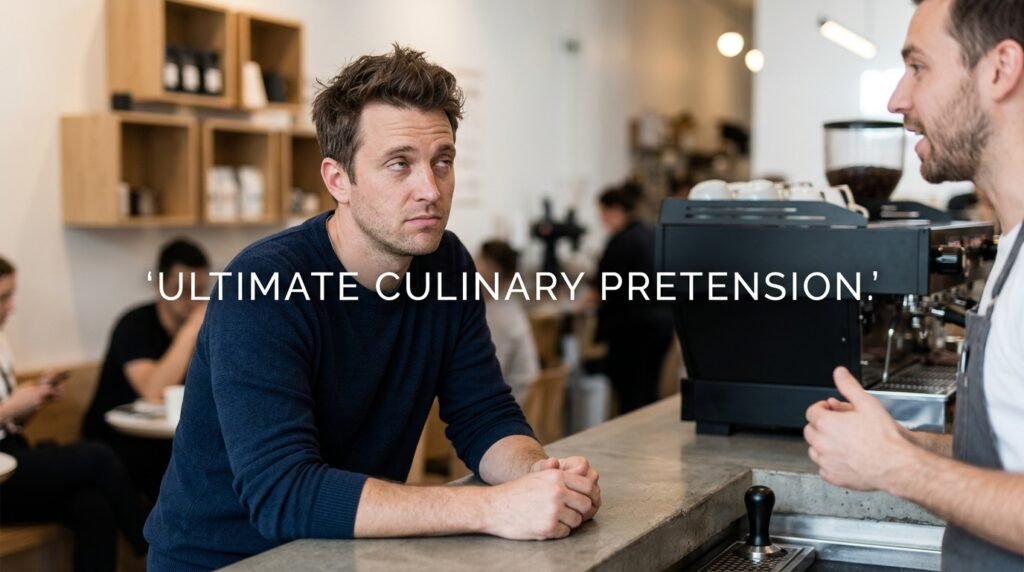
I thought it was the ultimate peak of culinary pretension. Whenever a barista used it, I rolled my eyes internally. I assumed it was just a fancy, invented marketing term designed to justify charging twenty-five dollars for a bag of roasted beans.
I thought coffee was just coffee. I believed that the roasting machine dictated the flavor. I assumed that if you roasted a bean dark, it tasted like chocolate, and if you roasted it light, it tasted sour.
But as my palate developed, I started noticing undeniable patterns.
I started realizing that no matter how lightly a roaster treated a bean from Brazil, it rarely tasted like the explosive, floral jasmine of an Ethiopian bean. I began to see that the map mattered just as much as the machine. Recognizing this massive global diversity is the core of (What Makes Coffee Taste Different Around the World?), because it highlights that human intervention is only a small part of the recipe.
I finally looked up the literal translation of terroir. It roughly translates to “a sense of place.” It is the total sum of the environmental factors that affect a crop: the minerals in the dirt, the angle of the sun, the microscopic fungi in the soil, the rainfall, and the altitude.
I decided I needed to test this concept in my own kitchen. I needed to taste the “sense of place” for myself.
Designing the Dirt Experiment
If I was going to prove that the earth itself changes the flavor of the coffee, I had to eliminate every other variable.
I couldn’t compare a naturally processed coffee to a washed coffee, because the fermentation would skew the results. I couldn’t compare a dark roast to a light roast, because the fire would hide the evidence.
I went to my favorite local roaster and explained my mission. I told him I wanted two bags of coffee that were identical in every way, except for the dirt they grew in.
He smiled, understanding exactly what I was trying to do. He handed me two bags.
Both were Washed coffees. Both were roasted to the exact same light-medium profile. Both were from the exact same harvest season.
But their geographical coordinates were separated by thousands of miles and completely different geological histories.
Bag A was from the Nyeri region of Kenya. Bag B was from the Antigua region of Guatemala.
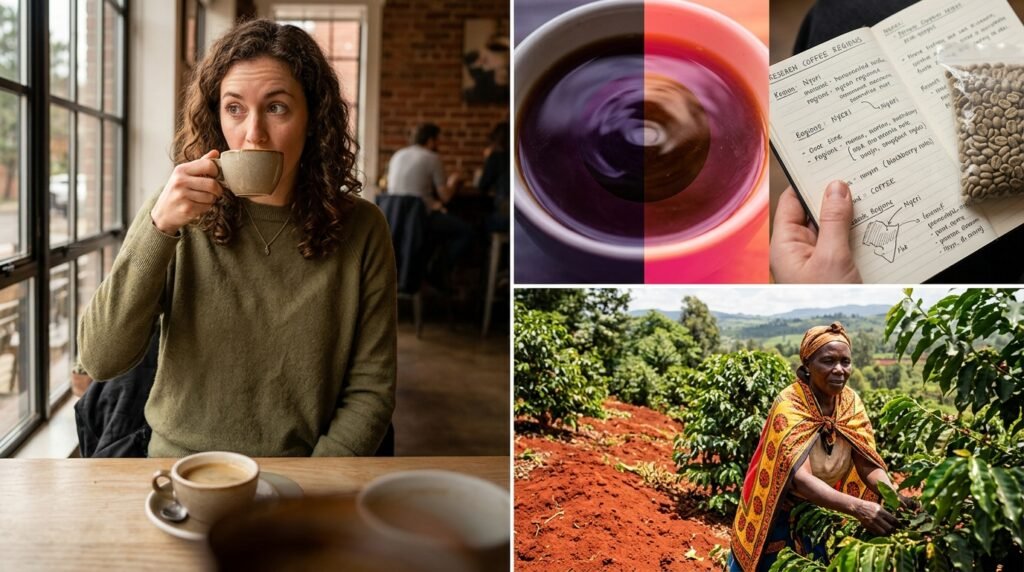
I took them home, cleared my kitchen table, and set up a blind side-by-side tasting. I weighed 15 grams of each, ground them to the identical coarseness, and brewed them using the exact same water temperature.
Tasting the Red Clay of Kenya
I started with the coffee from Kenya.
Before I even brought the mug to my lips, the aroma gave away its intensity. It didn’t smell warm or comforting; it smelled sharp, aggressive, and vibrantly fruity.
I took a slow sip, letting the liquid coat my entire palate.
The sensation was electric. The coffee had an incredibly bright, mouth-watering acidity that tasted vividly like dark blackberries and tart pink grapefruit. It was so lively that the sides of my tongue literally tingled. Beneath the dark berries, there was a strange, beautiful, savory sweetness that reminded me of a sun-ripened cherry tomato.
It was a loud, brilliant, explosive cup of coffee.
I sat the mug down and looked at my research notes regarding the Nyeri region.
The terroir of Kenya is defined by its dirt. The coffee is grown on the high slopes of Mount Kenya in soil that is famously, vibrantly red. This red volcanic loam is packed with massive amounts of iron and, most importantly, phosphoric acid.
As the coffee tree grows in that red dirt, its roots absorb the phosphoric acid directly from the earth. That acid is transported up the trunk, through the branches, and deposited directly into the seeds of the coffee cherry.
When I tasted that tingling, grapefruit-like snap on my tongue, I wasn’t just tasting a genetic trait of the plant. I was literally tasting the dissolved minerals of the African dirt. The soil had aggressively seasoned the bean from the ground up.
Tasting the Volcanic Ash of Guatemala
I drank a glass of room-temperature water to completely cleanse my palate. I needed a blank slate for the second half of the experiment.
I picked up the mug holding the coffee from Antigua, Guatemala.
The aroma rising from this mug was the exact opposite of the Kenyan coffee. There were no sharp berries. There was no citrus. It smelled deep, heavy, and rich, like a dark chocolate bar melting over a campfire.
I took a sip.
The liquid felt entirely different in my mouth. It was heavier, creamier, and coated my throat like a velvet blanket. The vibrant, tingling acidity of the Kenyan coffee was completely gone.
Instead, I tasted a massive wave of dark cocoa, toasted walnuts, and a distinct, beautiful smokiness that lingered long after I swallowed. It was the ultimate comfort coffee. It felt warm, grounding, and incredibly complex, but in a completely savory, dessert-like way.
I opened my laptop and pulled up the geographical data for Antigua.
The terroir of this region is one of the most unique in the world. The coffee farms are situated in a valley surrounded by three massive volcanoes: Agua, Fuego, and Acatenango.
Fuego is highly active. It regularly puffs out clouds of mineral-rich volcanic ash, which gently rains down over the coffee farms, constantly replenishing the soil with sulfur, potassium, and pumice.
Because the soil is so porous and packed with these specific heavy minerals, the coffee trees absorb a completely different chemical cocktail than the trees in Kenya. They don’t absorb phosphoric acid; they absorb the deep, heavy elements of the volcanic rock.
That is why the coffee tasted like smoke and cocoa. The seed had soaked up the literal ashes of the volcano.
The Epiphany at the Kitchen Table
I sat at my kitchen table for an hour, alternating sips between the fading warmth of the Kenyan blackberry and the Guatemalan cocoa.
That was the exact moment the invisible wall in my brain collapsed. That was the first time I truly, deeply understood coffee terroir.
A coffee plant is just a vessel. It is a biological sponge.
It does not invent its own flavor any more than the bees at the farmer’s market invented the taste of the orange blossoms. The coffee tree simply reaches its roots into the dark earth, absorbs whatever geological history is buried there, and packages it neatly into a tiny green seed for us to roast.
Discovering this connection between the earth and the mug was profoundly humbling. Unlocking this reality is exactly (How Exploring Coffee Origins Made Me Enjoy Coffee More), because it transformed my daily caffeine fix into an intimate conversation with global geography.
I realized that when I drink a cup of coffee, I am consuming a liquid landscape.
Terroir is More Than Just Dirt
As my fascination with this concept grew, I learned that terroir extends far beyond the chemical composition of the soil. It encompasses every single element that touches the tree.
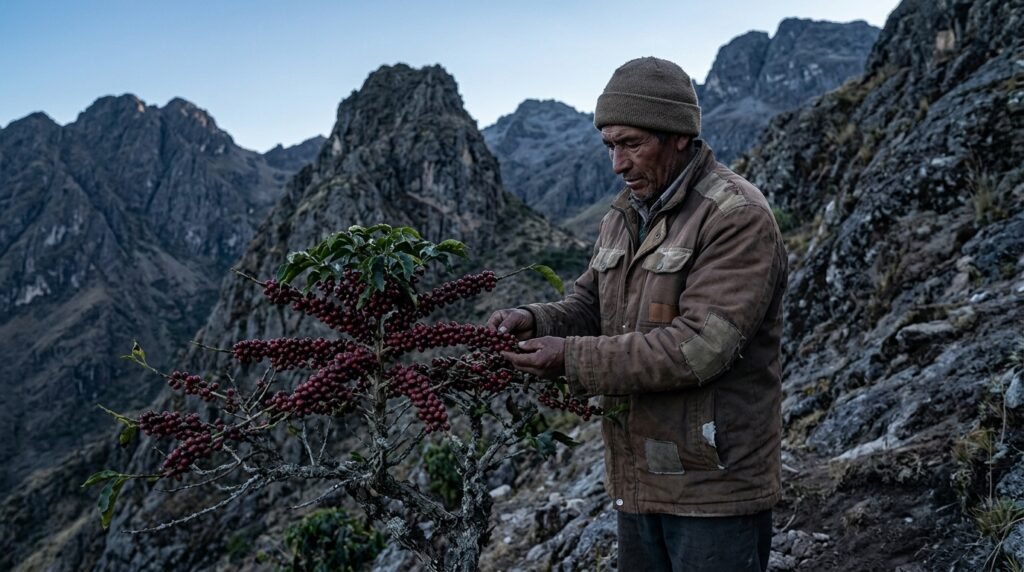
It is the altitude. If a tree is planted at 2,000 meters above sea level, the freezing night air forces the cherry to mature slowly, packing it with dense sugars. If it is planted at sea level, it grows fast and tastes woody and flat.
It is the slope of the hill. A tree planted on the eastern face of a mountain gets the gentle morning sun, while a tree on the western face gets the harsh, baking afternoon sun. Even on the exact same farm, those two trees will produce seeds that taste entirely different.
It is the shade canopy. If a farmer plants their coffee underneath massive banana trees or ancient cedars, the fallen leaves create a natural, decaying compost that changes the fungal network in the soil, which in turn alters the nutrients available to the coffee roots.
Every single leaf, every drop of rain, and every gust of wind leaves a microscopic fingerprint on the coffee bean.
Respecting the Sponge
Understanding terroir completely eradicated my tolerance for cheap, mass-produced commercial coffee.
When massive corporations buy millions of pounds of coffee from twenty different countries, dump them all into a giant metal silo, and roast them until they are burnt and oily, they are actively destroying the terroir.
They are taking the delicate iron of the Kenyan dirt, the rich volcanic ash of Guatemala, and the high-altitude sugars of Colombia, and setting them all on fire just to achieve a boring, uniform flavor that tastes the same in every drive-thru window on earth.
It is an agricultural tragedy.
Once you learn how hard the earth works to create these distinct flavors, you feel an obligation to protect them. This deep sense of respect is exactly (Why I Now Pay Attention to Coffee Origin and Type). I refuse to buy coffee that hides its geographical identity. I want to know the name of the mountain. I want to know the composition of the dirt.
The Ultimate Travel Mug
We live in a fast-paced, disconnected world. Most of us spend our mornings staring at glowing screens, entirely separated from the natural environment.
But a cup of single-origin specialty coffee is a tether back to the earth.
If you take the time to brew it carefully, and if you take a moment to actually pay attention to the liquid on your tongue, you can travel thousands of miles before you even leave your kitchen.
You can taste the red clay of Africa. You can taste the active volcanoes of Central America. You can taste the humid, heavy jungle air of Indonesia.
The next time you buy a bag of coffee, I challenge you to look past the brand name. Look at the region. Research the soil. When you take your first sip, close your eyes and try to find the landscape hidden inside the mug.
Once you experience the true power of terroir, coffee stops being a beverage. It becomes an edible map, a testament to the soil, and the most delicious geography lesson you will ever experience.
My name is Daniel Carter, I am 35 years old, and I live in the United States. I have been passionate about aquariums for many years, and what started as a simple hobby quickly became a lifelong interest in aquatic life, fish behavior, and responsible tank care.
Through TheBrightLance, I share real experiences, practical knowledge, and honest lessons learned from maintaining different types of aquariums. I enjoy testing equipment, studying fish behavior, improving maintenance routines, and helping beginners avoid common mistakes.
My goal is to make aquarism easier, more ethical, and more enjoyable for everyone — whether you are setting up your very first tank or looking to refine your techniques.