
There is a profound difference between looking at something and actually seeing it.
Imagine walking into a gallery or an artist’s studio and staring at a massive, intricate piece of traditional Japanese ink work. At first glance, you might just see a cool design—perhaps a snake weaving its way through a bed of peonies and dark waves. You acknowledge that it looks impressive, and then you move on.
But what happens when someone takes the time to explain the history behind the image?
What happens when you learn about the decades of strict discipline required by the artist to master that specific shading technique? What if you learn that the snake represents protection and transformation, and the specific curvature of the water is a nod to an artistic tradition that dates back hundreds of years?
Suddenly, you aren’t just looking at a cool picture anymore. You are looking at a story. You are looking at culture, geography, and relentless human dedication. The context completely changes your level of appreciation.
A few years ago, I realized I had been treating my morning coffee like a person mindlessly walking through an art gallery. I was consuming it every single day, but I wasn’t actually seeing it.
I was drinking a generic, dark liquid solely for the caffeine, completely blind to the incredible, complex story hidden inside the mug.
When I finally decided to stop treating coffee as a simple utility and started exploring the geographical origins of the beans, everything changed. Here is the honest, transformative story of how exploring coffee origins made me enjoy coffee exponentially more, and how learning the history of the bean completely rewired my daily routine.
The Era of Blind Consumption
To understand how much my enjoyment has grown, you have to understand how bleak my coffee routine used to be.
For the majority of my adult life, coffee was nothing more than high-octane fuel. I treated it the exact same way I treat the gasoline I put in my car. I didn’t care where it came from, I didn’t care who refined it, and I certainly didn’t care about the subtle nuances of its performance. I just needed it to get my engine running in the morning.
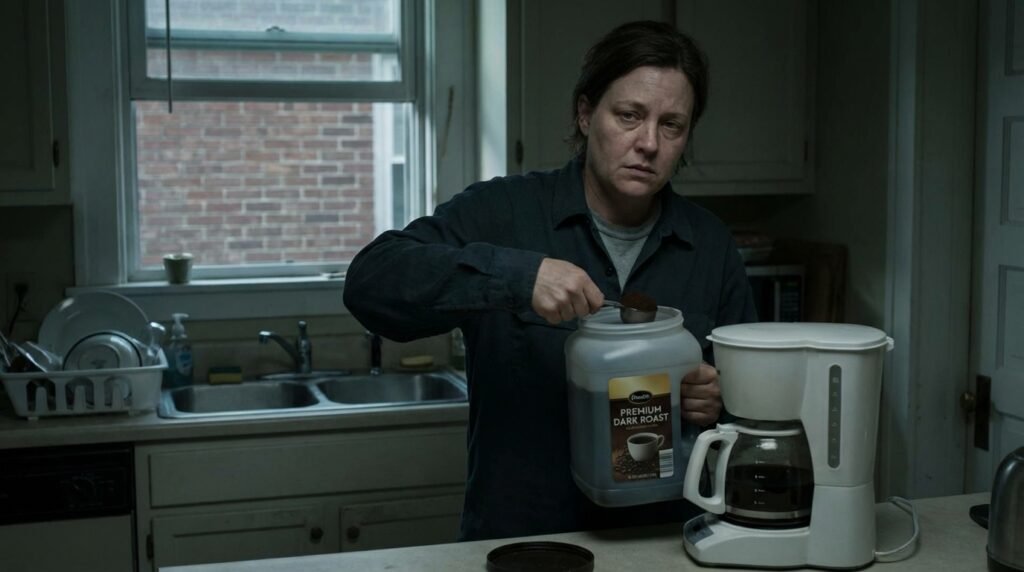
I would go to the supermarket and buy the largest, cheapest plastic tub of pre-ground coffee I could find.
The label usually said something vague like “Premium Dark Roast” or “Morning Blend.” There was absolutely no mention of a country, a region, or a farmer. It was a completely anonymous, factory-produced powder.
I would scoop it into a cheap drip machine, press a button, and drink the resulting bitter liquid as quickly as possible, usually masking the harsh flavor with a heavy pour of milk and a spoonful of sugar.
There was no joy in this ritual. It was a purely functional, thoughtless chore. I was completely disconnected from the beverage I was putting into my body every single day.
The First Glimpse of the Map
My transition from blind consumer to passionate explorer started with a simple gift.
A friend of mine, who was already deeply entrenched in the specialty coffee world, handed me a beautifully designed paper bag of whole bean coffee. It didn’t look anything like the massive plastic tubs I was used to buying.
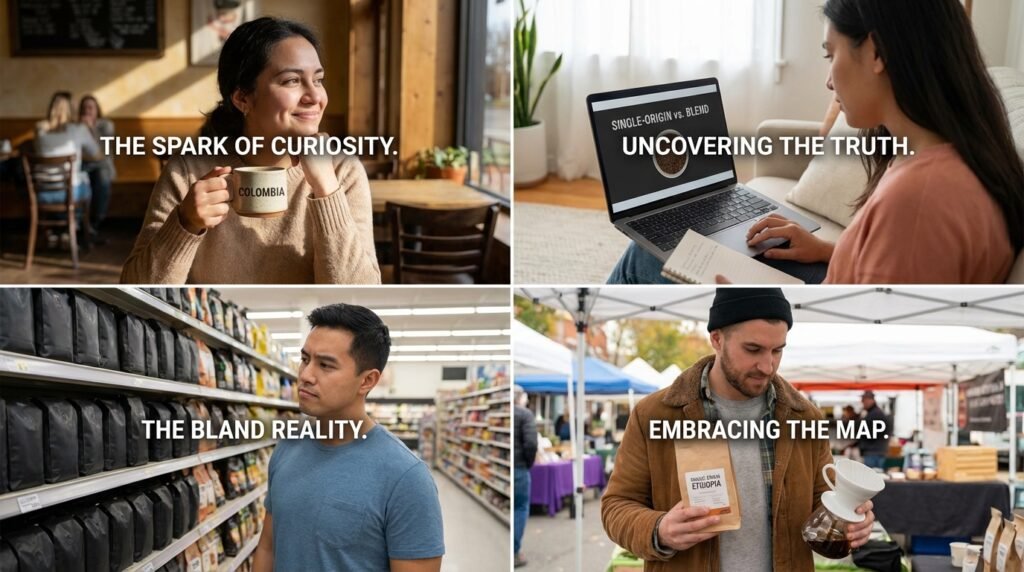
The front of the bag read: Colombia. Huila Region. Washed Process. 1,800 MASL. I was incredibly confused by the label. Why did I need to know the specific region? Why did I need to know the altitude (Meters Above Sea Level)?
My friend told me to go home, grind the beans fresh, and pay attention to what I was drinking.
When I brewed that coffee the next morning, the aroma immediately stopped me in my tracks. It didn’t smell like the burnt, ashy powder from the supermarket. It smelled sweet, vibrant, and alive. It smelled like toasted caramel and fresh red apples.
When I took a sip, the flavor was so incredibly distinct and clean that my brain struggled to process it. Grasping the sheer biological difference between this premium bean and my usual supermarket dust was the core realization of (The Day I Finally Understood the Difference Between Arabica and Robusta).
For the first time in my life, I wasn’t tasting a factory process. I was tasting a specific piece of the earth. I was tasting Colombia.
Escaping the Anonymity of the Blend
That single cup of Colombian coffee lit a massive fire of curiosity inside me. I wanted to know why it tasted so drastically different from my usual morning cup.
My research immediately led me to the concept of the “Single-Origin” coffee versus the “Blend.”
I learned that massive commercial coffee companies intentionally hide the origin of their beans. They buy incredibly cheap, low-grade coffee from five or six different countries around the world. Then, they dump all of those different beans into a massive metal silo, mix them together, and roast them extremely dark until they all taste exactly the same.
They do this to achieve a uniform, boring consistency. They want their coffee to taste identical in every single city, 365 days a year.
But in doing so, they completely destroy the unique, beautiful characteristics of the individual farms. They paint over the intricate details of the artwork with a massive roller of gray paint.
Realizing how much flavor I had been missing is exactly (What I Learned After Trying 10 Coffee Blends at Home), because it proved that mixing everything together ultimately creates a muddy, uninspiring experience.
Once I understood that a “Blend” was often just a corporate shield for low-quality beans, I completely abandoned them. I started seeking out single-origin coffees exclusively. I wanted to taste the unfiltered truth of the map.
The Magic of Terroir
As I began buying bags of coffee from different specific countries, I discovered the beautiful, French culinary concept of Terroir.
Terroir is the idea that a crop absorbs the “sense of place” where it was grown. It means that the dirt, the weather, the altitude, and the surrounding environment physically alter the genetic flavor of the seed.
This discovery completely transformed my enjoyment of coffee. It turned my morning beverage into an interactive geography lesson.
When I bought a bag of single-origin coffee from the Yirgacheffe region of Ethiopia, I learned that the coffee trees there grow wild in ancient, high-altitude forests. When I brewed the coffee, I could actually taste that wild, untamed environment. The coffee was incredibly light, floral, and exploded with the flavor of jasmine and ripe peaches.
When I bought a bag from the Cerrado Mineiro region of Brazil, I learned that the farms are situated on massive, warm, sunny plateaus. The resulting coffee reflected that comfortable, warm climate perfectly. It was heavy, dense, and tasted like a comforting wave of milk chocolate and roasted peanuts.
When I bought a bag from the Sumatra island in Indonesia, I learned about the relentless, humid jungle rain. The coffee tasted thick, savory, and aggressively earthy, like dark spices and cedar wood, directly reflecting the damp forest environment.
Connecting with the Craft
But terroir is only half of the story. The other massive reason that exploring origins made me enjoy coffee more was the human connection.
Before my specialty coffee journey, I never once thought about the person who grew my coffee. It just magically appeared on a supermarket shelf.
When you start buying single-origin coffees from reputable roasters, they don’t just print the country on the bag; they often print the name of the actual farmer or the local cooperative.
I started reading the stories of these farmers online. I learned about the intense, brutal labor required to plant coffee trees on violently steep volcanic mountain slopes. I learned about the meticulous, exhausting process of hand-picking only the perfectly ripe red coffee cherries, leaving the green ones behind to mature.
I learned about the art of processing—how a farmer in Costa Rica will carefully sun-bake the sticky fruit pulp onto the bean to create a sweet, pastry-like “Honey Process” flavor.
Coffee stopped being a faceless commodity. I realized that every single sip I took was the final result of years of passionate, back-breaking agricultural craftsmanship.
When you know how hard a farmer worked to produce those specific beans, you simply cannot gulp the coffee down mindlessly. You are forced to slow down. You are forced to savor it. The context breeds absolute respect.
The Natural Evolution of the Palate
One of the most surprising side effects of this global exploration was how rapidly my own palate evolved.
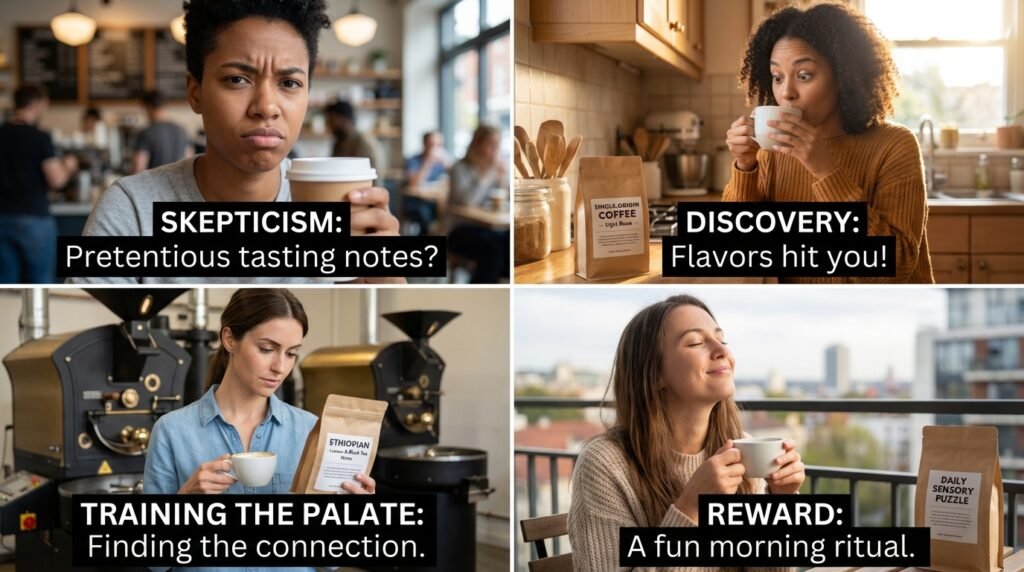
I used to think that the people who claimed they could taste “blueberries” or “grapefruit” in black coffee were just being pretentious. I assumed they were making it up to sound sophisticated.
But when you stop drinking muddy blends and start drinking high-quality, lightly roasted, single-origin coffees, those flavors are not subtle. They hit you right in the face.
I didn’t have to take expensive tasting courses or become a certified sommelier. My palate naturally trained itself simply by paying attention to the labels on the bags.
If I bought an Ethiopian coffee and the bag promised notes of lemon and black tea, I would close my eyes, take a sip, and actively look for those flavors. Finding that initial sensory connection is the precise definition of (How I Started Recognizing Good Coffee Without Being an Expert).
Once you give your brain the vocabulary to identify what it is tasting, the experience becomes incredibly rewarding. It turns every morning cup into a fun, low-stakes sensory puzzle.
The End of the Autopilot Routine
Today, my morning routine is the absolute highlight of my day.
I do not stumble into the kitchen and press a button on a plastic machine anymore. My coffee routine is a deliberate, mindful, and joyous ritual.
I walk into my pantry and look at the bags of single-origin coffee I currently have in stock. I check in with my mood.
Do I want a comforting, heavy, chocolatey anchor to get me through a stressful workday? I reach for the bag from South America. Do I want a bright, refreshing, floral spark to wake up my senses on a sunny weekend morning? I reach for the bag from East Africa.
I weigh the beans on a digital scale. I grind them fresh, breathing in the incredible, complex aromas. I slowly pour the hot water over the grounds using a gooseneck kettle, watching the coffee bloom and expand.
I am engaged in every single step of the process.
The World in a Mug
Exploring coffee origins didn’t just teach me about geography and agriculture. It taught me how to be present.
It taught me that there is incredible beauty and complexity hidden in the everyday items we take for granted, but we only get to experience that beauty if we are willing to look a little closer and ask a few questions.
If your current coffee routine feels like a boring, necessary chore, I urge you to change your perspective.
Stop buying the anonymous plastic tub. Go to a specialty roaster and buy a single-origin coffee. Read the label. Look up the country. Look up the altitude.
When you finally take that first sip, remember the soil, remember the climate, and remember the farmer. Once you understand the breathtaking story behind the bean, you will never view a cup of coffee the exact same way again. It will stop being fuel, and it will finally become art.
My name is Daniel Carter, I am 35 years old, and I live in the United States. I have been passionate about aquariums for many years, and what started as a simple hobby quickly became a lifelong interest in aquatic life, fish behavior, and responsible tank care.
Through TheBrightLance, I share real experiences, practical knowledge, and honest lessons learned from maintaining different types of aquariums. I enjoy testing equipment, studying fish behavior, improving maintenance routines, and helping beginners avoid common mistakes.
My goal is to make aquarism easier, more ethical, and more enjoyable for everyone — whether you are setting up your very first tank or looking to refine your techniques.