
I spend a lot of my time behind a camera lens, obsessing over aperture, shutter speed, and lighting to capture the perfect shot. If there is one crucial lesson that photography has taught me, it is that true beauty usually lives in the middle ground.
If your lighting is too harsh, the subject becomes washed out and blinding. If your shadows are too deep, all the intricate details disappear into the darkness. You have to constantly adjust your settings to find that perfect, harmonious balance where everything is clear, vibrant, and perfectly exposed.
For the longest time, my morning coffee routine was completely lacking that sense of balance.
I was constantly bouncing violently between extreme flavor profiles. On Monday, I would brew a heavy, earthy, dark-roasted Indonesian coffee that sat on my palate like a brick. On Tuesday, I would swing to the exact opposite end of the spectrum, brewing a wildly acidic, naturally processed African coffee that tasted like an explosive slice of blueberry pie.
I loved these extremes. They were exciting. But after a while, I started to experience genuine palate fatigue.
Drinking an intense, wild, fruit-bomb coffee every single morning at 6:30 AM started to feel overwhelming. It demanded too much of my attention. Sometimes, while I was still rubbing the sleep out of my eyes, I didn’t want to intellectually analyze notes of bergamot and jasmine.
I just wanted a reliable, comforting, and perfectly balanced cup of coffee. I needed the culinary equivalent of a perfectly exposed photograph.
That desire for balance led me straight to the lush, high-altitude mountains of the Andes. Here is the honest story of how I stopped chasing the extremes, and why Colombian coffee quickly became my absolute go-to choice for my daily routine.
Overcoming the Supermarket Stereotype
To fully appreciate my transition to Colombian coffee, I had to unlearn a lot of marketing propaganda.
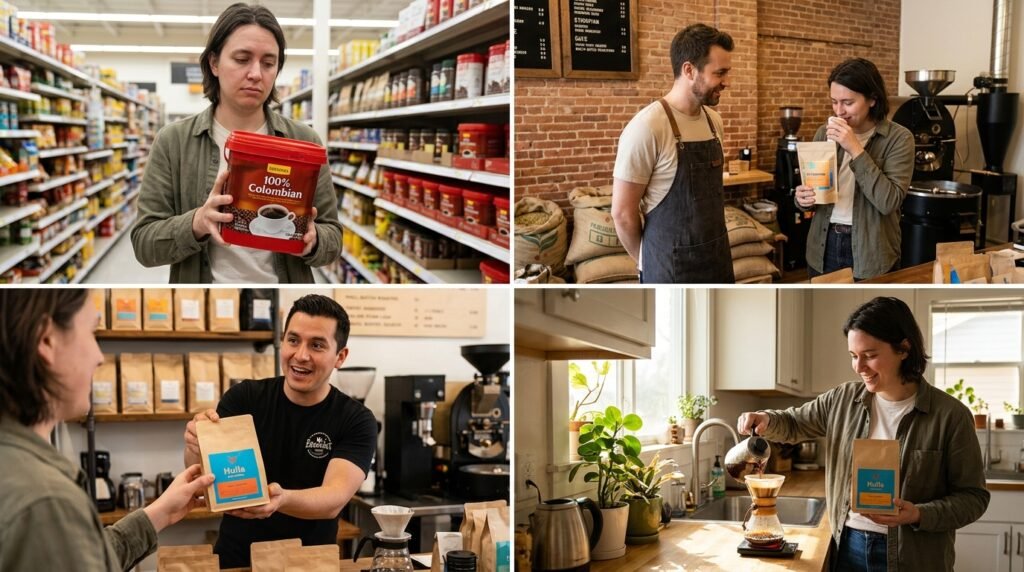
Growing up, “100% Colombian” was the ultimate buzzword printed on almost every massive plastic tub of cheap coffee in the grocery store. Because of this brilliant but misleading marketing campaign, I associated Colombia entirely with generic, mass-produced, diner-style coffee.
I thought it was the default flavor of the world. I assumed it was boring.
When I first transitioned into the specialty coffee scene, I actively avoided beans from Colombia. I was a snob. I wanted to explore the exotic corners of the globe. I wanted to taste the wild ferments of Costa Rica and the ancient Heirloom varieties of Ethiopia. Colombia felt too mainstream.
But exploring the map eventually led me to a profound realization. Realizing the depth of this global diversity is exactly (What I Learned From Drinking Coffee From Different Regions), because it taught me that a country’s commercial exports do not define its artisan potential.
A local roaster finally convinced me to look past the supermarket stereotype.
He handed me a small, beautiful bag of single-origin coffee from the Huila region of Colombia. He promised me it would completely change my perspective on what the country was capable of producing.
The Perfect Middle Ground
The following morning, I took that bag of Colombian coffee into my kitchen.
I weighed out my standard 15 grams, poured them into my manual burr grinder, and started turning the handle. The dry aroma that filled the air wasn’t aggressively fruity, nor was it heavily smoky. It smelled distinctly like brown sugar, toasted pecans, and milk chocolate. It smelled incredibly inviting.
I brewed it meticulously in my V60 pour-over cone, paying close attention to my water temperature and pour rate.
When the coffee finished dripping, I poured it into my mug, let it cool for a minute, and took a slow sip.
My palate instantly relaxed.
It was an absolute masterclass in flavor harmony. The coffee had a rich, velvety body that coated my tongue with the comforting taste of sweet caramel and milk chocolate. But right as I thought it was going to be a heavy, purely dessert-like cup, a bright, beautiful spark of acidity cut through the richness.
It didn’t taste like the sharp, zesty lemon of an African coffee. Instead, it tasted like the crisp, sweet bite of a red apple, or the subtle tartness of a dried cherry.
It was the perfect middle ground. It had the comforting, chocolatey foundation of a dark roast, combined with the clean, vibrant, fruity acidity of a light roast. Neither side overpowered the other. They worked together in absolute synergy.
The Geography of Balance
I was instantly obsessed. I needed to know how this specific region managed to produce a bean that was so inherently balanced.
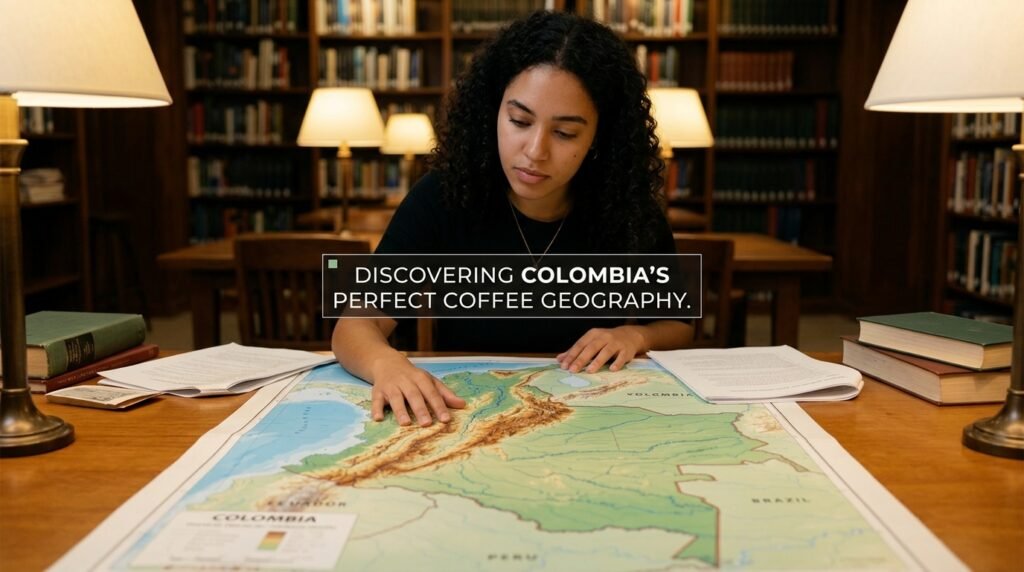
I began researching Colombian coffee farming, and I quickly discovered that the country is blessed with arguably the most perfect coffee-growing geography on the planet.
The mighty Andes mountains run directly through Colombia, splitting into three distinct, massive mountain ranges (the Cordilleras). These mountain ranges create hundreds of unique microclimates.
The coffee is grown at incredibly high altitudes along these steep slopes, deeply rooted in rich, volcanic soil. The high altitude means the air is cool, which slows down the maturation of the coffee cherry.
This slow growth is the true secret weapon. Understanding the biology behind this slow maturation is exactly (Why Some Coffee Origins Taste Sweeter Than Others), because the extended time on the branch allows the seed to absorb massive amounts of complex sugars and organic acids.
The volcanic soil provides the rich, deep chocolate and caramel notes, while the high altitude provides the bright, crisp, apple-like acidity.
Nature designed the perfect recipe for balance, and the Colombian farmers simply mastered how to harvest it.
Contrasting the South American Giants
As I started drinking more Colombian coffee, I began comparing it to its massive neighbor to the south: Brazil.
Brazil is the largest coffee producer in the world, and Colombia is a close second in terms of Arabica production. But their flavor profiles are surprisingly different.
When I want absolute, heavy comfort with zero acidity, I reach for a Brazilian bean. Brazilian coffees are typically grown at slightly lower altitudes and are often naturally processed, resulting in heavy notes of peanut butter, dark cocoa, and roasted nuts. They are fantastic, but they can sometimes feel a bit flat if you are craving a dynamic cup.
Understanding the differences between these two powerhouses is the core of (What I Noticed About South American Coffees).
Colombia is where I turn when I want the comfort of South America, but with a lively, refreshing spark.
Because Colombian coffees are almost exclusively “Washed” (meaning the fruit is stripped off the seed before drying) and grown at much higher elevations, they possess a clean, structured clarity that Brazilian coffees often lack.
A great Colombian cup will give you the chocolate you crave, but it will finish with a refreshing hint of orange peel or red berries. It is a dynamic, multi-layered experience that never feels heavy or exhausting.
The Regions Within the Country
My new obsession with Colombian coffee led me down a regional rabbit hole. I quickly learned that saying “I like Colombian coffee” is just the beginning of the journey.
Because the country has so many distinct mountain ranges and microclimates, the flavors vary wildly from north to south.
I started paying close attention to the specific departments (regions) printed on the bags from my local roastery.
When I bought beans from Huila, I noticed they were incredibly complex, often featuring intense sweetness, bright acidity, and distinct notes of caramel and red fruit. Huila quickly became my favorite origin for my daily morning pour-over.
When I bought beans from Nariño, which is situated high up in the south near the equator, the coffees were exceptionally smooth, creamy, and featured a distinct, bright citrus note that reminded me of sweet tangerines.
When I bought beans from Cauca, I found a beautiful balance of floral aromas and deep, brown-sugar sweetness.
I wasn’t just drinking generic Colombian coffee anymore; I was exploring the diverse terroirs of the Andes mountains without ever leaving my kitchen.
The Reliability of the Harvest
There is one more crucial reason why Colombian coffee became my absolute go-to choice: undeniable reliability.
Coffee is a seasonal crop. If you fall in love with a specific coffee from Central America or East Africa, you usually only have a small window of a few months to enjoy it at its absolute freshest. Once the harvest season is over, you have to wait an entire year for the new crop to arrive.
Colombia is completely unique in this regard.
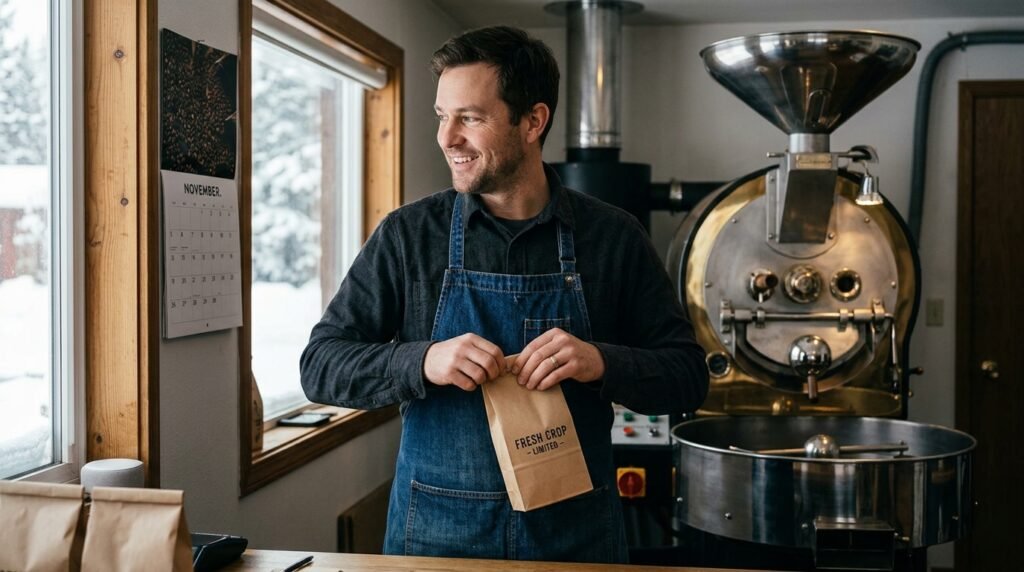
Because of its geographical location near the equator, and the diverse microclimates across its mountain ranges, Colombia actually produces fresh coffee all year round.
They have a main harvest, and they also have a secondary crop, often referred to as the mitaca crop.
This means that whether it is January or July, I can walk into a specialty coffee shop and find a freshly harvested, freshly roasted bag of incredible Colombian beans. It is the most reliable, consistent origin in the entire specialty coffee industry. I never have to worry about the beans being stale or out of season.
It is the dependable friend that is always there when I need it.
Becoming the Daily Driver
Today, my coffee shelf still looks diverse. I still keep a wild, fruity African coffee on hand for the weekends. I still buy rare, experimental ferments when I want to challenge my palate.
But the bag that empties the fastest—the bag that I instinctively reach for at 6:00 AM when the house is quiet and my eyes are barely open—is always the washed Colombian.
It is the ultimate daily driver.
It doesn’t demand my intellectual energy to decipher strange, funky tasting notes. It doesn’t overwhelm my palate with aggressive acidity. It simply delivers a perfectly balanced, consistently sweet, and incredibly satisfying cup of coffee every single time.
It pairs perfectly with a quiet morning. It is robust enough to handle a splash of milk if I feel like it, but complex and sweet enough to drink completely black.
It is the perfectly exposed photograph in a gallery of extreme contrasts.
Revisit the Classic
If your only experience with Colombian coffee is the giant, generic tub you bought at the supermarket ten years ago, I strongly urge you to give the country a second chance.
Do yourself a massive favor and seek out a specialty, single-origin Colombian coffee from a local roaster. Look for the regions of Huila, Nariño, or Cauca printed on the label. Make sure it has a recent “Roasted On” date, and brew it with care at home.
When you take that first sip, and the perfect harmony of milk chocolate, rich caramel, and crisp red apple washes over your palate, you will instantly understand the magic.
You will realize why Colombia has earned its legendary reputation in the coffee world, and you might just find that it becomes the reliable, perfectly balanced go-to choice for your morning routine as well.

My name is Daniel Carter, I am 35 years old, and I live in the United States. I have been passionate about aquariums for many years, and what started as a simple hobby quickly became a lifelong interest in aquatic life, fish behavior, and responsible tank care.
Through TheBrightLance, I share real experiences, practical knowledge, and honest lessons learned from maintaining different types of aquariums. I enjoy testing equipment, studying fish behavior, improving maintenance routines, and helping beginners avoid common mistakes.
My goal is to make aquarism easier, more ethical, and more enjoyable for everyone — whether you are setting up your very first tank or looking to refine your techniques.