
If you decide that you want to start running and eventually complete a marathon, you will likely fall into a very predictable, highly expensive psychological trap.
You will go to a specialized sporting goods store, and you will stare at a wall of incredibly advanced footwear. You will convince yourself that the only reason you are currently slow and out of shape is because you do not have the right gear.
So, you drop three hundred dollars on a pair of professional, carbon-plated, neon-colored running shoes. You put them on, lace them up, and step out your front door feeling like an Olympic athlete.
But within the first mile, your lungs are burning. Your shins ache. You are gasping for air, and you have to stop and walk.
The expensive shoes did not magically transform you into a runner. They did not fix your terrible posture. They did not fix the fact that you strike the ground heavily with your heels, or that you forget to control your breathing. You spent a massive amount of money to essentially run the exact same way you did in cheap sneakers.
For the first few years of my specialty coffee journey, I was the culinary equivalent of the guy in the neon running shoes.
I fell completely into the “gear trap.” I genuinely believed that if my coffee tasted bad, the only logical solution was to open my wallet and buy a more expensive piece of equipment. I bought fancy gooseneck kettles, expensive burr grinders, and premium beans.
But my coffee was still coming out bitter, sour, and wildly inconsistent.
It took me a long time to realize that throwing money at a problem does not fix a lack of technique. Here is the honest, slightly embarrassing story of how I improved my coffee without spending more money, the invisible bad habits I had to unlearn, and how mastering the free elements of brewing completely revolutionized my morning mug.
The Myth of the Magic Equipment
When we see professional baristas working in high-end specialty cafes, it is incredibly easy to be intimidated by their tools.
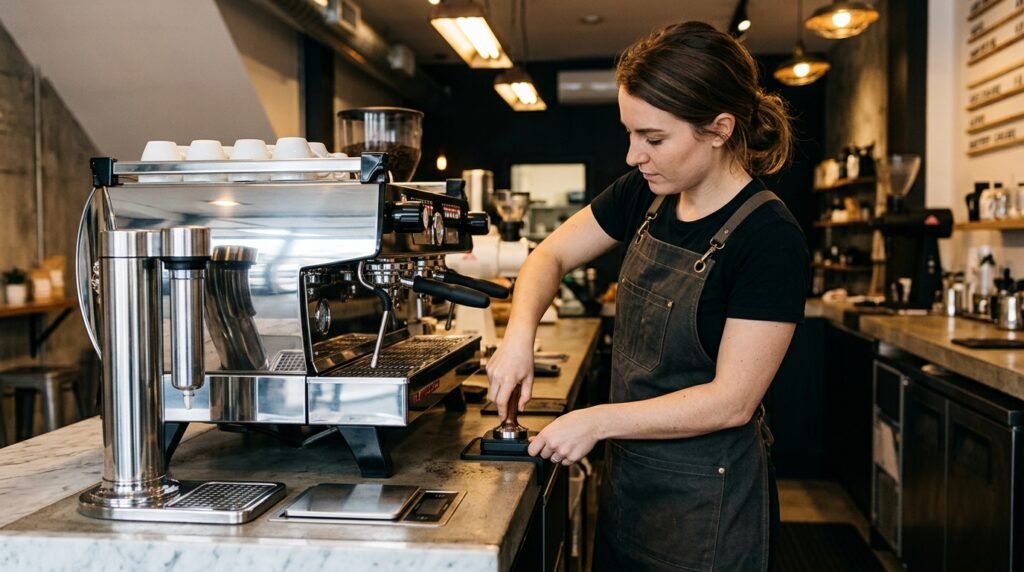
They are surrounded by massive, chrome espresso machines that cost more than a reliable used car. They have flush-mounted digital scales embedded in their countertops and dedicated water filtration towers.
We look at this environment and subconsciously decide that great coffee is locked behind a massive financial paywall. We assume that our coffee tastes bad because our kitchen is cheap.
This is a devastating consumer myth.
While a good grinder and fresh beans are certainly important, the actual act of brewing a perfect cup of coffee is simply a matter of controlling chemical variables. Mass, temperature, time, and agitation.
You do not need a digital, Bluetooth-enabled smart kettle to control these variables. You just need to pay attention. Once I stopped browsing the internet for expensive upgrades and started actually looking at my own physical movements in the kitchen, I found five massive, completely free upgrades that changed my life.
Free Upgrade One: The Ultimate Patience
The most destructive mistake I was making in my kitchen cost absolutely nothing to fix, but it was ruining every single bag of coffee I purchased.
I was using a standard, cheap stovetop kettle. I would turn the burner on high, wait for the water to reach a violent, rolling boil, and then immediately dump that bubbling water directly over my delicate coffee grounds.
I thought hot water was just hot water. I didn’t understand thermal extraction.
Coffee beans are packed with hundreds of fragile, complex aromatic oils. These oils are the source of all the sweet fruit, floral, and chocolate notes you want in your mug. If you hit those delicate oils with water that is 212 degrees Fahrenheit (100 degrees Celsius), you instantly scorch them.
You literally burn the sweetness away, leaving behind a harsh, ashy, carbonized flavor.
Fixing this required zero dollars. It just required patience. Understanding the sheer destruction caused by boiling water was the foundational lesson of (How Water Temperature Changed My Coffee Completely).
Now, when my cheap kettle starts whistling, I simply take it off the hot stove and let it sit on the counter for exactly sixty seconds. This one-minute pause allows the water temperature to naturally drop to a gentle, forgiving 200 degrees Fahrenheit. The scorching stopped immediately, and the natural sweetness of the coffee finally made it into my cup.
Free Upgrade Two: Honoring the Bloom
My second zero-cost improvement involved another psychological hurdle: my absolute lack of patience during the actual pouring process.
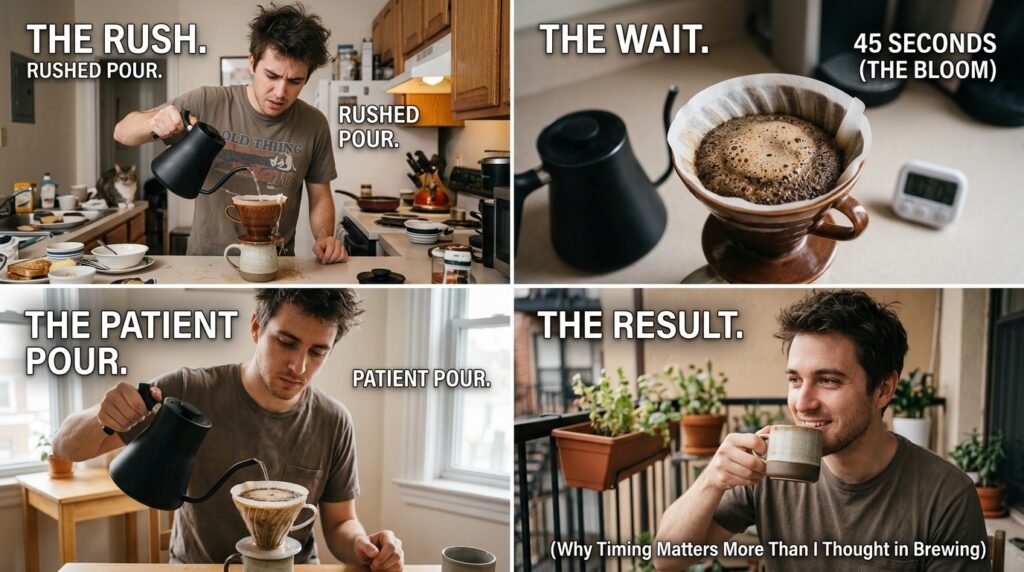
Because my mornings are usually rushed, I just wanted the coffee to be finished as fast as possible. I would take my kettle and dump all the water into the brewing cone at once, filling it to the absolute brim.
But fresh coffee actively fights back when you rush it.
During the roasting process, carbon dioxide gas gets trapped inside the cellular structure of the bean. When hot water hits fresh coffee grounds, that gas rapidly escapes, causing the coffee bed to bubble and swell aggressively.
If you dump all your water in at once, the escaping gas physically blocks the water from penetrating the coffee grounds. The water just channels down the sides of the paper filter, resulting in a weak, watery, highly acidic beverage.
I learned to give the coffee time to breathe.
Now, I pour just a tiny splash of water over the grounds—just enough to get them wet. Then, I put the kettle down and completely step away. I watch the coffee bubble and expand for forty-five seconds.
This short window of time allows all the defensive gas to escape. This single, free adjustment is exactly (Why Timing Matters More Than I Thought in Brewing). When I finally resume my pour, the water evenly saturates the grounds, extracting a deep, rich, perfectly balanced flavor.
Free Upgrade Three: Purging the Rancid Oils
This next upgrade is something that almost everyone ignores, yet it is arguably the most disgusting invisible flaw in a home coffee setup.
For years, I proudly used a manual burr grinder and a glass V60 cone. But I treated them like they were self-cleaning tools. After I brewed my coffee, I would just rinse the glass cone with hot water and put it back on the shelf. I would casually brush the loose dust out of my grinder.
I thought that because coffee is just “bean water,” it couldn’t possibly leave behind anything dangerous or dirty.
I was completely wrong.
Remember those delicate aromatic oils we talked about? When you grind coffee and brew it, those oils coat the inside of your grinder, the walls of your glass brewer, and the bottom of your ceramic mug.
If you only rinse them with water, the oils do not wash away. They stick to the surfaces, and over the course of a few days, those old oils oxidize and turn incredibly rancid.
I was brewing fresh, expensive coffee through a layer of rancid, rotting oil every single morning. The coffee always had a subtle, strange, old diner-coffee aftertaste.
I stopped being lazy. I took apart my burr grinder and scrubbed the steel plates. I started aggressively washing my glass brewer and my ceramic mugs with hot water and unscented dish soap every single day.
The very first time I brewed a cup in a completely sanitized, oil-free environment, the clarity of the flavor was absolutely mind-blowing. It cost me nothing but two minutes at the kitchen sink.
Free Upgrade Four: The Agitation Speed Limit
Another variable I had completely failed to respect was the physical force of gravity.
I used to pour my water holding the kettle high up in the air, letting the heavy stream of water crash violently into the coffee grounds. I thought I was being efficient.
But coffee extraction is heavily influenced by agitation. When you violently blast the coffee bed, you disturb the uniform layout of the grounds. You push all the microscopic, powdery fine dust particles to the very bottom of the filter.
Those fines act like cement. They clog the microscopic pores of the paper filter, stalling the flow of the water. Your three-minute brew suddenly takes six minutes, and the resulting coffee is harshly over-extracted and aggressively bitter.
I had to enforce a strict speed limit on my hands.
I started holding my kettle as low as physically possible, keeping the metal spout just an inch above the coffee bed. I forced myself to pour the water in incredibly slow, gentle, hypnotic circles.
I stopped treating the coffee like a dirty dish I was blasting with a hose, and started treating it like a delicate plant I was watering. By reducing the physical agitation, the water flowed evenly through the filter every single time, completely eliminating the bitter over-extraction.
Free Upgrade Five: The Liquid Foundation
The final free upgrade requires no new equipment, but it does require you to rethink the most abundant ingredient in your kitchen.
A cup of coffee is 98.5% water.
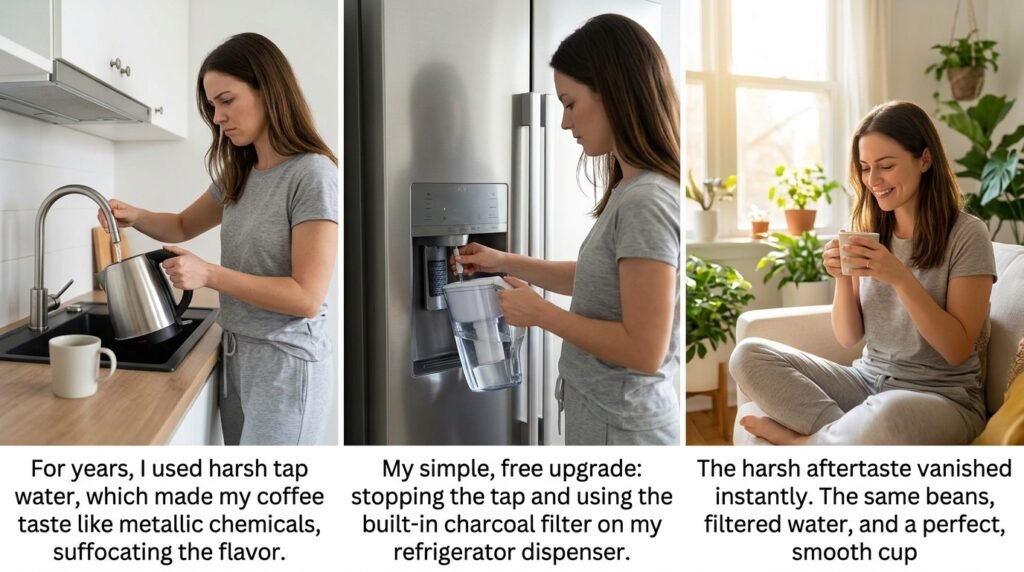
For years, I was filling my kettle straight from the kitchen tap. I lived in a city with heavily chlorinated, hard water. If you drank a glass of it plain, it tasted faintly like a swimming pool and metallic pipes.
I incorrectly assumed that the dark, bold flavor of the roasted coffee beans would just magically overpower the bad-tasting water.
This is a massive culinary error. The chemical minerals in your tap water actively interact with the flavor compounds in the coffee. If your water has too much calcium or chlorine, it acts like a chemical blanket, completely suffocating the bright, sweet, and complex notes of the bean.
I did not go out and buy expensive, bottled artisan spring water. I just stopped using the tap and started using the built-in charcoal filter on my refrigerator dispenser.
Realizing how much the base liquid was holding me back was the exact catalyst for (What I Changed to Improve My Coffee Instantly). I used water that was already in my house, but I made sure it was clean.
The harsh, metallic aftertaste vanished instantly. The coffee became soft, vibrant, and incredibly smooth.
Form Over Footwear
It is an incredibly hard pill to swallow when you realize that your expensive hobby is being ruined by your own bad habits.
It is much easier to just blame the equipment and buy a shiny new toy. But buying a new, three-hundred-dollar grinder will not fix the fact that you are scorching your beans with boiling water. A fancy digital scale will not fix the rancid oils coating your glass brewer.
You cannot buy your way out of bad technique.
If your coffee is currently tasting bitter, sour, or disappointing, I challenge you to put your wallet away. Do not look at online stores for a solution. Look at your own hands.
Are you rushing the bloom? Are you pouring too aggressively? Are you using heavily chlorinated tap water? Are you cleaning your equipment properly?
Focusing on these invisible, zero-cost variables forces you to actually engage with the craft. When you finally perfect your running form, you realize that you never actually needed the neon shoes to run a great race. You just needed to pay attention. And your morning coffee will be absolutely flawless because of it.

My name is Daniel Carter, I am 35 years old, and I live in the United States. I have been passionate about aquariums for many years, and what started as a simple hobby quickly became a lifelong interest in aquatic life, fish behavior, and responsible tank care.
Through TheBrightLance, I share real experiences, practical knowledge, and honest lessons learned from maintaining different types of aquariums. I enjoy testing equipment, studying fish behavior, improving maintenance routines, and helping beginners avoid common mistakes.
My goal is to make aquarism easier, more ethical, and more enjoyable for everyone — whether you are setting up your very first tank or looking to refine your techniques.