
There is a very specific psychological phenomenon that happens when you are deeply immersed in digital creative work.
When I am sitting at my computer, zoomed in at five hundred percent on a high-resolution photograph, painstakingly trying to remove a complex watermark from the background without ruining the original texture, I enter what psychologists call the “flow state.”
In this state, time completely loses its meaning.
You sit down at your desk at eight o’clock in the evening, thinking you are only going to edit one or two layers. You start masking out shadows, adjusting opacities, and tweaking the curves. Then, you finally look away from the glowing monitor, glance at the clock on the wall, and realize it is suddenly three o’clock in the morning.
For the first few years of my professional life, this time-warping phenomenon was a daily occurrence. And because I was constantly fighting exhaustion, I needed a tool to survive.
I didn’t drink coffee because I liked it. I drank coffee because it was a utilitarian necessity. It was a harsh, bitter caffeine delivery system designed strictly to keep my eyes open so I could hit my deadlines.
Today, my relationship with that dark liquid is completely unrecognizable. It is no longer a survival tool; it is the absolute foundation of my day. Here is the honest, psychological story of how coffee shifted from a desperate late-night crutch to a beautiful, non-negotiable daily routine, and how it completely changed my relationship with the morning.
The Dark Ages of the Drip Machine
To truly appreciate the routine I have now, I have to confess how terrible my habits used to be.
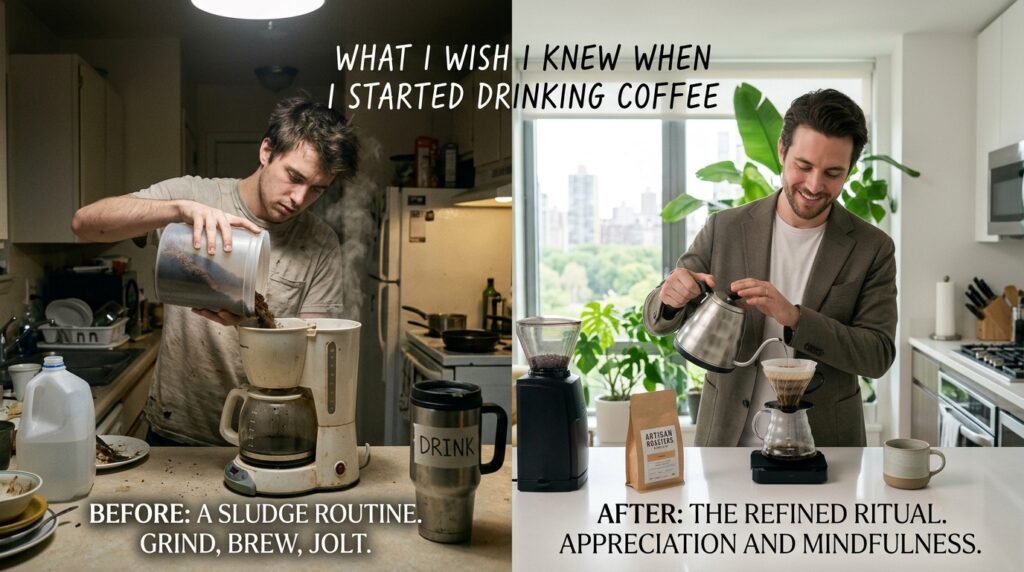
During my early days of heavy image editing, my kitchen was equipped with the cheapest, saddest automatic drip coffee maker you could possibly buy at a discount store.
I treated it with absolute disrespect. I would buy massive, plastic tubs of pre-ground dark roast coffee from the bottom shelf of the grocery store. I kept the tub in the freezer, completely unaware that the moisture was actively destroying whatever flavor was left in the stale dust.
When I needed to wake up, I would blindly dump three or four massive soup spoons of that frozen dust into a flimsy paper filter. I would fill the plastic reservoir with harsh, heavily chlorinated tap water, press the glowing red button, and walk away.
The machine would sputter, violently hiss, and produce a pot of boiling hot, black sludge.
It tasted like liquid ash. It was aggressively bitter, leaving a sharp, metallic tang on the back of my throat. I would pour it into a massive travel mug, dump a heavy splash of cold milk and two packets of artificial sweetener into it just to mask the burn, and carry it back to my desk.
I drank it exclusively for the chemical jolt. Looking back at that era is exactly (What I Wish I Knew When I Started Drinking Coffee). I was demanding absolute, pixel-perfect quality in my digital work, but I was willing to put absolute garbage into my own body.
The Breaking Point
The turning point didn’t happen because of a sudden culinary awakening. It happened because of a profound sense of physical burnout.
Living entirely on sugar, adrenaline, and bitter, stale coffee is a terrible long-term strategy. Eventually, my body started to push back. The cheap coffee was upsetting my stomach, the caffeine crashes were becoming brutal, and I was waking up feeling completely drained.
I decided I needed to stop treating my mornings like a frantic emergency.
I took a weekend off from my computer. I went for a walk in a different neighborhood, trying to clear my head, and I stumbled into a small, independent specialty coffee roastery.
I didn’t know what “specialty coffee” meant. I just wanted a warm drink.
I walked up to the counter and ordered a simple black coffee. The barista didn’t turn around and pour liquid out of a massive thermal urn. Instead, she took a small ceramic funnel, placed a paper filter inside, and ground a fresh batch of pale brown beans right in front of me.
She used a silver kettle with a long, elegant spout to pour hot water in slow, hypnotic circles over the coffee grounds.
I stood there, absolutely mesmerized. I had never seen anyone treat coffee with that level of meticulous, deliberate care.
The First Real Sip
When she handed me the ceramic mug, the first thing I noticed was the smell.
It didn’t smell like the burnt toast and dark ash that haunted my kitchen. It smelled vibrantly sweet. It smelled like toasted almonds, caramelized brown sugar, and a faint hint of fresh berries.
I took a tentative sip, fully expecting the harsh, bitter bite that I was so accustomed to.
It never came.
The liquid was impossibly smooth. It glided across my palate with a silky, tea-like texture. There was absolutely zero need for milk or sugar, because the coffee itself was naturally, inherently sweet. The bright, crisp acidity made my mouth water, and the finish lingered with the comforting taste of milk chocolate.
My brain completely stalled. It felt like I had been watching movies on a blurry, black-and-white television my entire life, and someone had suddenly handed me a pair of 4K, ultra-high-definition glasses.
That single cup of Ethiopian pour-over shattered my worldview. Stepping into that cafe was the exact catalyst for (The First Time I Explored Coffee Culture Deeply). I realized that coffee wasn’t just a bitter chemical delivery system; it was a vast, complex, beautiful culinary art form.

Building the Analog Anchor
I left that roastery with a bag of fresh, whole-bean coffee and a cheap plastic V60 pour-over cone.
I was determined to replicate that flawless cup in my own kitchen. I threw my plastic automatic drip machine into the recycling bin. I bought a manual hand grinder and a digital kitchen scale.
The first few weeks were incredibly frustrating. I was clumsy with the kettle, I messed up the math, and my coffee tasted wildly inconsistent.
But as I slowly learned the physics of extraction—as I learned how to adjust my grind size, control my water temperature, and time my pours—something unexpected began to happen.
The coffee started tasting incredible, yes. But more importantly, the actual act of making the coffee became something I desperately craved.
My life is completely dominated by screens. I look at a smartphone when I wake up, I stare at a high-resolution monitor for eight to ten hours a day for work, and I watch a television screen to relax at night. My entire existence is digital, fast-paced, and automated.
The manual pour-over routine was the exact opposite.
The Mandatory Meditation
When I wake up now, I do not reach for my phone. I walk directly into the kitchen.
I measure exactly 15 grams of coffee beans on the digital scale. I pour them into the manual grinder and turn the metal crank. The physical, tactile feedback of the steel burrs crushing the dense beans is incredibly satisfying. The intense, sweet aromatics immediately fill the room, waking up my senses before I even take a sip.
I heat my filtered water. I rinse the paper filter. I gently pour the first 45 grams of water to let the coffee bed bloom.
For exactly three and a half minutes, I am forced to be completely, entirely present in the physical world.
I cannot check my emails while I am pouring water from a gooseneck kettle. If I look away, the water level drops, the temperature crashes, and the extraction is ruined. I have to watch the flow rate. I have to watch the digital numbers tick up on the scale.
It demands my absolute focus.
This short, quiet window of time has become my daily meditation. It is a mandatory pause button. It forces me to ground myself in a tactile, analog process before I dive into the chaotic, stressful, digital demands of the workday.
The Punctuation Mark of the Day
Coffee is no longer a tool I use to stay awake. In fact, my relationship with caffeine has drastically decreased.
I only drink one, maybe two cups of coffee a day. I rarely drink it after one o’clock in the afternoon, because I no longer need it to artificially prop my eyes open.
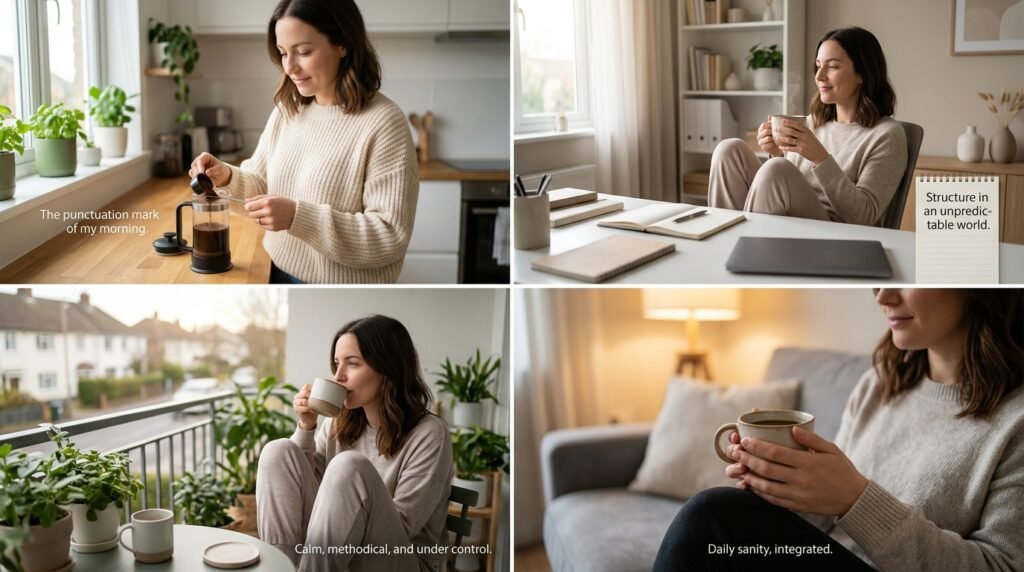
Instead, it has become the punctuation mark of my morning.
The routine provides a sense of structure and predictability in a world that is inherently unpredictable. No matter what disaster is waiting for me in my inbox, no matter how many frustrating edits a client has requested on a project, I know that my first ten minutes of the day will be calm, methodical, and entirely under my control.
This invisible integration into my mental health is exactly (How Coffee Became Part of My Lifestyle Without Me Realizing). It crept in as a hobby and slowly cemented itself as the cornerstone of my daily sanity.
Romanticize Your Morning
If your morning currently consists of stumbling out of bed, pressing a button on a machine, pouring bitter brown liquid into a travel mug, and immediately rushing out the door while scrolling through stressful news on your phone, I highly encourage you to hit the brakes.
You are starting your day in a state of chaotic reaction.
You do not need to spend five hundred dollars on fancy espresso equipment to change this. You just need to reclaim ten minutes of your time.
Buy a manual grinder. Buy a bag of incredible, freshly roasted coffee from a local shop. Buy a simple French Press or a pour-over cone.
Force yourself to slow down. Smell the dry grounds. Watch the hot water interact with the coffee. Feel the weight of the kettle in your hand. Treat the process not as a chore you have to rush through, but as a deliberate, peaceful ritual you get to experience.
When you finally sit down with that impossibly clean, sweet, complex mug of coffee that you crafted with your own hands, you will realize that the caffeine is just a secondary benefit. The true magic of a daily coffee routine is that it gives you a few quiet moments of peace, completely offline, before the rest of the world demands your attention.
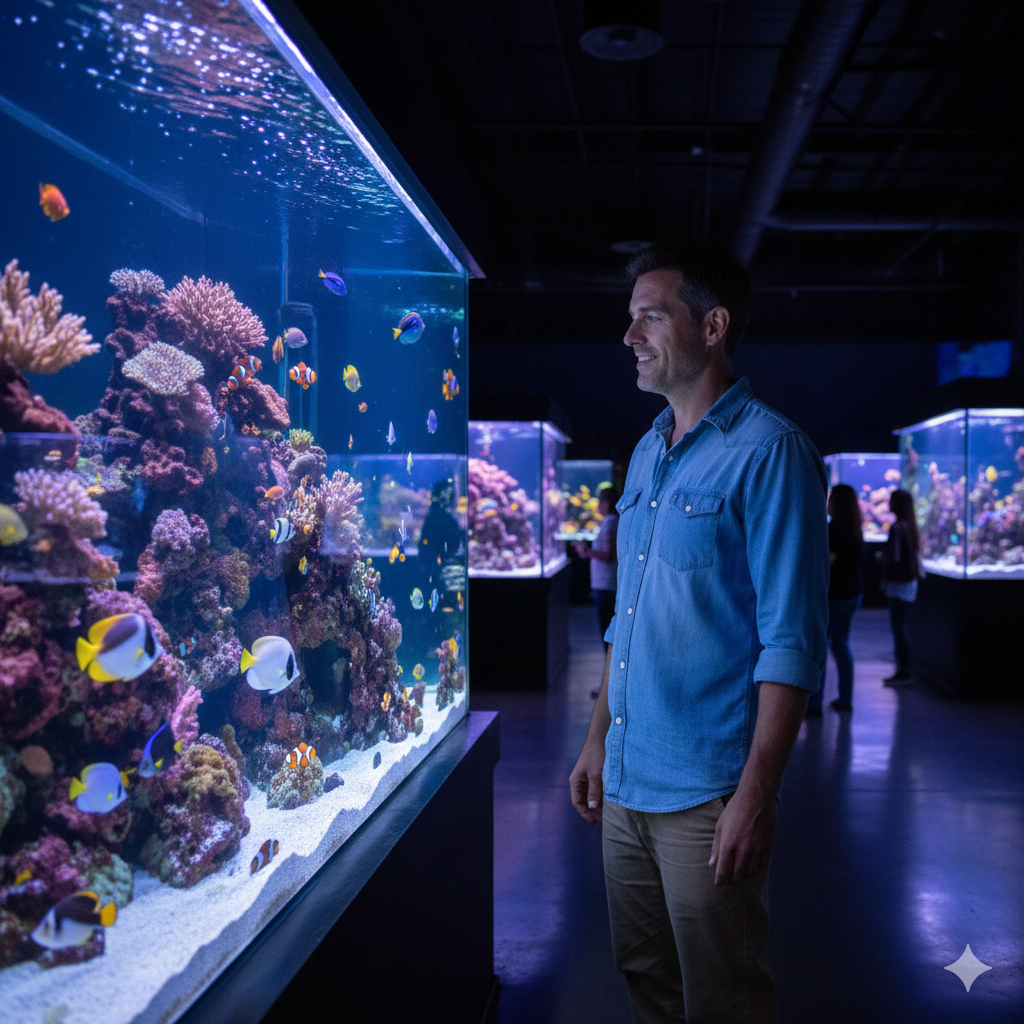
My name is Daniel Carter, I am 35 years old, and I live in the United States. I have been passionate about aquariums for many years, and what started as a simple hobby quickly became a lifelong interest in aquatic life, fish behavior, and responsible tank care.
Through TheBrightLance, I share real experiences, practical knowledge, and honest lessons learned from maintaining different types of aquariums. I enjoy testing equipment, studying fish behavior, improving maintenance routines, and helping beginners avoid common mistakes.
My goal is to make aquarism easier, more ethical, and more enjoyable for everyone — whether you are setting up your very first tank or looking to refine your techniques.