
When you listen to a heavily compressed audio file on a pair of cheap, plastic earbuds while riding a loud, crowded subway train, you are not actually experiencing music.
You are simply consuming noise to block out other noise. You do not hear the subtle vibration of the cello strings. You do not feel the heavy, emotional impact of the percussion. The music is just a flat, two-dimensional background track designed to make your commute slightly more tolerable.
But if you take that exact same piece of music, sit in the dead center of a world-class, acoustically engineered symphony hall, and listen to a live orchestra perform it, the experience completely shatters you.
The sound hits you physically in the chest. You hear the breath of the woodwind players. You hear the frantic, passionate scraping of the violin bows. You realize, with a sudden wave of embarrassment, that you had never actually heard the song before. You had only heard a ghost of it.
For the first decade of my adult life, my morning coffee was a heavily compressed audio file played through cheap earbuds.
I drank it blindly, frantically, and without a single ounce of respect. I consumed it purely to block out the exhaustion of modern life. I was completely deaf to the symphony of history, tradition, and human connection that existed inside my mug.
But eventually, I bought a ticket to the symphony hall. Here is the honest, eye-opening story of the first time I explored coffee culture deeply, how I uncovered the ancient, staggering history of this simple roasted seed, and how peeling back the layers of this global beverage permanently changed the way I interact with the world.
The Baseline of Total Ignorance
To truly appreciate the depth of this cultural exploration, I have to confess the absolute shallowness of my starting point.
During my early career, I was the ultimate utilitarian consumer. I bought my coffee in massive, vacuum-sealed plastic bricks from the commercial grocery store. The label usually just featured a generic, meaningless buzzword like “Morning Blend” or “French Roast.”
I had no idea what plant the coffee came from. I did not know what country it was grown in. I did not know the difference between a washed process and a natural process, and I certainly did not care.
I would dump a scoop of this stale powder into a plastic machine, press a button, and immediately pour the dark, bitter liquid into a travel mug. I would drown it in cold milk to mask the terrible taste and drink it as fast as physically possible.
I treated coffee the same way I treated a cheap battery charger. It was just a mechanism to keep my body functioning for another ten hours.

The Spark of Curiosity
The turning point happened entirely by accident. I had recently transitioned to buying specialty, light-roast whole beans from a local independent roaster, simply because I wanted my mornings to taste a little better.
I was standing in my kitchen, grinding a batch of single-origin beans, when I actually took a moment to read the packaging.
The label was covered in incredibly specific information. It listed a high-altitude region in Africa. It listed the name of a local farming cooperative. It listed the biological variety of the plant.
I suddenly realized that I was holding an agricultural product that had traveled across the globe, passed through dozens of human hands, and survived a massive oceanic journey just to end up on my kitchen counter. I realized I knew absolutely nothing about the actual culture of the beverage I was drinking every single day.
I decided it was time to take out my earbuds and actually listen to the music. I began to aggressively research the history and culture of the coffee bean.
Discovering the Ancient Ethiopian Ceremony
My cultural deep dive immediately transported me to the high-altitude, dense forests of the Ethiopian plateau, the undisputed biological birthplace of the Coffea arabica tree.
I learned that in Ethiopia, coffee is not a casual drink. It is not something you grab in a paper cup on your way to a stressful office job. It is the absolute, undeniable pillar of community life and social hospitality.
I was so fascinated by this that I actively sought out a traditional Ethiopian restaurant in my city that performed the authentic coffee ceremony, just so I could witness it with my own eyes.
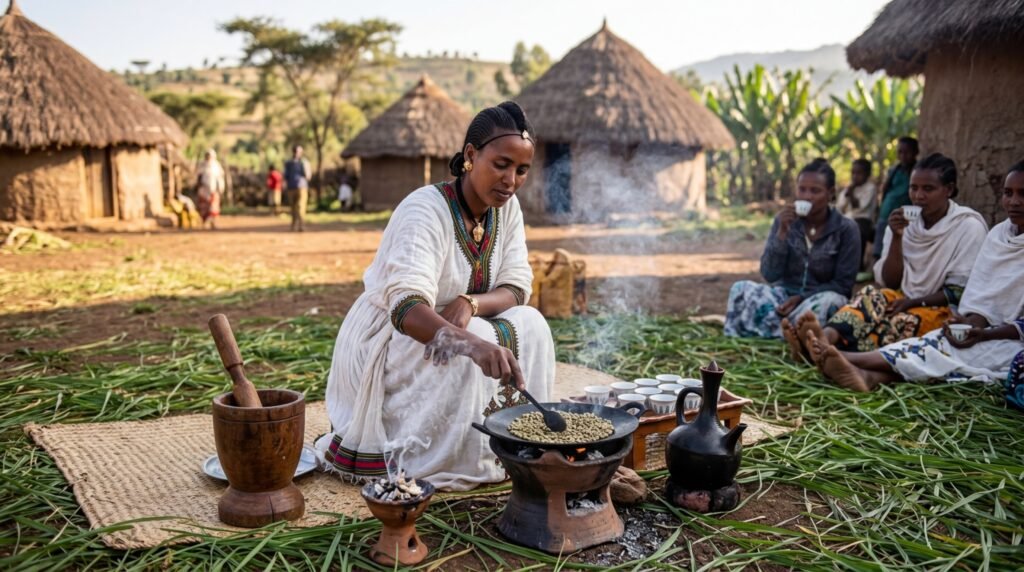
The ritual was staggering. The host did not open a bag of pre-roasted beans. She started with raw, green coffee seeds. She washed them and roasted them in a flat iron pan over a small, open heat source right in the middle of the room.
The heavy, intoxicating smoke of the roasting coffee mixed with the sweet scent of burning frankincense. Once the beans were dark and oily, she crushed them by hand using a traditional wooden mortar and pestle. The fresh grounds were then boiled in a beautiful clay pot called a jebena.
The coffee was served in three distinct, unhurried rounds.
Witnessing the intense sensory explosion of this ancient ritual was precisely the foundation of my journey, much like (The First Time I Tried Ethiopian Coffee (And Loved It)), because it forced me to see the bean as a sacred cultural artifact rather than a quick stimulant. I learned that in this culture, rushing the coffee process is an insult. Time is the ultimate currency of respect.
The Mysticism of the Middle East
As I followed the historical journey of the coffee bean out of Africa and across the Red Sea into Yemen, the cultural landscape shifted dramatically.
I began reading about the ancient Sufi monks of the 15th century who used a dark, bitter tea made from coffee cherries to stay awake during long, grueling nights of spiritual chanting and prayer. Coffee literally began as a tool to connect with the divine.
When the beverage eventually spread into the broader Middle East, specifically the Ottoman Empire, it evolved into a deeply intimate, almost magical tradition.
In Turkish coffee culture, they do not use paper filters. They grind the beans into a microscopic, flour-like powder. They place this powder into a small brass pot with a long handle, called a cezve, along with water and sugar.
The most traditional method involves burying this brass pot in a pan of scorching hot sand. The heat causes the dark liquid to foam up violently, building a thick, luxurious layer of crema.
Because the coffee is unfiltered, it is poured directly into a tiny cup, grounds and all. You must wait patiently for the heavy mud to settle to the bottom. And once you finish the liquid, the tradition dictates that you flip the cup over. A reader will interpret the abstract shapes left by the muddy grounds to divine your future.
Coffee in this region isn’t just a drink; it is an oracle.
The Intellectual Explosion of Europe
The most fascinating part of my cultural exploration occurred when the coffee bean finally reached the shores of Europe in the 17th century.
Before coffee arrived, the primary beverage of the European working class was weak beer and wine. Water was simply too dangerous and contaminated to drink safely. Because of this, the entire population spent their days in a mild, sluggish state of constant intoxication.
When coffee was introduced, it required boiling water, making it perfectly safe to consume. But instead of acting as a depressant, it delivered a massive, sharp spike of cognitive clarity.
Coffee physically sobered up the Western world.
The very first coffeehouses began opening in London, Paris, and Vienna. They were dubbed “Penny Universities” because, for the price of a single penny, any man could buy a cup of coffee and sit for hours listening to the greatest minds of the era debate philosophy, science, and politics.
This historical realization was deeply tied to (What I Learned About Coffee Culture Around the World), as I understood that coffee literally changed the intellectual trajectory of humanity. The Enlightenment, the French Revolution, and the foundations of modern mathematics were all fueled by caffeinated debates around wooden tables.
The Agricultural Reality of Latin America
As my exploration moved away from ancient history and into the modern era, my focus shifted to the massive, mountainous regions of Central and South America.
I started learning about the incredibly complex, back-breaking agricultural reality required to produce the specialty beans sitting in my kitchen. I learned about the concept of terroir—how the volcanic soil in Guatemala, the high altitudes in Colombia, and the intense humidity in Brazil physically alter the chemical structure and the flavor profile of the bean.
But more importantly, I learned about the human cost.
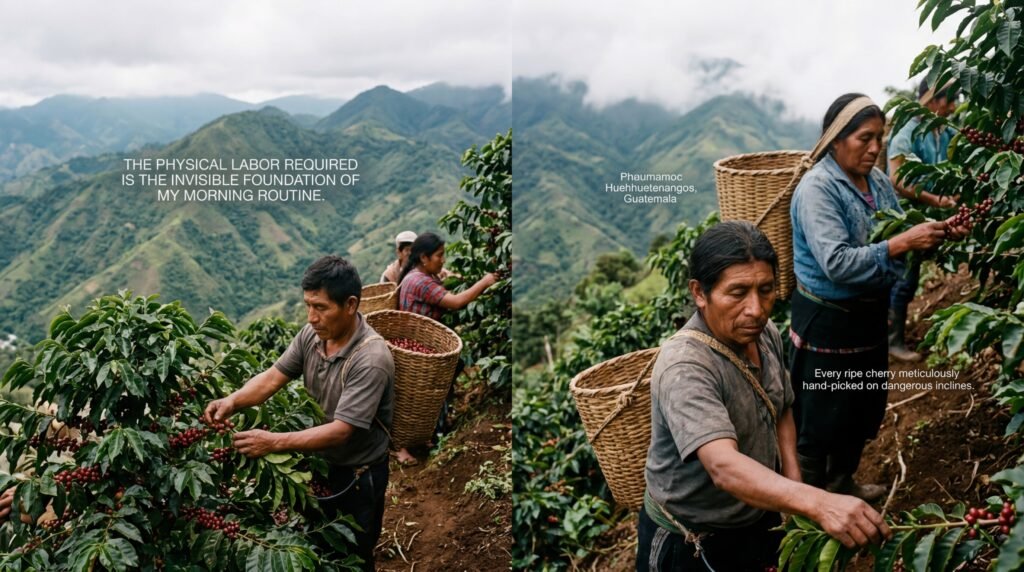
Specialty coffee cannot be harvested by giant machines. It grows on incredibly steep, dangerous inclines. Every single ripe red cherry must be meticulously picked by a human hand.
Uncovering the staggering physical labor required to produce these beans perfectly mirrors (What I Discovered About Coffee Farming Around the World), making it impossible to take the beverage for granted.
I realized that thousands of farmers dedicate their entire lives to cultivating a crop that they rarely have the luxury of experiencing as a finished, roasted specialty beverage. Their grueling labor is the invisible foundation of my entire morning routine.
Re-Evaluating the Modern Drive-Thru
When you finally expose yourself to the staggering depth of global coffee culture, your entire perspective on the modern coffee industry changes forever.
I looked at the massive, fast-food drive-thru chains on the corner of my street, pumping out massive paper cups of sugary, artificially flavored milkshakes in less than sixty seconds. I looked at the stressed commuters screaming their orders into plastic microphones.
I realized how far we had strayed from the source material.
We took an ancient, mystical, profoundly communal beverage that fueled revolutions and demanded hours of patient reverence, and we turned it into a cheap, rushed, isolated transaction. We put the cheap earbuds back in.
Taking My Seat in the Symphony Hall
The first time I explored coffee culture deeply, I did not just learn a few interesting historical facts. I permanently altered my daily lifestyle.
I refuse to drink coffee blindly anymore.
When I wake up in the morning, I do not rush. I use my manual burr grinder, and I listen to the mechanical crunch of the beans. I smell the deep, heavy aromatics. I heat my water and pour it slowly over my glass V60 cone, watching the coffee bed bloom and expand.
When I sit down with my heavy ceramic mug, I am fully aware of what I am holding.
I am holding the smoke of the Ethiopian ceremony. I am holding the hot sand of the Turkish cafe. I am holding the sharp, intellectual debates of the Parisian coffeehouses, and the intense, grueling labor of the Colombian farmers.
If you are currently treating your morning coffee like a thoughtless chore, I beg you to look deeper.
Read the label on your bag of beans. Look up the history of the country it came from. Buy a manual grinder and engage your physical senses. When you finally stop treating coffee like a cheap background track and start treating it like a global symphony, you will realize that the dark liquid in your cup is the most incredible, unifying cultural artifact on the face of the earth.
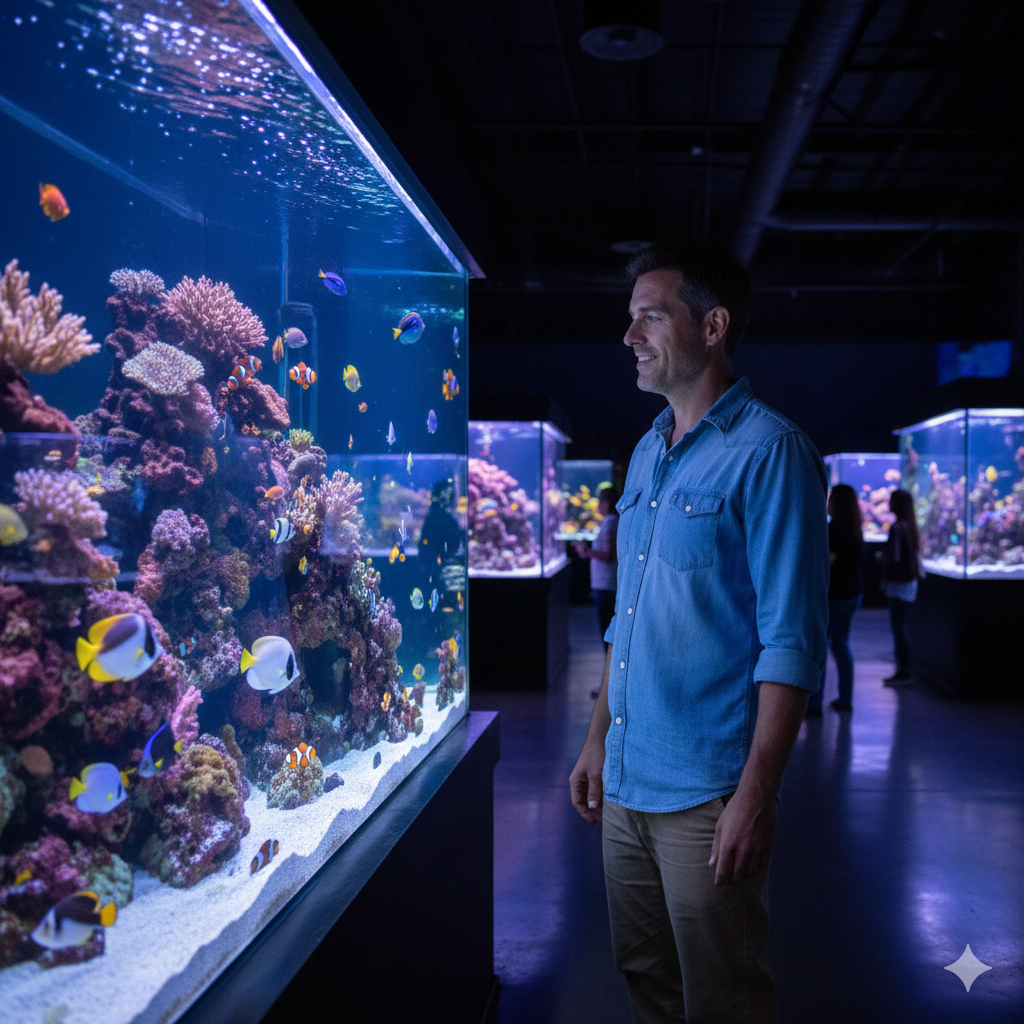
My name is Daniel Carter, I am 35 years old, and I live in the United States. I have been passionate about aquariums for many years, and what started as a simple hobby quickly became a lifelong interest in aquatic life, fish behavior, and responsible tank care.
Through TheBrightLance, I share real experiences, practical knowledge, and honest lessons learned from maintaining different types of aquariums. I enjoy testing equipment, studying fish behavior, improving maintenance routines, and helping beginners avoid common mistakes.
My goal is to make aquarism easier, more ethical, and more enjoyable for everyone — whether you are setting up your very first tank or looking to refine your techniques.