
If you have ever committed to getting a large, traditional Japanese Irezumi tattoo, you know that the process requires an incredible amount of patience.
You do not walk into a tattoo parlor and walk out three hours later with a massive, vibrant masterpiece covering your entire arm and chest. That is simply not how the art form works. It is a slow, agonizingly beautiful progression that happens over months, or even years.
During your first session, the artist will simply lay down the bold, black outline. You might walk out with just the skeletal frame of a winding snake (Hebi) on your forearm. It is isolated. It is a single, contained image.
But traditional Japanese tattooing is designed to flow. When you go back for your second session, the artist adds the heavy black and gray shading. In the third session, they introduce the vibrant color. And in the final sessions, they surround the snake with the background elements—the dark wind bars, the crashing water waves, and the delicate cherry blossoms.
Before you even realize what is happening, the ink has crawled up your shoulder, across your collarbone, and over your chest. What started as a single, isolated image has permanently merged with your body. It has become a fundamental part of your physical identity.
A few years ago, I thought I was just buying a bag of better coffee beans.
I thought it was a single, isolated purchase. I had absolutely no idea that I had just sat down for the first session of a massive lifestyle shift.
Here is the honest, deeply observant story of how coffee became part of my lifestyle without me realizing, how the slow ritual crept into every corner of my daily existence, and how a simple agricultural seed permanently altered the way I travel, socialize, and consume.
The First Session: The Black Outline
To fully appreciate the magnitude of this lifestyle shift, you have to look at the blank canvas of my life before specialty coffee.
For the first decade of my adult career, coffee was not a lifestyle. It was an emergency utility. I drank cheap, mass-produced, pre-ground coffee out of a plastic automatic drip machine. I drowned it in milk and sugar to hide the harsh, ashy bitterness. I drank it in my car while staring at traffic, purely to force my brain to wake up.
But then, out of sheer curiosity, I walked into an independent local roastery and ordered a black pour-over.
The barista handed me a ceramic mug. The liquid tasted impossibly bright, resembling sweet peaches and caramelized honey. It was a complete shock to my palate. I realized that coffee did not have to be a bitter chore. It could be a genuine culinary experience.
I went home and threw away my plastic drip machine. I bought a manual stainless steel burr grinder, a digital kitchen scale, and a glass V60 brewing cone.
I thought I was just upgrading my kitchen appliances. Taking this initial, purely technical step was exactly (What I Changed to Improve My Coffee Instantly).
It was the black outline. It was a simple, contained change in my kitchen. I had no idea that the ink was about to spread.
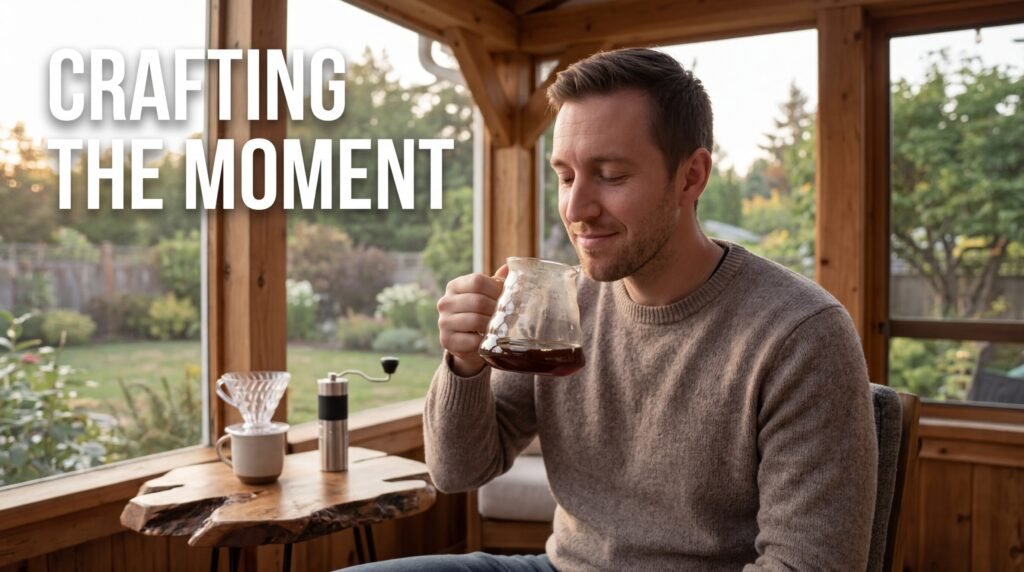
Adding the Shading: The Morning Anchor
The very first place the coffee lifestyle began to spread was my morning routine.
When you buy manual brewing equipment, you lose the ability to multitask. You can no longer just press a button and walk away to answer emails or scroll through social media on your smartphone. The process actively demands your physical presence.
I suddenly found myself waking up fifteen minutes earlier.
I would walk into the dark, quiet kitchen. I would weigh the beans. I would physically turn the heavy metal crank on the hand grinder, listening to the mechanical crunch of the steel burrs breaking the roasted seeds apart. I would smell the explosive, sweet aromatics filling the room.
I had to stand perfectly still at the kitchen counter, holding a heavy gooseneck kettle, pouring hot water in slow, precise circles for exactly four minutes.
Without me even realizing it, this requirement for physical precision completely cured my morning anxiety.
I was no longer starting my day by reacting to the stressful demands of my digital inbox. I was starting my day by executing a deliberate, analog, quiet victory. The coffee brewing ritual became my psychological anchor. The shading had been added to the tattoo, giving the outline a profound sense of depth and weight.
Adding the Color: The Social Shift
As the months went by, the ink continued to spread, quietly creeping into my social life.
When you are in your late twenties and early thirties, the default social invitation is usually centered around alcohol. If you want to catch up with a friend, you invite them to a loud, crowded bar. You spend too much money, you yell over the music, and the conversation rarely scratches below the surface.
But once I mastered the art of the manual pour-over, I naturally wanted to share it.
I stopped inviting people to loud bars. Instead, I started asking friends to come over to my apartment on a Saturday morning to try a new, rare bag of single-origin coffee I had just purchased.
When they arrived, the dynamic was completely different.
They would lean against my kitchen counter and watch me grind the beans and pour the water. The slow, unhurried nature of the brewing process created a perfectly safe, quiet environment. The conversational shields dropped immediately.
We didn’t talk about superficial things. We talked about life, struggles, and real emotions. The coffee had transformed my kitchen into a vulnerable confessional booth. It became the ultimate low-stakes social invitation, bringing vibrant, meaningful color to relationships that had previously felt distant.

The Background Waves: Changing How I Travel
The most surprising way coffee infiltrated my lifestyle was how it completely dictated my behavior when I left my own city.
Before coffee took over, my travel habits were entirely generic. If I visited a new city, I would look up the standard tourist monuments. I would eat at the famous restaurants recommended by travel blogs. I was following a predictable, boring script.
But as my palate developed, I started craving different flavor profiles.
When I booked a flight to a new city, the very first thing I did was open a map and search for independent, specialty coffee roasters. I completely ignored the tourist traps.
This hyper-specific pursuit led me to explore neighborhoods I never would have seen otherwise. I would find myself walking down quiet, residential streets in Brooklyn, or hidden industrial alleys in Tokyo, or winding cobblestone roads in Rome, just to find a specific café that was roasting Ethiopian beans.
Coffee became my compass.
It forced me to interact with locals. I would sit at the counter, drink an espresso, and talk to the barista about the city. Diving into these local micro-nations was the natural evolution of (The First Time I Explored Coffee Culture Deeply). The beverage was no longer just a drink; it was the lens through which I experienced the entire world. The background waves of the tattoo were crashing across my passport.
The Permanent Ink: A Philosophy of Consumption
The final, permanent layer of the lifestyle shift happened inside my own head.
When you truly commit to specialty coffee, you are forced to learn about the agricultural reality of the product. You learn that high-quality coffee cannot be harvested by massive machines. It requires a farmer in Colombia or Kenya to hike up a steep mountain and hand-pick every single ripe cherry.
You learn about the grueling fermentation process, the dangerous oceanic shipping routes, and the scientific precision of the local roaster.
You realize the staggering amount of human labor required to produce a single cup.
Once you understand this, your entire philosophy of consumption changes.
I used to buy the cheapest things possible. I wanted massive quantities for the lowest price. But coffee taught me to respect the supply chain. Developing this deep appreciation for quality and origin perfectly mirrors (How I Started Recognizing Good Coffee Without Being an Expert).
This mindset bled into everything else I consumed.
I stopped buying fast-fashion clothing that was meant to be thrown away after three washes. I started investing in fewer, high-quality garments. I stopped eating thoughtless, highly processed food. I started buying ingredients from local farmers’ markets.
Coffee taught me that respecting the raw materials, and respecting the people who produce them, always yields a fundamentally better life.

Looking in the Mirror
It has been several years since I threw away that plastic automatic drip machine.
When I look back at the person I used to be, the contrast is staggering. I used to be chronically rushed, highly anxious, socially isolated, and completely disconnected from the physical world. I was a blank, sterile canvas.
Today, my mornings are fiercely protected, quiet rituals. My social life is built around warm ceramic mugs and deep conversations. My travels are guided by the pursuit of local artisans. And my consumer habits are driven by a deep respect for human labor.
I didn’t plan any of this. I just wanted a better-tasting beverage.
But that is the beauty of allowing a true craft into your life. It starts as a simple, black outline. You think you are in control of it. You think it is just a hobby.
But if you give it enough time, and you respect the process, the ink will slowly spread. It will add shading, color, and depth to your daily routines. And one day, you will look in the mirror and realize that the coffee didn’t just become a part of your lifestyle.
It permanently redesigned exactly who you are.
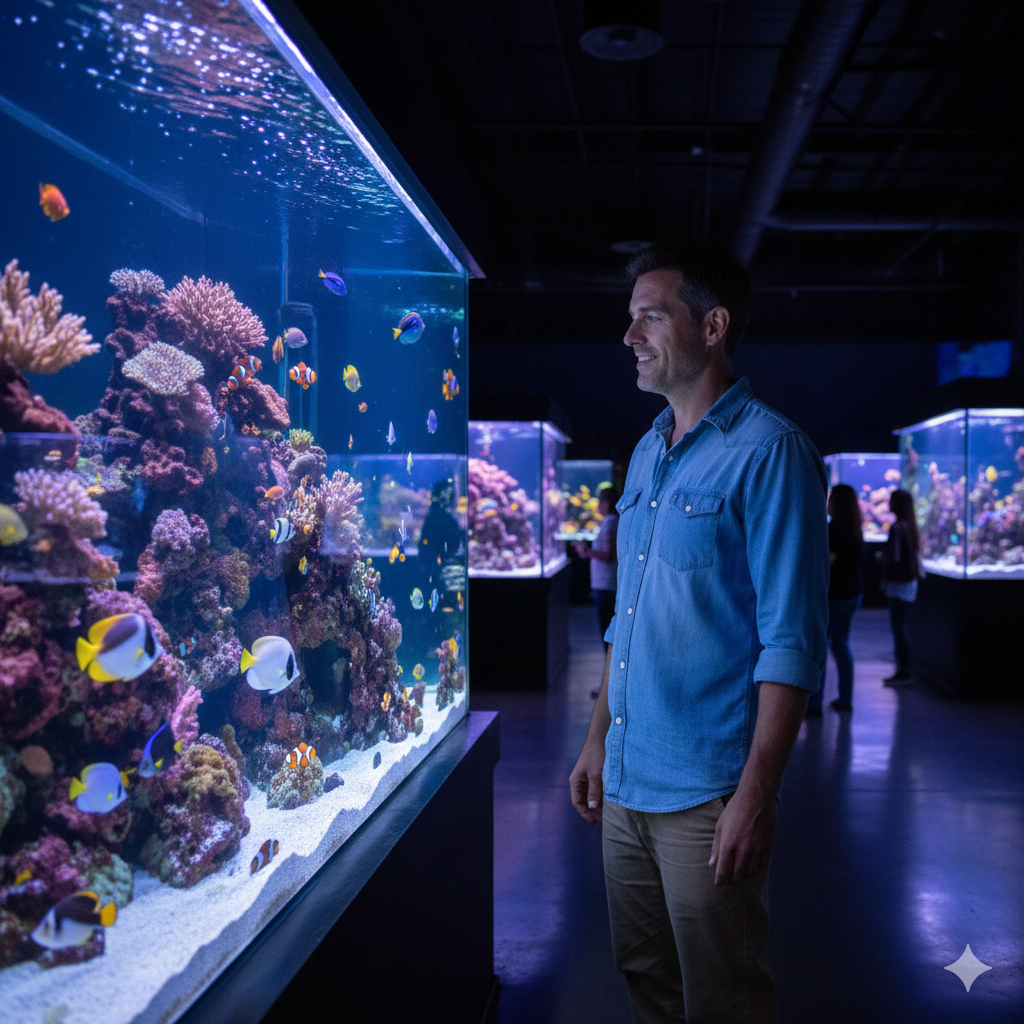
My name is Daniel Carter, I am 35 years old, and I live in the United States. I have been passionate about aquariums for many years, and what started as a simple hobby quickly became a lifelong interest in aquatic life, fish behavior, and responsible tank care.
Through TheBrightLance, I share real experiences, practical knowledge, and honest lessons learned from maintaining different types of aquariums. I enjoy testing equipment, studying fish behavior, improving maintenance routines, and helping beginners avoid common mistakes.
My goal is to make aquarism easier, more ethical, and more enjoyable for everyone — whether you are setting up your very first tank or looking to refine your techniques.