
The first time I brought a bag of whole specialty coffee beans into my house, I felt like I had just adopted an exotic pet without asking for the care manual.
I set the beautiful, minimalist paper bag on my kitchen counter and just stared at it. I had finally done it. I had bypassed the massive plastic tubs of pre-ground supermarket dust and spent twenty-two dollars on a single bag of single-origin coffee. I was ready to become a true coffee aficionado.
But as I looked at the bag, a wave of sheer panic washed over me.
I realized I had absolutely no idea what to do next. I didn’t own a proper coffee grinder. I didn’t own a kitchen scale. I didn’t even fully understand the words printed on the label. The bag said “Washed Process” and “Notes of Bergamot,” and I was standing there wondering if I needed to wash the beans myself before brewing them.
I made so many embarrassing mistakes during those first few weeks. I ruined perfectly good, expensive beans through sheer ignorance.
Looking back now, I laugh at how overly complicated I made things in my head, but I also mourn the incredible flavors I destroyed by not knowing the basics. If I could travel back in time and hand myself a cheat sheet, it would have saved me so much frustration and money.
If you are standing on the edge of the specialty coffee rabbit hole, holding your very first bag of whole beans, take a deep breath. Here is exactly what I wish I knew before buying my first coffee beans, so you don’t have to repeat my costly mistakes.
1. You Cannot Fake a Good Grinder
The most immediate problem I faced when I brought that first bag home was how to get the flavor out of the hard little seeds.
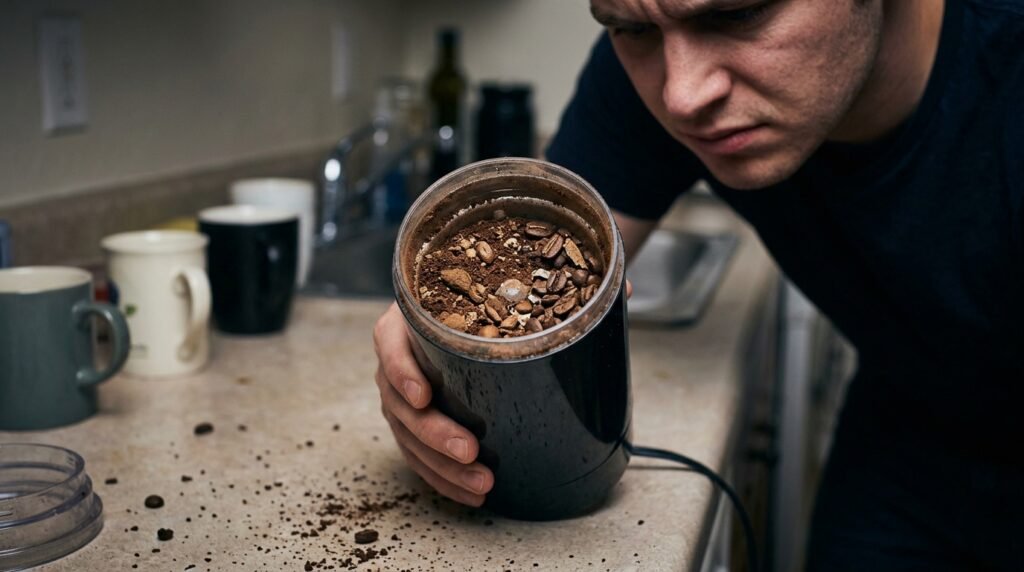
I thought I was being clever. I dug through the back of my kitchen cabinets and found a tiny, dusty electric blade grinder that was originally meant for chopping cooking spices. I poured the beautiful, expensive beans inside and held down the button until it sounded like a jet engine.
When I took the lid off, it was a disaster.
Half of the coffee was pulverized into microscopic dust, while the other half was chopped into massive, jagged boulders. I brewed it anyway. The resulting cup was a horrifying mixture of violently bitter (from the dust over-extracting) and sourly acidic (from the boulders under-extracting).
I wish someone had grabbed my hand in the store and told me that a good grinder is actually more important than the coffee machine itself.
Blade grinders do not grind; they chop randomly. To get a good cup of coffee, you need a “Burr Grinder.” Burr grinders use two ceramic or steel plates to crush the beans to a uniform, identical size.
When all the coffee particles are the exact same size, the hot water extracts the flavor from all of them at the exact same rate. This creates a sweet, balanced cup. If you are going to invest in good beans, you absolutely must invest in a burr grinder. A manual hand-crank burr grinder is incredibly cheap and works miracles.
2. The Roast Date is a Ticking Clock
When I bought my first bag, I instinctively looked at the bottom for an expiration date. I saw a date stamped for a year in the future, so I figured I was safe. I opened the bag, brewed a few cups, and then left the bag sitting open on my counter for three weeks.
By the third week, the coffee tasted like flat, wet cardboard.
I was furious. I thought the roaster had scammed me. I didn’t realize that coffee is a fresh agricultural product, highly susceptible to oxygen.
Once a coffee bean is roasted, it starts losing its vibrant, volatile aromatic compounds. The beautiful fruit and floral notes are the first things to evaporate into the air. If you leave a bag unsealed, oxygen will attack the oils and turn them stale almost immediately.
Realizing this fragility is the main reason (Why I Check Coffee Dates Before Buying) with absolute obsession today.
I wish I knew that a “Best By” date is a meaningless factory metric. You only want to look for a “Roasted On” date. You have a magical window of about seven to thirty days after that roast date where the coffee will taste spectacular. After a month, the magic fades.
Treat your coffee beans like fresh bread from a bakery. Buy small amounts, keep them in an airtight container away from sunlight, and consume them while they are still full of life.
3. “Light Roast” Does Not Mean Weak Coffee
This was my biggest misconception.
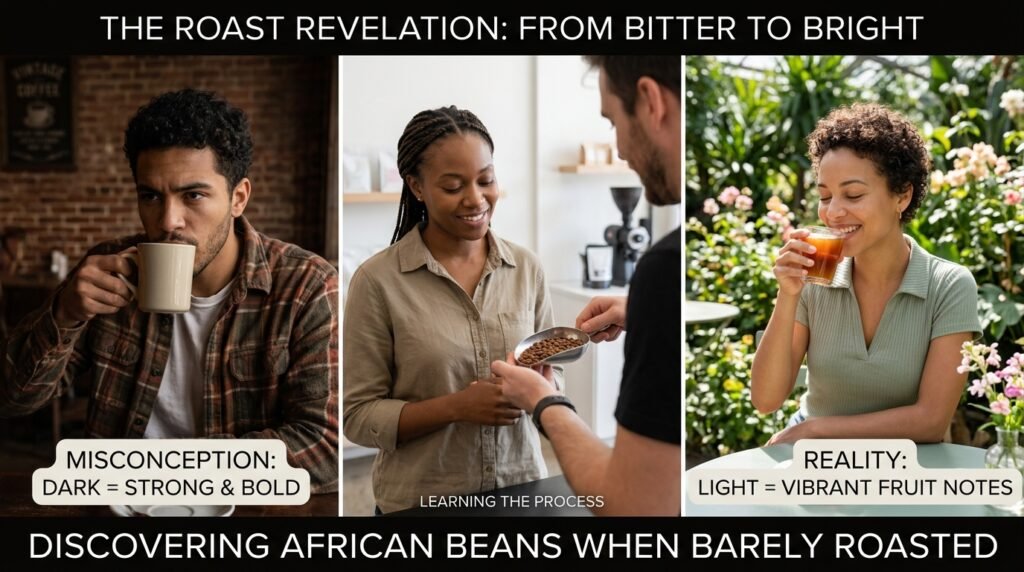
For my entire life, marketing commercials had trained my brain to believe that “Dark Roast” meant strong, highly caffeinated, and bold. I assumed that a “Light Roast” would taste like watery, weak, disappointing tea.
So, for my first specialty coffee purchase, I accidentally bought a very dark roast. I thought I was getting the strongest flavor possible.
What I didn’t know is that roasting coffee is a destructive process. The longer you roast a bean, the more you burn away its natural, agricultural flavors. Dark roasts don’t taste like the country they came from; they just taste like the roasting machine. They taste like carbon and ash.
Furthermore, the roasting process actually burns off a tiny bit of caffeine. Light roasts technically retain slightly more caffeine than dark roasts, though the difference is minimal.
I wish I knew that light roast coffee is where all the incredible, vibrant flavors hide.
When I finally bought a light-roast washed Heirloom coffee from the Guji region of Ethiopia, it blew my mind. Because the roaster applied heat gently, the natural sugars and fruit notes survived. It tasted like sweet peaches and jasmine flowers.
Discovering that light roasts were the secret to fruit notes is exactly (Why I Keep Going Back to African Coffees), because those high-altitude Ethiopian and Kenyan beans shine the brightest when they are barely roasted at all.
If you want to taste the origin of the bean, you have to abandon the dark roast.
4. Tasting Notes Are Metaphors, Not Ingredients
When I looked at the label of my first bag of beans, it proudly proclaimed: Tasting Notes of Ripe Blueberry, Milk Chocolate, and Hazelnut.
I was so confused. I genuinely thought the roaster had sprayed the beans with artificial blueberry syrup. I expected the coffee to taste like a liquid blueberry muffin.
When I brewed it and tasted it, I was severely disappointed. It didn’t taste like a blueberry muffin. It just tasted like… really good coffee.
I felt lied to. I wish someone had explained to me how to interpret those labels.
Tasting notes are not added ingredients. They are sensory metaphors.
Coffee contains over a thousand different natural chemical compounds. Depending on the soil, the altitude, and the roast, your brain will interpret these natural compounds as familiar flavors.
When a roaster writes “Blueberry” on the bag, they mean that the natural acidity and sweetness of that specific coffee bean share a similar chemical structure to the acidity and sweetness of a blueberry. They are trying to give you a roadmap. They are saying, “Hey, this coffee is bright and fruity, not earthy and dark.”
Once I stopped expecting a sugary syrup flavor and started looking for the subtle, natural hints in the background, my palate opened up. Figuring this out was the core of (How I Learned to Read Coffee Labels Without Confusion), because it allowed me to navigate the coffee aisle with realistic, exciting expectations.
5. Your Tap Water is Probably Ruining the Cup
This is a secret that took me almost an entire year to figure out, and it makes me furious just thinking about it.
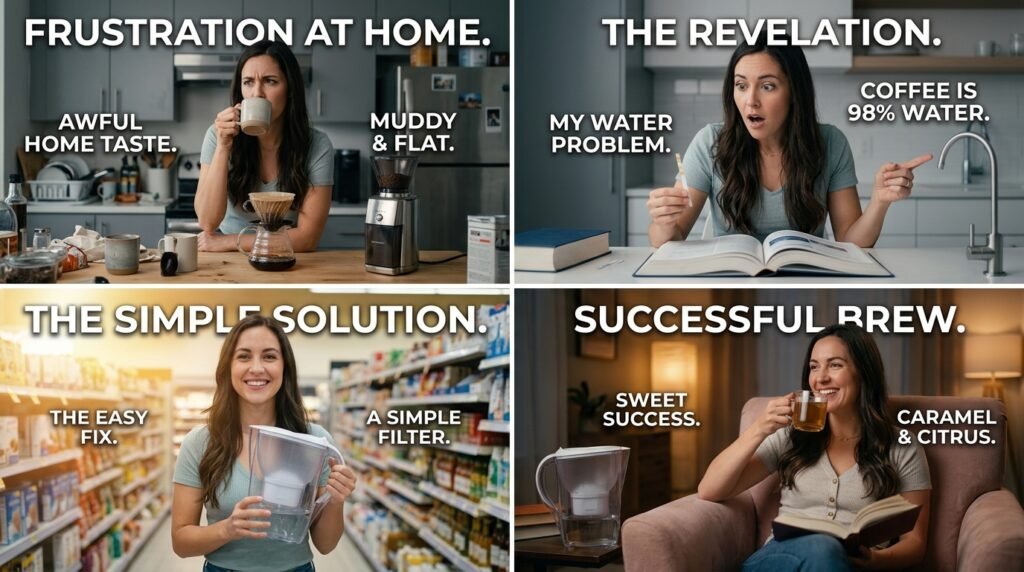
I would buy a bag of spectacular beans from a local café. I would drink a cup there, and it would taste like sweet caramel and bright citrus. I would buy the bag, take it home, brew it with my new burr grinder, and it would taste muddy, flat, and aggressively dull.
I thought I was a terrible brewer. I watched dozens of tutorial videos trying to fix my pouring technique.
I wish I knew that coffee is 98% water.
If your water tastes bad, your coffee will taste bad. It is a harsh mathematical reality.
I was using unfiltered tap water from my kitchen sink. My local city water was heavily chlorinated and full of hard minerals like calcium. When those harsh minerals interacted with the delicate coffee compounds, they completely muted the acidity and destroyed the sweet flavors.
The day I finally bought a simple, inexpensive water filter pitcher for my fridge, my coffee transformed overnight.
If you are going to spend good money on specialty beans, do not insult them by drowning them in chlorine. Use filtered water, or use bottled spring water. The clarity and sweetness that will suddenly appear in your mug will absolutely shock you.
6. The “Bloom” is Not Just for Show
When I first started trying to make pour-over coffee, I watched baristas pour a tiny bit of hot water over the grounds and then stand there, doing nothing, for forty-five seconds.
I thought this was just hipster theater. I thought it was a dramatic pause to make the process look more artisanal.
When I went home, I skipped that step. I just aggressively dumped all my hot water into the filter at once. The coffee grounds bubbled violently, the water drained too fast, and my coffee tasted sour and hollow.
I wish I knew the science behind the “Bloom.”
Freshly roasted coffee is packed with carbon dioxide gas. When hot water hits the coffee, that gas violently escapes. If you pour all your water at once, the escaping gas acts like a shield, literally pushing the water away from the coffee grounds. The water can’t extract the flavor.
By pouring a tiny amount of water first and waiting forty-five seconds, you are allowing the coffee to “degas.” You are letting the shield drop. Once the bubbling stops, you can pour the rest of your water, and it will perfectly penetrate the grounds, extracting all the sweet, complex sugars you paid for.
It isn’t theater. It is necessary chemistry.
7. You Are Allowed to Make Mistakes
The final thing I wish I knew before buying my first coffee beans is simply to relax.
The specialty coffee world can feel incredibly intimidating. You see people obsessing over specific water temperatures, measuring grounds to the tenth of a gram, and talking about extraction yields like scientists in a laboratory.
It is easy to feel like you aren’t qualified to drink good coffee.
I wish I knew that every single coffee expert started exactly where I was: staring at a bag of beans, totally confused.
You are going to mess up a few cups. You are going to grind the beans too fine, and the coffee will taste bitter. You are going to use water that is too cold, and the coffee will taste sour.
That is part of the journey.
Don’t let the pursuit of the “perfect” cup ruin the joy of the process. Every mistake teaches you something about flavor.
Buy the beans. Get a cheap hand grinder. Use filtered water. And just start experimenting.
The moment you brew that first successful cup at home—the moment you finally taste those natural, sweet fruit notes without adding a single drop of milk—you will realize that all the confusion and learning was absolutely worth it. You will never view coffee the same way again, and your morning routine will become the best part of your day.

My name is Daniel Carter, I am 35 years old, and I live in the United States. I have been passionate about aquariums for many years, and what started as a simple hobby quickly became a lifelong interest in aquatic life, fish behavior, and responsible tank care.
Through TheBrightLance, I share real experiences, practical knowledge, and honest lessons learned from maintaining different types of aquariums. I enjoy testing equipment, studying fish behavior, improving maintenance routines, and helping beginners avoid common mistakes.
My goal is to make aquarism easier, more ethical, and more enjoyable for everyone — whether you are setting up your very first tank or looking to refine your techniques.