
For what seemed like forever, I was completely convinced that the specialty coffee industry was running a massive scam on the general public.
I would walk past boutique cafes and local roasteries, see the price tags on their small, minimalist bags of coffee beans, and laugh. Why on earth would any rational human being spend twenty-four dollars on a bag of coffee when the supermarket sold a massive plastic tub of it for six dollars?
To me, coffee was just a morning utility. It was a dark, bitter liquid that I swallowed out of necessity to wake up. I assumed that the people buying the expensive stuff were just paying for a fancy logo and a trendy aesthetic. I genuinely believed that once the hot water hit the grounds, it all tasted exactly the same.
But as I got older, a nagging curiosity started to build in the back of my mind. What if I was wrong? What if there actually was a tangible, undeniable difference?
I decided to stop speculating and run a highly unscientific, yet deeply personal, experiment in my own kitchen. I was going to do a blind side-by-side taste test. I bought the cheapest, most generic tub of pre-ground dark roast I could find. Then, I went to a local specialty roaster and bought a premium, single-origin, freshly roasted bag of whole beans.
I set up my brewing equipment, boiled my water, and put them head-to-head.
What I noticed after comparing cheap vs expensive coffee completely shattered my worldview, humiliated my inner skeptic, and changed my morning routine forever. Here is the honest breakdown of exactly what happened.
The Contenders: The Heavyweight vs. The Artisan
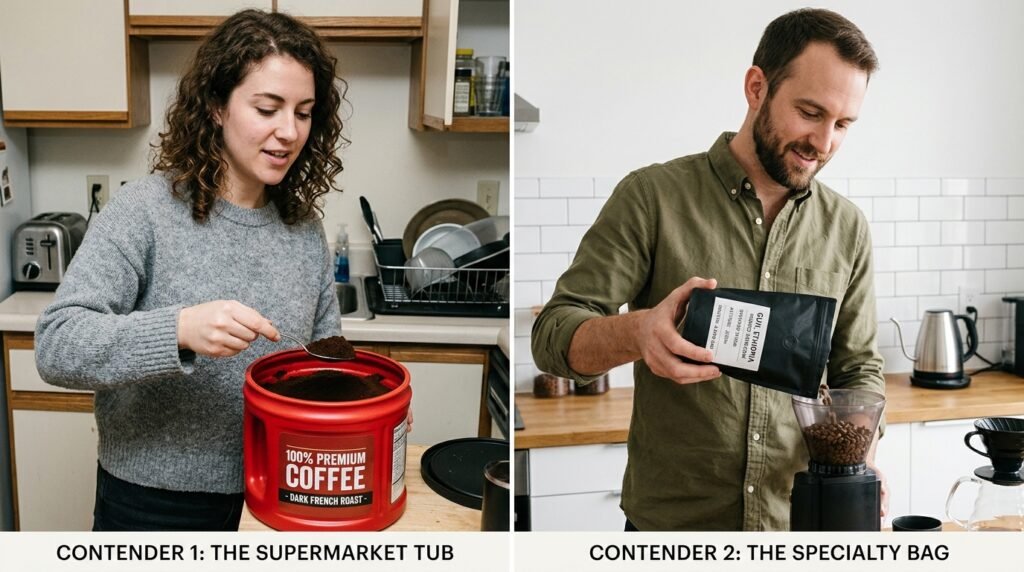
Before we get to the taste, we need to establish the baseline of the two coffees I used for this experiment.
Contender 1: The Cheap Supermarket Tub This cost me exactly $6.49 for a massive amount of coffee. The label simply said “100% Premium Coffee – Dark French Roast.” It did not mention the country of origin. It did not mention the altitude. And most importantly, it only had a “Best By” date set for two years in the future, which meant it could have been roasted a very long time ago. It was already ground into a fine, dark powder.
Contender 2: The Expensive Specialty Bag This cost me $24.00 for a small, 12-ounce bag. The label was incredibly transparent. It told me it was a washed Heirloom variety from the Guji region of Ethiopia. It was grown at 2,100 meters above sea level. And crucially, it had a sticker on the back that said it was roasted just four days ago. It was whole bean, which meant I had to grind it myself.
Observation 1: The Dry Aroma (The Smell Test)
The differences became glaringly obvious before I even boiled the water.
I opened the plastic lid of the cheap coffee first. I leaned in and took a deep breath. It smelled exactly like I expected: heavy, ashy, and intensely smoky. It reminded me of old wood, burnt toast, and perhaps a faint hint of stale, dark chocolate. It didn’t smell like food; it smelled like an industrial product.
Then, I opened the bag of the expensive Ethiopian coffee. I measured out a handful and put it into my manual hand grinder. As the burrs crushed the fresh beans, the aroma was released into the air.
I was physically taken aback.
It smelled absolutely nothing like the cheap tub. The kitchen was suddenly filled with an explosive, sweet perfume. It smelled vividly of fresh jasmine flowers, ripe peaches, and caramelized brown sugar. The stark contrast between the two smells was exactly (How I Learned That Not All Coffee Is the Same), because my nose instantly recognized that these were two completely different agricultural products.
One smelled dead. The other smelled vibrantly alive.
Observation 2: The Brewing Process (The Bloom)
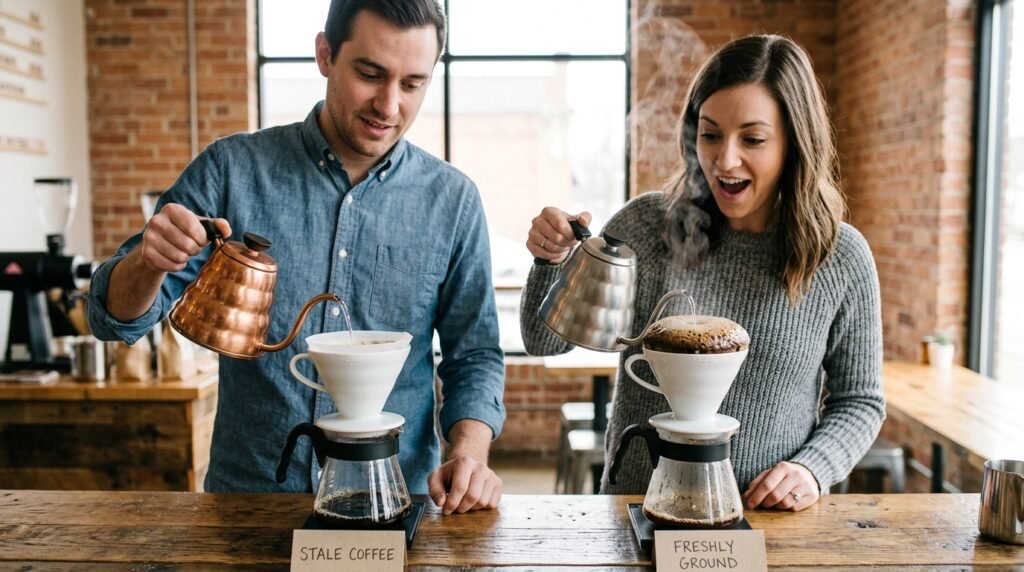
I set up two identical V60 pour-over cones side by side. I used the exact same amount of coffee (15 grams) and the exact same amount of water (225 grams) heated to the exact same temperature (205°F). I wanted this to be as fair as possible.
I poured a small amount of water over the cheap coffee first to saturate the grounds.
Nothing happened. The water simply pooled on top of the dark grounds, sinking slowly. It looked like pouring water onto a sandbox. It was completely flat and lifeless.
Then, I poured the same amount of water over the freshly ground expensive coffee.
Instantly, the coffee erupted. The bed of grounds rapidly expanded, bubbling and heaving upward. It looked like a miniature science volcano. This reaction is called the “bloom,” which happens when fresh coffee violently releases trapped carbon dioxide gas.
Seeing this side-by-side was a massive revelation. The cheap coffee had no gas left because it had gone completely stale months ago in a warehouse. The expensive coffee was still actively breathing. It was a fresh ingredient.
Observation 3: The Hot Taste Test (Black)
I let both coffees finish brewing. I had two identical ceramic mugs in front of me. I decided to taste them completely black, without any milk or sugar to hide behind.
I started with the cheap coffee. I took a sip and let it wash over my palate.
It was an aggressive experience. The liquid hit the back of my throat with a harsh, metallic bitterness. It tasted like ash and burnt rubber. As I swallowed, it left a dry, unpleasantly sharp residue on my tongue that made me want to immediately reach for a glass of water. It was exactly the flavor I had spent my entire life drowning in heavy cream just to tolerate.
I rinsed my mouth with water to cleanse my palate. Then, I picked up the expensive Ethiopian Guji.
I took a sip. My brain genuinely struggled to process the information.
There was zero bitterness. None. It didn’t burn, it didn’t scrape my throat, and it didn’t force me to wince. Instead, it was incredibly delicate, smooth, and naturally sweet. I could clearly taste the juicy, vibrant acidity of a peach, followed by an elegant, tea-like finish.
That specific sip was a massive turning point, echoing (The First Time I Tried Ethiopian Coffee (And Loved It)) in my mind, as I finally understood that fruit notes weren’t a marketing lie; they were real, tangible flavors locked inside a high-quality bean.
The two mugs sitting on my table didn’t even taste like the same beverage.
Observation 4: The Cooling Test (The Ultimate Exposer)
The most shocking observation happened about twenty minutes later.
I got distracted by a phone call and left both mugs sitting on the table. When I came back, they had both cooled down to room temperature.
Heat is a fantastic mask for bad flavor. When coffee is piping hot, your tastebuds are slightly numbed. But as it cools, the true nature of the bean is exposed.
I took a sip of the room-temperature cheap coffee. I actually gagged. It had transformed from harsh and bitter into something deeply sour, metallic, and completely undrinkable. The defects of the cheap, mass-produced beans were completely unhidden.
I nervously took a sip of the room-temperature expensive coffee.
It was incredible. In fact, it was better than when it was hot. As the temperature dropped, the peach and jasmine notes became even more pronounced and sweet. It tasted like a refreshing, complex, fruity iced tea. I happily drank the rest of the mug.
Observation 5: The Physical Reaction (The Aftermath)
The final thing I noticed didn’t happen in my mouth; it happened in my body.
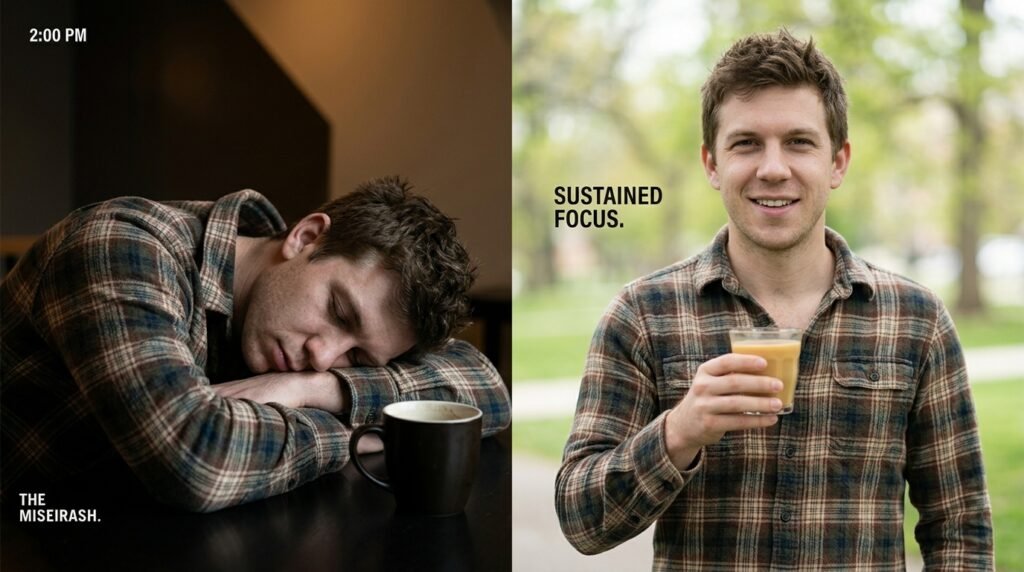
Whenever I used to drink three mugs of cheap, dark-roast supermarket coffee, I would get a very specific physical reaction. My stomach would feel slightly acidic and upset by mid-morning. I would get a harsh, jittery spike of energy, followed by a miserable crash around 2:00 PM. I thought that was just the reality of caffeine.
But after drinking the expensive, light-roast specialty coffee, I felt completely different.
My stomach felt perfectly fine. The energy I got wasn’t a violent, jittery spike; it was a clean, focused, and sustained alertness.
I realized that the cheap coffee was making me feel sick because I was drinking a heavily processed, stale, and often defective agricultural product that was burnt to a crisp. The expensive coffee was a clean, meticulously sorted, and gently roasted fruit seed. My body knew the difference immediately.
Understanding the “Why” Behind the Price
As I poured the remainder of the cheap coffee down the sink, I realized I owed the specialty coffee industry an apology.
I had assumed the high price tag was just a scam. But after diving into the research and exploring (Why Some Coffees Taste So Different (My Personal Discovery)), I finally understood the economics of what I had just tasted.
The cheap coffee was cheap because it was machine-harvested on flat, massive farms, stripping the branches of ripe, unripe, and rotting cherries all at once. It was roasted dark to hide the mold and the defects. It was a product of industrial volume.
The expensive coffee was expensive because it grew on a steep mountain in Ethiopia where machines cannot go. It required a human being to hike up that mountain and meticulously hand-pick only the perfectly ripe red cherries. It required careful washing, turning on raised drying beds, and masterful, light-touch roasting to preserve the floral notes.
I wasn’t paying for a hipster logo. I was paying for an immense amount of human labor, ethical farming practices, and agricultural perfection.
The Real Cost Per Cup
The final barrier I had to break through was the mental math.
Spending $24 on a bag of coffee feels wrong when you are used to spending $6. But I sat down and calculated the actual cost per cup.
A 12-ounce bag of expensive coffee yields about 18 to 20 generous, perfectly brewed cups. That comes out to roughly $1.20 per cup.
If I went to a commercial drive-thru chain, I would easily spend $5.00 on a mediocre, sugary latte. By buying the expensive beans and brewing them at home, I was actually drinking the best coffee in the world for a fraction of the price of a standard café visit.
Furthermore, because the expensive coffee was so deeply satisfying and complex, I stopped mindlessly chugging three cups a morning. I only needed one perfect cup to be happy.
The Final Verdict
My side-by-side kitchen experiment permanently cured me of my skepticism.
Comparing cheap vs expensive coffee isn’t like comparing a generic brand of aspirin to a name brand of aspirin, where the chemical makeup is exactly the same.
It is like comparing a bruised, mealy, out-of-season apple from a gas station to a crisp, perfectly ripe, organic apple picked directly from a local orchard. They are completely different experiences.
I threw away the plastic tub of cheap coffee that day, and I never bought another one.
If you are still drinking the generic supermarket dust and wondering if you are missing out, I highly encourage you to run this exact same experiment in your own kitchen. Buy one bag of fresh, single-origin specialty coffee. Brew it next to your usual cup. Taste them black.
I promise you, the moment that sweet, complex liquid hits your tongue, your days of buying cheap coffee will be over forever.

My name is Daniel Carter, I am 35 years old, and I live in the United States. I have been passionate about aquariums for many years, and what started as a simple hobby quickly became a lifelong interest in aquatic life, fish behavior, and responsible tank care.
Through TheBrightLance, I share real experiences, practical knowledge, and honest lessons learned from maintaining different types of aquariums. I enjoy testing equipment, studying fish behavior, improving maintenance routines, and helping beginners avoid common mistakes.
My goal is to make aquarism easier, more ethical, and more enjoyable for everyone — whether you are setting up your very first tank or looking to refine your techniques.