
I have a terrible, deeply ingrained habit of building invisible walls around my preferences.
Whenever I find something I genuinely love, I lock myself inside that discovery and throw away the key. If I find a band I enjoy, I will listen to their one album on repeat for six months and completely ignore the rest of the music industry. If I find a restaurant I like, I will order the exact same dish every single time I visit, terrified that if I try something new, I might waste a meal.
I am a creature of fierce, stubborn loyalty.
When I first discovered specialty coffee, this exact same psychological trap snapped shut on me. After a few months of experimenting, I tasted a washed Heirloom coffee from the Guji region of Ethiopia. The delicate, sweet flavors of peach and jasmine completely captivated my palate.
From that day forward, I refused to buy anything else. I became an absolute Ethiopian coffee purist.
If a roaster tried to sell me a coffee from South America, I politely declined. If they offered me a bag from Indonesia, I shook my head. I thought I had reached the absolute pinnacle of flavor, and I saw no logical reason to step outside of my safe, floral, peach-infused comfort zone.
But my stubbornness eventually made me blind to the rest of the map. I assumed that because Ethiopia produced my favorite coffee, any other country would simply be a downgrade.
I was spectacularly wrong. It took a forced intervention by a barista to break my loyalty and introduce me to a bag of beans that completely subverted every single expectation I had.
Here is the honest story of the coffee origin that surprised me the most, the wild science behind its bizarre flavor profile, and how it taught me to finally tear down the invisible walls around my palate.
The Geographical Assumption
My massive mistake was rooted in a very basic misunderstanding of geography.
Because I loved Ethiopian coffee so much, I assumed that the magic was simply tied to the continent of Africa. I figured that any coffee grown near Ethiopia would taste exactly like Ethiopian coffee, just a slightly worse version of it.
That deep-seated loyalty and geographical preference is exactly (Why I Keep Going Back to African Coffees), but my error was treating the entire continent as if it were a single, homogenous farm.
One Saturday afternoon, I walked into my favorite local roastery to pick up my usual bag of Ethiopian Guji. The head roaster was behind the counter, and he looked at me with a mischievous grin.
“I’m out of the Guji,” he lied. I later found out he had a massive box of it in the back room, but he was intentionally hiding it from me.
I panicked. I didn’t know what to buy.
“Take this instead,” he said, sliding a bag with a bright red label across the wooden counter. “It’s from Kenya. Specifically, the Nyeri region. Just trust me. Go home, brew it on a Chemex, and tell me what you think.”
I looked at the bag skeptically. Kenya shares a massive border with Ethiopia. I assumed it would just taste like a muted, boring version of the floral coffee I was craving. I paid for it reluctantly, feeling like I was settling for second best.
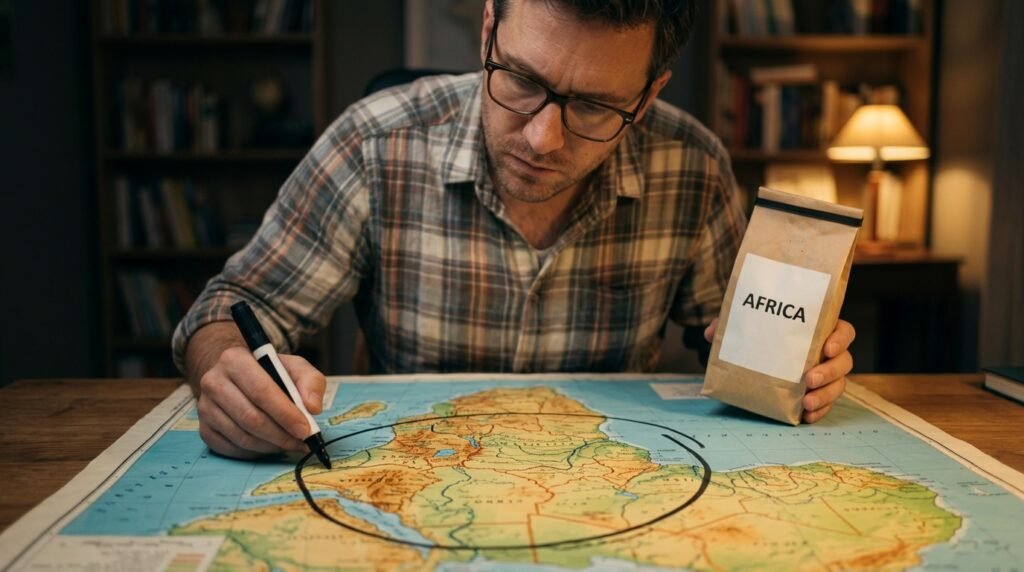
The Aromatic Curveball
The next morning, I set up my brewing station. I decided to follow the roaster’s advice and use my Chemex, a beautiful glass brewer that uses a very thick paper filter. This thick filter is famous for trapping heavy oils and producing an incredibly clean, crisp cup of coffee.
I opened the bag of Kenyan beans and poured 15 grams into my manual burr grinder.
When I started grinding, the aroma immediately hit me. I actually stopped turning the handle and leaned closer to the hopper, deeply confused.
It didn’t smell like jasmine flowers. It didn’t smell like peaches. And it certainly didn’t smell like the comforting chocolate or caramel notes I associated with South American coffees.
It smelled… savory.
It was a sharp, mouth-watering aroma that reminded me of dark, wild berries mixed with something remarkably similar to a fresh, sun-ripened tomato vine. It was herbaceous, acidic, and intense.
I had never smelled a coffee like this in my entire life. It didn’t smell like a morning beverage; it smelled like a complex culinary ingredient you would use in a high-end restaurant.
The Sip of Shock and Awe
I finished grinding the beans, boiled my filtered water to 205 degrees Fahrenheit, and carefully poured it over the grounds.
The bloom was aggressive and bubbly, releasing an even stronger scent of dark fruit into my kitchen. When the coffee finished dripping through the thick Chemex filter, I poured the dark, ruby-colored liquid into my mug.
I let it cool for a full two minutes. I took a deep breath, expecting to be disappointed, and took a sip.
My brain completely stalled.
The liquid was incredibly light-bodied, almost like a thin juice, but the flavor was explosively loud. It was like a symphony playing at maximum volume.
The very first thing that hit my tongue was a sharp, brilliant acidity that reminded me of biting into a fresh pink grapefruit. It made the sides of my mouth water instantly.
But right behind that grapefruit acidity was a massive wave of dark, jammy fruit. It tasted vividly like black currant and ripe blackberries.
And then came the finish—the part that truly shocked me. As the sweet blackberry flavor faded, a distinct, savory sweetness lingered on my palate. It tasted remarkably like a sweet, roasted cherry tomato.
I lowered the mug and stared at the dark liquid. Finding this bizarre, beautiful savory sweetness was undeniably (The Most Unique Coffee Flavor I’ve Ever Tried), proving that coffee can cross the line from a simple morning routine into a complex, challenging culinary experience.
It didn’t taste anything like my beloved Ethiopian coffee. It was a completely different beast. It was aggressive, wine-like, and absolutely magnificent.

Unlocking the Mystery of Kenya
I drank the entire Chemex in a state of absolute fascination. I immediately pulled out my laptop and started researching the Nyeri region of Kenya. I needed to understand how a country right next door to Ethiopia could produce a coffee that tasted so aggressively different.
I quickly discovered that the magic of Kenyan coffee comes down to a perfect storm of three factors: the soil, the genetics, and the water.
First, I looked at the terroir. The Nyeri region sits on the slopes of Mount Kenya. The soil there is famous for being a deep, vibrant red. It is incredibly rich in iron and phosphoric acid.
When a coffee plant grows in that red volcanic dirt, it absorbs those specific minerals. The phosphoric acid in the soil translates directly into the cup, creating that mouth-watering, sparkling acidity that I tasted as grapefruit and blackberry. The soil is quite literally seasoning the bean from the ground up.
The Science of SL-28
The second factor that surprised me was the botanical genetics of the plant itself.
While Ethiopian coffees rely on ancient, wild “Heirloom” varieties that grow naturally in the forests, Kenyan coffees are the result of meticulous, deliberate science.
In the 1930s, the Kenyan government hired a research facility called Scott Laboratories to create the perfect coffee plant. They wanted a variety that could survive droughts but still produce world-class flavor.
The scientists at Scott Labs developed two specific genetic varieties: SL-28 and SL-34.
These two varieties are legendary in the specialty coffee world. They are the exact reason Kenyan coffee tastes so unique. The SL-28 variety, in particular, is genetically predisposed to produce massive amounts of complex fruit acids and that famous black currant flavor.
This stark contrast in agricultural genetics is the main reason (Why Some Coffee Origins Taste Sweeter Than Others), because the DNA of the SL-28 plant actively forces the seed to develop deep, savory-sweet fruit notes that simply do not exist in other coffee varieties.
I wasn’t just tasting the dirt; I was tasting a nearly century-old scientific triumph.
The Double Washing Process
The final piece of the puzzle that makes Kenyan coffee so surprising is how the farmers process the fruit after it is picked.
Most countries that wash their coffee do it once. They strip the fruit off the seed, soak it in a water tank to remove the sticky mucilage, and then lay it out to dry in the sun.
But in Kenya, they use an incredibly labor-intensive method known as the “Double Fermentation” or the “Kenyan 72-Hour Process.”
After they strip the fruit off the seed, they ferment the beans in tanks without water for up to 24 hours. Then, they wash them. Then, they put them back into tanks to ferment a second time. Finally, they wash them again and soak them in clean water for another 24 hours before drying them.
This obsessive, rigorous washing process removes every single microscopic trace of fruit pulp from the seed.
The result is a coffee bean that is immaculately clean. There is no funky, fermented interference. The double washing process is exactly why my cup of Kenyan coffee tasted so sharp, structured, and precise. It allows the intense acidity of the SL-28 genetics and the red volcanic soil to shine through with absolute, crystalline clarity.
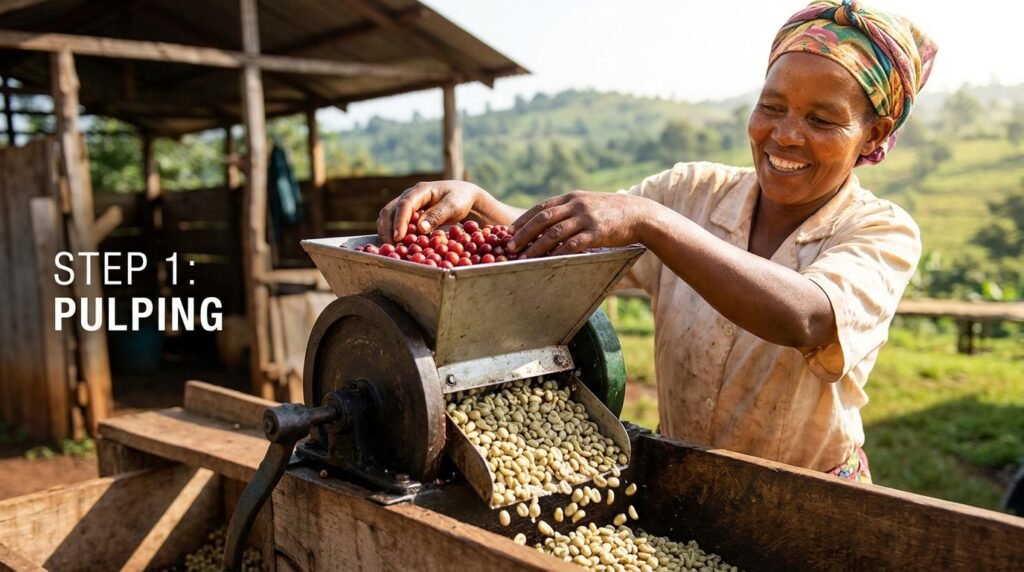
A New Perspective on the Map
Drinking that bag of Kenyan coffee completely changed my life as a coffee buyer.
It humbled me. It proved that my stubborn loyalty to a single origin was actually depriving my palate of incredible experiences.
I realized that borders on a map are just imaginary lines drawn by humans, but the agricultural reality of the earth changes mile by mile. Just because Kenya shares a border with Ethiopia does not mean they share the same soil, the same genetics, or the same processing traditions.
The floral, delicate elegance of Ethiopia and the savory, aggressive, blackberry intensity of Kenya are two sides of the same brilliant African coin.
I stopped being an Ethiopian purist that day.
Embracing the Unexpected
Today, my coffee routine is driven entirely by curiosity, not by loyalty.
I still buy my beloved Ethiopian Guji when I want a comforting, sweet, tea-like cup. It will always hold a special place in my heart as the coffee that woke up my palate.
But when I walk into a roastery now, I actively look for the origins that intimidate me. I look for the bags that challenge my expectations.
When I see a bag of Kenyan SL-28, I always buy it. I know it will demand my attention. I know it will wake me up with that sharp grapefruit acidity and that bizarre, wonderful savory tomato sweetness. It is the ultimate weekend coffee for when I want to sit down and truly engage with my beverage.
Break Down Your Walls
If you are currently stuck in a coffee rut—if you buy the exact same bag, from the exact same country, from the exact same roaster every single week—I challenge you to break your own rules.
You are missing out on the most beautiful part of specialty coffee: the surprise.
Next time you are standing in front of the retail shelf, put down your usual bag. Ask the barista what the most unusual, vibrant, or polarizing coffee they have in stock is.
If they hand you a bag from Kenya, do not hesitate. Take it home. Brew it carefully, preferably with a paper filter to keep it clean.
When that intense aroma of dark berries and savory herbs fills your kitchen, and that bright, wine-like acidity hits your tongue, you will understand exactly why it surprised me so much. You will realize that the world of flavor is massive, and locking yourself in a comfort zone is the biggest mistake a coffee lover can make.

My name is Daniel Carter, I am 35 years old, and I live in the United States. I have been passionate about aquariums for many years, and what started as a simple hobby quickly became a lifelong interest in aquatic life, fish behavior, and responsible tank care.
Through TheBrightLance, I share real experiences, practical knowledge, and honest lessons learned from maintaining different types of aquariums. I enjoy testing equipment, studying fish behavior, improving maintenance routines, and helping beginners avoid common mistakes.
My goal is to make aquarism easier, more ethical, and more enjoyable for everyone — whether you are setting up your very first tank or looking to refine your techniques.