
If you were to pay two hundred dollars for a front-row ticket to see your absolute favorite band perform live, you would carefully guard that piece of paper.
You would dress up, drive through heavy traffic, find expensive parking at the stadium, and excitedly walk to your assigned seat. But imagine if, when you finally sat down, you looked around and realized the stadium was completely empty.
The stage is completely dismantled. The massive speakers are gone. The stadium lights are turned off, and a janitor is quietly sweeping the floor.
Confused, you look closely at the fine print on your glossy ticket. You suddenly realize the date printed on the paper is from six months ago.
You bought a legitimate ticket. It was for the right band, and it was for the right seat. But because you completely ignored the date, you entirely missed the performance. The magic had already happened, the music had already faded into the night, and all you were left with was an expensive, useless piece of paper.
For the first five years of my specialty coffee journey, I was constantly showing up to an empty stadium.
I was spending premium money on high-quality, single-origin coffee beans. I was buying the right brands, the right origins, and using the right equipment. But because I was completely ignoring the timeline of the bean, I was missing the entire culinary performance.
I was buying coffee that had been dead for months.
Here is the honest, highly technical, and deeply frustrating story of why I check coffee dates before buying, the massive supermarket deception I had to unlearn, and how respecting the strict timeline of the roasted bean completely transformed the liquid in my mug.
The Great Supermarket Deception
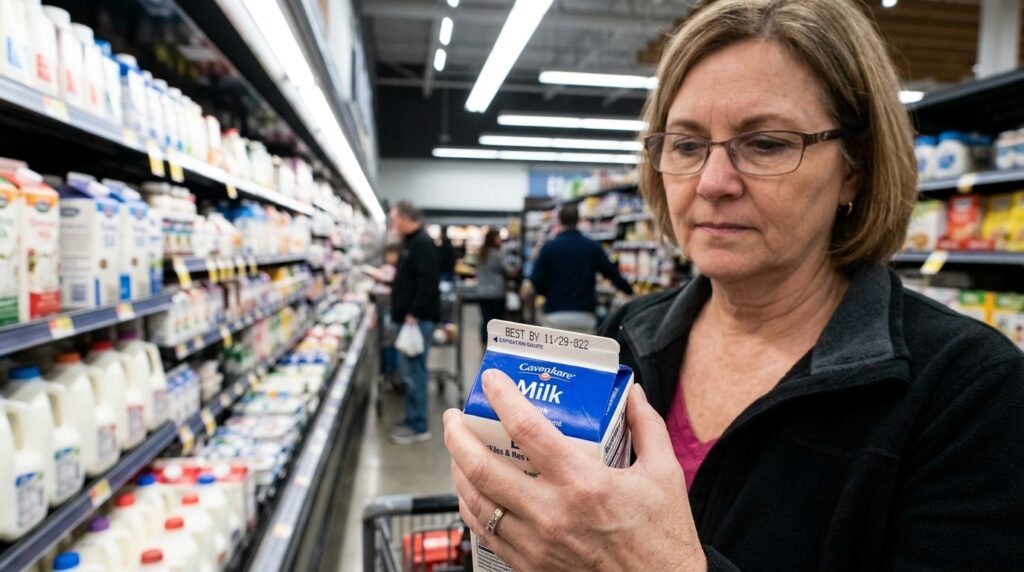
When we walk into a massive commercial grocery store, we are trained to look for one specific metric when buying food: the expiration date.
If we buy a gallon of milk, we check the cap to make sure it doesn’t expire next week. If we buy a loaf of bread, we check the plastic tag. We have been culturally conditioned to believe that as long as the current date is before the printed “Best By” date, the product is perfectly fresh and ready to consume.
The corporate coffee industry weaponizes this consumer habit against us.
When you pick up a foil bag of coffee in the grocery aisle, you will almost always find a “Best By” date stamped on the bottom. Usually, that date is twelve, eighteen, or even twenty-four months in the future.
The roaster is telling you, Don’t worry, this coffee is good until next year. But the commercial coffee industry is playing a clever trick with the definition of the word “good.” They are using it purely as a food safety metric, not a culinary one.
Because roasted coffee is a dry, low-moisture environment, it will not grow toxic mold or curdle like a carton of milk. It will not physically poison you if you drink it a year from now. From a legal health and safety standpoint, it is “good.”
But from a flavor, aromatic, and culinary standpoint, it has been dead for months. Falling for this deceptive labeling was exactly (The Biggest Mistake I Made When Buying Coffee). I was trusting a corporate legal department to tell me how my breakfast was going to taste.
The Chemistry of the Ticking Clock
To understand why the “Best By” date is a scam, you have to understand the brutal, unforgiving chemistry of the coffee roasting process.
A raw, green coffee seed has almost no flavor. It smells vaguely like dry grass or hay.
The magic happens when a roaster drops that green seed into a massive, 400-degree steel drum. The intense heat triggers the Maillard reaction, breaking down the cellular structure of the seed and converting its internal carbohydrates into hundreds of complex, highly volatile aromatic oils.
These delicate oils are the only reason your coffee tastes like sweet milk chocolate, bright jasmine flowers, or ripe berries.
But the exact second the coffee bean leaves that hot roasting drum and hits the cooling tray, a massive chemical countdown begins.
Those beautiful oils are highly unstable. The moment they interact with the oxygen in the ambient air, they begin to aggressively oxidize. They evaporate. They dry out. They turn rancid.
Within three to four weeks of the roast date, the vast majority of those complex flavor compounds have permanently vanished into the atmosphere. The music has stopped playing. The band has left the stage.
The Only Date That Matters
Once I learned about the rapid oxidation of coffee oils, I completely changed my consumer behavior.
I stopped looking at the “Best By” date altogether. It is a completely useless piece of information. Today, there is only one piece of data I look for when I pick up a bag of coffee: the “Roasted On” date.
I want to know the exact day, month, and year that the coffee physically left the roasting drum.
If a roaster is proud of their product and respects the chemistry of the bean, they will proudly stamp the exact roast date right on the front or back of the bag. They want you to know that the product is fresh.
If a bag of coffee only has an expiration date, and refuses to tell me when it was actually roasted, I immediately put it back on the shelf.
An anonymous date means the company is deliberately hiding the age of the product. By the time that foil bag makes it through a massive corporate supply chain—sitting in warehouses, transport trucks, and grocery store stockrooms—the coffee inside could already be six to eight months old.
Learning to demand this specific timeline transparency was the core lesson of (How I Finally Learned to Choose Good Coffee at the Store). I refuse to buy a ticket to a concert without knowing the date of the show.

The Visual Proof of Death
If you do not believe that coffee dies within a month, there is a very simple, highly visual test you can perform in your own kitchen.
When coffee is freshly roasted, carbon dioxide gas becomes permanently trapped inside the dense cellular structure of the bean.
When you pour hot water over fresh coffee grounds in a pour-over cone or a French press, that trapped gas aggressively escapes. The entire bed of coffee grounds violently bubbles, heaves, and expands. This beautiful, aggressive reaction is called the “bloom.”
It is the visual proof that the coffee is alive and full of preserved oils.
But if you pour hot water over a bag of coffee that you bought at the supermarket with a generic “Best By” date, absolutely nothing happens. The water just hits the dark powder and turns into a flat, muddy puddle.
There are no bubbles. There is no expansion. The carbon dioxide gas leaked out months ago, and the aromatic oils evaporated right behind it. You are extracting flavor from a completely empty, wooden shell.
The Paradox of “Too Fresh”
As I began religiously checking roast dates and seeking out the freshest coffee possible, I eventually ran into a very strange, highly counterintuitive problem.
I found a local artisan roaster, bought a bag of coffee that had been pulled out of the roasting drum just two hours prior, brought it home, and brewed it immediately.
I was expecting an absolute explosion of sweet, perfect flavor. Instead, the coffee tasted incredibly sharp, metallic, and sour. The extraction was completely chaotic.
I had discovered the paradox of freshness. You can actually drink coffee when it is too fresh.
Uncovering this bizarre biological reality was exactly (What Nobody Told Me About Coffee Beans). I learned that coffee beans need time to calm down.
In the first two or three days after the roasting process, the beans are completely packed with highly pressurized carbon dioxide gas. If you try to brew them immediately, that massive wall of escaping gas physically repels the hot water. The water cannot penetrate the coffee grounds to extract the sweet sugars. It only manages to wash away the harsh, sour surface acids.
Coffee requires a mandatory resting period. It needs to sit in a bag with a one-way degassing valve for a few days to let the aggressive gas slowly bleed out, while leaving the flavor oils intact.
The Golden Window of Flavor
This taught me that buying coffee is a strategic game of timing. You are aiming for a highly specific, golden window of flavor.
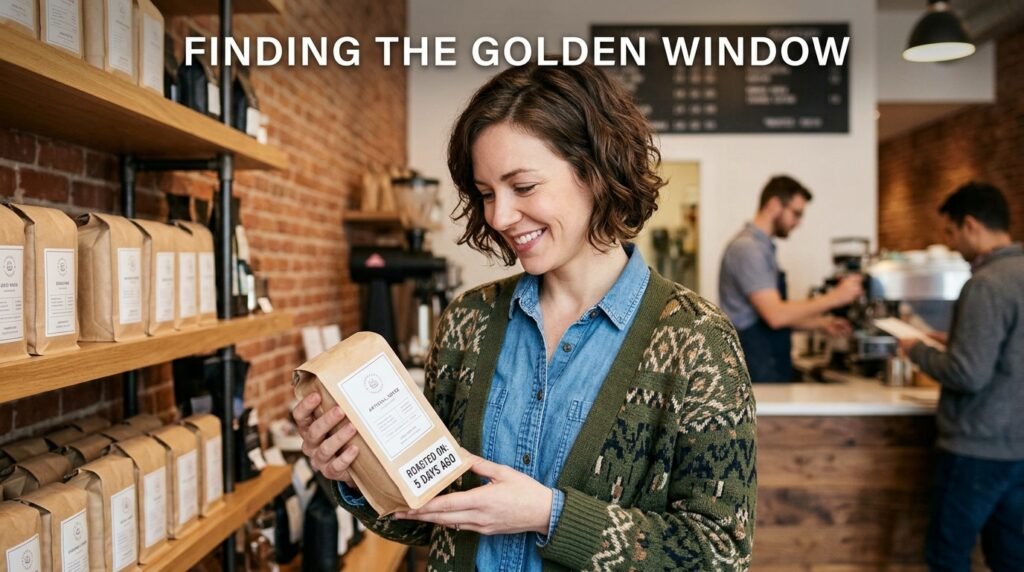
For lightly roasted, single-origin specialty coffees, that golden window generally opens on day five after the roast date, and it begins to close around day twenty-one.
During this sixteen-day period, the aggressive carbon dioxide gas has dissipated enough to allow for a sweet, even extraction, but the aromatic oils have not yet oxidized and gone stale. This is when the music is playing at its absolute peak volume.
Darker roasts degas much faster because their cellular structure is more heavily damaged by the heat, so their golden window might open on day three and close on day fourteen.
Redesigning My Coffee Life
Once I understood the golden window, I completely redesigned how I purchase and consume coffee.
I stopped treating coffee like a bulk utility. I used to buy massive two-pound bags to save money, only to realize that by the time I reached the bottom of the bag, the coffee was six weeks old and tasted like cardboard.
Now, I treat coffee exactly like I treat fresh bread from a local bakery, or fresh produce from a farmer’s market.
I only buy standard 12-ounce bags. I calculate exactly how much coffee I drink in a two-week period, and I only buy that exact amount. When my supply runs low, I check the calendar, drive to my local specialty roaster, and look at the “Roasted On” dates stamped on the bottom of their bags.
I purposefully look for a bag that was roasted about four or five days ago. That way, the moment I open the bag in my kitchen the next morning, the coffee is entering the absolute peak of its golden window.
Catching the Live Performance
We spend hundreds of dollars on premium burr grinders, beautiful gooseneck kettles, and precision digital scales. We watch endless tutorials on how to pour water perfectly and how to dial in our extraction times.
But none of that expensive equipment matters if the ingredient you are pouring water over has been dead for six months.
You cannot extract sweet, complex blueberry notes from a bean if those notes evaporated into the air while sitting in a hot distribution warehouse last summer. You cannot resurrect a dead product.
I challenge you to look at the bag of coffee sitting on your kitchen counter right now.
Look for the “Roasted On” date. If it doesn’t have one, or if all you see is an expiration date for the year 2027, you are currently drinking the ghost of a coffee bean.
Stop buying tickets to empty stadiums. Stop trusting the corporate supermarket supply chain with your morning routine. Seek out local roasters, demand transparency, and religiously check the roast dates before you hand over your money.
When you finally start brewing coffee within that perfect, magical golden window, you will never have to choke down a bitter, stale, lifeless cup ever again. You will finally get to sit in the front row, hear the music, and experience the absolute masterpiece of a live performance.

My name is Daniel Carter, I am 35 years old, and I live in the United States. I have been passionate about aquariums for many years, and what started as a simple hobby quickly became a lifelong interest in aquatic life, fish behavior, and responsible tank care.
Through TheBrightLance, I share real experiences, practical knowledge, and honest lessons learned from maintaining different types of aquariums. I enjoy testing equipment, studying fish behavior, improving maintenance routines, and helping beginners avoid common mistakes.
My goal is to make aquarism easier, more ethical, and more enjoyable for everyone — whether you are setting up your very first tank or looking to refine your techniques.