
If you were to look inside my kitchen cabinets a few years ago, you would have found a very predictable, very depressing sight.
Sitting right on the middle shelf, next to the oatmeal and the sugar, was a massive, brightly colored plastic container. Inside that container was a mountain of dark, pre-ground coffee.
I bought it purely out of habit.
Every couple of weeks, I would go to the supermarket, grab the largest tub I could find on sale, and lug it home. I thought I was being incredibly efficient. I thought I was hacking my morning routine by making it as brainless and fast as humanly possible.
My alarm would go off, I would stumble into the kitchen, open the plastic lid, and drag a little plastic scoop through the dark brown dust. I would dump it into a paper filter, press a button on my machine, and wait for the caffeine to be delivered.
I never questioned this routine. I never thought about what I was actually putting into my body.
But today, you will not find a single speck of pre-ground coffee in my house. The plastic tubs are gone. The vacuum-sealed foil bricks are banished.
Making the switch from pre-ground dust to fresh whole beans was the single biggest leap I ever made in my coffee journey. It completely redefined what a morning cup should taste like.
Here is the honest story of why I gave up pre-ground coffee, the science of why it tastes so flat, and why I will never, ever go back to the convenience trap.
The Illusion of Convenience
The main reason anyone buys pre-ground coffee is convenience.
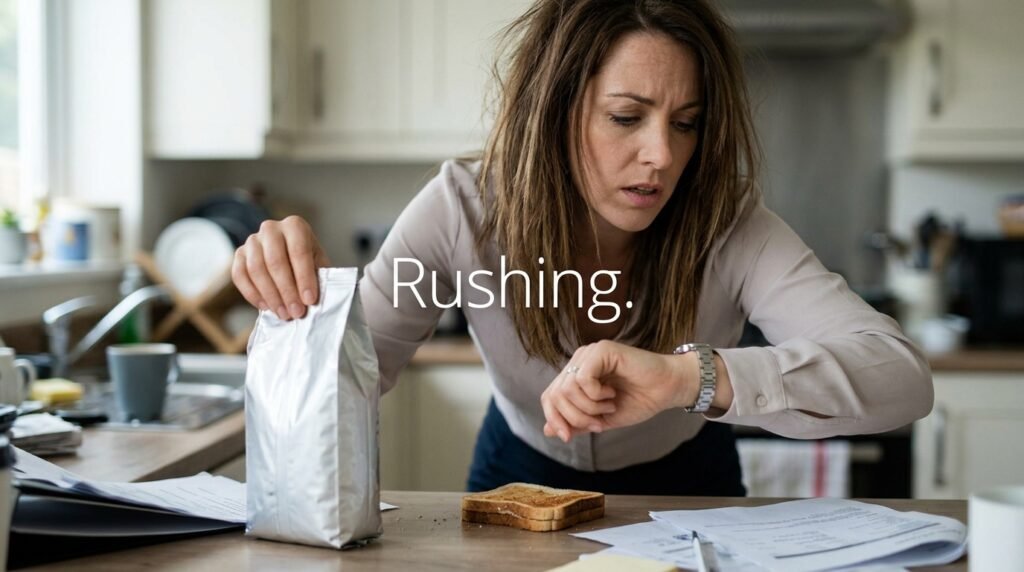
Mornings are chaotic. When you are rushing to get ready for work, make breakfast, and get out the door, the idea of adding an extra step to your coffee routine feels exhausting.
Buying coffee that is already ground feels like a shortcut. The factory did the hard work for you. All you have to do is add water.
But I eventually realized that this convenience was a massive illusion. I wasn’t saving time; I was sacrificing the entire purpose of the beverage.
I was drinking a liquid that tasted like stale cardboard and ash, just to save roughly forty-five seconds of my morning.
I used to wonder why my coffee never tasted like the coffee at my local specialty café. I would buy the exact same brand of beans that the café sold, but I would buy the pre-ground version off the grocery store shelf. When I brewed it at home, it tasted completely dead.
I blamed my coffee machine. I blamed the water. I blamed my own brewing skills.
I didn’t realize that the real culprit was sitting right there in the bag. The coffee wasn’t just resting; it was rapidly degrading.
The Invisible Enemy: Oxygen
To understand why I gave up pre-ground coffee, you have to understand a little bit of food science.
Coffee beans are an agricultural marvel. During the roasting process, the seed of the coffee cherry undergoes complex chemical reactions. Sugars caramelize, amino acids transform, and massive amounts of volatile aromatic compounds are created.
These volatile compounds are the magic. They are the reason coffee smells so incredible. They are the source of the blueberry, jasmine, chocolate, and caramel notes that make a great cup of coffee so special.
But these compounds are incredibly fragile.
The moment a coffee bean leaves the roasting machine, it starts to release these trapped gases (a process called degassing) and interact with the air.
Oxygen is the absolute worst enemy of roasted coffee.
When oxygen hits the oils and compounds in the coffee bean, it causes oxidation. It is the exact same process that causes a sliced apple to turn brown and mushy when left on the kitchen counter. The flavor goes flat, the vibrant aromas evaporate, and the oils turn rancid and bitter.
When a coffee bean is whole, its dense outer structure acts like a protective vault. It keeps the oxygen out and the volatile compounds locked safely inside for a few weeks.
But when you grind the coffee, you shatter that vault.
The Mathematical Disaster of Grinding
This is where the math of pre-ground coffee becomes truly horrifying for your tastebuds.
When a whole bean is crushed in a grinder, you are breaking it into hundreds of tiny little particles. By doing this, you are exponentially increasing the surface area of the coffee that is exposed to the air.
Instead of oxygen just touching the outside shell of the bean, it is now attacking the coffee from thousands of different microscopic angles simultaneously.
Because of this massive increase in surface area, the oxidation process accelerates at an unbelievable speed.
Industry experts and food scientists generally agree that whole bean coffee loses a significant portion of its flavor within a few weeks of being roasted.
But ground coffee? Ground coffee loses up to 70% of its volatile aromatic compounds within just 15 to 30 minutes of being ground.
Let me repeat that. Minutes. When I finally learned this fact, my jaw hit the floor.
I thought about the massive plastic tub sitting in my pantry. That coffee had been roasted months ago. It had been ground in a massive industrial facility. It had been packaged, shipped across the country, and sat on a supermarket shelf for weeks before I even bought it.
Then, I opened it, broke the seal, and let it sit in my kitchen cabinet for another month, scooping out a little bit every day.
By the time I brewed it, the coffee wasn’t just stale. It was a complete ghost. All the beautiful, complex flavors had evaporated into the atmosphere of a factory months ago. I was essentially brewing the dusty, oxidized remains of what used to be a coffee bean.
The Turning Point: The Guji Revelation
Knowing the science is one thing, but experiencing the difference is what actually forces you to change your habits.
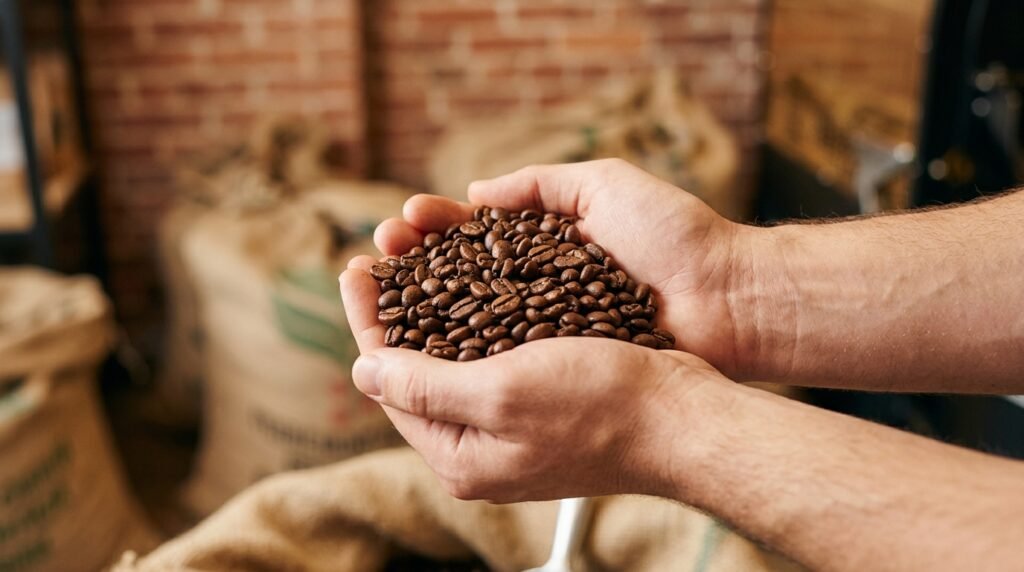
My personal turning point happened when a friend gifted me a small bag of specialty whole bean coffee. It was a washed Heirloom variety from the Guji region of Ethiopia.
I didn’t own a coffee grinder at the time. I almost took the bag to a local supermarket to run it through their industrial grinder in the aisle, but my friend stopped me.
“Don’t you dare,” he said. He lent me a small, inexpensive hand grinder and told me to grind it right before I poured the hot water.
The next morning, I woke up, measured out a handful of the Ethiopian beans, and put them in the manual hand grinder. As I started turning the crank, something incredible happened.
The physical friction of crushing the fresh beans released a wave of aroma that I had never experienced in my own kitchen. The entire room instantly filled with the intense, sweet smell of fresh jasmine flowers, ripe peaches, and brown sugar.
It was intoxicating. I literally stood there just smelling the grounds for a full minute before I even boiled the water.
When I brewed that coffee, the taste matched the aroma perfectly. It was vibrant, incredibly sweet, and completely free of the harsh, ashy bitterness I was used to.
Looking back, discovering that specific Ethiopian bean was (The Coffee That Changed My Morning Routine Completely), because it forced me to rethink my entire setup. The difference between the fresh Guji grind and my old plastic tub of dust wasn’t just a small upgrade; it was an entirely different beverage.
The Power of Control: Dialing It In
Beyond the massive leap in freshness and flavor, giving up pre-ground coffee gave me something I didn’t even know I needed: control.
When you buy a bag of pre-ground coffee, the factory has made a massive assumption about how you are going to brew it. They usually grind it to a “medium” size, assuming you are going to throw it into a standard automatic drip machine.
But the world of coffee brewing is vastly diverse, and every method requires a different grind size.
If you use a French Press, you need a very coarse grind, like sea salt. If the grind is too fine, the mesh filter can’t stop the particles, and you end up with a mug full of muddy sludge.
If you make espresso, you need a very fine grind, almost like powdered sugar. If the grind is too coarse, the water shoots through the coffee in three seconds, leaving you with a sour, watery mess.
When you own your own grinder, you become the master of your extraction.
If my pour-over was tasting a little too bitter one morning, I could simply adjust my grinder to make the particles a little coarser the next day. I quickly realized (How Grind Size Affected My Coffee More Than I Expected), as even a tiny adjustment on my burr grinder completely altered the sweetness of the cup.
Pre-ground coffee locks you into a single setting. Grinding fresh gives you the ultimate freedom to experiment and perfect your recipe.
The Investment: Blade vs. Burr Grinders
Of course, to give up pre-ground coffee, you have to buy a grinder. This is the hurdle that stops most people.
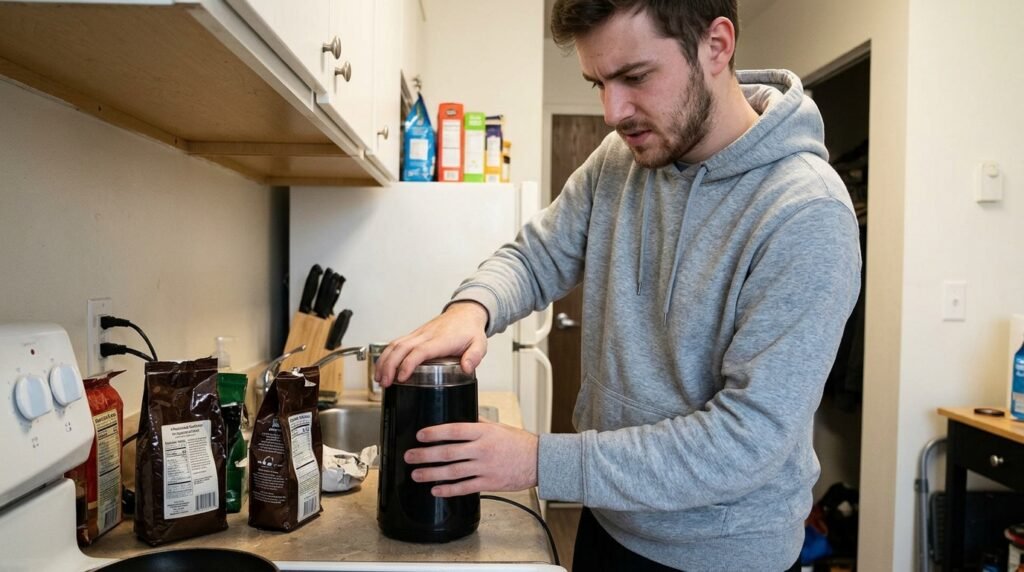
When I first made the switch, I made a classic beginner mistake. I went to the store and bought a cheap, $15 electric blade grinder.
It looked like a little blender. You press the lid down, and a metal blade spins wildly, chopping the beans.
The problem with blade grinders is that they don’t grind; they chop at random. You end up with a mix of huge boulders of coffee and microscopic dust. When you brew this uneven mixture, the water extracts the flavor unevenly. The dust becomes bitter, and the boulders become sour.
I quickly learned that if I wanted to do the beans justice, I needed a Burr Grinder.
A burr grinder uses two grooved ceramic or steel plates (burrs) to crush the beans to a uniform, consistent size.
You don’t need to spend hundreds of dollars to get started. I bought a high-quality manual hand grinder for around $50. Yes, it required a little bit of elbow grease in the morning, but the consistency of the grind rivaled electric machines that cost four times as much.
It was the best investment I ever made for my kitchen.
The Storage Solution
Once I committed to buying only whole beans, my perspective on how to treat coffee changed entirely.
I stopped treating it like a dry pantry staple and started treating it like fresh produce.
I learned that oxygen, light, and heat are the enemies of the whole bean. Leaving them in a clear glass jar on a sunny kitchen counter is a recipe for stale, ruined coffee.
Once I had the whole beans, learning (How I Started Storing Coffee the Right Way) became my next obsession to keep that oxygen out. I invested in an opaque, airtight container specifically designed to push air out and protect the beans from UV light.
By buying fresh whole beans, storing them properly in a cool, dark place, and only taking out exactly what I needed each morning, I managed to extend the vibrant life of my coffee for weeks.
The Ritual of the Morning
Today, grinding coffee is no longer an inconvenience to me. It is a vital part of my morning ritual.
There is something deeply satisfying about the tactile experience of weighing out the whole beans. There is a meditative rhythm to turning the handle of my manual burr grinder.
But most importantly, there is the smell.
That sudden, explosive release of aromatic compounds when the burrs first crush the beans is the best part of waking up. It is a sensory preview of the incredible flavors that are about to hit my mug.
It forces me to slow down. It forces me to be present.
When I drank pre-ground coffee, the machine did all the work, and the resulting liquid was instantly forgettable.
Now, I am an active participant in the brewing process. I am unlocking the flavors that the farmer and the roaster worked so hard to preserve.
Conclusion: Break the Cycle
If you are reading this and you still have a tub of pre-ground coffee sitting in your pantry, I am not judging you. I lived that life for a very long time.
But I am telling you, with absolute certainty, that you are missing out on the true magic of this beverage.
You don’t need to become an obsessive coffee snob to appreciate the difference. You just need to respect the science of the bean.
Finish the tub you have, or better yet, throw it in your compost bin. Go to a local roaster, buy a bag of freshly roasted whole beans, and pick up an entry-level burr grinder.
The first time you grind those beans fresh in your own kitchen and the aroma fills the room, you will instantly understand. You will taste the sweetness, the clarity, and the vibrant life of the coffee.
And just like me, you will realize that you can never, ever go back to pre-ground coffee again.

My name is Daniel Carter, I am 35 years old, and I live in the United States. I have been passionate about aquariums for many years, and what started as a simple hobby quickly became a lifelong interest in aquatic life, fish behavior, and responsible tank care.
Through TheBrightLance, I share real experiences, practical knowledge, and honest lessons learned from maintaining different types of aquariums. I enjoy testing equipment, studying fish behavior, improving maintenance routines, and helping beginners avoid common mistakes.
My goal is to make aquarism easier, more ethical, and more enjoyable for everyone — whether you are setting up your very first tank or looking to refine your techniques.