
I used to live a highly caffeinated double life.
To my friends, my coworkers, and the outside world, I was a tough, uncompromising coffee purist. I always ordered my coffee completely black. I would sit in diners or office breakrooms, sipping a mug of dark, oily liquid without flinching, acting as if I genuinely enjoyed the harsh, aggressive bitterness.
But in reality, I was suffering. I hated the taste.
I kept a secret stash of raw sugar packets hidden in the center console of my car. Whenever I bought a coffee from a drive-thru, I would pull around the corner, park out of sight, and frantically dump two packets of sugar into the cup just to make the beverage drinkable.
I was convinced that coffee was inherently bitter, and that the only way to genuinely enjoy it was to mask the flavor with artificial sweetness. My palate was completely dependent on added sugar.
Quitting this terrible habit was the primary reason (Why I Gave Up Pre-Ground Coffee), but even when I started buying fresh beans, I still secretly craved that sugary crutch.
It wasn’t until a colleague handed me a very specific bag of beans from Central America that my entire culinary worldview collapsed. One single cup of coffee eradicated my sugar addiction overnight and completely rewired what my tongue considered “delicious.”
Here is the honest story of the coffee origin that permanently changed my taste preferences, the brilliant agricultural science of Central America, and how I finally learned to taste natural sweetness.
The Gift from the Tropics
The catalyst for my palate’s transformation happened on a random Tuesday afternoon.
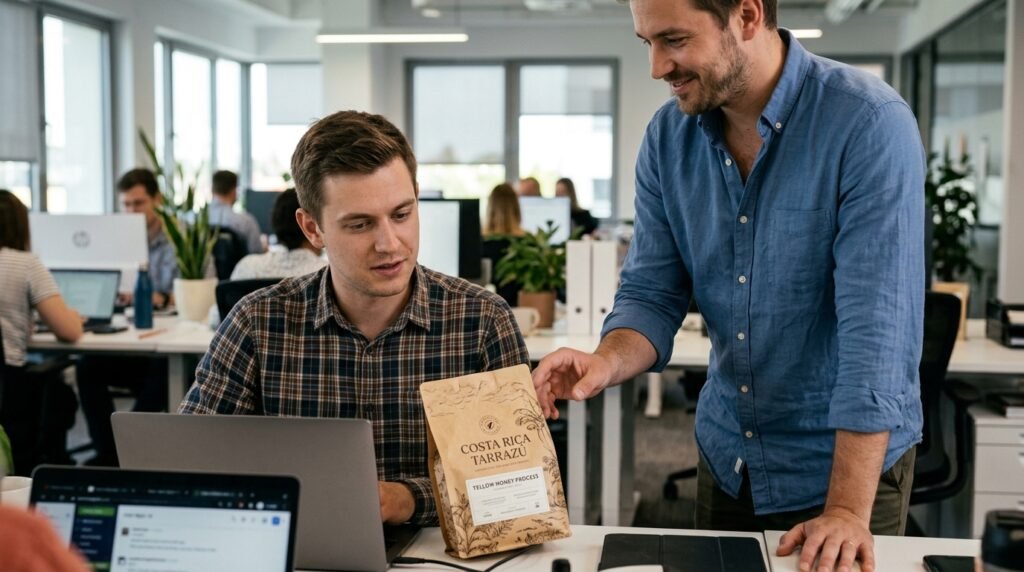
A coworker of mine had just returned from a two-week vacation. Knowing that I was starting to get into specialty coffee brewing at home, he walked over to my desk and dropped a beautifully illustrated paper bag next to my keyboard.
“I brought this back from a farm I visited,” he said. “It’s going to ruin normal coffee for you.”
I picked up the bag and read the label. It was from Costa Rica. Specifically, the Tarrazú region. Beneath the region, there were two words that completely confused me: Yellow Honey Process.
I assumed the roaster had literally infused the coffee beans with liquid honey or artificial flavoring. I was skeptical, but I took it home that evening, curious to see what a “honey-flavored” coffee tasted like.
The Aromatic Illusion
The next morning, I opened the bag of Costa Rican beans.
I leaned in and took a deep breath. My brain immediately short-circuited. The aroma pouring out of the bag did not smell like dark, roasted coffee, and it certainly didn’t smell like the sharp, acidic fruit I had experienced with some African coffees.
It smelled exactly like a freshly baked graham cracker covered in caramelized brown sugar and vanilla bean.
It was so intensely sweet and pastry-like that I actually checked the ingredient list on the back of the bag to make sure they hadn’t added artificial syrups. But the ingredients simply read: 100% Arabica Coffee.
I weighed out 15 grams, ground them in my manual burr grinder, and set up my V60 pour-over cone.
As the hot water hit the grounds, the kitchen filled with the scent of baked apples and milk chocolate. It was the most comforting, dessert-like aroma I had ever experienced in a kitchen, entirely devoid of the harsh, ashy smell I associated with “strong” coffee.
The Sip That Killed the Sugar Habit
When the coffee finished brewing, I poured the rich, amber liquid into my mug.
Out of pure habit, I reached for the sugar bowl sitting on my counter. I grabbed a spoon, ready to dump my usual crutch into the mug. But the smell of the coffee stopped me. It already smelled so sweet that adding sugar felt almost insulting.
I put the spoon down. I decided to take one sip black, just to test it.
I brought the mug to my lips and took a slow sip.
My eyes went wide. I actually pulled the mug away and stared at it in sheer disbelief.
There was absolutely zero bitterness. The liquid was incredibly smooth, with a creamy, syrupy body that coated my tongue perfectly. But the most shocking part was the undeniable, explosive sweetness.
It tasted vividly like melted caramel, sweet red apples, and rich milk chocolate. It wasn’t the sharp, zesty sweetness of a lemon or a peach; it was a deep, sugary, confectionary sweetness. It tasted exactly like someone had already stirred a spoonful of raw honey directly into the mug.
I drank the entire cup completely black. I didn’t even touch the sugar bowl.
That morning was a monumental turning point in my life. The profound shock of that experience is the exact definition of (How My Taste Changed After Drinking Better Coffee), because my palate finally realized that coffee didn’t need to be rescued. It was already perfect.

The Secret of the “Honey Process”
I was completely obsessed. I needed to know how a coffee bean could naturally taste like a caramel dessert.
I started researching Costa Rican coffee production, and I quickly discovered that the secret was hidden in those two confusing words on the label: Honey Process.
I learned that the Honey Process has absolutely nothing to do with actual bees or liquid honey. It is a highly specialized, incredibly difficult method of processing the coffee fruit after it is picked from the tree.
In most of the world, farmers use the “Washed” process, where they strip the fruit off the seed completely and wash it clean before drying. This results in a very crisp, clean, tea-like cup.
In Costa Rica, however, water is sometimes scarce, and the farmers are incredibly innovative. They invented a middle ground.
When they harvest the ripe coffee cherries, they run them through a machine that removes the outer skin, but they intentionally leave the sticky, sugary fruit pulp (called mucilage) completely glued to the seed.
In the coffee industry, this sticky fruit pulp is commonly referred to as “honey.”
Baking the Sugar into the Seed
The farmers take these sticky, mucilage-covered seeds and lay them out on raised beds under the hot Costa Rican sun.
This is where the magic happens.
As the sun beats down on the beans, that sticky layer of natural fruit sugar begins to dry and caramelize. The massive amounts of complex sugars literally bake their way through the parchment layer and seep deep into the cellular structure of the coffee seed.
Because the skin is gone, the fruit doesn’t aggressively ferment like a “Natural” processed coffee. It just gets sweeter, heavier, and more syrupy.
Understanding this brilliant manipulation of agricultural chemistry is the exact reason (Why Some Coffee Origins Taste Sweeter Than Others). Costa Rican farmers literally weaponized the sun to inject natural caramel notes directly into the DNA of my morning cup.
The Tarrazú Microclimate
While the Honey Process is the star of the show, the environment in Costa Rica plays a massive supporting role in this flavor profile.
The beans I drank were from the Tarrazú region, which is globally famous for producing some of the most meticulously crafted coffees on Earth.
Tarrazú is an incredibly steep, high-altitude valley surrounded by massive mountains. The coffee is grown in rich, volcanic soil. But the true advantage of this region is the weather.
They have a highly predictable climate. They experience a distinct, intense rainy season, which allows the coffee cherries to grow plump and full of nutrients. But right when it is time to harvest and dry the coffee, the weather shifts into a long, incredibly predictable dry season.
This predictable sunshine is absolutely crucial for the Honey Process. If it rained while the sticky beans were drying on the beds, they would instantly mold and rot. The flawless, dry Costa Rican summer allows the farmers to perfectly caramelize those sugars year after year without fail.
Changing the Preference Paradigm
Before I drank that bag of Costa Rican Tarrazú, my taste preferences were incredibly binary.
I thought coffee was either a heavy, bitter, dark roast that required milk and sugar, or it was a highly acidic, bright, fruity light roast that tasted like tea. I was bouncing between extreme comfort and extreme acidity.
Costa Rica introduced me to the ultimate middle ground.
It changed my preference from “heavy and bitter” to “naturally sweet and structured.”
It taught me that I didn’t have to choose between a coffee that felt like a heavy hug and a coffee that offered complex flavors. A great Central American coffee delivers both. It gives you the comforting body of a South American bean, but it elevates it with the brilliant, engineered sweetness of the Honey Process and the crisp, clean finish of the high-altitude volcanic dirt.
Opening the Door to Central America
That single bag of coffee didn’t just kill my sugar habit; it opened the door to an entire geographical region I had been neglecting.
Once my palate was calibrated to look for that natural, brown-sugar sweetness, I started exploring Costa Rica’s neighbors.
I bought a bag from the Antigua region of Guatemala. Because it was grown in soil constantly dusted by active volcanic ash, the coffee had a similar deep sweetness, but it added a beautiful, complex layer of baking spices and a hint of dark cocoa.
I bought a bag from the Santa Barbara region of Honduras. It offered an incredibly creamy, velvety body with massive notes of vanilla bean and toasted almonds.
Central America quickly became my go-to region for daily drinking. Whenever I want a coffee that feels luxurious, sweet, and perfectly balanced without being aggressively acidic, I always look for a bag from this narrow, volcanic strip of land.

The Ultimate Litmus Test
Today, I use Costa Rican Honey Processed coffee as my ultimate litmus test for my friends.
Whenever someone visits my house and tells me they “only drink coffee with lots of cream and sugar,” I smile. I know exactly what to brew for them.
I do not brew them a wild, acidic Kenyan coffee; that would scare them away. I do not brew them a heavy Brazilian dark roast; they would just ask for the sugar bowl.
Instead, I meticulously brew a pour-over of a Yellow or Red Honey Processed Costa Rican bean.
I hand them the black mug and ask them to take just one sip before they add anything to it. I watch their eyes widen. I watch the realization wash over their face as they taste the caramel, the graham cracker, and the natural fruit sugars.
Nine times out of ten, they push the milk and sugar away and finish the entire mug black.
Throw Away the Sugar Bowl
If you are currently trapped in the exact same cycle I was in—if you are buying pre-ground coffee and dumping artificial sugar into your mug just to survive the bitterness—you need to break the cycle.
You do not hate black coffee. You just hate bad black coffee.
I challenge you to find a local specialty roaster and ask them for a Honey Processed coffee from Costa Rica, preferably from the Tarrazú region.
Take it home, grind it fresh, and brew it carefully.
When you take that first sip and the completely natural, syrupy sweetness of caramelized fruit pulp washes over your tongue, your palate will permanently change. You will finally understand that the earth is perfectly capable of sweetening its own creations, and you will gladly throw your secret stash of sugar packets directly into the trash.

My name is Daniel Carter, I am 35 years old, and I live in the United States. I have been passionate about aquariums for many years, and what started as a simple hobby quickly became a lifelong interest in aquatic life, fish behavior, and responsible tank care.
Through TheBrightLance, I share real experiences, practical knowledge, and honest lessons learned from maintaining different types of aquariums. I enjoy testing equipment, studying fish behavior, improving maintenance routines, and helping beginners avoid common mistakes.
My goal is to make aquarism easier, more ethical, and more enjoyable for everyone — whether you are setting up your very first tank or looking to refine your techniques.