
The sound of heavy rain hitting my kitchen window at 5:30 in the morning usually puts me in a very specific mood.
On one particular cold, gray Tuesday a few months ago, I dragged myself out of bed, wrapped myself in a heavy sweater, and shuffled into the kitchen to start my morning ritual. I reached for my absolute favorite bag of coffee—my beloved, light-roast, naturally processed Ethiopian Guji.
I ground the beans, boiled the water, and brewed a pristine pour-over. I sat at my table, looked out at the gloomy weather, and took a sip.
It was a fantastic cup of coffee. It tasted like bright blueberries, zesty lemon, and delicate jasmine flowers.
But for the very first time since I discovered specialty coffee, I didn’t want it.
Drinking a bright, acidic, intensely fruity coffee on a freezing, miserable morning felt completely out of place. It felt like listening to loud, upbeat pop music when all I really wanted was the quiet hum of an acoustic guitar. I didn’t want an explosion of fruit in my mouth. I wanted comfort. I wanted warmth. I wanted a beverage that felt like a heavy, chocolatey hug.
That single, rainy morning sent me on a detour from my usual African coffee obsession. It forced me to walk into a roastery, ask for the exact opposite of what I usually buy, and open my mind to a region I had been stubbornly ignoring.
Here is the honest story of how stepping out of my comfort zone and trying a specialty Brazilian bean completely shifted my perspective, and how tasting Brazilian coffee changed my morning routine forever.
The Stigma of the Giant
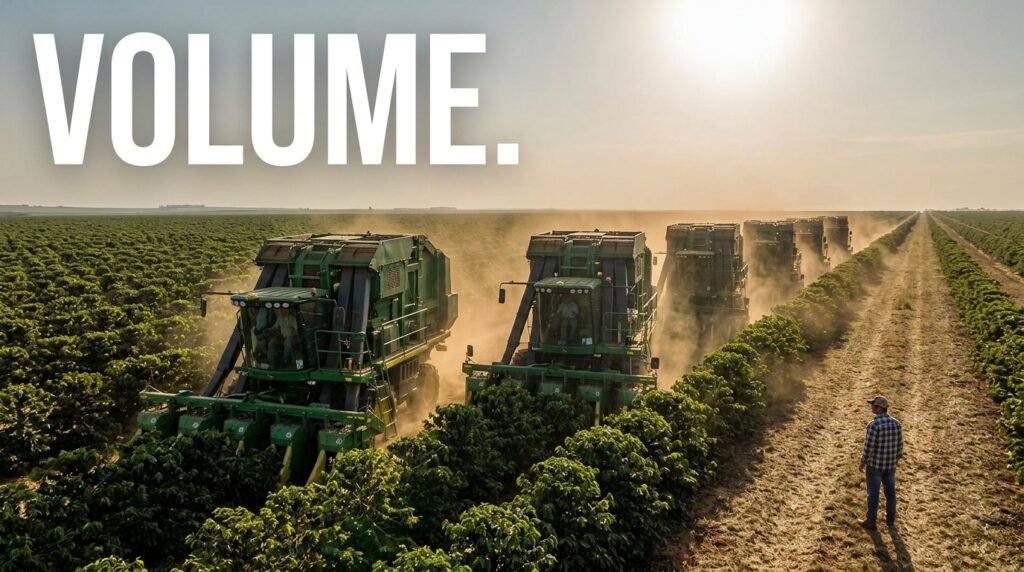
To understand why I avoided Brazilian coffee for so long, you have to understand the sheer scale of the country’s coffee production.
Brazil is the undisputed heavyweight champion of the global coffee industry. They produce roughly a third of all the coffee grown on planet Earth. Because they produce so much volume, the vast majority of Brazilian coffee is grown on massive, flat, mechanized farms designed for high yields and low costs.
For decades, this massive output was the backbone of cheap, commercial supermarket coffee.
When you buy a giant plastic tub of dark roast for six dollars, you are almost certainly drinking low-grade Brazilian beans. The industry has used Brazil as a cheap filler for so long that the country developed a reputation for producing “boring,” “flat,” and “nutty” coffee that lacked any real personality.
When I first transitioned into specialty coffee, I became a total snob about this.
I was chasing the wild, exotic flavors of Kenya, Ethiopia, and Panama. If I saw a bag of coffee from Brazil on a roaster’s shelf, I immediately walked past it. I assumed it was going to taste like the cheap diner coffee I had spent years trying to escape. I thought it lacked the sophisticated acidity I had learned to love.
I had completely pigeonholed an entire nation based on its commercial exports, completely ignoring the incredible artisan farmers working in its high-altitude micro-regions.
The Barista’s Prescription
The day after my rainy Tuesday realization, I went to my local roaster.
I walked up to the counter and made a confession. “I love the Ethiopian beans you sold me,” I told the barista. “But I need something else for the days when I just want to feel cozy. I don’t want flowers. I don’t want fruit. I want heavy, sweet, chocolatey comfort without any sharp acidity.”
He smiled knowingly, walked over to the retail wall, and pulled down a bag with a dark yellow label.
“You need to go to Brazil,” he said.
I hesitated, explaining my bias against Brazilian beans. He laughed and assured me this was not the supermarket filler I was afraid of.
He explained that this specific bag came from a small, family-owned farm in the Minas Gerais region. It was a Yellow Bourbon variety, grown at a respectable altitude, and processed using a method called “Pulped Natural” (sometimes called Honey Process), where a sticky layer of the fruit is left on the bean while it dries in the sun.
“It’s going to blow your mind,” he promised. “It’s the ultimate comfort cup.”
I trusted him, bought the bag, and took it home to wait for the next cold morning.
The Aroma of a Bakery
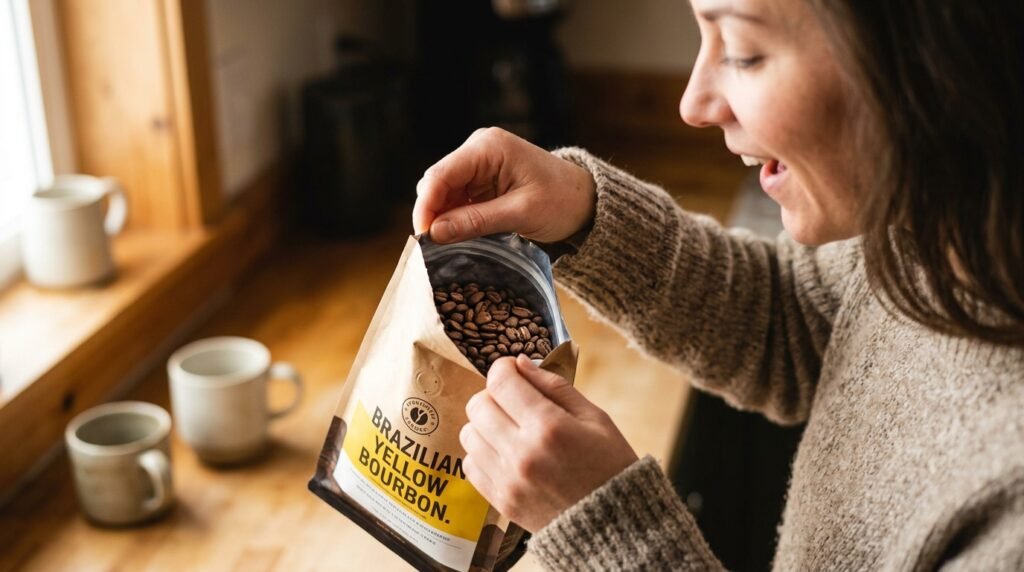
When the weekend finally arrived, the weather was appropriately chilly. I opened the bag of Brazilian Yellow Bourbon, and my kitchen was instantly transformed.
When I usually open African coffees, the room fills with the sharp, sweet smell of berries or citrus. This was entirely different.
The aroma coming out of the bag smelled exactly like walking into a warm bakery at six in the morning. It was dense and rich. There were massive, undeniable notes of toasted hazelnuts, dark cocoa powder, and sweet caramel. It smelled so incredibly inviting that my mouth actually started to water before I even turned on the grinder.
I weighed out my usual 15 grams, poured them into my manual burr grinder, and started turning the handle.
The physical resistance of the beans felt a little different—slightly softer than the rock-hard African seeds I was used to. As the burrs crushed the beans, the smell of fresh brownie batter wafted up from the hopper.
I set up my V60 pour-over, boiled my water, and started the bloom.
Even the visual experience was different. The coffee bed expanded into a rich, dark dome, and the steam rising off the carafe carried a heavy, buttery scent. It felt grounding. It didn’t demand my intellectual analysis to figure out complex floral notes; it just promised straightforward, delicious warmth.
The Sip of Pure Comfort
I poured the dark, heavy liquid into my thickest ceramic mug. I sat down at my table, wrapped both hands around the hot ceramic, and took a slow sip.
It was exactly what I had been craving.
The very first thing I noticed was the texture. In the specialty coffee world, we call this the “body” or the “mouthfeel.” My usual Ethiopian coffees felt light and thin, like drinking a fine tea. This Brazilian coffee was heavy. It was syrupy. It coated my tongue and the roof of my mouth with a rich, velvety weight.
And then the flavor hit.
There was absolutely no sourness. The bright, zesty acidity of my usual cups was completely absent. In its place was a deep, resonating sweetness. I tasted a massive wave of milk chocolate, followed immediately by the distinct, creamy flavor of peanut butter. As I swallowed, a lingering taste of toasted almonds and brown sugar stayed on my palate.
It was flawless. It tasted like the most refined, high-quality version of classic coffee you could possibly imagine.
Sitting there and analyzing the contrast between this heavy cup and my usual light cups made me realize that (What I Noticed About South American Coffees) was not a lack of quality, but a completely different philosophical approach to flavor. They aren’t trying to be bright and fruity; they are trying to be deeply balanced, sweet, and comforting.
I drank the entire mug in record time. I didn’t want to analyze it; I just wanted to enjoy it.
A Two-Track Morning Routine
That single bag of Brazilian coffee completely shattered my rigid morning routine.
Before that cup, I was a monogamous coffee drinker. I would buy one bag of coffee, drink it every single morning until it was gone, and then go buy another bag.
But the Brazilian Yellow Bourbon taught me that coffee should be a reflection of my mood and my environment.
I started keeping two distinctly different bags of coffee in my pantry at all times.
Bag A was always my bright, wild, fruity African coffee (usually an Ethiopian Guji or a Kenyan AA). This became my “Wake Up and Focus” coffee. I reach for this on sunny mornings, on days when I need a sharp burst of energy, or on weekend afternoons when I want to sit down and really dissect complex flavors.
Bag B became my comforting South American coffee (almost always a Brazilian or a heavy Colombian). This became my “Cozy Survival” coffee. I reach for this on rainy days, on freezing winter mornings, or on days when I am exhausted and just want a heavy, chocolatey hug before I have to face the world.
Creating this two-track system completely elevated my daily ritual. Understanding the distinct roles these different origins play in my life is the exact reason (What I Learned From Drinking Coffee From Different Regions) became such a crucial part of my coffee education. I stopped viewing countries as competitors and started viewing them as different tools for different emotional needs.
Tweaking the Brewing Gear
Because the Brazilian coffee offered such a different physical texture than my African coffees, it also forced me to change how I interacted with my brewing equipment.
I usually brew exclusively with a paper filter (like a V60 or a Chemex). Paper filters are fantastic at trapping the natural oils of the coffee bean, resulting in a very clean, clear, and tea-like cup. This is perfect for highlighting the delicate floral notes of a light roast.
But paper filters were stripping away the heavy, syrupy oils that made the Brazilian coffee so comforting.
I decided to pull an old, dusty French Press out of the back of my cabinet.
A French Press uses a metal mesh filter instead of paper. Because metal mesh doesn’t trap the natural coffee oils, all of those heavy, velvety fats end up directly in your mug.
The next time I brewed the Brazilian Yellow Bourbon, I used the French Press. The result was staggering.
The chocolate and peanut butter notes were amplified to an extreme level. The body of the coffee became so thick and creamy that it almost felt like I had added a splash of whole milk, even though it was completely black.
Adjusting my equipment to match the origin of the bean was a massive breakthrough. Realizing that the tool matters just as much as the bean is exactly (The Brewing Method That Changed Everything for Me), because the French Press unlocked the absolute maximum potential of that heavy, comforting Brazilian profile.

The Beauty of the Baseline
I still consider light-roast Ethiopian coffee to be my absolute favorite category in the world. I love the wild acidity. I love the floral mystery.
But I now have a deep, profound respect for specialty Brazilian coffee.
It taught me that not every cup of coffee needs to be an intellectual challenge. Sometimes, you don’t want to search your palate for notes of bergamot or dried cherry. Sometimes, you just want your coffee to taste like really, really good coffee.
Brazil provides the ultimate baseline. It is the steady, reliable heartbeat of the coffee world. When grown at high altitudes, harvested with care, and roasted gently, a Brazilian bean can deliver a level of sweet, chocolatey perfection that no other country can match.
It cures the rainy day blues. It pairs perfectly with a sweet pastry. It grounds you.
Broaden Your Horizons
If you are a specialty coffee beginner who only drinks heavy, dark roasts, I always recommend trying a bright African coffee to wake up your palate.
But if you are like I was—a coffee nerd who only drinks highly acidic, fruity light roasts—I want to offer you a different challenge.
Don’t let the commercial stigma keep you away from the largest coffee-producing nation on earth. The next time you visit a specialty roaster, ask them for a high-quality, naturally processed Brazilian coffee.
Take it home. Wait for a cold, gloomy morning. Brew it in a French Press to maximize the heavy body, and take a sip.
I promise you, the rich, velvety flavors of chocolate and toasted nuts will wrap around you like a warm blanket. You will realize that comfort is just as valuable as complexity, and tasting Brazilian coffee might just change your morning routine forever.

My name is Daniel Carter, I am 35 years old, and I live in the United States. I have been passionate about aquariums for many years, and what started as a simple hobby quickly became a lifelong interest in aquatic life, fish behavior, and responsible tank care.
Through TheBrightLance, I share real experiences, practical knowledge, and honest lessons learned from maintaining different types of aquariums. I enjoy testing equipment, studying fish behavior, improving maintenance routines, and helping beginners avoid common mistakes.
My goal is to make aquarism easier, more ethical, and more enjoyable for everyone — whether you are setting up your very first tank or looking to refine your techniques.