
If you wake up early on a cold morning and walk past a traditional, local bakery, you will be hit by an invisible wall of incredible aromatics. You will smell the warm yeast, the toasted flour, and the melting butter.
If you walk inside and buy a loaf of bread that has just been pulled out of the stone oven, you are holding a culinary masterpiece.
When you tear off a piece of that bread while standing on the sidewalk, the crust shatters perfectly. The inside is steaming, pillowy, and complex. It is a transcendent, emotional food experience that requires absolutely no butter, jam, or toppings. It is perfect exactly as it is.
Now, imagine taking that exact same recipe, baking the bread, and sealing it inside a thick plastic bag. Imagine loading that bag onto a shipping truck, driving it across the country for three weeks, and letting it sit on the bottom shelf of a fluorescent-lit gas station for another month.
When you finally buy that plastic-wrapped bread and take a bite, it will technically keep you alive. But it has absolutely no soul. It is spongy, dry, and tastes faintly like the plastic it was shipped in.
For the first decade of my adult life, I was eating the gas station bread of the coffee world.
I thought coffee was just a bitter, dark liquid that you choked down to survive a morning commute. I had absolutely no idea what I was missing until I finally tasted the real thing.
Here is the honest, highly sensory story of why fresh coffee made a huge difference for me, the invisible chemistry that destroys stale beans, and why making this single, simple switch will permanently revolutionize the beverage in your mug.
The Myth of the Pantry Staple
The biggest obstacle I had to overcome in my coffee journey was a massive cultural delusion.
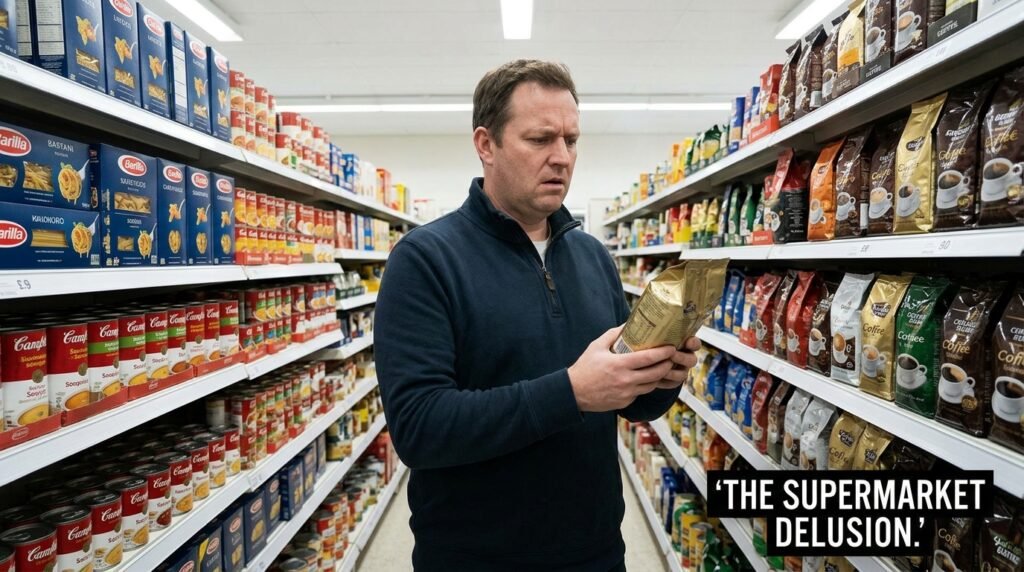
Because we buy coffee in the dry goods aisle of the commercial supermarket—usually right next to the dried pasta, the white flour, and the canned soups—our brains naturally categorize it as a non-perishable pantry staple.
We look at the hard, dry, brown beans and we assume they are practically invincible.
We assume that because they are dry, they do not decay. I used to buy massive, two-pound foil bricks of coffee, rip the top open, and leave them sitting on my kitchen counter for months. I expected the coffee to taste exactly the same on day sixty as it did on day one.
This is a devastating culinary misunderstanding.
A roasted coffee bean is actually one of the most chemically complex, highly fragile, and volatile agricultural products in your entire kitchen. It is not like dry pasta. It is much closer to a fresh piece of fruit or a delicate pastry.
The Chemistry of the Oven
To understand why freshness matters, you have to understand what actually happens inside a coffee roasting machine.
When a farmer harvests a raw, green coffee seed, it smells like sweet grass and has almost no flavor. But when a roaster drops that green seed into a 400-degree steel drum, a massive chemical reaction occurs. It is called the Maillard reaction.
The intense heat breaks down the cellular structure of the seed, converting complex carbohydrates into hundreds of delicate, highly aromatic oils. These oils are the sole reason your coffee tastes like milk chocolate, jasmine flowers, or ripe blueberries.
But the exact second the coffee bean leaves that hot roasting drum and hits the cooling tray, the clock starts ticking.
Those beautiful, complex aromatic oils are incredibly unstable. The moment they are exposed to the oxygen in the ambient air, they begin to aggressively oxidize. They evaporate. They dry out. They turn rancid.
Within three to four weeks of the roast date, the vast majority of those incredible flavors have completely vanished into the atmosphere, leaving behind a stale, wooden, empty shell.
The Supermarket Stagnation
Once I understood the brutal, fast-paced chemistry of oxidation, I looked at my supermarket shopping habits with absolute horror.
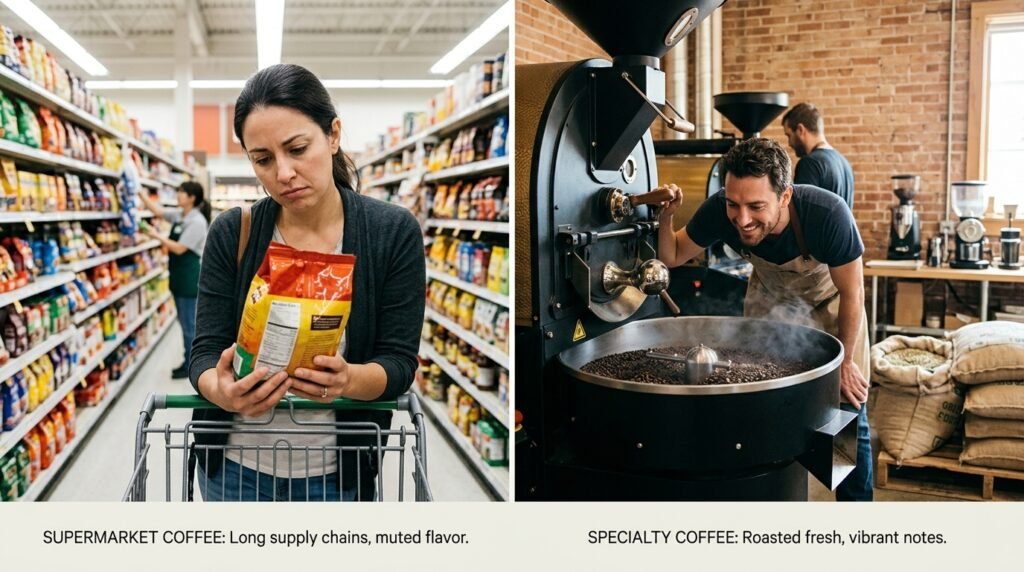
I realized how the commercial supply chain actually works. A massive corporate factory roasts millions of pounds of coffee. They pack it into bags and load it onto pallets. Those pallets sit in a hot distribution warehouse for weeks. Then they are loaded onto transport trucks. Then they sit in the back room of a grocery store.
By the time the teenager stocking the shelves finally puts that bag in the coffee aisle, and you put it in your shopping cart, months have passed.
I was buying a product that had been dead for half a year.
Understanding the sheer magnitude of this supply chain delay was precisely (What I Noticed After Comparing Cheap vs Expensive Coffee). I realized I wasn’t tasting the soil of Colombia or the altitude of Ethiopia. I was simply tasting the flavor of severe, prolonged oxidation.
The Day Everything Changed
My perspective shattered the day I finally ran out of supermarket coffee and decided to drive to a small, independent specialty roastery in my city.
I walked through the front door and the smell almost knocked me over. The air was thick with the scent of caramelized sugars and heavy fruit. Behind the counter, there was a massive cast-iron roasting machine actively spinning.
I bought a 12-ounce bag of naturally processed Ethiopian beans. The barista handed me the bag, and it was still physically warm to the touch.
When I got back into my car and placed the paper bag on the passenger seat, the aromatics completely filled the cabin. It smelled like a warm blueberry pie. I had never, ever smelled coffee like this in my entire life.
Taking that warm bag home and opening it in my own kitchen was the foundational moment of (My First Experience With Freshly Roasted Coffee). It felt like I was holding a completely different agricultural product. The beans were matte, beautiful, and smelled intensely alive.
The Visual Proof of Life
The huge difference wasn’t just in the smell. The next morning, when I brewed that fresh coffee for the first time, I received undeniable, visual proof that the product was fundamentally different.
When you roast coffee, a massive amount of carbon dioxide gas becomes permanently trapped inside the dense cellular walls of the bean.
When you pour hot water over stale, supermarket coffee grounds, absolutely nothing happens. The water just hits the dark powder, turns into a muddy puddle, and slowly drains into your cup. The coffee looks completely flat and dead.
But when I poured hot water over the freshly roasted Ethiopian coffee, the coffee bed fought back.
The hot water triggered the immediate release of the trapped carbon dioxide gas. The entire bed of coffee grounds violently bubbled, heaved, and expanded, rising nearly an inch inside my glass V60 cone. It looked like a living, breathing creature.
This beautiful, aggressive reaction is called the “bloom.” It is the absolute, undeniable visual proof that the coffee you are brewing is fresh, volatile, and packed with preserved flavor.
The Flavor Explosion
Once the bloom settled and the ruby-red liquid finished draining into my ceramic mug, I took my first sip.
I actually had to close my eyes. I was expecting the harsh, bitter, ashy bite that usually accompanied my morning routine. I was expecting to need a heavy splash of cold milk just to make the beverage tolerable.
But there was no bitterness. There was absolutely zero harshness.
The coffee was impossibly smooth. The bright, crisp acidity hit the sides of my tongue like a fresh green apple, immediately followed by a wave of deep, heavy sweetness that tasted exactly like milk chocolate and wild berries.
It was a complete revelation.
I realized, in that exact moment, that coffee is not inherently bitter. The terrible, harsh flavor I had been running from for years was not the taste of coffee. It was the taste of stale, rotting, oxidized oils.
When you eliminate the staleness, you eliminate the bitterness. The fresh bean is naturally sweet, incredibly complex, and completely stands on its own.
The Pro-Tip: The Degassing Window
However, switching to fresh coffee also comes with a highly specific, slightly paradoxical lesson. You can actually drink coffee when it is too fresh.
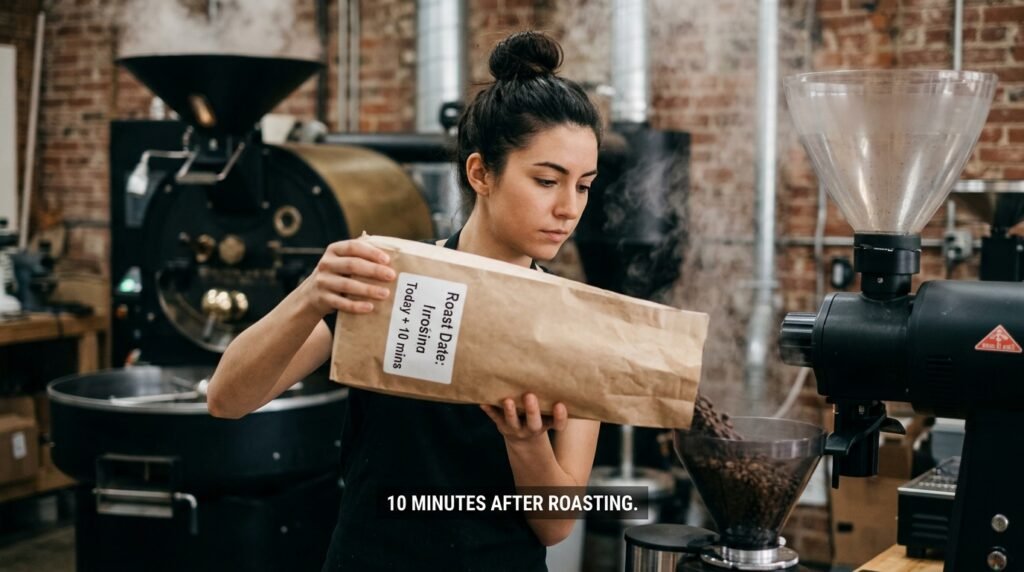
If you take a bag of coffee that was pulled out of the roaster just ten minutes ago, grind it, and brew it immediately, it will actually taste quite sharp, metallic, and overwhelming.
Because the beans are so freshly roasted, they are completely packed with highly pressurized carbon dioxide gas. When you brew them immediately, that excessive gas physically blocks the hot water from properly extracting the sweet sugars. You end up extracting nothing but gas and sharp acids.
Coffee requires a brief period of rest.
It needs to sit in a bag with a one-way valve for about three to seven days, depending on the roast level. This allows the excessive, aggressive gas to slowly bleed out, while leaving the beautiful aromatic oils perfectly intact.
The sweet spot for specialty coffee is generally between day four and day twenty-one after the roast date.
Redesigning My Shopping Habits
Experiencing this incredible, vibrant window of flavor completely permanently rewired my consumer habits.
I completely stopped buying massive bulk bags of coffee to save a few dollars. I knew that by the third week, the coffee would be dead.
Now, I treat buying coffee exactly like I treat buying fresh produce or fresh bread. I only buy exactly what I know I can consume in a two-week period. Implementing this strict, non-negotiable standard is the exact reason (Why I Check Coffee Dates Before Buying).
If I am standing in a shop and I see a bag of coffee without a “Roasted On” date, or if the date printed on the bag is a month old, I refuse to buy it. I will not pay a premium price for a dead agricultural product.
Step Out of the Gas Station
If you are currently frustrated with your morning coffee, if you find yourself dumping massive amounts of sugar and heavy cream into your mug just to hide the bitter, harsh aftertaste, you need to look closely at your beans.
You do not need to buy a three-thousand-dollar espresso machine to fix your mornings. You just need to stop eating the gas station bread.
I challenge you to break your supermarket routine this weekend. Find an independent, local coffee roaster in your city. Walk through the front door, smell the warm, caramelized air, and buy a bag of beans that was roasted just a few days ago.
When you bring it home, grind it, pour the hot water, and watch the coffee violently bloom and bubble in your brewer, you will instantly understand the magic. You will taste the sweet, vibrant, unadulterated fruit of the coffee cherry, and you will completely understand why fresh coffee is the only coffee worth drinking.

My name is Daniel Carter, I am 35 years old, and I live in the United States. I have been passionate about aquariums for many years, and what started as a simple hobby quickly became a lifelong interest in aquatic life, fish behavior, and responsible tank care.
Through TheBrightLance, I share real experiences, practical knowledge, and honest lessons learned from maintaining different types of aquariums. I enjoy testing equipment, studying fish behavior, improving maintenance routines, and helping beginners avoid common mistakes.
My goal is to make aquarism easier, more ethical, and more enjoyable for everyone — whether you are setting up your very first tank or looking to refine your techniques.