
If you spend enough time watching people in the fresh produce aisle of a massive commercial grocery store, you will quickly witness one of the most universal, silent performances of human behavior.
A person will walk up to a massive pile of watermelons. They will pick one up, weigh it in their hands, and knock on the green rind with their knuckles. They will listen to the dull, hollow thud. They will nod their head thoughtfully, place the melon in their shopping cart, and confidently walk away.
But if you were to stop them and ask them what specific acoustic frequency they were listening for, they wouldn’t be able to tell you.
They don’t actually know what the hollow sound means. They are just imitating a behavior they saw someone else do. They are squeezing the avocados, smelling the pineapples, and knocking on the melons entirely on autopilot. They are just guessing and hoping for the best.
For the first decade of my adult life, this was my exact strategy in the coffee aisle.
I would stand in front of the massive wall of colorful bags, foil bricks, and plastic tubs. I would read the bold marketing buzzwords like “Premium,” “Mountain Roast,” and “Gourmet Blend.” I would nod thoughtfully, throw a bag into my cart, and completely guess. I had absolutely no idea what I was buying.
But eventually, I got tired of drinking bitter, lifeless sludge every morning. I decided to stop guessing and actually learn the rules of the game.
Here is the honest, practical story of how I finally learned to choose good coffee at the store, the marketing lies I had to unlearn, and the specific, non-negotiable details I now look for every single time I buy a bag of beans.
The Illusion of the Expiration Date
The very first, and arguably the most important, lesson I had to learn was that coffee is not a non-perishable canned good. It is a fresh agricultural product.
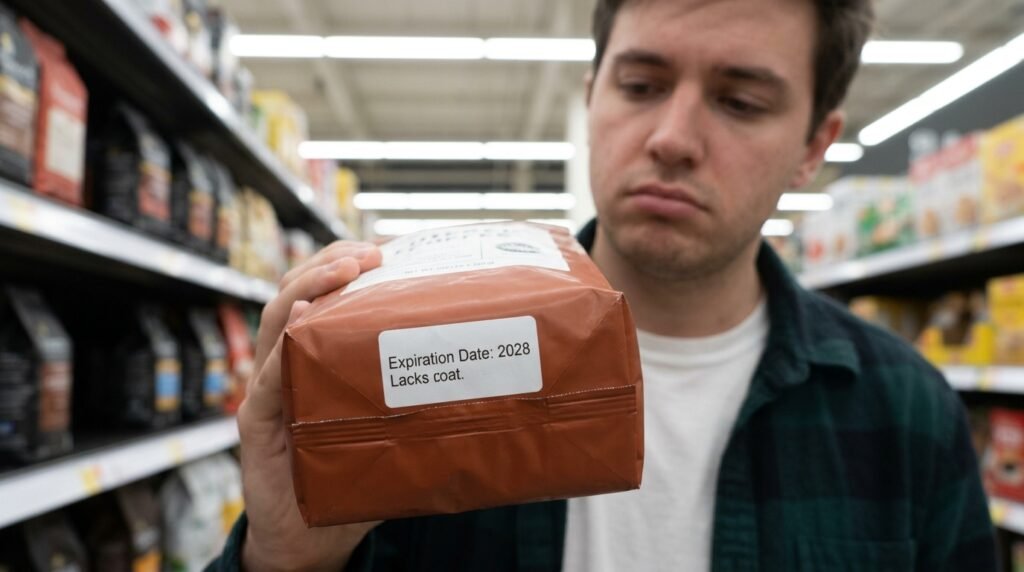
When I used to buy cheap coffee at the supermarket, the only number I ever looked at was the expiration date printed on the bottom of the bag. If the date said the coffee was good until the year 2028, I assumed it was fresh.
I was completely wrong.
Once a coffee bean leaves the roasting drum, the clock starts ticking. The incredible, volatile aromatic oils that give coffee its sweet, complex flavor profile immediately begin to react with the oxygen in the air. This process is called oxidation.
Within three to four weeks after the roast date, the vast majority of those delicate flavors have completely evaporated into the atmosphere. The coffee becomes stale, flat, and wooden.
Commercial coffee companies do not want you to know this. They put expiration dates on their bags that are twelve or eighteen months in the future. By the time you buy that foil brick off the supermarket shelf, the coffee inside has likely been dead for half a year.
Today, I have a strict, unbreakable rule: if a bag of coffee does not have a specific “Roasted On” date printed clearly on the label, I absolutely will not buy it. I only buy coffee that was roasted within the last fourteen to twenty-one days.
The Murder of the Bean
The second major shift in my shopping habits required me to completely abandon convenience.
For years, I bought pre-ground coffee. It made sense to my fast-paced, highly stressed brain. Why would I spend the time and physical effort grinding my own coffee every morning when a factory machine could do it for me?
But then I learned the brutal physics of coffee staling.
When you leave a coffee bean whole, its dense outer structure protects the delicate oils trapped inside. But the exact second you crush that bean in a grinder, you exponentially increase its surface area. You expose millions of microscopic coffee particles to the oxygen in the air.
While a whole bean might take four weeks to go stale, a ground coffee bean will lose the majority of its complex flavor in about fifteen minutes.
Buying a massive tub of pre-ground coffee and keeping it in your pantry for a month is the culinary equivalent of buying an apple, slicing it into tiny pieces, leaving it on your kitchen counter, and expecting it to taste fresh two weeks later. It is impossible.
Understanding this devastating chemical reality is the exact reason (Why I Gave Up Pre-Ground Coffee). I stopped paying companies to murder my coffee before I even brought it home. I bought a manual burr grinder, and I exclusively buy whole beans.
Decoding the Geography Lie
Once I started seeking out fresh, whole-bean coffee, I had to learn how to read the actual labels.
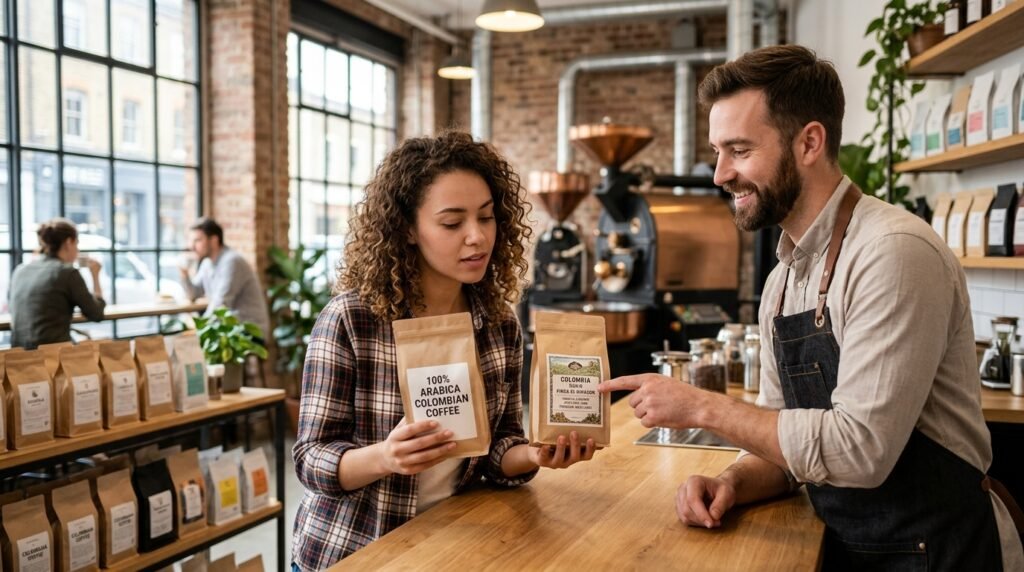
The commercial coffee industry relies heavily on vague, meaningless geographical marketing. You will see massive bags proudly proclaiming that they are “100% Arabica” or “100% Colombian Coffee.”
When you do not know any better, these labels sound incredibly impressive. But they are essentially useless.
Advertising “100% Arabica” is like a wine bottle advertising that it is made from “100% Grapes.” It is the absolute bare minimum requirement for the beverage. It tells you nothing about the quality.
Similarly, labeling a bag “Colombian Coffee” is incredibly deceptive. Colombia is a massive, highly diverse country with dozens of different micro-climates, altitudes, and soil types. Coffee grown in the northern mountains tastes completely different from coffee grown in the southern volcanic regions.
When I shop for coffee today, I look for extreme geographical specificity.
I do not want a bag that just says “Colombia.” I want a bag that says “Huila, Colombia.” I want a bag that lists the specific altitude of the farm (e.g., 1,700 meters above sea level). I want a bag that lists the specific biological varietal of the plant, like Bourbon or Caturra.
Learning how to translate this dense, agricultural data was the core lesson of (How I Learned to Read Coffee Labels Without Confusion). The rule of thumb is simple: the more specific the geographical information on the bag, the higher the quality of the coffee inside.
If a roaster is proud of the farmer who grew the beans, they will print the farmer’s name on the label. If the bag is completely anonymous, it means the roaster bought the cheapest, lowest-grade commodity beans they could find and blended them all together.
The Dark Roast Deception
For a very long time, I associated the strength and quality of coffee with its color. I assumed that a “French Roast” or an “Espresso Roast” meant the coffee was bold, powerful, and premium.
I didn’t realize that the roasting drum is often used as a weapon to hide agricultural defects.
Think about the coffee bean like a steak. If a high-end restaurant buys a beautiful, incredibly expensive cut of Wagyu beef, the chef will barely cook it. They will sear it lightly to ensure the natural, complex flavor of the meat is the absolute star of the dish.
But if a cheap diner buys a terrible, low-grade, tough piece of meat, the chef will cook it well-done until it is completely charred, and then drown it in heavy steak sauce to hide the bad flavor.
Commercial coffee companies do the exact same thing.
They buy cheap, defective, moldy, or old coffee beans from massive commodity markets. Because these raw beans taste terrible, the roaster leaves them in the massive industrial heating drums until they are completely burned.
When you buy a shiny, oily, pitch-black dark roast from a supermarket, you are not tasting the origin of the coffee. You are not tasting the soil of Guatemala or the altitude of Kenya. You are simply tasting the carbon left behind by the roasting machine.
To actually taste the natural sweetness, the bright acidity, and the delicate fruit notes of the coffee cherry, you have to buy light or medium roasts. The lighter the roast, the more the natural identity of the bean is preserved.
Looking for the Valve
There is one final, highly physical detail I look for before I ever place a bag of coffee in my shopping basket.
I pick up the bag, flip it around, and look for a tiny, circular plastic valve embedded in the packaging.
This is called a one-way degassing valve. During the roasting process, the intense heat causes carbon dioxide gas to become trapped inside the dense cellular structure of the coffee bean. For the first few days after the coffee is roasted, the beans will violently release this gas into the air.
If a roaster seals freshly roasted coffee in an airtight bag, the trapped carbon dioxide will cause the bag to inflate like a balloon and eventually explode.
The tiny plastic valve allows the carbon dioxide to escape the bag without letting harmful, staling oxygen back in.
If you find a bag of coffee at the store that is completely sealed like a brick, with no degassing valve whatsoever, it tells you a very sad story. It means the coffee was allowed to sit in an open warehouse for weeks, completely going stale and releasing all of its gas, before it was finally packaged.
It is a dead product. I immediately put it back on the shelf.
Exiting the Supermarket
When you finally arm yourself with this knowledge, an incredible thing happens. You realize that the massive commercial supermarket is actually the absolute worst place on earth to buy coffee.
Supermarkets operate on massive, sluggish supply chains. By the time a bag of coffee makes it from a commercial roasting factory, onto a transport truck, into a distribution warehouse, and finally onto the grocery store shelf, months have already passed.
Once I learned how to choose good coffee, my shopping habits completely migrated.
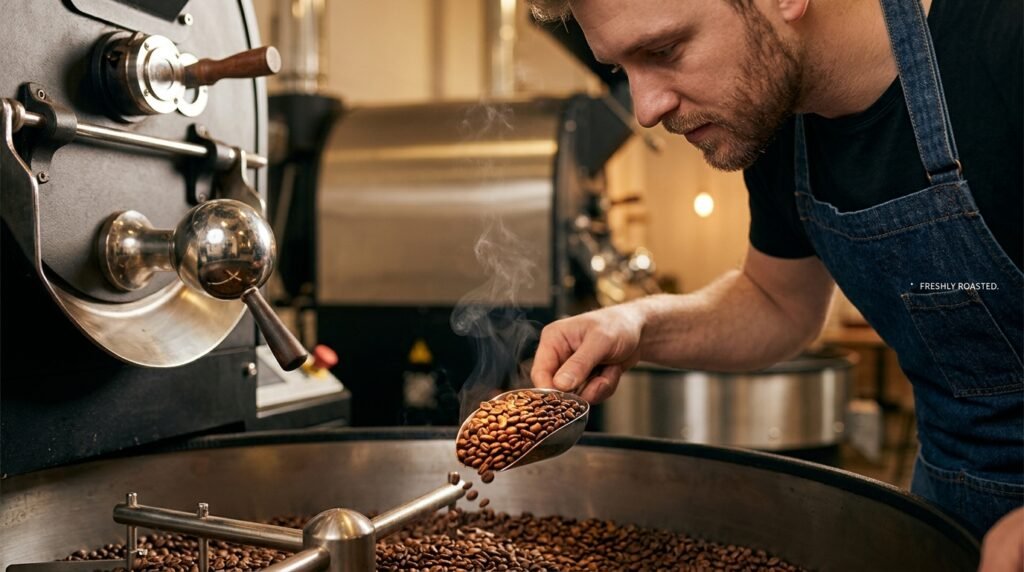
I stopped walking down the coffee aisle at the grocery store. I started driving directly to small, independent specialty roasteries in my city.
When you walk into a local roastery, you are cutting out the middleman. You can pick up a bag of beans that is still physically warm from the roasting drum in the back room. You can talk directly to the person who roasted it. You can ask them what specific fruit notes they taste in the Ethiopian batch, or whether the Colombian batch is better suited for a French Press or a V60.
The Reward of Paying Attention
Yes, learning how to buy coffee requires a little bit of effort. It requires you to read the fine print, seek out local businesses, and pay a slightly higher price for a premium agricultural product.
But the reward is staggering.
The difference between a stale, pre-ground, anonymously sourced dark roast and a freshly roasted, whole-bean, single-origin light roast is almost unbelievable. Experiencing that gap in quality firsthand was the massive paradigm shift of (The First Time I Noticed Coffee Quality Actually Matters).
You suddenly realize that you haven’t just been drinking bad coffee; you have been drinking an entirely different beverage.
The next time you need to stock your kitchen, I challenge you to stop knocking on the watermelons without knowing why. Stop guessing in the coffee aisle.
Look for the “Roasted On” date. Buy whole beans. Ignore the “100% Arabica” marketing fluff and look for specific altitudes and farm names. Choose a lighter roast to respect the origin of the seed.
When you finally learn how to decipher the labels and respect the incredible journey of the bean, you will never settle for the bitter, stale sludge ever again. Your morning mug will transform from a necessary chore into an absolute daily masterpiece.

My name is Daniel Carter, I am 35 years old, and I live in the United States. I have been passionate about aquariums for many years, and what started as a simple hobby quickly became a lifelong interest in aquatic life, fish behavior, and responsible tank care.
Through TheBrightLance, I share real experiences, practical knowledge, and honest lessons learned from maintaining different types of aquariums. I enjoy testing equipment, studying fish behavior, improving maintenance routines, and helping beginners avoid common mistakes.
My goal is to make aquarism easier, more ethical, and more enjoyable for everyone — whether you are setting up your very first tank or looking to refine your techniques.