
I spend a considerable amount of my free time experimenting with digital image generation. I am incredibly meticulous about it.
When I craft a prompt to generate an image, I don’t just type a vague sentence like “a picture of a landscape.” That would result in a generic, boring, and highly predictable picture. Instead, I specify the exact camera type, the focal length of the lens, the specific style of lighting, and the precise subject composition. I know that changing just one of those technical variables will completely transform the final image from a moody, shadowy portrait into a bright, vibrant masterpiece.
Over the past few years, I realized I treat my morning coffee with the exact same level of technical obsession.
You cannot just tell a barista, “I want a cup of coffee.” That is the equivalent of a generic prompt. To get a masterpiece in your mug, you have to specify the variables. You have to dictate the altitude, the processing method, the botanical genetics, and most importantly, the specific country of origin.
Every single country acts like a different camera lens, completely altering how the final flavor is rendered on your palate.
After years of brewing, testing, and obsessively cataloging different beans in my kitchen, I have finally established a hierarchy. Here is my highly subjective, completely honest personal ranking of the coffee origins I’ve tried, counting down from my specialized, situational favorites to my absolute, undisputed daily champion.
#5: Indonesia (The Moody, Heavy Contrast)
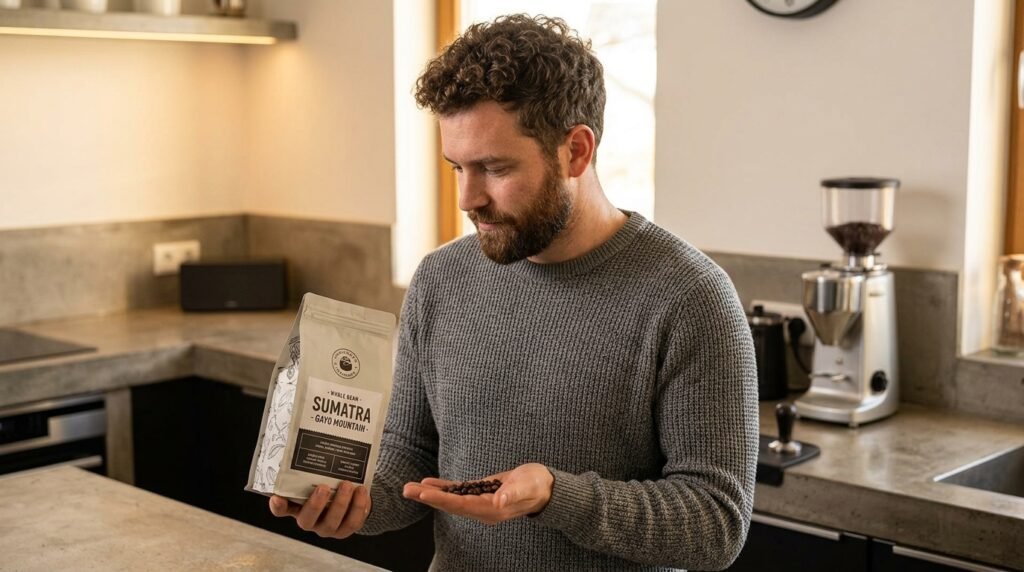
Coming in at number five on my list is Indonesia, specifically the island of Sumatra.
I rank Sumatra here not because it is a bad coffee, but because it is an incredibly specific, intense experience. If I were comparing this to photography, Sumatran coffee is a high-contrast, black-and-white portrait taken in the shadows. It is heavy, moody, and completely lacks bright colors.
When I brew a bag of Sumatran coffee, my kitchen smells like a damp, exotic forest.
The flavors are violently earthy. There are massive, dense notes of cedar wood, dark baking spices, pipe tobacco, and unsweetened baker’s cocoa. It is a completely savory experience with virtually zero acidity.
This bizarre flavor profile is the direct result of the Indonesian climate. Because the jungle is so relentlessly humid, farmers cannot dry their coffee in the sun like the rest of the world. They have to use a method called “Wet-Hulling,” where they strip the protective layers off the bean while it is still wet and squishy. This violent exposure to the humid air mutes all the bright fruit notes and amplifies the heavy earthiness.
Realizing how much labor and environmental adaptation goes into these distinct regional profiles is exactly (What I Discovered About Coffee Farming Around the World), because it taught me to respect the farmers as survivalists, adapting to their extreme weather.
I don’t want to drink Sumatran coffee every single morning. It is simply too heavy. But on a freezing winter evening, when I am sitting by a fire and want something that feels as thick and comforting as a heavy stout beer, Indonesia is exactly what I reach for.
#4: Costa Rica (The Sweet, Golden Hour)
Taking the fourth spot on my list is Costa Rica, particularly the high-altitude Tarrazú region.
If Sumatra is a moody shadow, Costa Rica is the “golden hour” of photography. It is bathed in warm, sweet, glowing light. It is incredibly inviting and universally beloved.
What pushes Costa Rica so high on my list is the country’s mastery of the “Honey Process.”
When Costa Rican farmers harvest their coffee, they often use a machine to rip the skin off the cherry, but they intentionally leave the sticky, sugary fruit pulp (the “honey”) glued to the coffee seed. They lay these sticky seeds out in the hot Central American sun to dry.
As the sun beats down, that natural fruit sugar actually caramelizes and bakes directly into the cellular structure of the bean.
When I brew a Yellow or Red Honey Processed Costa Rican coffee, the aroma is absolutely intoxicating. It smells like a warm graham cracker covered in melted brown sugar and vanilla bean.
The body of the coffee is creamy and syrupy, and the flavor is overwhelmingly sweet. It tastes like baked apples, sweet pastry, and milk chocolate. It is the ultimate dessert coffee.
I rank it at number four only because it is sometimes too sweet for my daily palate. I love it, but occasionally I crave a coffee with a little more aggressive bite to wake me up. However, when I want a luxurious, sugary treat without adding actual sugar to my mug, Costa Rica is undefeated.
#3: Brazil (The Comforting, Reliable Baseline)
Winning the bronze medal in my personal ranking is the undisputed heavyweight champion of the global coffee industry: Brazil.
Brazil is the classic 35mm film of the coffee world. It is reliable, nostalgic, and always delivers exactly what you expect. It is the foundation upon which my entire understanding of coffee was built.
I actively avoided Brazilian coffee for a long time because I thought it was just cheap, commercial filler. But once I started buying high-quality, specialty-grade, naturally processed beans from the Cerrado Mineiro region, I realized how foolish I had been.
Brazil produces the most comforting cup of coffee on the planet.
Because the farms are situated on massive, warm plateaus, the beans don’t develop sharp, acidic fruit flavors. Instead, they develop massive, dense, confectionary sugars. When you leave the whole cherry to dry in the sun (the Natural process), those sugars ferment into a heavy, decadent flavor profile.
When I brew a Brazilian coffee, it tastes vividly like a peanut butter cup. It is a massive wave of roasted nuts, heavy dark cocoa, and sweet praline.
It coats the palate beautifully and leaves a long, chocolatey finish. When I want absolute, predictable comfort without any sharp acidity, this is my anchor, which perfectly explains (What I Noticed About South American Coffees).
Brazil also earns the number three spot because it is, without question, the absolute best coffee to use in an espresso machine. The heavy body and massive oils produce a stunning, thick crema that cuts through milk perfectly for a latte.

#2: Colombia (The Perfect, High-Resolution Balance)
Just barely missing the top spot, coming in at a very strong number two, is Colombia.
If you want a coffee that does absolutely everything perfectly without ever overwhelming your palate, you travel to the steep, volcanic slopes of the Colombian Andes.
Colombia is the coffee that I recommend to absolutely everyone. It is a masterpiece of high-resolution balance. It takes the heavy, chocolatey comfort of Brazil and elevates it with a brilliant, refreshing spark of high-altitude acidity.
My favorite Colombian coffees come from the Huila region. Because the plants grow at extreme altitudes (often over 1,800 meters) in rich volcanic soil, the seeds develop a highly complex cellular structure.
The farmers almost exclusively use the Washed process, which strips the fruit away completely, leaving a very clean, pristine flavor.
When I pour a mug of washed Colombian coffee, the first thing I taste is a rich, golden caramel and a sweet milk chocolate foundation. But just as I think the coffee is going to be heavy and dense, a bright, beautiful, crisp acidity cuts right through the middle.
It tastes exactly like biting into a crisp, sweet red apple or a tart cherry.
This perfect tightrope walk between deep, chocolatey comfort and bright, fruity acidity makes Colombia the ultimate daily driver. You can drink it every single morning for the rest of your life and never get tired of it. It never fights with your palate; it just harmonizes with it.
#1: Ethiopia (The Breathtaking, Vibrant Masterpiece)
Taking the undisputed number one spot on my personal ranking is the biological birthplace of the coffee plant itself: Ethiopia.
Specifically, I am obsessed with washed Heirloom coffees from the Guji and Yirgacheffe regions.
If Brazil is a nostalgic film camera, Ethiopia is an ultra-high-definition, vibrant, saturated digital masterpiece. It completely shatters the definition of what coffee is supposed to taste like.
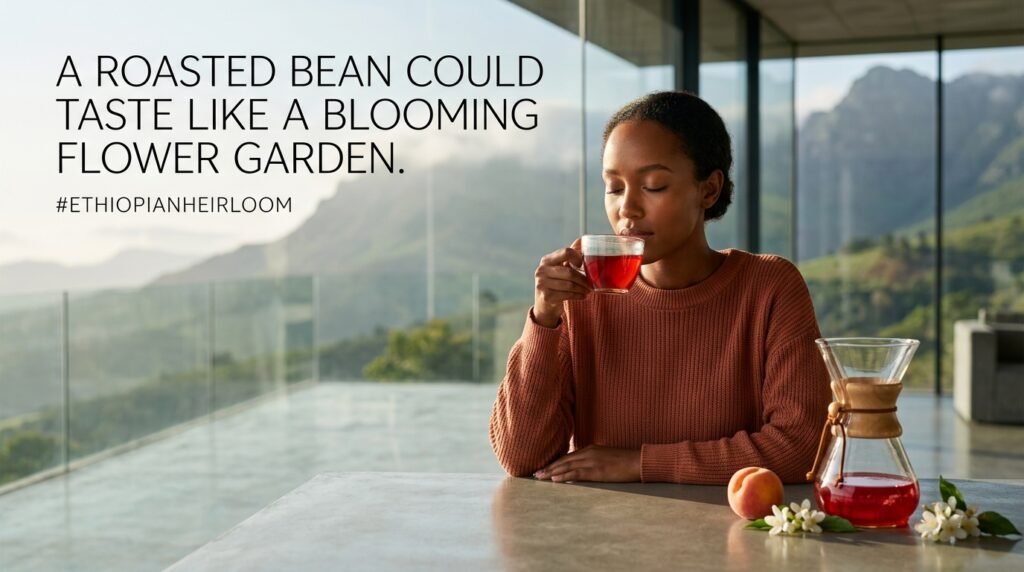
Before I tried Ethiopian coffee, I had no idea that a roasted bean could taste like a blooming flower garden.
The magic of Ethiopia lies in its ancient, wild genetics. The coffee trees there haven’t been cross-bred in modern laboratories to maximize crop yields. They are wild “Heirloom” varieties that have been naturally mutating in the freezing, high-altitude African forests for centuries.
When you take those ancient genetics, grow them at 2,200 meters above sea level, and wash the fruit off immediately after harvesting, the resulting beverage is nothing short of a culinary miracle.
When I brew a washed Ethiopian Guji, the liquid in the carafe is translucent and ruby-red. The body is incredibly light and silky, feeling exactly like a high-end Earl Grey tea on my tongue.
There is zero bitterness. There is zero heavy chocolate.
Instead, the flavor explodes with the vibrant, mouth-watering taste of ripe, juicy peaches and crisp lemon zest. As the coffee washes over my palate, the fruit notes fade into a delicate, lingering, perfumed finish of jasmine blossoms and raw honey.
It is breathtakingly elegant. This impossible, elegant clarity is the undeniable reason (Why I Keep Going Back to African Coffees), even when the rest of the world offers so many fantastic alternatives.
Ethiopian coffee demands your absolute attention. You cannot mindlessly drink it while scrolling through your phone. It forces you to sit down, close your eyes, and actively analyze the brilliant, floral complexity hitting your senses.
Building Your Own Map
My personal ranking is completely subjective, built upon years of trial, error, and meticulous brewing in my own kitchen.
Your list might look entirely different. You might place the heavy, earthy spice of Indonesia at the very top, or you might find that the sweet, graham-cracker notes of Costa Rica are the only thing you ever want to drink.
The beauty of specialty coffee is that there is no wrong answer, as long as you are actively paying attention to the origin.
I challenge you to stop buying generic, multi-origin blends that hide the identity of the bean. You cannot rank what you cannot identify.
Start treating your coffee purchases like you are selecting a specific lens for a camera. Buy a single-origin bag from Colombia, and then buy a single-origin bag from Ethiopia. Brew them side-by-side. Compare the heavy chocolate to the delicate peach.
Once you start exploring the map and establishing your own hierarchy of flavor, your morning routine will transform from a necessary chore into the most exciting, rewarding, and delicious hobby of your life.

My name is Daniel Carter, I am 35 years old, and I live in the United States. I have been passionate about aquariums for many years, and what started as a simple hobby quickly became a lifelong interest in aquatic life, fish behavior, and responsible tank care.
Through TheBrightLance, I share real experiences, practical knowledge, and honest lessons learned from maintaining different types of aquariums. I enjoy testing equipment, studying fish behavior, improving maintenance routines, and helping beginners avoid common mistakes.
My goal is to make aquarism easier, more ethical, and more enjoyable for everyone — whether you are setting up your very first tank or looking to refine your techniques.