
I was standing in line at a local artisanal bakery, staring through the glass display case at a massive, decadent slice of dark chocolate cake.
It was a Saturday afternoon, and I decided to treat myself. I ordered the cake and asked the barista for a cup of black coffee to go with it. I didn’t specify the origin; I just let them pour whatever they had on batch brew.
I sat down at a small iron table outside, took a rich, heavy bite of the dark chocolate frosting, and then took a sip of the coffee.
It was a complete culinary disaster.
The coffee was a highly acidic, washed Ethiopian Yirgacheffe. On its own, it was a masterpiece—bright, floral, and bursting with notes of lemon zest and Earl Grey tea. But when mixed with the dense, buttery dark chocolate of the cake, the two flavors clashed violently. The lemon notes in the coffee turned sour, and the chocolate tasted oddly metallic.
They were fighting each other on my palate.
That was the exact moment I realized I had been treating my coffee journey with a massive blind spot. I had become so obsessed with the bright, fruity, complex coffees of Africa that I had completely forgotten about the concept of a culinary foundation.
I needed an anchor. I needed a coffee that didn’t fight with my food, but rather complemented it. I needed the reliable, heavy, chocolatey comfort of the Americas.
Here is the honest, sensory-driven story of what I noticed about South American coffees, and how diving into this continent completely grounded my palate and gave me a newfound respect for the classics.
The Foundation of Global Flavor
To truly appreciate South America, you have to understand its role in the global coffee consciousness.
When you ask a random person on the street to imagine the smell and taste of coffee, they are not imagining jasmine flowers. They are not imagining blueberries or pink grapefruit.
They are imagining South America.
For over a century, the massive exports from countries like Brazil and Colombia have defined what the word “coffee” means to the human brain. It is the nostalgic scent of a diner at 6:00 AM. It is the smell of your grandparents’ kitchen. It is characterized by deep, roasted nuts, rich cocoa, and sweet caramel.
Because this flavor profile is so common, many specialty coffee enthusiasts (myself included) initially write it off as “boring.” We run toward the exotic, fruity profiles of other continents.
But brushing off an entire continent is a massive mistake. Realizing that there are profound, nuanced differences even within these classic profiles is exactly (What Nobody Told Me About Coffee Beans), because it takes a mature palate to appreciate subtlety over sheer volume.
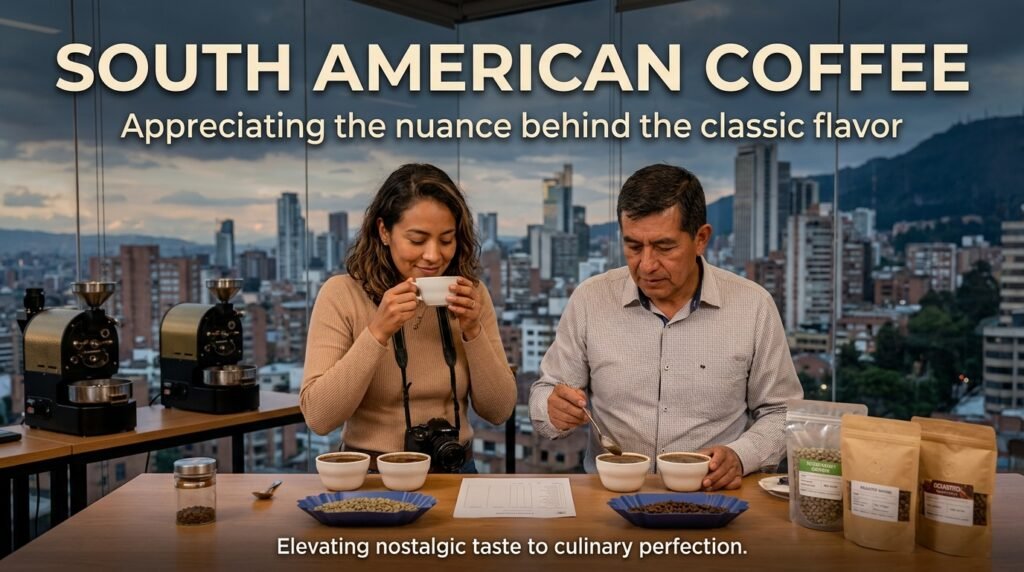
South American specialty coffee is not the cheap supermarket dust from our childhood. It is the absolute perfection of that nostalgic flavor, elevated to a level of culinary brilliance.
Notice #1: The Unbeatable Heavy Body
The very first thing I noticed when I dedicated an entire month to exclusively drinking South American coffees was the physical texture of the liquid.
In the coffee world, we refer to this as the “body” or the “mouthfeel.“
When I brew a high-altitude African coffee, the body is usually very light and tea-like. It washes over the tongue quickly and disappears, leaving behind a clean finish.
South American coffees do not disappear. They announce their presence and they stay there.
Whether I was brewing a bag from the Minas Gerais region of Brazil or a high-elevation lot from Peru, the coffee felt thick, syrupy, and velvety. It coats the roof of your mouth and lingers on your tastebuds long after you swallow.
This heavy body is a direct result of the specific growing environments and the genetic varieties (like Caturra, Typica, and Bourbon) prevalent on the continent. These plants naturally develop dense cellular structures that, when roasted, release heavy, viscous oils into the cup.
This texture is why South American coffees are the absolute best choice for a cold, rainy morning. You don’t just taste the coffee; you feel it.
Notice #2: The Brazilian Sweetness
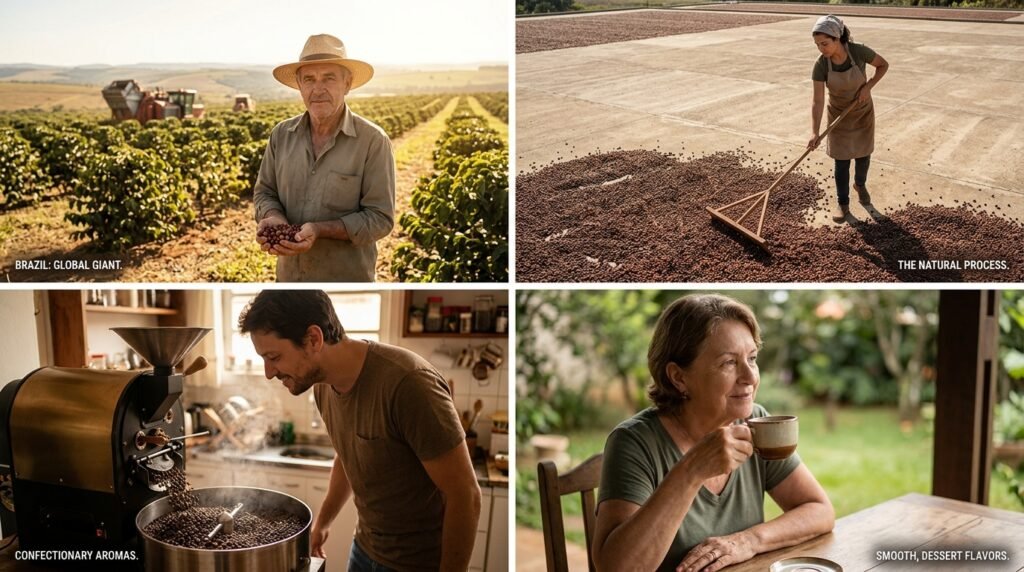
As I explored the continent country by country, the distinct personalities of the regions began to emerge. Brazil, being the undisputed giant of global production, was my first deep dive.
What I noticed about Brazil was its unapologetic, aggressive sweetness.
But it isn’t a fruity sweetness. It is a deep, confectionary sweetness. Because much of Brazil’s coffee is grown on vast, rolling plateaus at slightly lower altitudes (around 800 to 1,200 meters), the coffee cherries mature in a warmer climate.
Furthermore, Brazil is famous for using the “Natural” processing method. They leave the coffee cherry intact and let it dry in the sun on massive concrete patios. The fruit ferments and bakes the sweet, sticky sugars directly into the seed.
When I brew a natural Brazilian coffee, my kitchen smells like a candy shop.
The flavors are incredibly distinct: peanut butter, toasted hazelnut, molasses, and massive amounts of milk chocolate. There is virtually zero acidity. It is the ultimate dessert coffee. Understanding this specific, comforting lack of acidity is exactly (How Tasting Brazilian Coffee Changed My Morning Routine), as it taught me that I don’t always need my morning beverage to be a sharp, vibrant wake-up call.
Notice #3: The Colombian Tightrope
Moving slightly north and west from Brazil, I hit the towering Andes mountains of Colombia.
What I noticed about Colombian coffee was how brilliantly it manipulated balance.
If Brazil is a pure, heavy chocolate bar, Colombia is a chocolate bar infused with a hint of crisp fruit.
The geography of Colombia is radically different from the plateaus of Brazil. The coffee here is grown on incredibly steep, volcanic mountain slopes at much higher altitudes (often between 1,500 and 2,000 meters). The air is cooler, and the plants struggle more.
Additionally, Colombia almost exclusively uses the “Washed” processing method, where the fruit is stripped off the seed immediately, leaving a very clean, pristine flavor profile.
When I brew a washed coffee from the Huila or Nariño regions of Colombia, the chocolate and caramel foundation is still there. But right at the very end of the sip, a bright, beautiful spark of acidity cuts through the heaviness.
It usually tastes like a crisp red apple, a sweet cherry, or a subtle orange peel.
It never overwhelms the chocolate, but it keeps the coffee from feeling too heavy or flat. This perfect, harmonious balance between sweet comfort and bright acidity is exactly (Why Colombian Coffee Became My Go-To Choice). It is the most reliable, crowd-pleasing origin on the planet.
Notice #4: The Pristine Softness of Peru
One of the greatest surprises of my South American exploration came from a country that often gets overshadowed by its massive neighbors: Peru.
I bought a bag of single-origin organic coffee from the Cajamarca region of Peru. I didn’t really know what to expect.
What I noticed immediately was the pristine softness of the cup.
Peru has quietly become one of the largest producers of certified organic coffee in the world. The farms are often incredibly remote, nestled high in the Andes, run by small indigenous cooperatives. The isolation of these farms means the environment is incredibly pure.
The Peruvian coffee I brewed was delicate. It didn’t have the heavy, peanut-butter punch of Brazil, nor the crisp apple snap of Colombia.
Instead, it was soft, creamy, and incredibly soothing. It tasted like vanilla bean, toasted graham crackers, and sweet milk chocolate. It was the most gentle coffee I had ever tasted. It didn’t demand my attention; it simply provided a quiet, flawless background to my morning.
The Ultimate Espresso Engine
My deep dive into South America also completely changed how I use my home espresso machine.
Pulling a shot of espresso is a violent brewing method. High-pressure hot water is blasted through tightly packed grounds in just thirty seconds. If you use a highly acidic, light-roast African coffee, the espresso can easily become a sour, face-puckering assault on your tastebuds.
But South American coffees are practically built for the espresso machine.
When I put a Brazilian or a Colombian bean into my grinder, the magic happens. Because these beans are packed with heavy oils and natural chocolate sugars, the espresso machine extracts a massive, beautiful, thick layer of golden crema.
The resulting shot of espresso is a concentrated syrup of dark chocolate and toasted nuts. It is rich, balanced, and intensely sweet.
The Marriage with Milk
This leads me to the most important thing I noticed about South American coffees: they are the undisputed champions of milk-based drinks.
Remember my disastrous chocolate cake experience at the bakery? The lemony African coffee clashed with the rich dessert.
The same rule applies to adding milk to your coffee. If you pour steamed milk into a bright, floral, citrusy Ethiopian coffee, the milk masks the delicate flavors, and the acidity can sometimes make the milk taste slightly sour. It is a bad marriage.
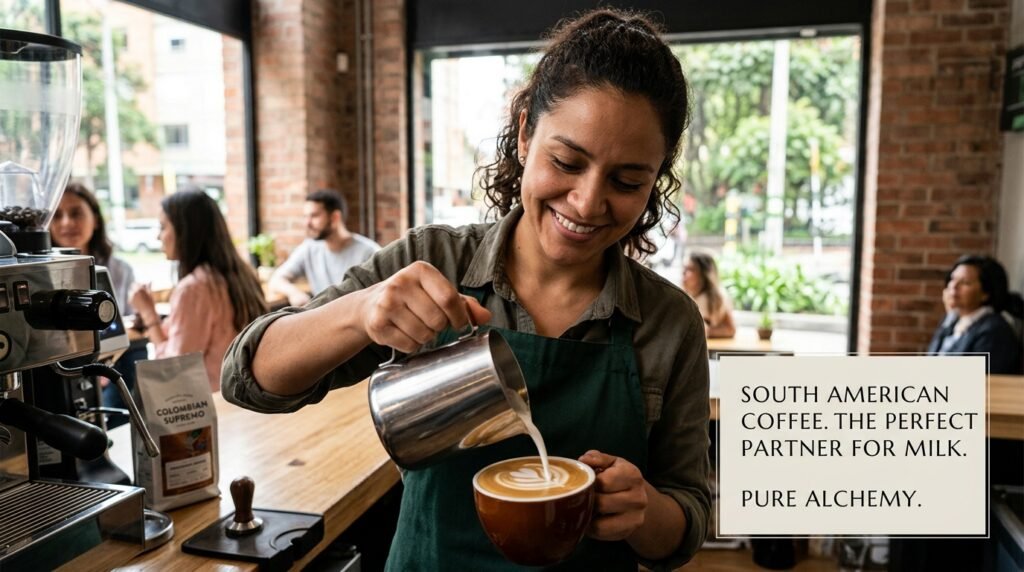
But if you pour steamed whole milk over a shot of heavy, chocolatey South American espresso? It is pure alchemy.
The fats in the milk bind perfectly with the heavy chocolate and caramel notes of the coffee. A Brazilian or Colombian latte tastes like liquid velvet. It tastes like a sophisticated hot chocolate with a caffeine kick.
South America taught me that if you are someone who loves to add milk or cream to your morning mug, you absolutely must be buying beans from this continent. They are structurally designed to cut through the dairy and provide a sweet, harmonious balance.
Returning to the Bakery
A few months after my first bakery disaster, I went back to the exact same artisanal shop.
I ordered the exact same decadent slice of dark chocolate cake. But this time, when I ordered my coffee, I asked the barista what they had on batch brew.
“We have a washed Ethiopian Yirgacheffe, or a washed Colombian from the Cauca region,” he said.
I smiled. “I’ll take the Colombian, please.”
I took my cake and my coffee to the small iron table outside. I took a bite of the rich, buttery dark chocolate frosting. Then, I took a slow sip of the hot Colombian coffee.
It was a revelation.
The caramel and milk chocolate notes of the coffee perfectly mirrored the sweetness of the cake. The heavy body of the coffee washed the dense frosting off my palate cleanly. The subtle, crisp apple acidity of the Colombian bean provided just enough brightness to keep the pairing from feeling too heavy.
They weren’t fighting. They were dancing.
The Anchor of the Coffee World
I will never stop loving the wild, exotic, fruity coffees of Africa. They will always hold a special place in my heart for when I want to intellectually engage with my beverage.
But exploring South America taught me to respect the baseline.
You cannot build a house without a foundation. South America is the foundation of the global coffee industry. It is the anchor that keeps the entire specialty coffee world grounded.
The next time you are buying coffee, do not dismiss the bags from Brazil, Colombia, or Peru as “ordinary.” They are not ordinary. They are the result of incredible volcanic terroirs, high-altitude climates, and generations of farming mastery.
Take a bag home. Brew it carefully. And when that heavy, sweet, comforting aroma of chocolate and toasted nuts fills your kitchen, you will finally understand the profound, quiet beauty of a perfectly balanced cup.

My name is Daniel Carter, I am 35 years old, and I live in the United States. I have been passionate about aquariums for many years, and what started as a simple hobby quickly became a lifelong interest in aquatic life, fish behavior, and responsible tank care.
Through TheBrightLance, I share real experiences, practical knowledge, and honest lessons learned from maintaining different types of aquariums. I enjoy testing equipment, studying fish behavior, improving maintenance routines, and helping beginners avoid common mistakes.
My goal is to make aquarism easier, more ethical, and more enjoyable for everyone — whether you are setting up your very first tank or looking to refine your techniques.