
For the first decade of my adult life, I operated under a very simple, very flawed assumption: coffee is just coffee.
I thought that no matter what brand you bought, what country it came from, or how much it cost, it was all fundamentally the exact same brown liquid. Sure, some brands were a little stronger, and some were a little weaker, but the core flavor profile—that dark, bitter, roasted taste—was universal.
If someone told me they tasted “notes of blueberry and jasmine” in their morning mug, I would roll my eyes. I assumed they were either making it up to sound sophisticated, or they had poured a ridiculous amount of flavored syrup into their cup when no one was looking.
But then, my entire perspective shifted. I started exploring the world of specialty coffee, and I accidentally stumbled into a sensory universe I never knew existed.
I remember brewing two different bags of coffee on the exact same morning, using the exact same equipment, and being absolutely stunned by the results. One cup tasted like heavy dark chocolate and toasted nuts. The other cup tasted like a vibrant, fruity cup of black tea with lemon.
How could two things, both labeled simply as “coffee,” taste so drastically different?
That question sent me down a massive rabbit hole. I wanted to understand the science and the agriculture behind the flavors in my mug. Here is the story of my personal discovery, and the main reasons why some coffees taste completely different from others.
The Seed of a Fruit, Not a Bean
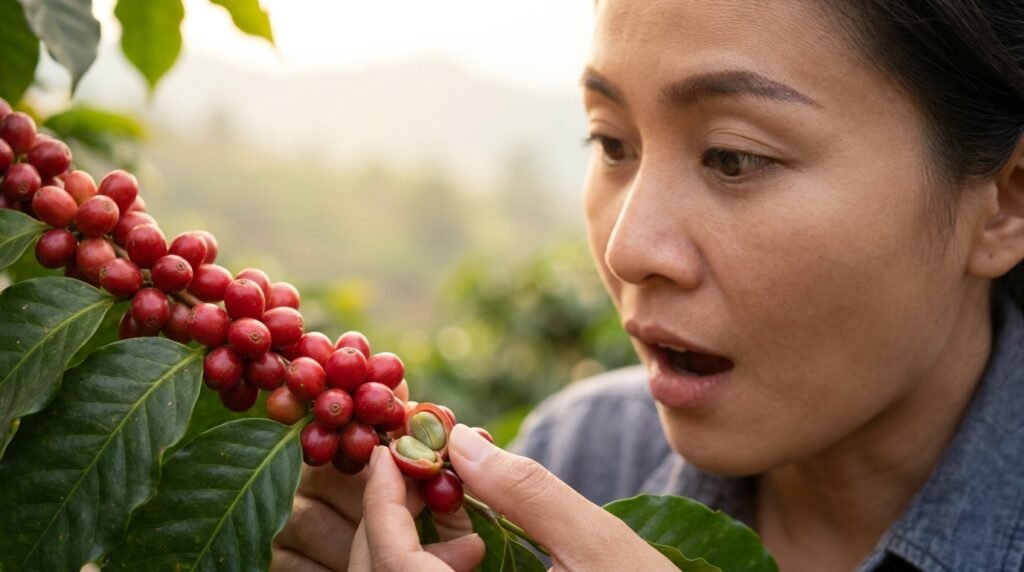
The first major breakthrough in my understanding came from a simple botanical fact that I had somehow managed to ignore my entire life: coffee is not a bean. It is a seed.
Specifically, it is the seed of a small, cherry-like fruit that grows on a shrub.
When you realize that coffee is a fruit, everything starts to make sense. Think about apples. A Granny Smith apple tastes incredibly tart and crisp, while a Fuji apple tastes remarkably sweet and mellow. They are both apples, but their genetic makeup makes them taste completely different.
Coffee works the exact same way. There are dozens of different species of coffee plants, and thousands of different varieties.
The two main species you will hear about are Arabica and Robusta. Robusta is tough, grows at low altitudes, and produces a harsh, bitter, rubbery flavor with a massive hit of caffeine. Arabica is fragile, grows high in the mountains, and produces the sweet, complex, and nuanced flavors that specialty coffee lovers obsess over.
But even within Arabica, there are countless sub-varieties. The Heirloom varieties growing wild in the forests of Ethiopia taste nothing like the Bourbon varieties growing on the hillsides of Central America. The genetics of the plant itself are the very first building block of flavor.
The Magic of Terroir and Altitude
Once I understood the plant, I started looking at the environment. In the wine industry, there is a French term called terroir (pronounced ter-wahr). It essentially means “the taste of the place.”
I quickly discovered that terroir applies just as heavily to coffee. The soil composition, the amount of rainfall, the amount of shade, and the local climate all physically alter the chemical makeup of the coffee seed.
This is exactly ( What Makes Coffee Taste Different Around the World?). A coffee plant growing in the volcanic, mineral-rich soil of Guatemala is going to absorb different nutrients than a plant growing in the red, loamy dirt of Kenya.
But the most important environmental factor of all is altitude.
When I started reading the labels on specialty coffee bags, I noticed they always listed the elevation, usually somewhere between 1,200 and 2,000 meters above sea level. I used to think this was just pretentious marketing. It turns out, altitude is the secret to sweetness.
When a coffee plant grows high up in the mountains, the air is cooler. Because of the cool temperatures, the coffee cherries mature much slower. This extended ripening time allows the seed inside to develop highly complex sugars and organic acids.
This slow growth is the main reason ( Why Some Coffee Origins Taste Sweeter Than Others ). When you drink a high-altitude coffee, you are literally tasting the struggle of the plant to grow in cold mountain air. Lower altitude coffees grow faster, resulting in less sugar development and a blander, earthier flavor.
The Processing Method: The Biggest Flavor Changer
Of all the things I learned during my personal coffee discovery, nothing blew my mind quite like “processing.”
When the farmer picks the ripe red coffee cherries off the tree, they have to get the seed (the bean) out from inside the fruit before they can ship it. How they remove that fruit drastically changes the final taste of your coffee.
There are two main ways to do this, and discovering the difference between them changed my mornings forever.
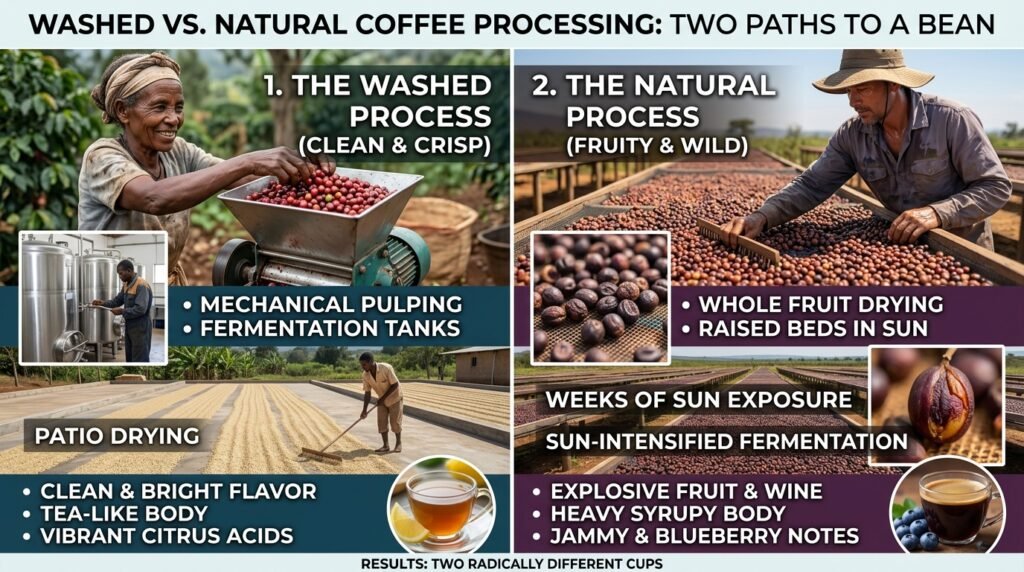
1. The Washed Process (Clean and Crisp) In the washed process, the farmer takes the freshly picked cherries and immediately runs them through a machine that violently scrubs all the fruit and sticky mucilage off the seed. The seeds are then soaked in water tanks to ferment slightly and clean off any remaining fruit residue before being laid out to dry in the sun.
Because the fruit is removed almost immediately, the flavor of the final coffee is entirely driven by the seed itself. Washed coffees taste incredibly clean, bright, and crisp. They often have tea-like bodies and vibrant, citrusy acidity. When I want a refreshing, structured cup of coffee, I always look for the word “Washed” on the bag.
2. The Natural Process (Fruity and Wild) This is the process that completely shattered my idea of what coffee could be. In the natural (or unwashed) process, the farmer doesn’t remove the fruit. Instead, they take the whole, intact coffee cherries and lay them out on raised beds in the hot sun to dry like raisins.
The cherries sit in the sun for weeks. As they dry and shrivel up, all the intense sugars, wild fruit flavors, and ferments from the rotting fruit seep directly into the seed.
When you roast and brew a naturally processed coffee, the result is explosive. It often tastes like strawberry jam, ripe blueberries, and dark wine. The body is heavy and syrupy. The first time I tried a natural Ethiopian Guji, the blueberry flavor was so intense I thought my tastebuds were hallucinating.
If you ever buy two bags of coffee from the exact same farm, but one is washed and one is natural, they will taste so different you won’t believe they came from the same tree.
The Art of the Roast: Destroying or Highlighting Flavor
Of course, all the genetics, altitude, and processing in the world don’t matter if the coffee is ruined in the final step: the roast.
For most of my life, I drank “French Roast” or “Italian Roast” coffees. The beans were oily, black, and smelled like a campfire.
What I discovered is that roasting coffee is like cooking a steak. If you buy a beautiful, expensive, dry-aged ribeye steak, you want to cook it medium-rare so you can actually taste the quality of the meat. If you cook it on a grill until it is a charred, blackened hockey puck, you can’t taste the meat anymore; you can only taste the charcoal.
Commercial coffee companies often use cheap, low-altitude, defective beans. To hide the bad flavors of those cheap beans, they roast them incredibly dark. The dark roast destroys the origin flavors and replaces them with the flavor of ash and carbon. That is why all cheap coffees taste exactly the same: you aren’t tasting the coffee, you are tasting the burn.
Specialty coffee roasters do the opposite. They buy expensive, high-quality, high-altitude beans, and they roast them light or medium.
A light roast barely caramelizes the sugars, leaving all the delicate floral, fruity, and acidic notes completely intact. A medium roast brings out the rich chocolate, caramel, and nutty notes without crossing the line into bitterness.
This difference in roasting is the most obvious reason why coffees taste different on the grocery store shelf.
A Tale of Two Origins: My Ultimate Taste Test
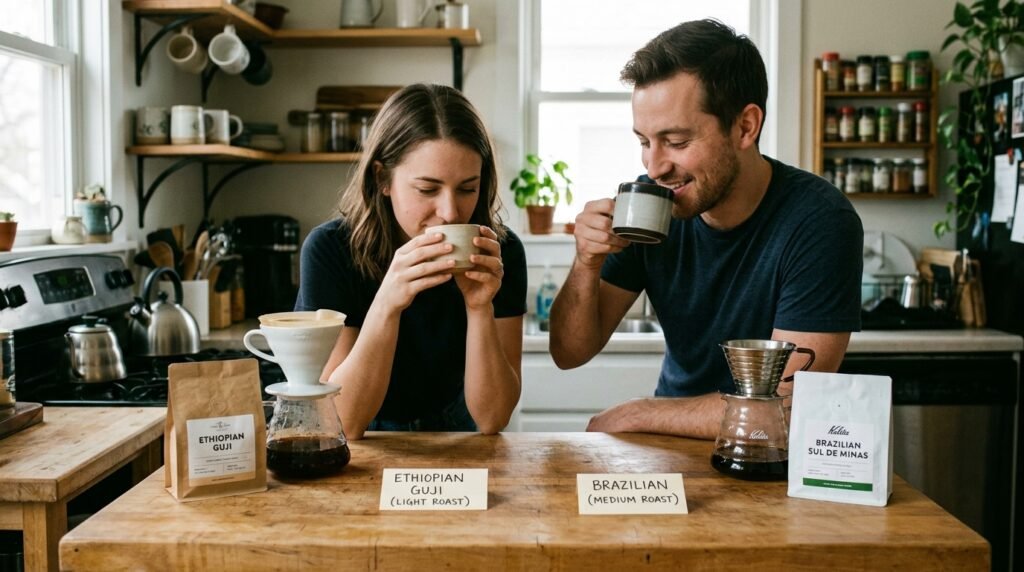
To truly solidify this discovery, I did a side-by-side taste test in my kitchen. I brewed a cup of my favorite light-roast African coffee (an Ethiopian Guji) next to a medium-roast South American coffee.
The contrast was staggering.
The Ethiopian coffee, grown incredibly high up and naturally processed, tasted like a wild fruit bomb. It was thin, acidic, and tasted like jasmine flowers and berries. It was the perfect, complex cup for a slow weekend morning when I had time to analyze every sip.
Then, I tasted the South American cup. Understanding this specific profile is exactly (How Tasting Brazilian Coffee Changed My Morning Routine). The Brazilian beans, grown at a slightly lower altitude and naturally processed, offered a completely different comfort level. It was heavy, rich, and tasted like creamy milk chocolate, peanut butter, and sweet caramel. It had zero sourness and coated my mouth like a warm dessert.
Neither coffee was “better” than the other. They were just completely different expressions of agriculture. One was a bright, acidic fruit; the other was a comforting, chocolatey hug.
Freshness: The Invisible Flavor Thief
There is one final factor I discovered that dictates why some coffees taste amazing and others taste like flat cardboard: time.
Coffee beans are full of volatile oils and aromatic compounds. The moment the beans leave the roasting machine, they start releasing carbon dioxide and losing those flavors to the air.
If you buy a bag of coffee that was roasted six months ago (which is standard for supermarket coffee), almost all of the unique origin flavors have evaporated. The blueberry notes disappear. The chocolate notes fade. You are left with a stale, dusty, generic “coffee” flavor.
But if you buy a bag of coffee from a local roaster that was roasted just one week ago, those oils are still trapped inside the bean. When you grind it, the aroma fills the entire room. When you brew it, the flavors are punchy, vibrant, and alive.
If you have ever wondered why the coffee at your local specialty café tastes so much better than the exact same beans brewed at home, freshness (along with a good grinder) is usually the culprit.
My Advice for Your Next Cup
My personal discovery journey completely ruined bad coffee for me, but it opened up a world of culinary joy I never expected to find in a beverage.
I no longer look at coffee as a caffeine delivery system. I look at it as an agricultural miracle.
If you want to start experiencing these differences for yourself, my advice is simple. The next time you buy a bag of coffee, skip the supermarket aisle. Go to a local specialty coffee roaster or order a bag online from a reputable source.
Read the label. Look for the altitude. Look for the processing method. Make sure there is a “Roasted On” date, not just a “Best By” date.
Buy a light-roast Ethiopian coffee and a medium-roast Colombian coffee. Take them home, brew them carefully side-by-side without any milk or sugar, and just take a sip.
Close your eyes and pay attention to what your tongue is telling you. Does one taste like fruit? Does the other taste like chocolate? Does one feel heavy, while the other feels like tea?
Once you stop treating coffee like a generic morning chore and start treating it like a tasting experience, you will quickly discover exactly why some coffees taste so different.
And I promise you, once you taste the difference, your mornings will never be the same again.

My name is Daniel Carter, I am 35 years old, and I live in the United States. I have been passionate about aquariums for many years, and what started as a simple hobby quickly became a lifelong interest in aquatic life, fish behavior, and responsible tank care.
Through TheBrightLance, I share real experiences, practical knowledge, and honest lessons learned from maintaining different types of aquariums. I enjoy testing equipment, studying fish behavior, improving maintenance routines, and helping beginners avoid common mistakes.
My goal is to make aquarism easier, more ethical, and more enjoyable for everyone — whether you are setting up your very first tank or looking to refine your techniques.