
If you ask an anthropologist about the single most important turning point in human history, they will not point to the invention of the wheel, and they will not point to the forging of bronze or iron.
They will point to the mastery of fire.
When our ancient ancestors learned how to build and maintain a campfire, it completely altered the trajectory of our species. The fire was not just a tool for cooking meat or a weapon to keep dangerous predators away in the dark. It was the very first social magnet.
Before the fire, humans slept in isolated, defensive positions. But once the campfire was lit, everyone naturally gathered around it. The heat drew them in. The glowing light provided a safe perimeter. Sitting in a circle around the flames, early humans began to share stories, develop complex language, and form the deep, trusting bonds that eventually built entire civilizations.
The physical hearth was the absolute center of human survival and sociology.
But if you look at the modern world we live in today, the physical hearth is gone. We have central heating. We have microwaves. We have perfectly temperature-controlled, isolated apartments. We no longer need to gather around a physical fire to stay warm or to feel safe.
But our biology hasn’t changed. We still possess an ancient, primal craving to gather around a shared source of warmth.
I firmly believe that we did not abandon the campfire; we simply poured it into a ceramic mug.
For the first half of my adult life, I treated coffee as a sterile, utilitarian drug. But as I began to travel, observe, and dive deeper into the global culture of the roasted bean, I realized that coffee is the modern, portable campfire.
Here is the honest, deeply philosophical story of why coffee is more than just a beverage worldwide, how a simple agricultural crop replaced the ancient hearth, and why the dark liquid in your kitchen is the ultimate thread holding human connection together in a cold, digital age.
The Biology of the Shared Hearth
To understand the global phenomenon of coffee, you have to look closely at the physical act of consuming it.
When you order a hot cup of coffee, watch what your hands naturally do. You do not just hold the cup by the handle and keep it away from your body. You naturally wrap both of your hands entirely around the ceramic mug. You pull the heat close to your chest. You lower your head slightly to let the warm steam hit your face, and you take a deep, slow breath.
This is not a logical, calculated action. It is a deeply ingrained biological instinct.
Holding a warm object physically lowers our defensive barriers. It triggers a subconscious neurological response that signals safety, comfort, and peace.
When I used to drink cheap, mass-produced coffee from a plastic drive-thru cup, I was ignoring this biological gift. I was drinking it fast, entirely focused on the caffeine spike. But when I finally slowed down and started brewing specialty coffee by hand, I realized that the physical warmth of the mug was just as important as the liquid inside of it.

The Universal Peace Treaty
Because coffee provides this profound sense of physical and psychological safety, it has evolved into the ultimate global peace treaty.
If you travel to any foreign country where you do not speak the language, do not understand the customs, and feel completely isolated, the offer of a cup of coffee is the universal translator. It is the international symbol for “you are welcome here.”
In the Middle East, offering a guest a cup of thick, spiced coffee brewed in a traditional brass cezve is a sacred social contract. It is a demonstration of pure honor. The host is literally offering you the warmth of their home.
In Ethiopia, the traditional coffee ceremony is an hours-long demonstration of absolute respect. The host roasts the green beans over an open flame in the living room, ensuring that the guests are enveloped in the heavy, intoxicating smoke before the first cup is ever poured.
Witnessing how this simple seed acts as a diplomatic tool across borders was the defining moment of (The Moment I Realized Coffee Is a Global Experience). I realized that coffee is the only beverage on earth that carries the exact same emotional weight regardless of the geopolitical border you are standing behind.
A Geography of Invisible Hands
The concept of coffee being more than a beverage becomes even more staggering when you look at the massive, invisible web of human labor required to create it.
When we gather around the modern campfire of a coffee shop, we are not just connecting with the people sitting across the table from us. We are connecting with a massive, global network of invisible hands.
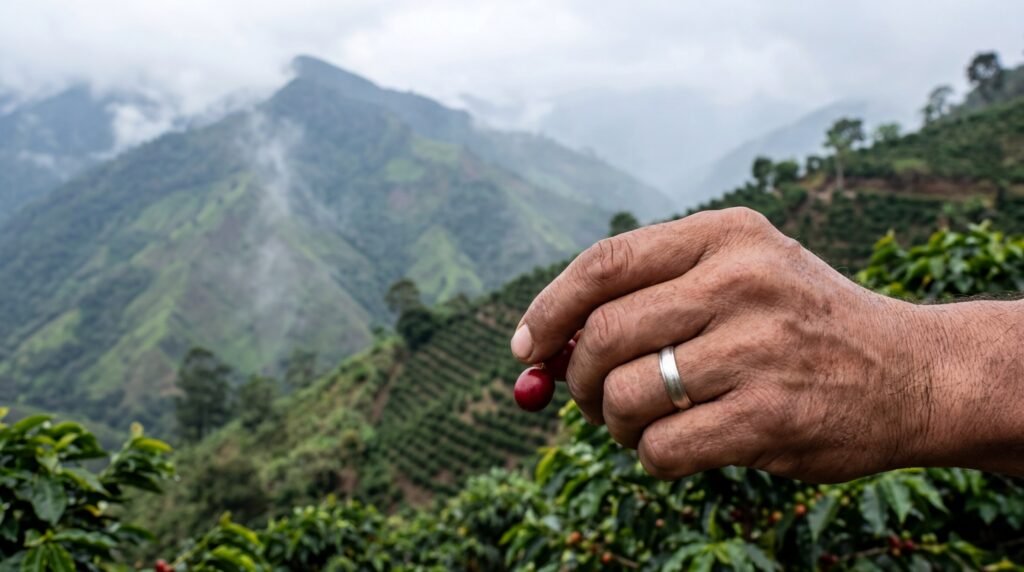
Unlike massive industrial crops like corn or wheat, high-quality specialty coffee cannot be harvested by giant, automated machines. It grows on steep, high-altitude volcanic mountainsides in places like Colombia, Guatemala, and Kenya.
Every single ripe, red coffee cherry must be meticulously picked by a human being.
A farmer had to hike up a treacherous, muddy incline. Workers had to spend weeks washing, fermenting, and raking the seeds on raised drying beds under the heavy tropical sun.
Absorbing the sheer scale of this exhausting physical labor perfectly illustrates (What I Discovered About Coffee Farming Around the World). I suddenly understood that every single sip of coffee is a liquid testament to an epic, global collaboration.
When you drink a cup of coffee, you are quite literally tasting the geographical dirt, the intense climate, and the back-breaking dedication of a family you will never meet. It is a profound, silent connection to the earth and the people who tend to it.
The Architecture of the Modern Village Square
Beyond the agricultural connections, coffee is fundamentally responsible for reshaping the architecture of our modern societies.
Historically, human beings lived in tight-knit villages. We had a central town square where everyone naturally intersected. You would see the baker, the blacksmith, and the mayor all walking the exact same cobblestone paths.
Today, we live in massive, anonymous, sprawling cities. We drive in isolated metal cars, we park in underground garages, and we take elevators directly to our high-rise apartments. We have completely lost the village square.
The local, independent coffee shop is the desperate, modern attempt to rebuild that village square.
When you walk into a neighborhood roastery, you are stepping into a designated “Third Place”—a sociological sanctuary that is neither your private home nor your highly stressful workplace.
It is a completely neutral, democratic zone. The CEO of a tech company and a struggling university student will sit at the exact same communal wooden table, united by the exact same roasted beverage.
Breaking the Digital Isolation
This architectural phenomenon is the very reason I stopped brewing coffee exclusively in my kitchen and started spending my afternoons in local cafes.
In an era where remote work and digital communication dominate our lives, the silence of a solitary apartment can become absolutely deafening. We can go an entire week without speaking a single word out loud to a stranger.
We desperately crave the ambient noise of humanity.
Going to a coffee shop provides the ultimate excuse to simply exist in public. Recognizing this profound social utility is the exact reason (Why Coffee Brings People Together). You do not even have to engage in a deep conversation to feel the benefits.
Just hearing the high-pitched hiss of the espresso machine, smelling the dense, caramelized sugars in the air, and listening to the low, rhythmic murmur of human conversation is enough to cure the digital isolation. The coffee shop is the campfire, and we are all just pulling up a chair to get warm.
The Chemistry of Empathy
We must also acknowledge the biological reality that makes coffee such a powerful social tool. It alters our brain chemistry in a way that actively promotes empathy and connection.
Alcohol, the other major social beverage in human history, is a central nervous system depressant. It blurs our vision, numbs our reactions, and often makes us sloppy and self-centered.
Caffeine, however, is a mild, sharp stimulant.
When you sit across from a friend and drink a cup of high-quality coffee, the caffeine triggers the release of dopamine. It elevates your mood. It sharpens your cognitive focus. You become a better, more active listener. You are more articulate, more patient, and more deeply engaged in whatever the other person is saying.
Coffee does not numb the human experience; it amplifies it. It provides the exact chemical environment required for two isolated adults to drop their defensive shields and actually communicate.

Building the Fire in My Own Kitchen
When I finally understood that coffee was not a drug, but rather a global tradition, a social anchor, and a portable campfire, I completely overhauled the way I interact with it in my own home.
I stopped treating the morning brew as a frantic, thoughtless chore.
I threw away my automatic plastic drip machine. I bought a manual stainless steel burr grinder, a digital kitchen scale, and a beautiful glass V60 pour-over cone. I decided that if coffee was the modern hearth, I was going to learn how to build the fire properly.
Now, my morning routine is a sacred, un-rushable ritual.
When I wake up, I do not reach for my smartphone to check my emails. I walk into the quiet kitchen. I weigh the light-roast, single-origin beans. I turn the metal crank on the hand grinder, letting the intense, sweet aromatics wake up my senses.
I stand perfectly still and pour the hot water from a gooseneck kettle in slow, hypnotic circles. I watch the coffee bed bloom. I watch the steam rise.
For fifteen minutes, the chaotic, demanding, digital world simply does not exist. I am anchored to the physical world. I am tending to the fire.
The Greatest Human Tradition
We live in a world that is obsessed with finding the fastest, most efficient shortcut for every single aspect of our lives. We are constantly trying to eliminate friction.
But when you eliminate all the friction, you lose the texture of life.
If you are currently buying cheap, mass-produced coffee and drinking it blindly out of a paper cup just to survive your morning commute, I challenge you to look deeper into your mug.
You are holding the most incredible, unifying cultural artifact on the face of the earth.
You are holding the brutal physical labor of a farmer on a different continent. You are holding the ancient hospitality of the Bedouin tribes. You are holding the intellectual fuel of the Enlightenment, and the ambient warmth of the modern village square.
The next time you make a cup of coffee, slow down. Pre-heat a heavy ceramic mug. Wrap both of your hands around it. Take a deep breath of the steam, and appreciate the fact that you are participating in the oldest, greatest human tradition of all time: gathering around the warmth of the fire.
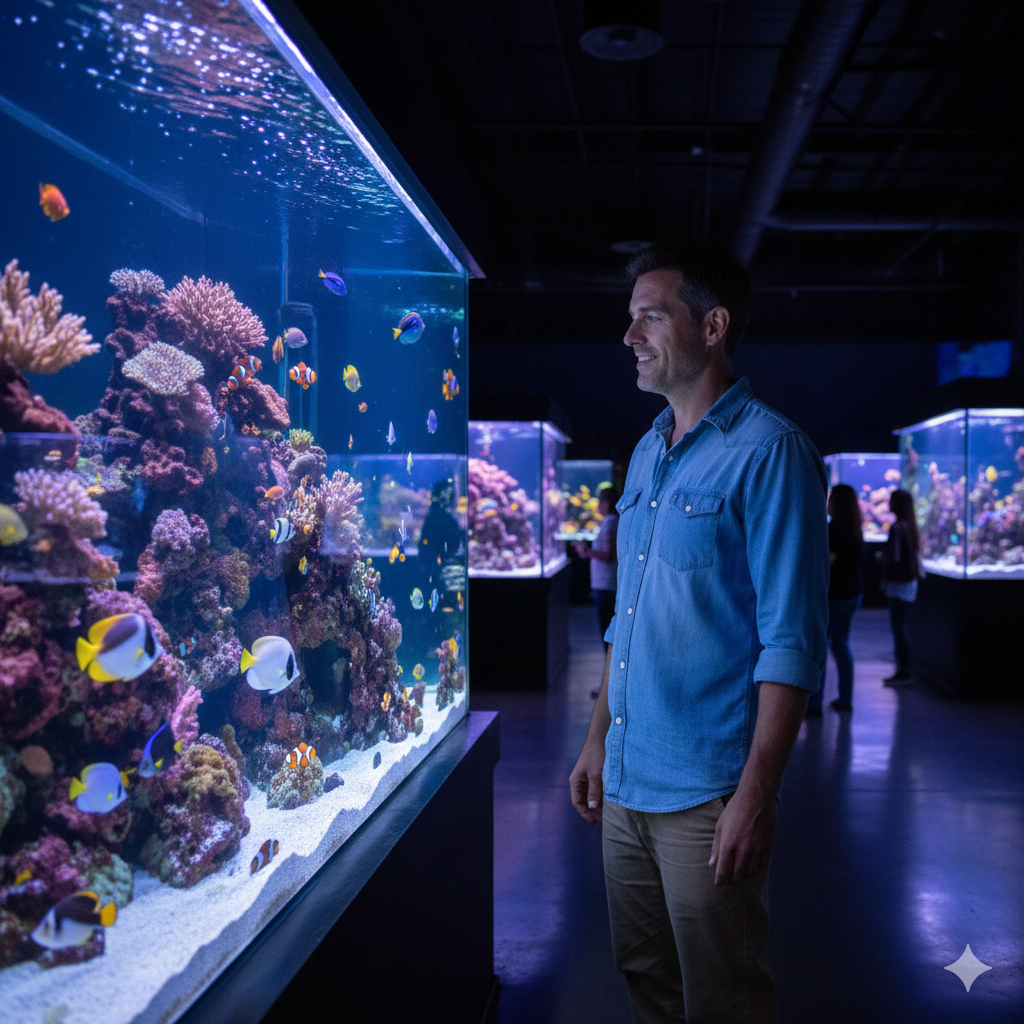
My name is Daniel Carter, I am 35 years old, and I live in the United States. I have been passionate about aquariums for many years, and what started as a simple hobby quickly became a lifelong interest in aquatic life, fish behavior, and responsible tank care.
Through TheBrightLance, I share real experiences, practical knowledge, and honest lessons learned from maintaining different types of aquariums. I enjoy testing equipment, studying fish behavior, improving maintenance routines, and helping beginners avoid common mistakes.
My goal is to make aquarism easier, more ethical, and more enjoyable for everyone — whether you are setting up your very first tank or looking to refine your techniques.