
I am generally someone who thrives on absolute, predictable routine. I like to wake up at the exact same time every morning, walk the exact same route to my favorite local park, and drink the exact same comforting types of coffee.
For the first few years of my specialty coffee journey, I built a very comfortable, very rigid map of the world inside my kitchen pantry.
On the left side of the wooden shelf, I kept my South American coffees. I knew exactly what they would deliver: a heavy, comforting hug of milk chocolate, toasted hazelnuts, and sweet caramel. On the right side of the shelf, I kept my East African coffees. I knew they would provide a bright, zesty, tea-like explosion of blooming flowers and crisp citrus fruit.
I lived happily inside this binary flavor world. I thought I had experienced the entire spectrum of what a coffee bean was capable of doing. I believed that coffee was either a heavy chocolate dessert or a bright fruit juice.
Then, one rainy afternoon, a well-meaning friend visited my apartment and brought me a bag of coffee as a gift. The label didn’t say Colombia, and it certainly didn’t say Ethiopia.
It simply said: Sumatra, Indonesia.
I had completely ignored the entire continent of Asia in my coffee education. I assumed it wouldn’t fit into my neat, organized binary system. I assumed it would just be a weird, bitter outlier that wasn’t worth my time or my money.
But when I brewed that first cup, my neat little map was completely set on fire. It didn’t taste like chocolate, and it didn’t taste like fruit. It tasted like an ancient, mystical forest.
Here is the honest, sensory-overloading story of why coffee from Asia surprised me so much, the wild agricultural survival tactics that create its bizarre flavor profile, and how it completely shattered my narrow view of the coffee world.
The Aromatic Shock in the Kitchen
My massive surprise started before I even boiled the water for my morning brew.
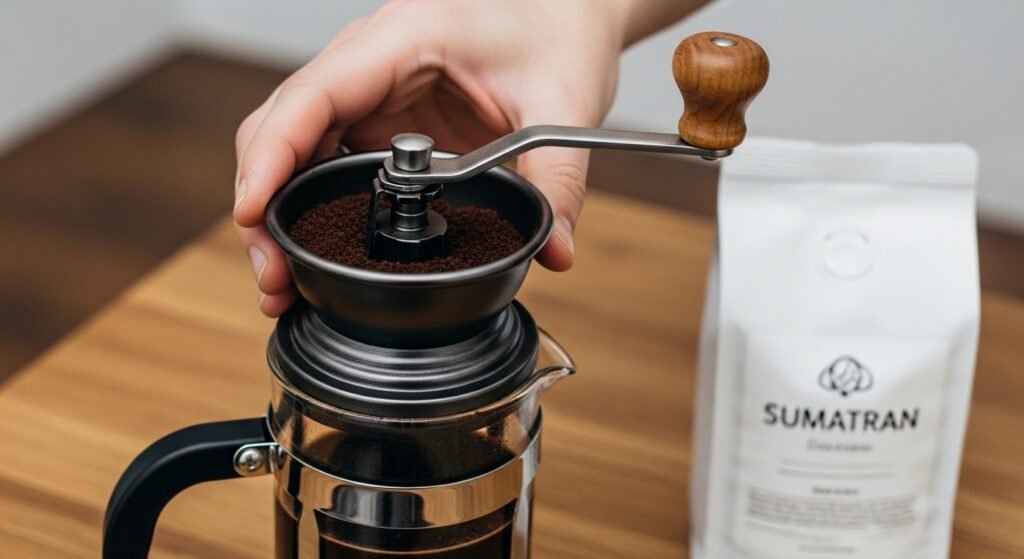
I broke the seal on the bag of Sumatran beans, poured fifteen grams onto my digital scale, and dumped them into my manual burr grinder. Usually, when I grind fresh coffee, my kitchen immediately fills with the scent of baked goods, sweet caramel, or bright, acidic citrus.
But as I turned the handle on the grinder, a completely unfamiliar aroma filled the air.
It smelled heavy, dark, and incredibly savory. I paused, stopped grinding, and leaned closer to the plastic hopper. It smelled vividly like a walk through a damp cedar forest right after a heavy, tropical rainstorm. There were massive, undeniable notes of wet earth, dark pipe tobacco, and pungent baking spices, like clove, nutmeg, and black pepper.
It smelled like a masculine, expensive cologne, not a comforting morning beverage.
I was deeply intimidated. Encountering a scent this wildly different is a core part of (The Most Unique Coffee Flavor I’ve Ever Tried), because my brain simply could not comprehend that a coffee bean was biologically capable of smelling like a wet forest floor. It felt like I was grinding an entirely different species of plant.
I cautiously set up my glass French Press, hoping the immersion brewing method would tame whatever wild, earthy beast was hiding inside those grounds.
The Sip of Heavy Velvet
When the four-minute timer finally beeped, I slowly pressed the metal plunger down, separating the dark, oily liquid from the spicy grounds.
I poured the coffee into my thickest ceramic mug and let it sit for a moment, watching the heavy steam rise into the cool morning air. I took a hesitant sip, fully expecting it to taste like muddy water or harsh, bitter ash.
My expectations were completely shattered in a matter of seconds.
The very first thing that shocked me was the physical texture of the liquid. It was the heaviest, thickest coffee I had ever experienced in my entire life. It didn’t just lightly coat my tongue; it felt like it coated my entire throat. It was incredibly velvety and syrupy, feeling almost like I was drinking a melted dark chocolate truffle.
And then the flavor fully arrived.
There was absolutely zero acidity. There was not a single trace of lemon, apple, peach, or berry. Instead, it was an overwhelming, complex wave of savory depth.
I tasted dark, unsweetened baker’s cocoa mixed with a sharp hit of black pepper and cedar wood. As I swallowed, a lingering, warm spice note remained on the back of my palate, reminding me of a heavy, dark ginger cake or a thick stout beer.
It wasn’t sweet. It wasn’t refreshing. It was brooding, intense, and absolutely magnificent.
The Survival Tactic: Exploring Wet-Hulling
I sat at my kitchen table, completely mesmerized by the heavy, savory liquid in my mug. I needed to know how the continent of Asia managed to produce a coffee that tasted so aggressively different from the rest of the world.
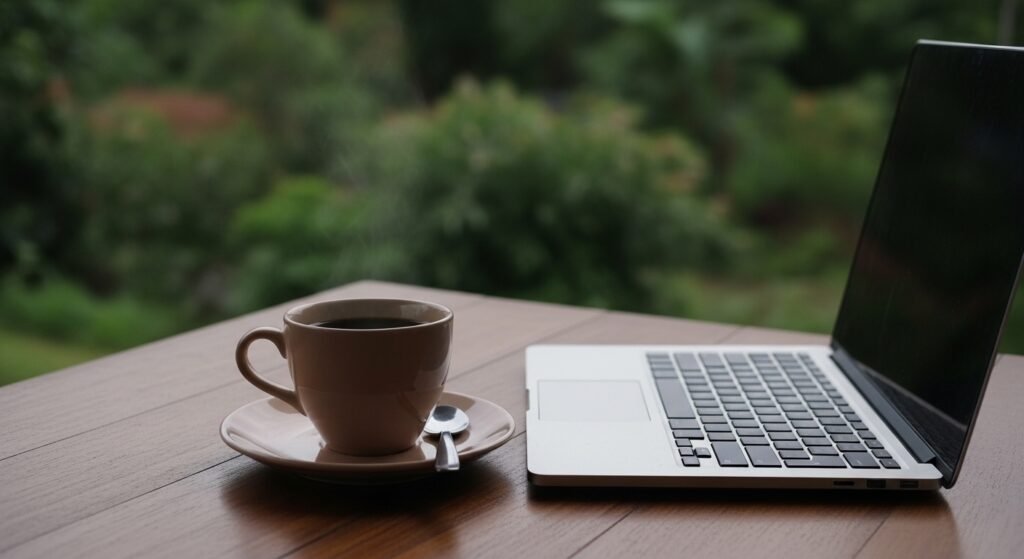
I opened my laptop, completely ignoring my morning emails, and started researching the Indonesian coffee industry.
I quickly discovered that the bizarre flavor of my Sumatran coffee was not just a result of the volcanic dirt; it was the result of a desperate, ingenious agricultural survival tactic.
In places like Brazil, Colombia, or Ethiopia, farmers rely on long, predictable, hot dry seasons to process and dry their coffee beans. The sun bakes the moisture out of the seeds slowly and safely over several weeks.
But Indonesia is geographically different. The climate is defined by relentless, suffocating humidity and almost constant torrential rainfall.
If a farmer in Sumatra tried to dry their coffee normally, laying the beans out on a concrete patio in their protective parchment layer, the beans would simply rot. The extreme jungle humidity would breed mold, and the entire crop would be destroyed before it ever fully dried.
To survive this hostile, wet environment, Indonesian farmers had to invent a completely new processing method called Giling Basah, which roughly translates to “Wet-Hulling.”
The Violent Chemistry of the Jungle
The Wet-Hulling process is completely unique to Indonesia, and it is the sole reason their coffee tastes like a spicy cedar forest instead of a fruit orchard.
After picking the ripe red coffee cherries, farmers quickly strip off the outer skin. But instead of waiting weeks for the beans to dry in their protective parchment layer, they run the beans through a special, heavy-duty hulling machine while they are still wet, soft, and squishy.
This violent machine literally rips the protective parchment off the raw, wet seed.
The naked, vulnerable coffee beans are then thrown directly onto tarps in the humid jungle air to dry as quickly as possible between the relentless rainstorms.
This extreme exposure to the humid environment drastically alters the cellular structure of the bean. It completely destroys the bright, acidic fruit notes that usually develop inside a coffee seed.
In their place, the porous bean absorbs the heavy, earthy, spicy characteristics of the jungle air itself.
Understanding this forced environmental adaptation is the foundation of (What Makes Coffee Taste Different Around the World?). The farmers didn’t choose to make their coffee taste earthy on a whim; the unrelenting rain forced them to invent a process that permanently changed the chemistry of the bean just so they could have a product to sell.
Expanding the Map to Vietnam
My unexpected, mind-bending journey through Indonesia made me fiercely curious about the rest of the Asian continent. I realized my coffee education was severely lacking, so I ordered a bag of coffee from Vietnam.
Vietnam is actually the second-largest coffee-producing nation on Earth, right behind Brazil. But you rarely see Vietnamese coffee highlighted in high-end specialty coffee shops or hipster cafés. I wanted to know why.
When I brewed my first cup of Vietnamese coffee using my standard pour-over method, the flavor was a massive shock.
It was harsh, aggressive, and incredibly bitter. It tasted almost like burnt rubber and harsh, dry wood. It lacked all the delicate nuance, sweetness, and floral elegance I was used to finding in my Arabica beans.
I was confused until I did some more digging.
I discovered that while South America and Africa primarily grow the delicate, sweet Arabica coffee species, Asia is the undisputed global king of the Robusta species.
The Robusta Reality
Robusta is a completely different genetic beast.
While Arabica plants are fragile and require high altitudes and cool climates to survive, Robusta is a tough, resilient plant. It can grow at very low altitudes in brutal, punishing heat.
But its greatest survival mechanism is its chemical composition. To defend itself against the massive swarms of insects found at low, tropical altitudes, the Robusta plant pumps massive amounts of caffeine into its seeds. It often contains double the amount of caffeine found in Arabica beans.
Because caffeine is a natural pesticide, and because caffeine is naturally, intensely bitter, Robusta coffee is inherently harsh, heavy, and aggressive.
Grasping this fundamental genetic divide is exactly (The Day I Finally Understood the Difference Between Arabica and Robusta). It finally explained why my Vietnamese coffee tasted so punishing when brewed black. It wasn’t a bad roast, and the farmer didn’t make a mistake; it was simply the unyielding, highly caffeinated nature of the Robusta plant that dominates the Asian commercial market.
The Brilliance of the Phin Filter
But the Asian coffee culture is brilliant, and they are incredibly resourceful. They didn’t try to force their harsh Robusta beans to taste like delicate floral teas. Instead, they invented brewing methods specifically designed to tame the beast and turn it into a dessert.
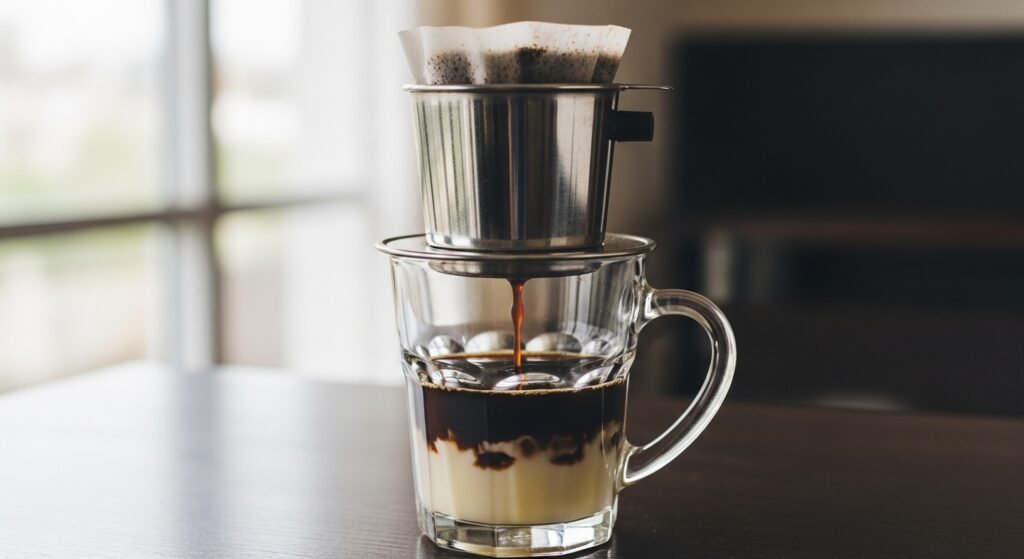
I learned about the traditional Vietnamese Phin filter.
It is a small, inexpensive metal drip filter that sits directly on top of your coffee mug. You put the dark, heavy, finely ground Robusta inside, pour hot water over them, and let the thick, oily coffee slowly drip down.
But the real magic happens at the very bottom of the mug before the brewing even starts.
Before you place the Phin on the cup, you pour a thick, generous layer of sweetened condensed milk into the glass. The intensely bitter, highly caffeinated Robusta coffee drips directly into the sugary, creamy milk.
When you take a spoon and stir it all together, it creates an absolute culinary masterpiece.
The aggressive bitterness of the Robusta cuts perfectly through the cloying, heavy sweetness of the condensed milk. If you tried to do this with a delicate Arabica bean, the coffee flavor would be completely lost in that much sugar. But the Asian Robusta stands its ground, creating a rich, decadent beverage that tastes like a melted, highly caffeinated coffee ice cream.
It completely changed how I viewed “bitter” coffee. It taught me that every origin and every species has a specific culinary purpose, as long as you know how to brew it properly.
Breaking the Snobbery
My unexpected journey through Asia completely cured me of my specialty coffee snobbery.
I used to think that the only coffees worth drinking were the delicate, highly acidic washed Arabicas from Ethiopia or Colombia. I used to turn my nose up at anything that was heavy, earthy, or overtly bitter. I thought I knew exactly what “good” coffee was supposed to be.
But Asia taught me that coffee is not a monolith, and perfection is subjective.
The heavy, cedar-wood spice of a wet-hulled Sumatran coffee is a beautiful testament to human survival in a harsh jungle climate. The aggressive, bitter punch of a Vietnamese Robusta is the necessary, brilliant foundation for one of the most delicious milk-based beverages on the planet.
Today, my pantry is no longer a rigid binary of South American chocolate and African fruit.
I proudly keep a bag of Indonesian coffee sitting right between my Colombian and Ethiopian beans.
I don’t drink it every day. It is still an intense, polarizing experience that demands a specific mood. But on a cold, dreary winter night, when I want a beverage that feels heavy, dark, and wonderfully complex, I skip the chocolate and the fruit.
I reach for the wet-hulled beans of Sumatra, and I let the spicy, earthy flavor of the Asian jungle completely envelop my palate.
A Challenge for Your Comfort Zone
If you are currently stuck in a flavor rut—if you only buy bright, acidic African coffees because someone told you they were the best, or if you only buy safe, comforting South American blends because you are afraid of acidity—I challenge you to expand your map.
You need to experience the absolute shock of the Asian flavor profile.
Go to a local specialty roaster and ask for a bag of coffee from Sumatra, Java, or Sulawesi. Make sure the barista confirms it is processed using the traditional Wet-Hulling method.
Take it home, grind it coarse, and brew it in a French Press to maximize the heavy, syrupy body and the intense oils.
When you take that first sip, and the completely unexpected flavors of cedar wood, pipe tobacco, and dark spices hit your tongue, your definition of coffee will permanently expand. You will finally understand why coffee from Asia surprised me so much, and you will realize that the culinary world is far too massive to stay locked inside a comfortable, binary box.

My name is Daniel Carter, I am 35 years old, and I live in the United States. I have been passionate about aquariums for many years, and what started as a simple hobby quickly became a lifelong interest in aquatic life, fish behavior, and responsible tank care.
Through TheBrightLance, I share real experiences, practical knowledge, and honest lessons learned from maintaining different types of aquariums. I enjoy testing equipment, studying fish behavior, improving maintenance routines, and helping beginners avoid common mistakes.
My goal is to make aquarism easier, more ethical, and more enjoyable for everyone — whether you are setting up your very first tank or looking to refine your techniques.