
Carrying a receipt in my left hand and two identical-looking bags of coffee in my right, feeling completely certain that the barista had accidentally charged me twice for the exact same product.
I had just walked out of a high-end specialty roastery. When I placed my order, I specifically asked for something fun and educational to try over the weekend. The head roaster handed me two bags.
I looked at the labels as I walked to my car.
Bag A: Ethiopia. Guji Region. Heirloom Variety. 2,100 MASL. Harvested October. Bag B: Ethiopia. Guji Region. Heirloom Variety. 2,100 MASL. Harvested October.
They were twins. They came from the exact same mountain, grown in the exact same volcanic dirt, picked by the exact same farmers, from the exact same botanical species of plant.
I went back inside and told the roaster he gave me duplicates. He just laughed, pointed to a tiny word printed at the very bottom of the labels, and told me to go home and brew them side-by-side.
That weekend, my kitchen turned into a sensory laboratory. I brewed both coffees using identical water temperatures and identical pour-over cones.
When I tasted them, my reality fractured. They didn’t just taste slightly different; they tasted like they were grown on entirely different planets. It was a culinary impossibility.
Here is the honest, mind-bending story of how coffee from the exact same plant can taste drastically different, and the incredible agricultural secrets I uncovered that day.
The Taste of the Twins
To understand my shock, you have to understand exactly what happened in my kitchen that morning.
I made sure every single variable was controlled. I used 15 grams of coffee for each cup. I poured exactly 225 grams of water. I waited for them to cool down to the exact same temperature.
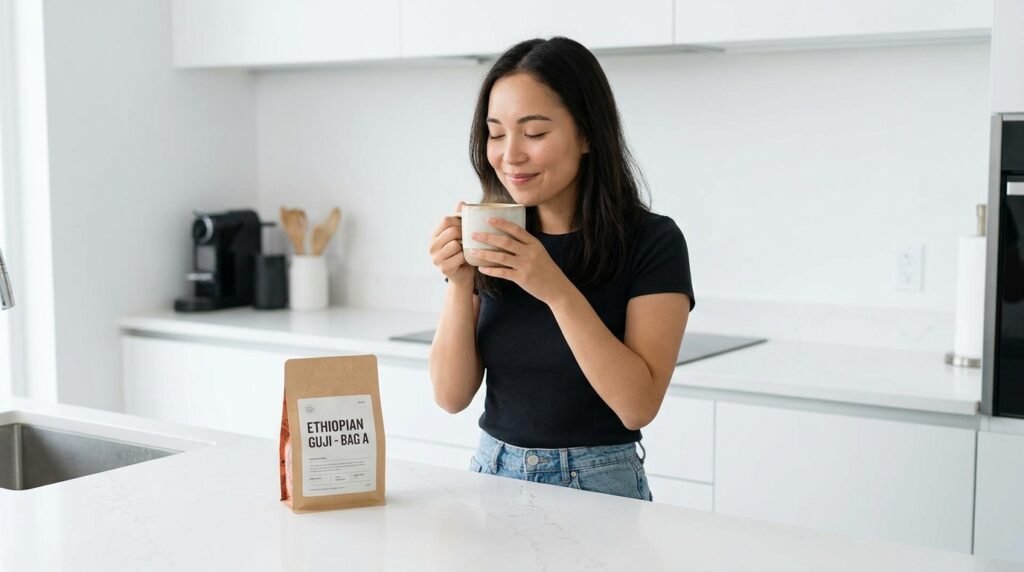
I picked up the mug holding the coffee from Bag A.
I took a sip. It was breathtakingly elegant. It had a light, tea-like body. The liquid was translucent and incredibly clean on my palate. As it washed over my tongue, I tasted crisp, bright notes of fresh lemon zest, juicy white peaches, and a delicate, lingering finish of jasmine flowers.
It was the classic Ethiopian Guji profile I had fallen in love with months ago.
I rinsed my mouth with a glass of water. I picked up the mug holding the coffee from Bag B. Keep in mind, this coffee came from the exact same trees as Bag A.
I took a sip.
My eyes widened instantly. It was thick, heavy, and syrupy. There was no delicate jasmine. There was no crisp lemon. Instead, an explosive, aggressive wave of dark fruit flooded my mouth. It tasted vividly like a massive slice of warm blueberry pie mixed with dense strawberry jam. It was so intense and wild that it almost tasted like a sweet red wine.
I sat there, staring at the two mugs. Realizing the sheer magnitude of this contrast was exactly (How I Learned That Not All Coffee Is the Same), because I had physical proof that a plant’s genetics are only the starting line of flavor.
How could the same dirt and the same plant produce a delicate peach tea in one mug, and a heavy blueberry jam in the other?
The answer was hidden in that tiny word printed at the bottom of the labels.
The Anatomy of a Cherry
To solve the mystery of the twins, I had to completely change how I viewed a coffee bean.
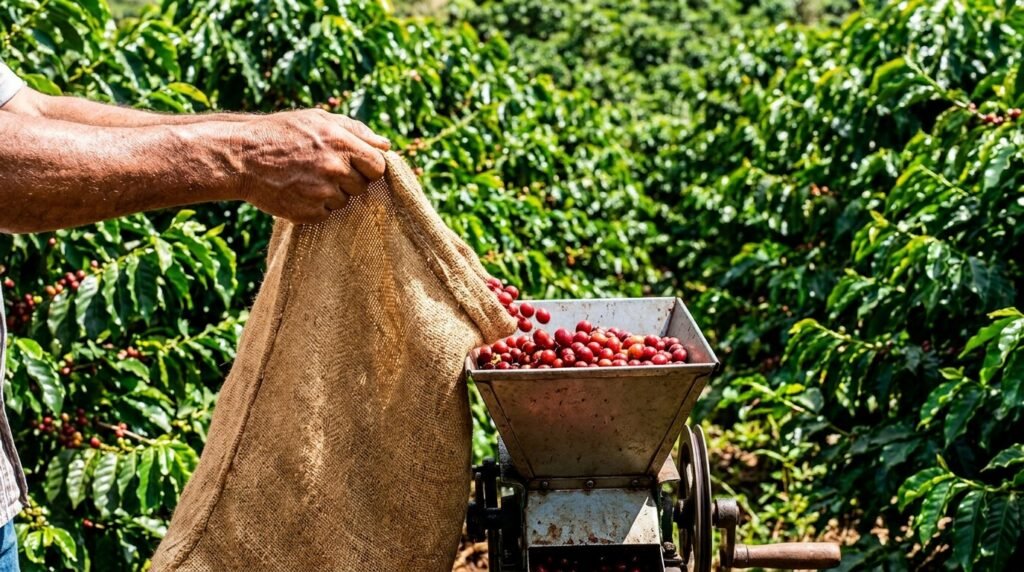
Most people think of a coffee bean as a hard, brown rock. But before it gets roasted in a machine, it is a seed. And that seed lives inside a bright red, fleshy fruit called a coffee cherry.
Imagine a standard, sweet cherry you would buy at the grocery store. It has an outer skin. Under the skin is the sweet, sticky fruit pulp (called mucilage). And right in the center is the pit, or the seed.
Coffee is structured exactly the same way.
When a farmer in Ethiopia picks a ripe coffee cherry off the branch, they cannot just ship it to a roaster. If they put fresh, wet fruit into a shipping container, it would rot and turn into moldy mush in a matter of days.
The farmer has to remove the seed from the fruit and dry it out so it can survive the journey across the ocean.
This removal and drying phase is called Coffee Processing. And as I learned that Saturday morning, the specific method the farmer chooses to process the fruit will fundamentally rewrite the genetic flavor of the seed.
Bag A: The Washed Process (The Naked Seed)
I looked closely at the label on Bag A. The tiny word at the bottom read: Washed.
The Washed process is the most common method used in specialty coffee, and it is designed to produce absolute clarity.
When farmers harvest the cherries for a washed coffee, they immediately dump them into a machine called a depulper. This machine violently rips the outer skin and the fruity flesh off the seed.
But there is still a sticky, sugary layer of mucilage glued to the seed. To get rid of it, the farmers soak the seeds in massive tanks of water for 12 to 24 hours. The water ferments slightly, dissolving the sticky fruit entirely.
Finally, the completely naked seeds are taken out of the water, washed clean, and laid on raised beds to dry in the sun.
Because the fruit is stripped away immediately, the seed does not absorb any of the heavy, sugary fruit flavors. When you roast and brew a washed coffee, you are tasting the pure, unadulterated genetics of the plant and the soil it grew in.
That is why Bag A tasted so crisp, clean, and floral. The washed process allowed the high-altitude volcanic dirt and the ancient Heirloom DNA to shine through with absolute, tea-like perfection.
Bag B: The Natural Process (The Wild Ferment)
I turned to the label on Bag B. The tiny word at the bottom read: Natural.
The Natural process (also known as the Dry process) is the oldest method in the world, and it is a completely different agricultural philosophy.
Instead of stripping the fruit off the seed, the farmers leave the coffee cherry completely intact. They take the whole, freshly picked fruit and lay it directly onto raised drying beds under the hot African sun.
They leave it there for weeks.
As the hot sun beats down on the cherry, the fruit slowly begins to dry, shrivel, and turn brown, looking very much like a dark raisin. Inside that shriveling fruit, a massive chemical reaction is happening.
The sugary, sticky fruit pulp begins to ferment. As it ferments and dries, all of those heavy, intense, jammy fruit sugars physically seep through the parchment layer and directly into the porous cellular structure of the coffee seed.
The seed literally marinates in its own rotting fruit juices for weeks.
Eventually, the dried, hardened fruit husk is cracked off, revealing the seed inside. But by that point, the seed has been permanently altered.
Experiencing the result of this fermentation is undeniably (The Most Unique Coffee Flavor I’ve Ever Tried), because the coffee completely loses its crisp, floral clarity and transforms into a wild, syrupy, explosive fruit-bomb.
That is why Bag B tasted like heavy blueberry pie. The seed had absorbed the fermented sugars of the cherry, creating a flavor profile so intense that it felt like drinking a completely different plant.
The Honey Process: The Perfect Compromise
Once I understood the massive difference between Washed and Natural coffees, I started researching other processing methods. I discovered that farmers are incredibly creative, and they have invented methods that sit perfectly in the middle.
The most famous middle ground is called the Honey Process (or Pulped Natural).
In this method, farmers use the depulper machine to rip off the outer skin of the cherry, but they intentionally leave the sticky, honey-like layer of fruit mucilage glued to the seed. They skip the water tanks entirely and lay the sticky seeds out in the sun to dry.
Because the skin is gone, it doesn’t ferment as wildly as a Natural coffee. But because the sticky sugar is still there, it absorbs more sweetness than a Washed coffee.
When you drink a Honey processed coffee from Central America, you get the perfect tightrope walk: a clean, structured cup that finishes with an intense, heavy brown-sugar sweetness. It is a brilliant manipulation of flavor using nothing but sunlight and timing.
The Roaster’s Translation
The farmer’s processing method is the primary reason the same plant can taste different, but the journey doesn’t end there. The coffee roaster is the next person in line who can radically alter the flavor of the bean.
Let’s imagine that Bag A (the washed, floral Ethiopian coffee) was given to two different roasters.
The first roaster applies heat very gently. They pull the beans out of the machine just after they hear the first “crack” (the moment the bean expands). This light roast preserves the delicate organic acids, ensuring the peach and jasmine notes survive the fire.
The second roaster is old-school. They leave the beans in the roasting drum until they turn dark brown, oily, and begin to smoke.
If I brewed that dark roast, it wouldn’t taste like peach or jasmine at all. The intense heat would literally burn those delicate floral compounds away, replacing them with the flavor of caramelized carbon, ash, and roasted wood.
It is still the exact same plant, from the exact same farm, processed the exact same way. But the application of heat completely overrides the genetics.
The Final Variable: You
The most humbling part of this realization happened right in my own kitchen.
After understanding the farmer’s role and the roaster’s role, I realized that I am the final variable in the equation. I hold the ultimate power to change how the plant tastes.
I took the floral, delicate beans from Bag A, and I intentionally ground them way too fine—almost like powdered sugar. I brewed a pour-over. Because the grounds were so dense, the hot water got trapped. It took five agonizing minutes for the water to drain through the filter.
When I tasted it, the peach and jasmine were gone. The coffee was harsh, aggressively bitter, and tasted like aspirin.
I had over-extracted the coffee. By exposing the grounds to the hot water for too long, I had pulled out the harsh, unpleasant tannins that hide deep inside the cellular structure of the seed.
Learning how to manipulate this extraction in my kitchen is exactly (How Grind Size Affected My Coffee More Than I Expected). If I grind the beans coarser, the water flows faster, and the coffee becomes brighter and more acidic. If I grind finer, the coffee becomes heavier and more bitter.
I can literally change the flavor of the plant just by turning a dial on my hand grinder.

The Ultimate Collaborative Art
That weekend experiment with the twin Ethiopian coffees completely shattered my narrow view of the coffee industry.
I used to think that buying a great bag of coffee was just about finding a good brand name. I had no idea that every single cup of coffee is the result of a massive, fragile, global collaboration.
The dirt and the altitude write the genetic code. The farmer uses sunlight and water to process the fruit and manipulate the sugars. The roaster uses fire to translate those raw compounds into soluble flavors. And finally, the brewer uses water and grind size to extract the final masterpiece.
If any one of those people makes a drastic change, the entire flavor profile shifts.
A Challenge for Your Palate
If you truly want to understand why specialty coffee is so fascinating, you need to replicate this experiment in your own home.
Go to a high-quality local roastery. Ask the barista if they have a Washed and a Natural coffee from the exact same country. Often, roasters will intentionally sell “Twin” packs specifically for this educational purpose.
Take them home, brew them side-by-side with identical water and identical equipment, and taste them blind.
When you experience the crisp, floral clarity of the Washed seed clashing against the heavy, jammy, wild explosion of the Natural seed, your mind will be blown. You will finally understand how coffee from the exact same plant can taste so profoundly different, and you will never take a single sip of your morning routine for granted ever again.

My name is Daniel Carter, I am 35 years old, and I live in the United States. I have been passionate about aquariums for many years, and what started as a simple hobby quickly became a lifelong interest in aquatic life, fish behavior, and responsible tank care.
Through TheBrightLance, I share real experiences, practical knowledge, and honest lessons learned from maintaining different types of aquariums. I enjoy testing equipment, studying fish behavior, improving maintenance routines, and helping beginners avoid common mistakes.
My goal is to make aquarism easier, more ethical, and more enjoyable for everyone — whether you are setting up your very first tank or looking to refine your techniques.