
Sometimes, a project requires me to completely replace a piece of clothing on a subject. I might need to take a photograph of a person wearing a plain white t-shirt and seamlessly swap it out for a complex, highly textured soccer jersey.
To make the edit believable, I cannot just paste the new jersey on top of the image. I have to spend hours in absolute isolation, meticulously matching the lighting, mapping the fabric to the contours of the body, and adjusting the digital shadows. I have to artificially force the new clothing to connect with the original environment.
When I am finished, the image looks perfectly natural. The subject looks deeply integrated into their surroundings. But I know the truth: it is a digital illusion, constructed by a person sitting completely alone in a quiet room.
For a very long time, my own life felt a lot like that unedited base layer.
Because my work is so deeply tied to digital screens, software interfaces, and isolated concentration, I often felt disconnected from the physical world. I used coffee strictly as a utilitarian chemical. It was just a dark, bitter liquid I consumed to keep my eyes open so I could finish rendering the next batch of pixels.
But as I slowly transitioned away from cheap, automatic drip machines and started exploring the analog, manual world of specialty coffee, something entirely unexpected happened.
The liquid in my mug stopped being an isolation tool. It transformed into a physical, unedited bridge. Here is the honest, highly observant story of how coffee connects people in ways I never expected, the vulnerability of the brewing ritual, and how a simple agricultural seed became my greatest anchor to the human race.
The Universal “Peace Treaty”
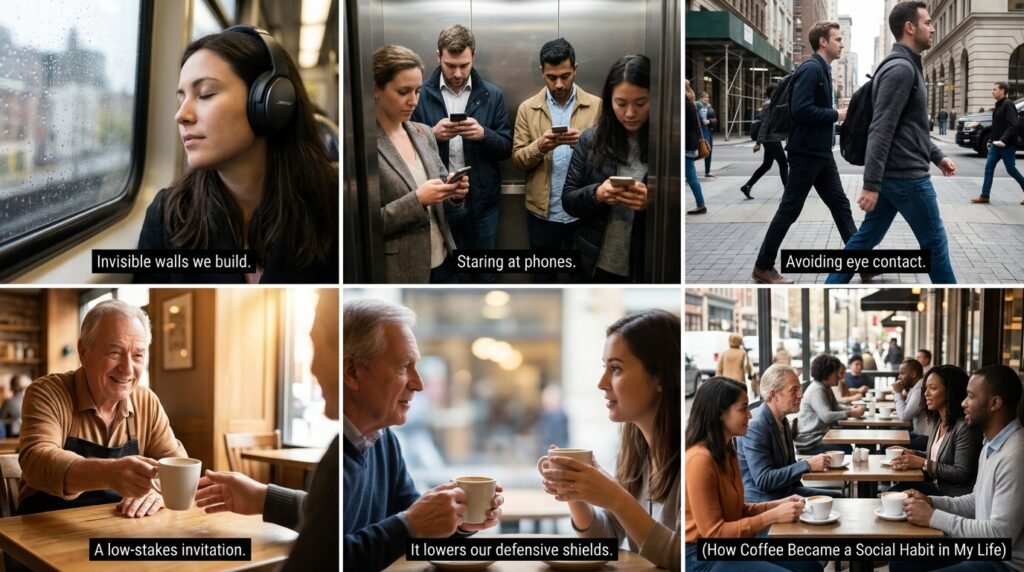
In modern society, we have built massive, invisible walls around ourselves. We wear noise-canceling headphones on the train. We stare at our phones in the elevator. We avoid eye contact at the grocery store.
Asking someone to break those walls down is incredibly difficult. If you ask an acquaintance to “come over for dinner,” the stakes feel massively high. It implies a long time commitment, a formal setting, and a lot of pressure to maintain a conversation.
But coffee operates on a completely different psychological wavelength.
Asking someone to “grab a cup of coffee” is the ultimate, universal peace treaty. It is a low-stakes invitation. It implies a casual environment, a short time commitment, and absolute neutrality.
Whether you are trying to reconnect with an old friend you haven’t seen in years, trying to network with a potential client, or going on a first date, coffee is the socially acceptable key that unlocks the door. It lowers our defensive shields. It gives us a physical object to hold in our hands, which naturally eases our anxiety.
Realizing how easily this simple beverage breaks down our modern, digital barriers was the exact catalyst for (How Coffee Became a Social Habit in My Life). I stopped drinking it alone in the dark, and started using it as an excuse to invite people back into my physical orbit.
The Kitchen Counter Confessional
The social power of coffee becomes even more profound when you start brewing it manually in your own home.
When a friend comes over to my apartment to visit, I no longer just offer them a can of soda from the fridge. I offer to make them a pour-over.
When I pull out my digital scale, my manual burr grinder, and my gooseneck kettle, it completely changes the dynamic of the room. I am no longer just a host handing them a beverage; I am performing a quiet, analog ritual for them.
Because the V60 pour-over method takes exactly three and a half minutes of continuous pouring, I am physically anchored to the kitchen counter. I cannot walk away. I cannot check my phone.
This creates a highly unique, temporary window of absolute vulnerability.
My friend usually walks over and leans against the kitchen island to watch the process. As the hot water hits the fresh coffee grounds and the intense, sweet aromatics fill the room, a magical shift happens. The silence is broken.
Without fail, the conversation in those three and a half minutes becomes deeply honest. We don’t talk about the weather. We talk about our careers, our relationships, and our anxieties.
There is something about the warmth of the steam, the mechanical crunch of the grinder, and the deliberate slowness of the process that gives people permission to drop their guard. The kitchen counter transforms into a confessional booth, all facilitated by hot water and ground seeds.
Bridging the Generational Divide
One of the most unexpected ways coffee has connected me to other people is across the massive chasm of the generational gap.
I work in a highly technical, digital field. When I try to explain concepts like synthetic image generation, rendering parameters, or digital masking to my parents or my grandparents, I can see their eyes glaze over.
We live in completely different technological worlds. Finding common ground can sometimes feel incredibly difficult, like we are speaking two different languages.
But coffee is an ancient, universal language.
My grandparents might not understand what I do on my computer, but they absolutely understand the concept of a warm mug on a cold morning.
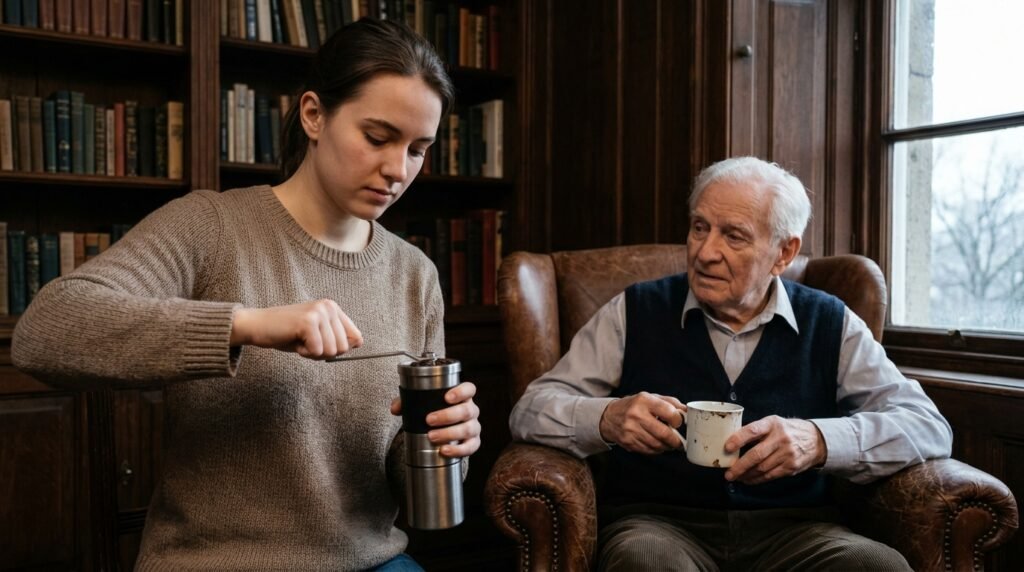
When I go to visit my family, I pack my manual grinder and a bag of premium, light-roast specialty coffee. In the morning, I brew them a cup.
When my father takes a sip of a flawless, naturally processed Ethiopian coffee that tastes like sweet blueberries and milk chocolate, his eyes light up. We don’t need to talk about software. We talk about the flavor. We talk about the texture.
It provides us with a shared, physical experience that completely transcends the digital divide. It proves that no matter how fast technology moves, the ancient human desire for warmth, flavor, and shared ritual remains exactly the same.
The Accidental Community of the Cafe
If the home kitchen is a private confessional, the local specialty coffee shop is the ultimate public town square.
When you work remotely, the isolation can become suffocating. You can go days without speaking a single word out loud. When I feel that digital fatigue setting in, I pack my laptop and walk to a local, independent roastery.
I don’t go there just for the caffeine; I go there for the ambient hum of humanity.
The coffee shop is one of the only places in modern society where people from entirely different socio-economic backgrounds, professions, and age groups willingly gather in the exact same room.
I have sat at a communal wooden table and accidentally struck up conversations with graphic designers, retired teachers, off-duty nurses, and local musicians. We are all there for different reasons, but we are united by the exact same roasted beverage.
This environment fosters a type of serendipitous connection that simply does not exist on the internet. Acknowledging the profound psychological relief of these shared spaces is the exact reason (Why Coffee Brings People Together). It forces us out of our curated algorithms and back into the unpredictable, beautiful mess of the real world.
The Invisible Global Chain
Perhaps the most staggering realization of how coffee connects people happened when I started researching the agricultural origins of the beans I was grinding.
When you buy a cheap, mass-produced plastic tub of ground coffee from a major corporation, it is entirely anonymous. It is a faceless commodity.
But when you buy a bag of single-origin specialty coffee, the label tells you a story. It tells you the name of the country. It tells you the specific region. It often tells you the altitude of the farm, the specific variety of the plant, and sometimes, the actual name of the farmer who grew it.
I remember holding a bag of washed Colombian coffee from the Huila region.
I suddenly realized that the physical object in my hand was the final link in a massive, invisible human chain.
A farmer in the high-altitude mountains of South America had to plant the seed, nurture the tree for years, and hand-pick the ripe red cherries. Workers had to wash the fruit, ferment it, and dry it in the sun. The raw green seeds had to be loaded onto a ship, travel across the ocean, and arrive at a port.
Then, a local roaster in my city had to take those green seeds, place them in a massive steel drum, and apply the exact perfect amount of heat to unlock their potential without burning them.
And finally, I was standing in my kitchen, applying hot water to finish the job.
The Weight of the Mug
I was not drinking a manufactured beverage. I was drinking the combined physical labor of dozens of human beings spread across thousands of miles.
When I took a sip of that Colombian coffee and tasted the bright, crisp apple acidity and the heavy caramel sweetness, I felt a profound, overwhelming sense of gratitude.
I was experiencing the exact soil, the exact climate, and the exact agricultural dedication of a family I will never meet, living on a continent I have never visited.
Understanding the sheer scale of this agricultural collaboration was the moment of (The Moment I Realized Coffee Is a Global Experience). I realized that every single cup of coffee is a quiet, liquid testament to global human cooperation.

The Ultimate Analog Anchor
In my professional life, I have the power to artificially connect anything I want. I can take a subject from a studio and digitally force them into a new environment. I can clone, I can mask, and I can alter reality with the click of a mouse.
But none of it is real.
The more time I spend in that synthetic, digital world, the more I desperately crave the heavy, unedited, undeniable reality of the physical world.
Coffee is the ultimate analog anchor.
It cannot be downloaded. It cannot be automated. It requires physical heat, physical gravity, and physical time. It demands that you use your hands, your sense of smell, and your sense of taste.
But most importantly, it gives you a reason to look away from the glowing screen.
It gives you a reason to invite a friend into your kitchen. It gives you a reason to smile at a barista. It gives you a reason to sit at a communal table and listen to the chaotic, beautiful noise of your local community.
If you currently view your morning coffee simply as a chemical requirement to get through the workday, I challenge you to change your perspective. Stop rushing it. Stop drinking it alone in the dark.
Brew a pot, pour two mugs, and hand one to someone else. You will quickly realize that the caffeine is just a secondary byproduct. The true power of the coffee bean is its incredible, ancient ability to make us feel a little bit more human, and a little less alone.
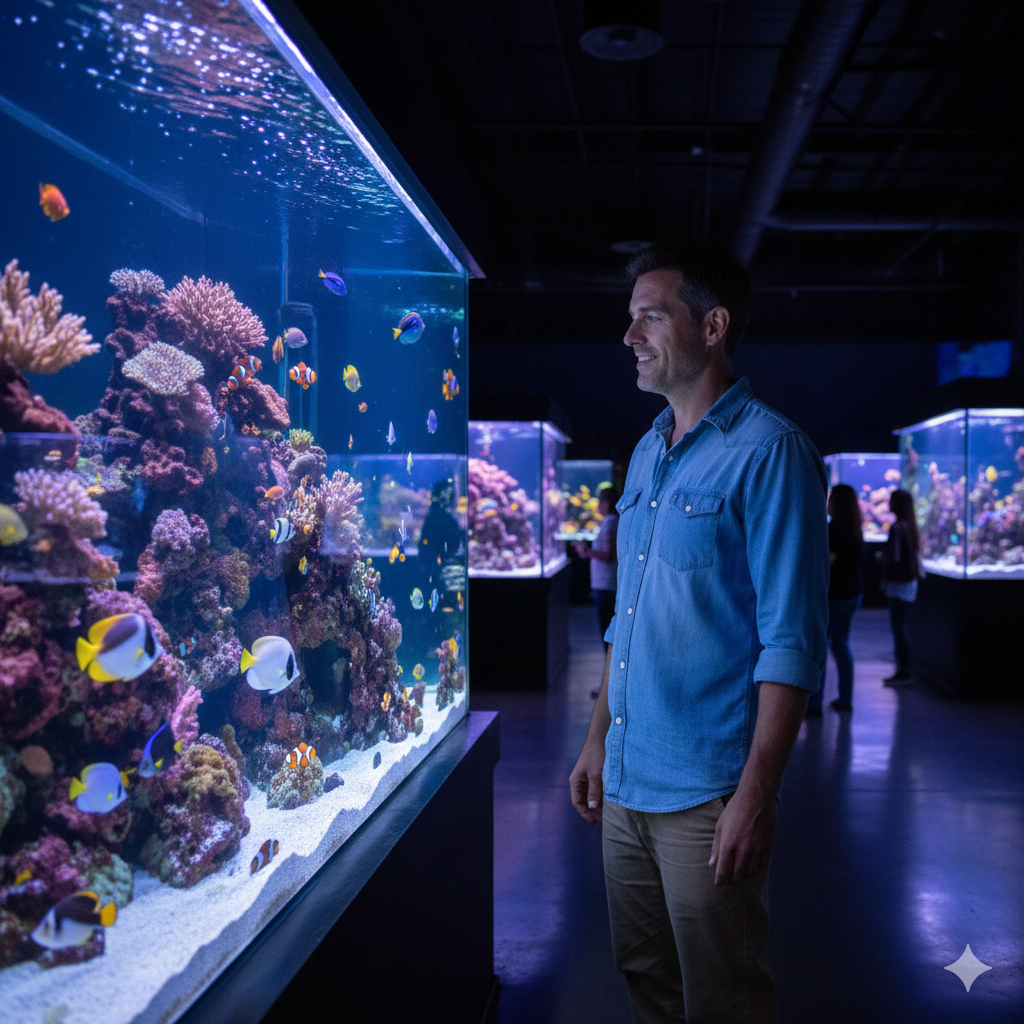
My name is Daniel Carter, I am 35 years old, and I live in the United States. I have been passionate about aquariums for many years, and what started as a simple hobby quickly became a lifelong interest in aquatic life, fish behavior, and responsible tank care.
Through TheBrightLance, I share real experiences, practical knowledge, and honest lessons learned from maintaining different types of aquariums. I enjoy testing equipment, studying fish behavior, improving maintenance routines, and helping beginners avoid common mistakes.
My goal is to make aquarism easier, more ethical, and more enjoyable for everyone — whether you are setting up your very first tank or looking to refine your techniques.