
If you open the bottom drawer of almost any refrigerator in the world, you will likely find a graveyard of good intentions.
It is the infamous crisper drawer. This is the place where we place the expensive, beautiful, organic produce we confidently bought at the weekend farmer’s market. We buy vibrant green spinach, perfectly ripe avocados, and crisp bell peppers, fully intending to transform our diets and cook healthy masterpieces.
But then, Tuesday morning arrives. We are tired. We are rushed. We don’t feel like chopping vegetables.
So, we leave the produce in the drawer. We tell ourselves we will use it tomorrow. Then we tell ourselves we will use it on Friday. By the time Sunday rolls around, we open that bottom drawer and find a puddle of brown, wilted, rotting mush.
We take our expensive, premium ingredients and we drop them directly into the kitchen trash can, completely overwhelmed by a heavy wave of financial guilt. We didn’t consume the luxury; we just paid for the privilege of throwing it away.
For a massive portion of my adult life, my coffee station was the exact equivalent of the refrigerator crisper drawer.
I was spending a significant amount of my hard-earned money on beautiful, high-end specialty coffee. I was buying incredibly complex Ethiopian beans, rich Colombian roasts, and sweet Guatemalan coffees. But through a series of terrible habits, psychological traps, and careless brewing mistakes, I was essentially throwing half of every bag directly down the sink.
I was burning my own money.
Here is the honest, highly confessional story of how I stopped wasting good coffee, the invisible drains on my wallet I had to plug, and how respecting the ingredient finally allowed me to drink every last drop of the luxury I was paying for.
Waste One: The “Special Occasion” Hoarding
The very first, and most psychologically damaging, way I wasted coffee was completely born out of financial anxiety.
When I finally started buying twenty-dollar bags of specialty coffee from local artisan roasters, I felt a deep sense of preciousness about the product. Because it was expensive, I placed it on a mental pedestal.
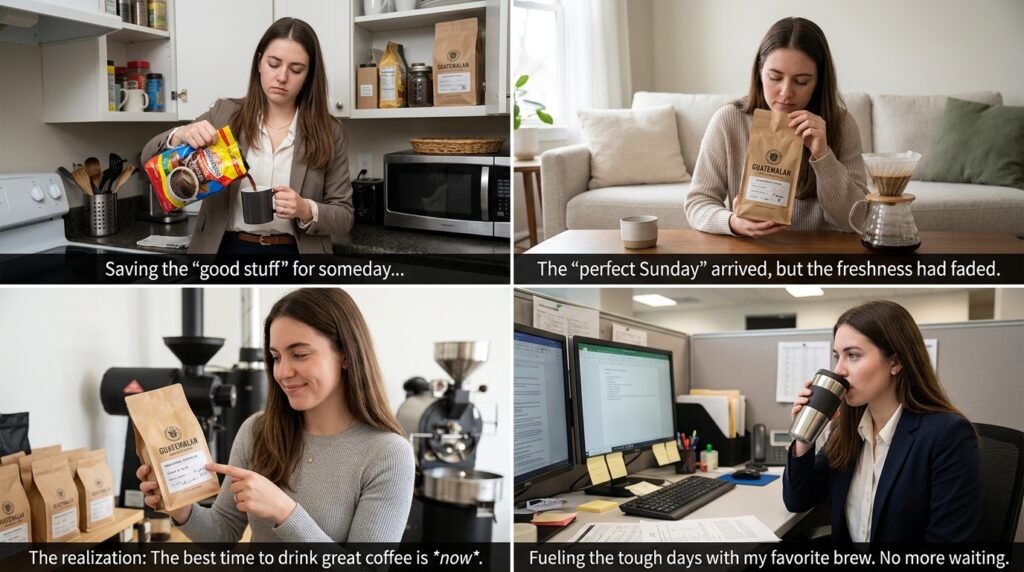
I convinced myself that I could not drink this incredible Guatemalan coffee on a random, stressful Tuesday morning before commuting to work. I felt like I needed to “save” it for a slow, peaceful Sunday morning when I could truly sit down and appreciate it.
So, on weekdays, I would drink cheap, harsh, generic supermarket coffee. I hoarded the good stuff in the back of my cabinet.
I was completely ignoring the unforgiving biological clock of the coffee bean.
Coffee is not a bottle of vintage wine that gets better with age. It is a highly volatile, rapidly decaying agricultural product. The exact second the coffee leaves the roasting drum, its delicate aromatic oils begin to aggressively oxidize.
By the time my “perfect, peaceful Sunday” finally arrived three weeks later, the coffee was already dying.
By hoarding the beans, I was allowing the oxygen to steal all the complex fruit and chocolate notes that I had paid a premium for. The coffee I was trying to protect had turned into stale, flat, dusty wood.
Overcoming this scarcity mindset was a massive part of (Why I Check Coffee Dates Before Buying). Once I started paying attention to the roast date, I realized that the “perfect moment” to drink expensive coffee is the exact moment you bring it home.
I stopped saving my good coffee. I now drink my absolute best beans on my absolute worst, most stressful workdays, because that is when I actually need a beautiful culinary experience the most. I never let a bean die in the cabinet anymore.
Waste Two: The “Dialing In” Drain
The second way I was actively burning my money occurred right at the brewing cone, and it was entirely due to a lack of preparation.
When you buy a brand new bag of specialty coffee, you usually have to “dial in” your burr grinder. Because every coffee is grown at a different altitude and roasted differently, it requires a slightly different grind size to extract perfectly.
In my early days, I would guess the grind size, weigh out 18 grams of expensive coffee, and pour my hot water.
I would taste the coffee, and my face would instantly scrunch up. The water had drained too fast, and the coffee was violently sour and weak. Because it tasted terrible, I would walk over to the kitchen sink and pour the entire mug down the drain.
I would adjust my grinder, weigh out another 18 grams of coffee, and try again. Sometimes the second cup would be too bitter, and I would dump that one down the drain, too.
By the time I finally figured out the correct grind size, I had already thrown 36 to 50 grams of expensive coffee directly into the sewer. I was throwing away almost twenty percent of the bag before I ever swallowed a single drop.
This financial bleeding had to stop.
I realized I needed a system. Learning to track my variables was the ultimate lesson of (How Grind Size Affected My Coffee More Than I Expected).
I started keeping a small, physical notebook right next to my coffee grinder. When I buy a new bag of Ethiopian coffee, I write down the exact grinder setting I use on the very first day. If the cup is slightly sour, I write an arrow pointing down, indicating I need to grind finer the next morning.
But crucially, I stopped dumping the “imperfect” cups down the sink. Unless the coffee is completely undrinkable, I force myself to drink the slightly sour or slightly bitter cup. I take it as a learning experience. By writing down my settings, I never make the same mistake twice, and I never waste 50 grams of coffee just trying to find the sweet spot.
Waste Three: The Batch Brew Excess
My third massive avenue of waste was deeply embedded in American coffee culture: the illusion of the bottomless pot.
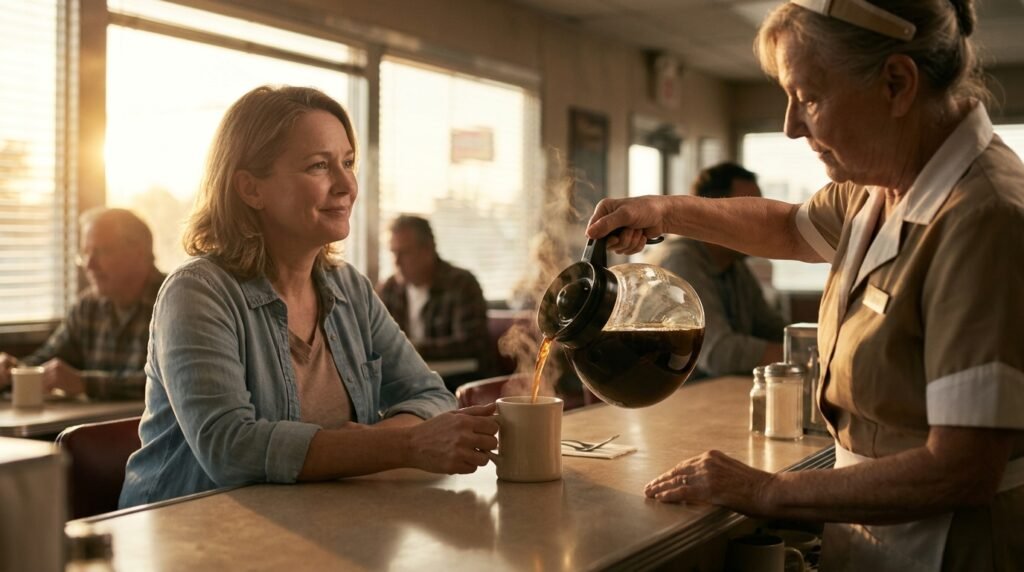
Because we grew up watching diners pour coffee out of massive glass carafes, we are culturally conditioned to believe that coffee should be brewed in massive, excessive batches.
When I started working from home, I bought a giant, 32-ounce French Press. Every morning at 7:00 AM, I would grind a massive mountain of premium coffee beans and fill the glass cylinder to the absolute brim.
I would drink one large mug while reading my emails. Then, I would get completely absorbed in my work.
By 1:00 PM, I would look over at my kitchen counter and see twenty ounces of premium, expensive coffee sitting in the French Press, ice cold and completely dead. I couldn’t microwave it without destroying the chemical acids and making it violently bitter, so I would just dump it down the drain.
Every single day, I was throwing away two mugs of world-class coffee.
I had to completely break this habit. I realized that treating specialty coffee like a diner utility was a recipe for financial ruin. Relearning how to measure my exact consumption was a core component of (Why My Coffee Always Tasted Weak (And How I Fixed It)).
I put the massive French Press in storage. I bought a single-cup glass V60 pour-over cone.
Now, I only brew exactly the amount of liquid I am going to consume in the next twenty minutes. I weigh exactly 15 grams of coffee, and I brew exactly one mug. If I want a second cup of coffee in the afternoon, I simply walk back into the kitchen, grind 15 more grams, and perform the ritual again.
By brewing single cups, I reduced my coffee consumption by half, saving myself hundreds of dollars a year, while completely eliminating liquid waste.
Waste Four: The Bottom-of-the-Bag Neglect
There was one final, insidious way I was wasting my expensive ingredients, and it usually happened at the very end of the month.
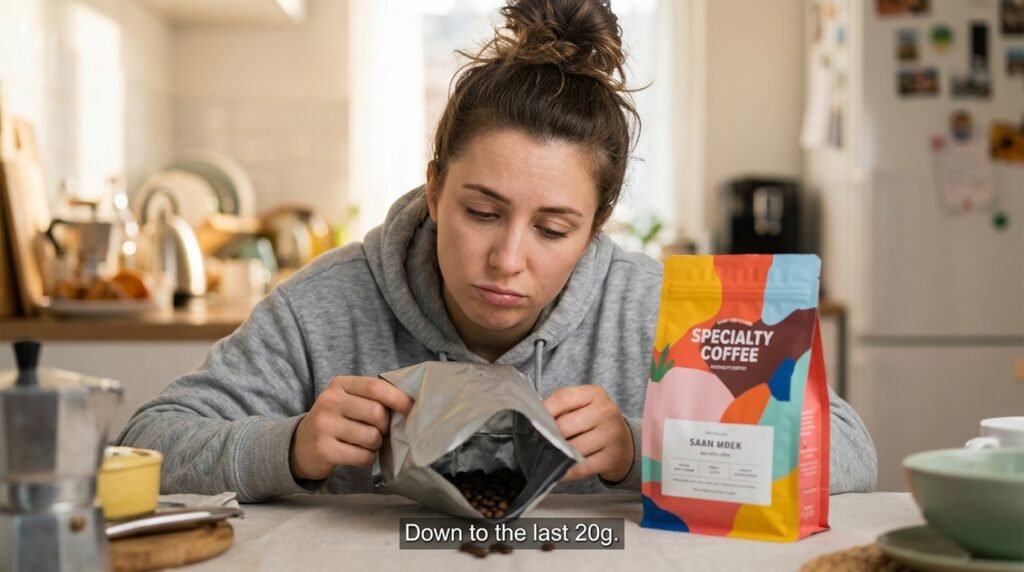
When I would get down to the last 20 or 30 grams of coffee in a bag, I would often look at the few remaining beans sitting at the bottom of the foil pouch and feel a profound sense of apathy.
Because I had been opening and closing that bag for two weeks, those final beans had been exposed to the most oxygen. They had lost their vibrant, explosive smell. They looked slightly dull.
Instead of actually brewing them, I would leave that bag sitting in the cabinet, tell myself I would use it later, and immediately open a fresh, brand-new bag of coffee.
Three months later, I would find six different bags of coffee in my pantry, all containing just a tiny handful of stale, dead beans at the bottom. I would sweep them all into the trash can.
I had to institute a strict, non-negotiable “Zero Leftovers” policy in my kitchen.
I refuse to open a new bag of specialty coffee until the current bag is completely empty. If there are only 12 grams of coffee left in the bag—which is not enough for my standard 15-gram recipe—I do not throw them away.
I simply adjust my math. I use the 12 grams, adjust my water ratio on the digital scale, and brew a slightly smaller cup of coffee. I honor the farmer, the roaster, and my own wallet by ensuring that every single seed I purchase is fully extracted and enjoyed.
Honor the Ingredient
When we spend our hard-earned money on a luxury culinary item, we have a responsibility to actually respect the product.
Buying a twenty-dollar bag of single-origin coffee does not make you a coffee connoisseur if you are blindly pouring half of it down the kitchen sink, letting it rot in the back of your pantry, or hoarding it until it loses all of its vibrant flavor.
You are just throwing organic produce into the crisper drawer.
I challenge you to look at your coffee station tomorrow morning and audit your own waste.
Are you making massive pots of coffee that you never finish? Are you dumping “bad” extractions down the drain because you refuse to take notes on your grinder settings? Are you waiting for a “special occasion” to drink the beautiful beans sitting in your cabinet?
Stop treating your coffee like an intimidating, precious artifact, and stop treating it like an infinite diner utility. Measure precisely, brew exactly what you need, take notes on your equipment, and drink the good stuff today.
When you finally plug these invisible financial drains, you will realize that drinking world-class specialty coffee isn’t actually that expensive at all. You just had to stop paying for the privilege of throwing it away.

My name is Daniel Carter, I am 35 years old, and I live in the United States. I have been passionate about aquariums for many years, and what started as a simple hobby quickly became a lifelong interest in aquatic life, fish behavior, and responsible tank care.
Through TheBrightLance, I share real experiences, practical knowledge, and honest lessons learned from maintaining different types of aquariums. I enjoy testing equipment, studying fish behavior, improving maintenance routines, and helping beginners avoid common mistakes.
My goal is to make aquarism easier, more ethical, and more enjoyable for everyone — whether you are setting up your very first tank or looking to refine your techniques.