
If you live in a moderately sized city, you probably suffer from a psychological phenomenon known as urban blindness.
When we walk down our familiar streets or drive our standard routes to work, our brains go into complete autopilot to conserve energy. We filter out the buildings, the storefronts, and the thousands of doors we pass every single day. We navigate our environment strictly by focusing on our final destination.
But behind every single one of those ignored doors is an entirely different universe.
A few years ago, when I first started working remotely, the isolation of my home office began to heavily weigh on me. I needed to escape my apartment, but I didn’t have a corporate office to go to. So, I started packing my laptop into a backpack and walking through doors I had ignored for years.
I started visiting different independent coffee shops.
I originally thought I was just looking for a chair and an internet connection. I assumed that every cafe was essentially the exact same business model selling the exact same dark liquid. But as I spent hundreds of hours sitting in dozens of different establishments, my perspective completely shattered.
I realized that a coffee shop is not just a retail store. It is an independent micro-nation hiding in plain sight. Every single one has its own unwritten laws, its own citizenship of regulars, its own architectural atmosphere, and its own cultural philosophy.
Here is the honest, highly observant story of what I learned from visiting different coffee shops, how the architecture of a room dictates human behavior, and why exploring these localized sanctuaries became my favorite way to travel without ever leaving my city.
The Transit Hub: The Culture of Velocity
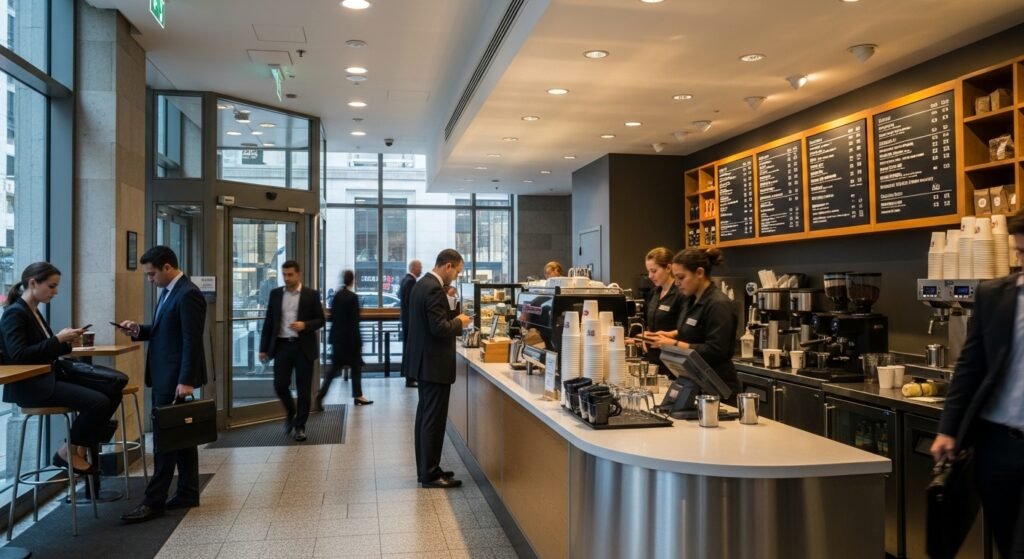
The very first type of micro-nation I discovered is what I call the “Transit Hub.”
These coffee shops are usually located in the dead center of the downtown financial district, or right next to a major train station. The absolute defining characteristic of this environment is velocity.
When you push open the heavy glass door, you are instantly hit by a wall of chaotic, electric energy. The music is usually upbeat and slightly too loud. The lighting is incredibly bright and sterile.
There are very few chairs, and the ones that do exist are tall, hard, and deliberately uncomfortable. The architecture is actively discouraging you from staying.
In the Transit Hub, coffee is not an artisan craft. It is a biological fuel.
You watch the customers march in, wearing sharp suits and carrying briefcases. They do not make small talk. They stare at their phones while waiting in a fast-moving line. The baristas operate like a highly trained military unit, shouting names, pulling espresso shots with furious speed, and sliding paper cups across a stainless-steel counter.
Sitting in the corner of a Transit Hub taught me a lot about modern survival. I realized that for a massive portion of the population, coffee is simply the required admission ticket to participate in the corporate rat race. There is no romance here, only brutal, caffeinated efficiency.
The Neighborhood Living Room: The Analog Sanctuary
When the chaotic energy of the Transit Hub became too overwhelming, I would retreat to a completely different type of micro-nation: the “Neighborhood Living Room.”
These shops are usually tucked away on quiet, residential side streets. You can spot them by the worn wooden signs and the bicycles parked outside.
The moment you walk into a Neighborhood Living Room, your blood pressure immediately drops. The lighting is warm, dim, and inviting. The air smells heavily of roasted nuts and old paper. The furniture is a completely mismatched collection of deep, velvet thrift-store couches, scarred wooden tables, and mismatched armchairs.
Nobody is in a rush.
The baristas here are not operating a military assembly line. They are the unofficial mayors of the neighborhood. They know the names of the dogs tied up outside. They know which customers are studying for college exams and which ones are newly retired.
This environment perfectly demonstrated (How Coffee Connects People in Ways I Didn’t Expect). People do not come here for the caffeine; they come here for the ambient warmth of the community.
I would sit on a battered leather couch for hours, watching strangers strike up casual conversations while waiting for their pour-overs. I learned that in an increasingly isolated, digital world, these specific coffee shops act as the last remaining analog campfires. They are safe havens for human connection.
The Science Laboratory: The Pursuit of Perfection
As my own palate developed and I started chasing higher-quality flavor profiles, I stumbled into the most intimidating micro-nation of them all: the “Science Laboratory.”
This is the ultra-modern, hyper-specialized “Third Wave” coffee shop.
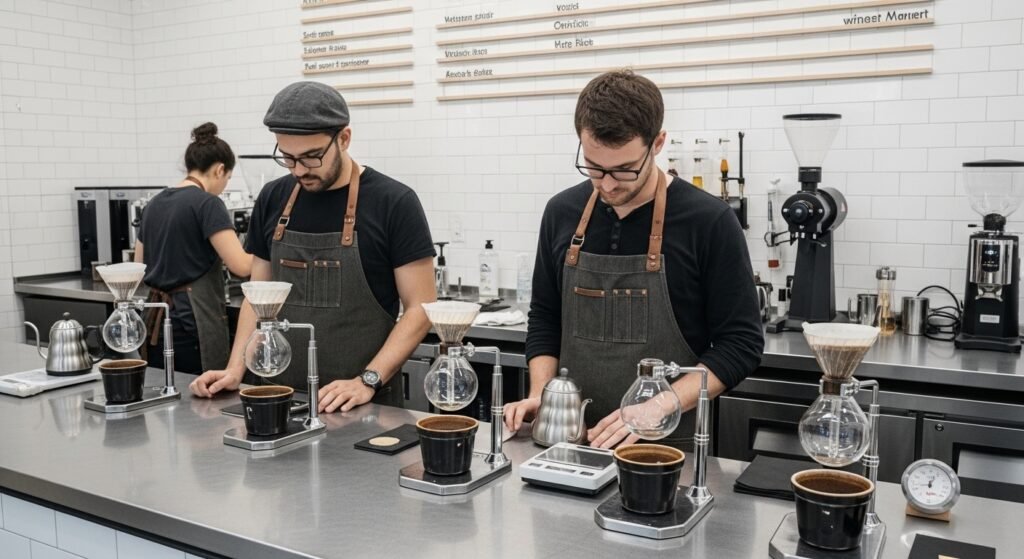
The design is usually aggressively minimalist. You will see stark white subway tiles, exposed concrete floors, and raw steel countertops. There is no comfortable furniture, and there is certainly no loud music. The environment is sterile, clean, and highly focused.
The people behind the counter here are not just baristas; they are culinary chemists.
They wear heavy canvas aprons. They do not serve massive, 20-ounce sugary milkshakes. In fact, if you ask for vanilla syrup or a dark roast, they might politely refuse. Their entire philosophy is built around honoring the delicate, natural fruit notes of single-origin coffee beans.
You watch them work in absolute silence. They use digital scales that measure water weight to the tenth of a gram. They use complex glass siphons and monitor the water temperature with digital thermometers.
Sitting in these minimalist temples was exactly (How I Learned That Not All Coffee Is the Same). I learned that coffee possesses an incredibly high culinary ceiling. The Laboratory taught me that when you treat a roasted seed with the exact same respect as a fine wine, the flavor profile will completely blow your mind.
The Late-Night Creative Hub: The Digital Cave
Because my work schedule as a digital editor is highly erratic, I often found myself needing to work late into the evening. This led me to discover the “Creative Hub.”
These are the rare coffee shops that stay open past nine o’clock at night. The vibe here is completely unique.
The overhead lights are turned off, replaced by small, warm desk lamps and the collective, pale blue glow of two dozen laptop screens. The music is usually low-fi, atmospheric, and rhythmic.
The citizenship of this micro-nation consists entirely of freelancers, writers, designers, and university students facing terrifying deadlines.
There is an intense, heavy silence in the room, but it is not a lonely silence. It is the silence of absolute, collective focus. Everyone in the room is carrying a heavy cognitive burden, and just being surrounded by other people working hard makes your own burden feel slightly lighter.
I learned that the late-night coffee shop is the ultimate cure for procrastination. When you are sitting alone in your apartment, it is incredibly easy to get distracted by your television. But when you are sitting in a room full of intensely focused strangers, the social pressure forces you to perform.
The Universal Language of the Menu
One of the most fascinating things I learned from my coffee shop tourism is how to read a menu like a cultural manifesto.
Before I started paying attention, I thought all menus were the same. But the menu is actually the constitution of the micro-nation. It tells you exactly what the owners value.
If you walk into a shop and the menu is massive, featuring dozens of blended drinks, artificial flavors, and heavily sweetened seasonal specials, you are in a shop that values broad commercial appeal. They are selling sugar and comfort, not coffee.
If you walk into a shop and the menu is incredibly tiny—featuring only a few options like “Black,” “White,” “Filter,” and “Espresso”—you are in a shop that values uncompromising craft. They are forcing you to taste the raw quality of the bean.
Learning to decipher these unwritten signals was the beginning of (The First Time I Explored Coffee Culture Deeply). It allowed me to instantly categorize an environment within ten seconds of walking through the door, so I could adjust my own expectations accordingly.
The Soundtrack of the Room
Another massive factor that dictates the culture of the coffee shop is the acoustic environment.
The next time you visit a cafe, close your eyes for thirty seconds and just listen. The soundscape is deliberately engineered.
In a fast-paced transit shop, you will hear the aggressive, high-pitched screech of milk being steamed incorrectly. You will hear the heavy slamming of portafilters against the knock box. The chaos creates a sense of urgency in your brain, forcing you to drink faster and leave.
But in a high-end specialty shop, the acoustics are entirely different.
You hear the quiet, satisfying mechanical crunch of a high-end burr grinder. You hear the soft, rhythmic dripping of hot water passing through a paper filter. You hear the low, relaxed murmur of people discussing art or literature. The sonic environment actively lowers your heart rate.
Becoming a Regular
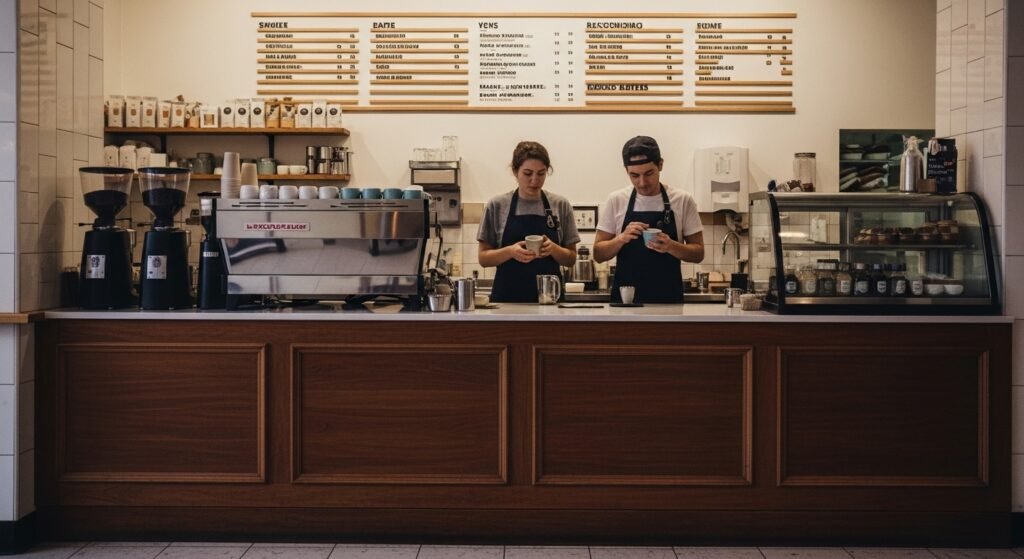
The ultimate reward of visiting different coffee shops is finding the one micro-nation where you truly belong, and crossing the border from “tourist” to “citizen.”
When you finally find a shop whose architecture, menu, and acoustic vibe perfectly align with your own personality, you start visiting every week.
Eventually, you experience the magic moment. You walk through the door, you make eye contact with the barista, and before you can even open your mouth, they start preparing your exact order.
In a massive, anonymous city, being recognized and remembered by another human being is an incredibly powerful psychological comfort. You have officially become a Regular. You have claimed a tiny piece of the city as your own.
Expand Your Borders
It is incredibly easy to fall into a comfortable, thoughtless routine. It is easy to just go to the exact same commercial chain store every single morning because it is located on the right side of the street on your way to work.
But when you do that, you are succumbing to urban blindness. You are missing out on the rich, diverse human ecology happening right in your own neighborhood.
I challenge you to break your routine this weekend.
Do not go to your usual spot. Open a map on your phone, find a small, independent coffee roastery that you have never visited before, and walk through the door.
Do not order your coffee to go. Ask for it in a ceramic mug. Sit down at a table without your laptop or your phone.
Just observe the micro-nation. Watch the way the baristas move. Listen to the background noise. Look at the people sharing the space with you. You will quickly realize that you aren’t just tasting a different origin of coffee bean; you are experiencing a completely different slice of humanity. And the lessons you learn from simply paying attention will stay with you long after the cup is empty.
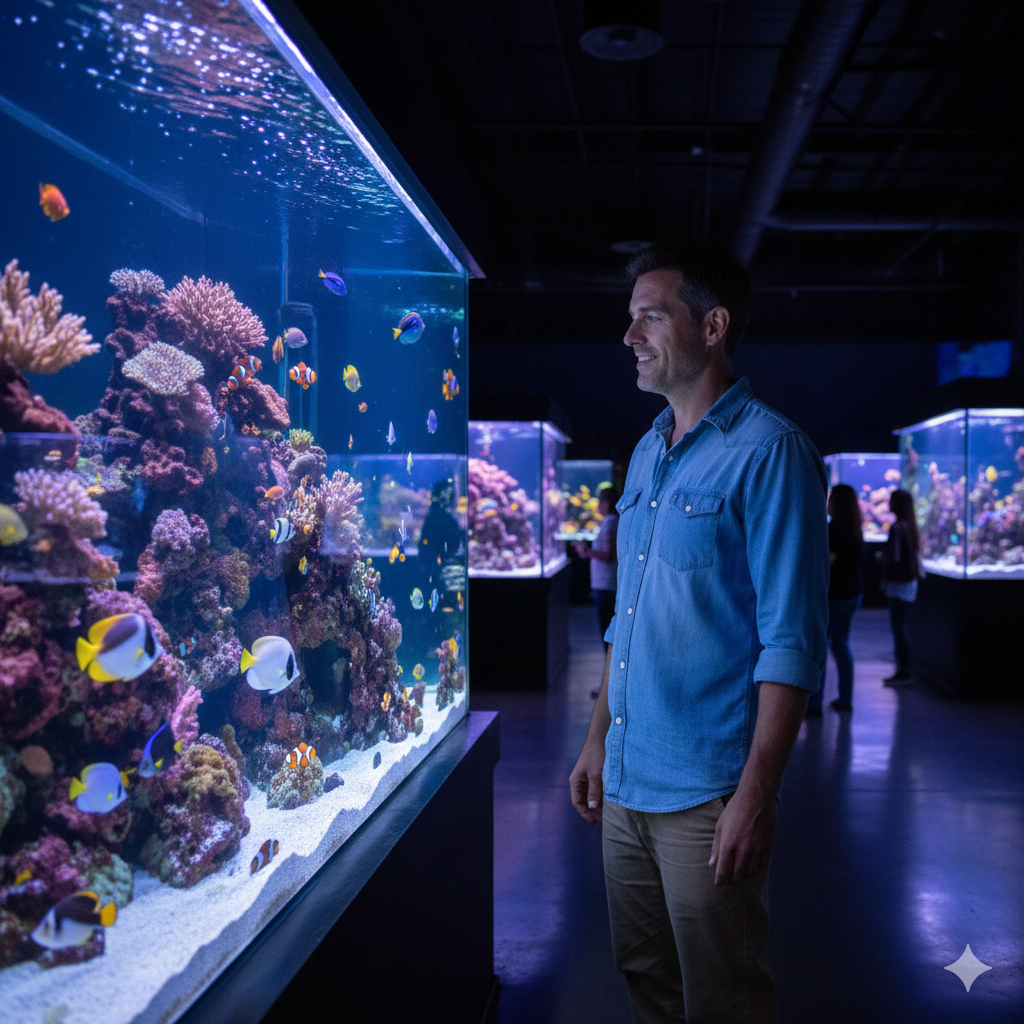
My name is Daniel Carter, I am 35 years old, and I live in the United States. I have been passionate about aquariums for many years, and what started as a simple hobby quickly became a lifelong interest in aquatic life, fish behavior, and responsible tank care.
Through TheBrightLance, I share real experiences, practical knowledge, and honest lessons learned from maintaining different types of aquariums. I enjoy testing equipment, studying fish behavior, improving maintenance routines, and helping beginners avoid common mistakes.
My goal is to make aquarism easier, more ethical, and more enjoyable for everyone — whether you are setting up your very first tank or looking to refine your techniques.