
When you work with complex digital image editing, one of the most profound tasks you can undertake is the restoration of a severely damaged, century-old photograph.
When you first open the scanned file on your monitor, it doesn’t look like a memory. It just looks like a broken piece of data. It is covered in heavy scratches, sepia-toned water damage, and layers of visual dust.
For the first few hours, your brain treats the project as a purely technical, utilitarian chore. You grab the digital healing brush. You painstakingly sample pixels from one area to rebuild the torn edges of another. You adjust the contrast curves to cut through the faded haze.
But then, a magical shift occurs.
As the digital dust is finally cleared away and the shadows snap into sharp focus, the image stops being a technical chore. You are suddenly looking directly into the crystal-clear eyes of a human being who lived a hundred years ago. The context completely changes. It is no longer just a piece of paper or a digital file; it is a time machine. It is a profound, emotional connection to the past.
For the vast majority of my adult life, my morning coffee was just a piece of damaged data.
I treated it as a purely utilitarian chore. It was a harsh, bitter substance that I consumed rapidly to force my brain to wake up. I didn’t care what it tasted like, and I certainly didn’t care where it came from.
But eventually, the dust was cleared away. Here is the honest, deeply personal story of the first time I noticed coffee was more than just a drink, the exact moment the context of my morning routine shifted, and how a simple agricultural seed transformed into my greatest anchor to the world.
The Era of the Liquid Alarm Clock
To understand the magnitude of this shift, you have to understand how disconnected I originally was from the food and beverages I consumed.
I live a highly digital, fast-paced life. I spend hours staring at glowing monitors, rendering files, and meeting strict deadlines. In that environment, efficiency is the only thing that matters.
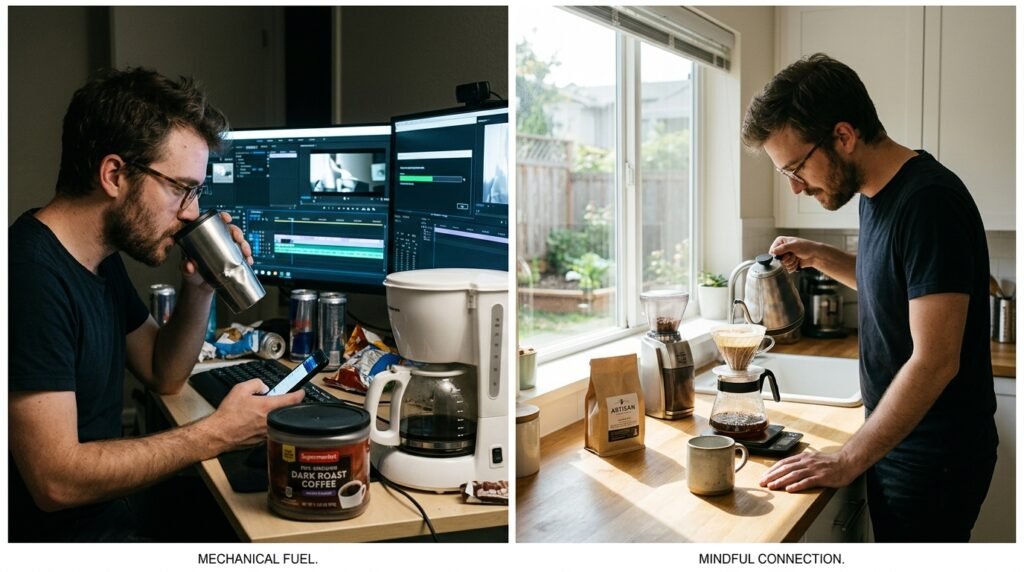
My kitchen reflected this digital anxiety. My coffee maker was a cheap, plastic automatic drip machine. I bought massive plastic tubs of pre-ground, dark roast coffee that had been sitting on a supermarket shelf for months.
I did not drink coffee for pleasure. I drank it as a biological override.
When I stayed up until three in the morning editing a complex image, I needed a liquid alarm clock to get me out of bed four hours later. I would dump the stale powder into a paper filter, press a button, and chug the resulting black sludge from a travel mug while staring at my phone.
It was a completely thoughtless, mechanical transaction. I was putting fuel into a machine.
The Accidental Awakening
The turning point did not happen on purpose. It happened because my cheap plastic coffee maker finally died, completely burning out its heating element on a cold Tuesday morning.
Desperate for caffeine to get through the workday, I walked out of my apartment and wandered into a small, independent specialty coffee roastery a few blocks away.
I walked up to the counter and ordered a standard black coffee, expecting the barista to turn around and dispense heavy, burnt liquid from a massive metal urn.
Instead, she took out a small glass cone, placed it on a digital scale, and hand-ground a batch of light-roast beans. She grabbed a silver gooseneck kettle and began to pour the hot water in slow, deliberate, hypnotic circles.
I was completely captivated by the quiet intentionality of her movements. She wasn’t rushing. She was treating the brewing process with an almost reverent level of respect.
When she handed me the ceramic mug, I took a sip.
The shock to my palate was absolute. The harsh, ashy bitterness I had associated with coffee my entire life was completely absent. The liquid was impossibly smooth, tasting vibrantly of sweet peaches, jasmine flowers, and a heavy, honey-like finish.
The realization that a simple seed could produce such a complex, beautiful flavor profile was the exact catalyst for (My Honest Experience Switching to Specialty Coffee). My entire definition of the beverage was permanently rewritten in a single sip.
The Face Behind the Pixels
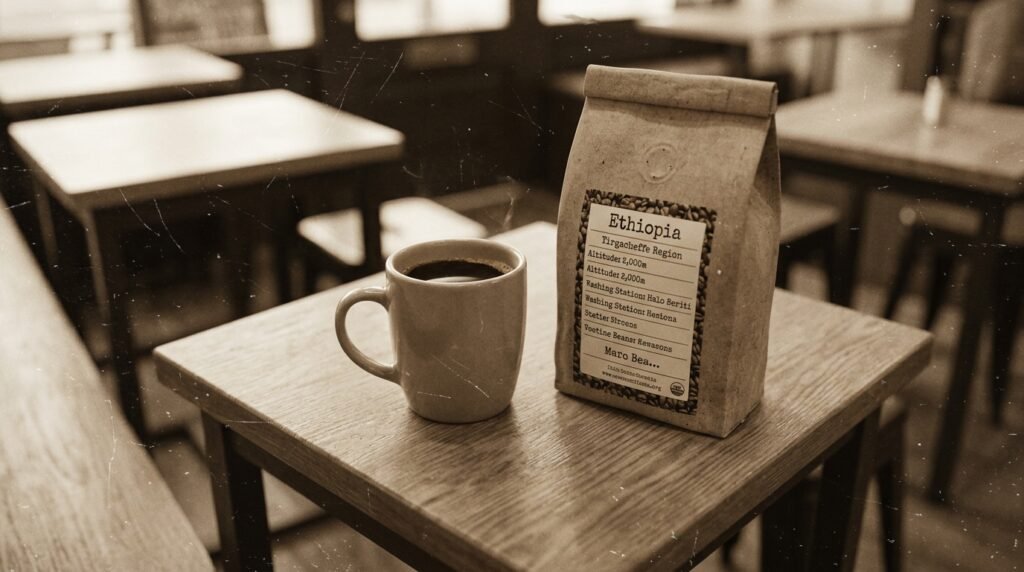
I sat down at a small wooden table in the corner of the cafe and looked closely at the bag of retail coffee beans sitting next to my mug.
The label didn’t just say “Coffee.” It was packed with highly specific, granular data.
It listed the country of origin: Ethiopia. It listed the specific region: Yirgacheffe. It listed the altitude at which the coffee was grown: 2,000 meters above sea level. It even listed the name of the washing station where the local farmers brought their freshly picked cherries.
That was the exact moment the scratches and the dust disappeared from the photograph.
I suddenly realized that the liquid in my mug did not magically appear out of a factory machine. It was an agricultural miracle.
I closed my eyes and imagined the staggering chain of human events required to produce this one cup. A farmer in the high-altitude mountains of Africa had to plant a seed in volcanic soil. They had to wait years for the tree to bear fruit.
Human hands had to physically walk through the dense forest, meticulously picking only the perfectly ripe, deep red cherries, leaving the unripe green ones behind.
The Invisible Global Chain
The realization hit me like a physical weight.
Those hand-picked cherries had to be carefully washed, fermented, and dried on raised beds under the African sun. The raw green seeds had to be packed into burlap sacks, loaded onto a truck, and shipped across the ocean.
A local roaster in my city had to take those fragile green seeds and apply the exact perfect mathematical curve of heat to unlock their hidden sugars without burning them.
And finally, a barista had to use precise water temperature and gravity to extract that flavor into my cup.
This deep dive into the staggering logistics of the global trade was precisely (What I Learned About Coffee Culture Around the World). I realized that coffee is the ultimate collaborative human project.
When I took another sip from that ceramic mug, I wasn’t just drinking caffeine. I was drinking the soil of the Ethiopian highlands. I was drinking the intense physical labor of a family living thousands of miles away. I was drinking geography, climate, and history.
It was no longer a drink. It was a profound connection to the physical world.
Reclaiming the Morning
I left that cafe, walked to a home goods store, and bought my own manual pour-over equipment. I bought a burr grinder, a digital scale, and a gooseneck kettle.
I decided that I was never going to treat my mornings as a thoughtless, rushed emergency ever again.
When you spend your entire life in a digital landscape, moving files, answering emails, and manipulating software interfaces, you become starved for analog reality. You lose touch with physical cause and effect.
Brewing coffee manually became my daily cure for that digital fatigue.
Now, when I wake up, I do not look at my phone. I walk into the kitchen and I engage my physical senses. I listen to the mechanical crunch of the burr grinder. I smell the explosive, sweet aromatics filling the room. I feel the weight of the heavy kettle in my hand.
I am forced to stand in my kitchen, absolutely still, for exactly four minutes. I cannot multitask. I must respect the timer, the ratio, and the flow of the water.
The Anchor in the Chaos
This quiet, mandatory pause completely changed my psychological health.
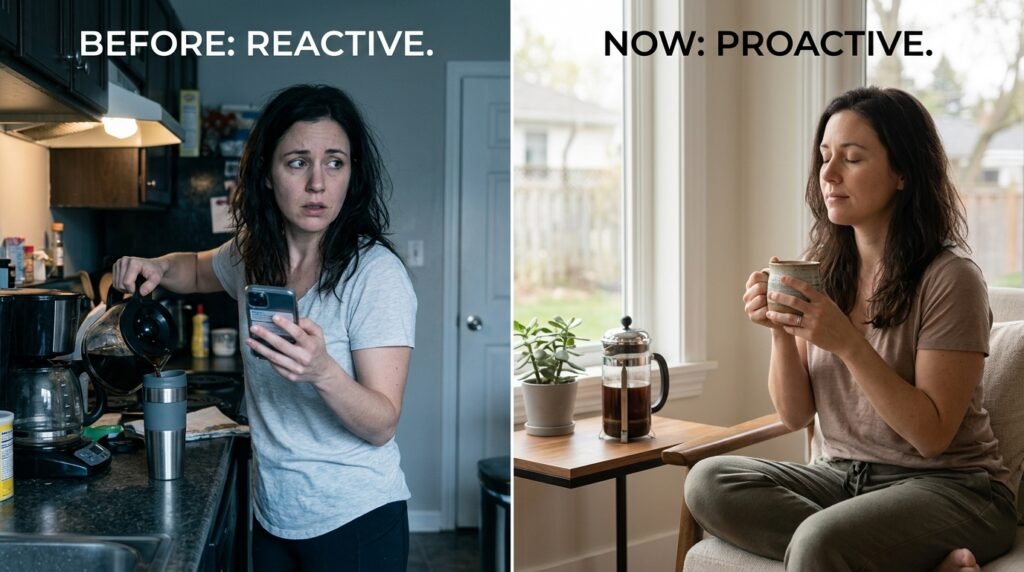
Before this realization, my mornings were purely reactive. I woke up already feeling behind schedule, rushing to consume enough caffeine to catch up to the demands of the day.
Now, my mornings are proactive. The coffee brewing ritual is a boundary line. It is a quiet, sacred fifteen minutes that belongs entirely to me, before my clients, my inbox, or the world can demand anything of my time.
It centers me. It proves that no matter how chaotic the digital world becomes, the physical world still requires patience, gravity, and heat to function.
Understanding the psychological weight of this daily ritual is the ultimate reason (Why Coffee Means More Than Just Caffeine to Me). It transitioned from being an alarm clock to being a meditative anchor.
The Social Bridge
The final piece of the puzzle—the final realization that coffee was far more than a beverage—happened when I started sharing it.
Once I learned how to brew café-quality coffee in my own kitchen, I wanted to share the experience. I started inviting friends over, not for dinner or a party, but simply for a cup of coffee.
When you make a manual pour-over for another person, you are performing an act of service. You are spending time and deliberate effort to craft something specifically for them.
I noticed that when I handed a steaming, perfectly balanced cup of specialty coffee to a friend, the conversation immediately deepened. The warmth of the mug, combined with the slow, deliberate pacing of the drink, naturally forces people to drop their defensive shields.
We didn’t talk about superficial things. We talked about life, struggles, and real emotions.
Coffee is the great social equalizer. It is the universal language of hospitality. It is a completely neutral, safe bridge that allows two human beings to sit across from each other and simply exist in the same space.
Looking Past the Pixels
If you are currently trapped in the cycle of viewing coffee as a purely functional drug—if you are buying whatever is on sale, throwing it into a machine, and chugging it in your car—you are looking at a heavily damaged photograph.
You are only seeing the scratches. You are missing the masterpiece hidden underneath.
I challenge you to clear the dust.
Go to a local roaster. Buy a bag of whole beans that tells you exactly where it was grown. Buy a cheap manual brewer. Take the extra five minutes tomorrow morning to actually smell the dry grounds, watch the hot water interact with the coffee bed, and taste the liquid without adding milk or sugar.
When you finally realize how much human effort, global history, and agricultural magic went into that single mug, your perspective will shatter. You will realize that coffee has never just been a drink. It is a ritual, an anchor, and a quiet moment of peace waiting patiently for you to discover it.
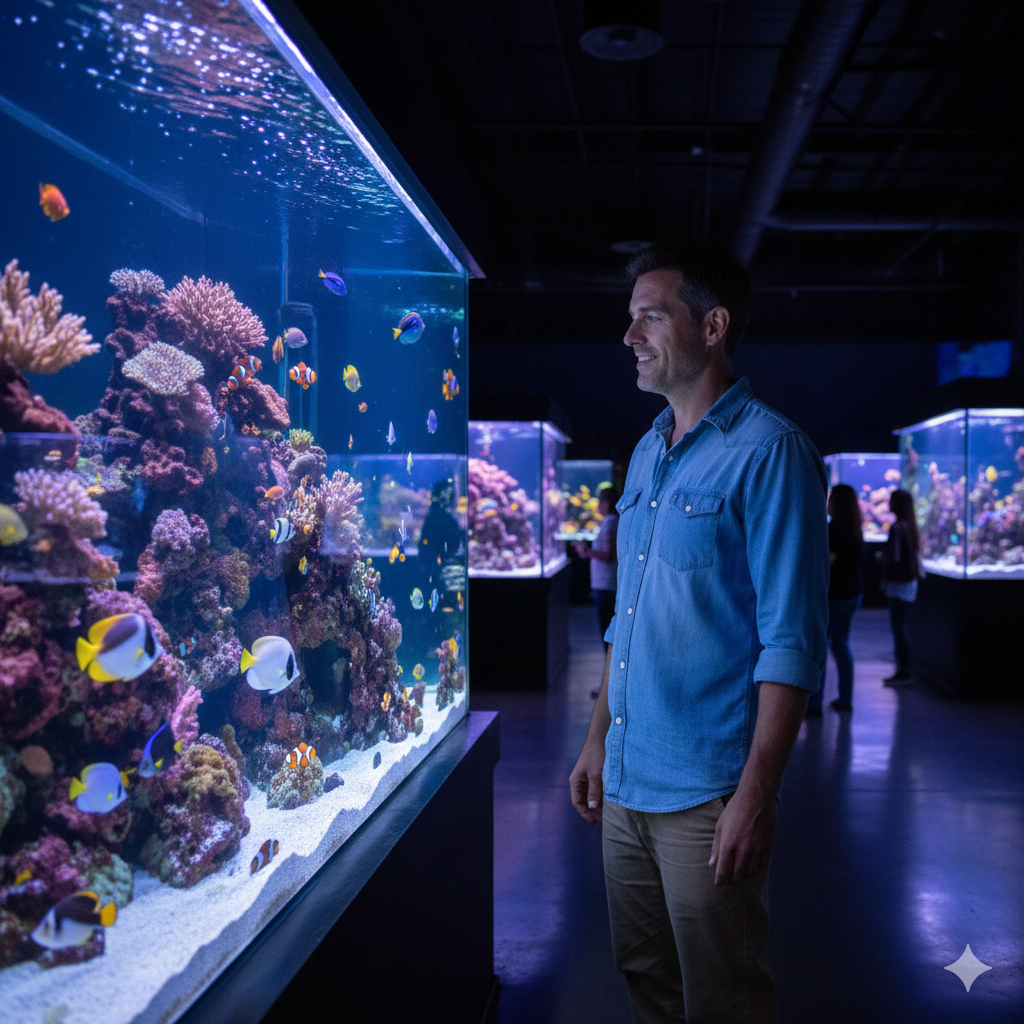
My name is Daniel Carter, I am 35 years old, and I live in the United States. I have been passionate about aquariums for many years, and what started as a simple hobby quickly became a lifelong interest in aquatic life, fish behavior, and responsible tank care.
Through TheBrightLance, I share real experiences, practical knowledge, and honest lessons learned from maintaining different types of aquariums. I enjoy testing equipment, studying fish behavior, improving maintenance routines, and helping beginners avoid common mistakes.
My goal is to make aquarism easier, more ethical, and more enjoyable for everyone — whether you are setting up your very first tank or looking to refine your techniques.