
Creating a composite image is the ultimate test of your skills.
You might take a human subject from a clean studio photoshoot, extract them, and drop them onto a background image of a gritty, bustling Tokyo street at midnight. If you just copy and paste the layers, the result looks incredibly fake. It looks like a cheap, amateur collage.
The reason it looks fake is because the environmental context is missing.
The bright, white studio lights bouncing off the subject’s face completely clash with the dark, neon-soaked ambient light of the Tokyo background. To make the image look real, you cannot just drop the subject into the scene; you have to deeply understand the original environment of every single pixel. You have to meticulously match the color temperatures, paint in the shadows, and adapt the subject to fit the world they are standing in.
For the first decade of my life, my view of coffee was like a bad, unedited composite image.
I assumed coffee was a universal, identical commodity. I thought everyone in the entire world interacted with the roasted bean in the exact same way I did. I assumed the entire planet woke up, pressed a button on a plastic machine, poured a massive mug of brown liquid, and drank it in their car while stressing about morning traffic.
I was forcing my own fast-paced, highly isolated, utility-driven context onto a globally diverse beverage.
When I finally started exploring the history of the bean and the vast, diverse rituals surrounding it, my worldview completely shattered. I realized that the liquid in my mug changes its meaning entirely depending on the cultural lighting of the environment.
Here is the honest, eye-opening story of what I learned about coffee culture around the world, how different countries treat the exact same agricultural product, and how learning these global rituals forever changed my morning routine.
The Italian Espresso Bar: The Great Equalizer
My exploration started in the birthplace of espresso: Italy.
In my Americanized mind, getting an espresso was a luxury. You go to a fancy cafe, pay five dollars, open your laptop, and sit there for three hours working on a spreadsheet.
In Italy, that concept is considered almost offensive.
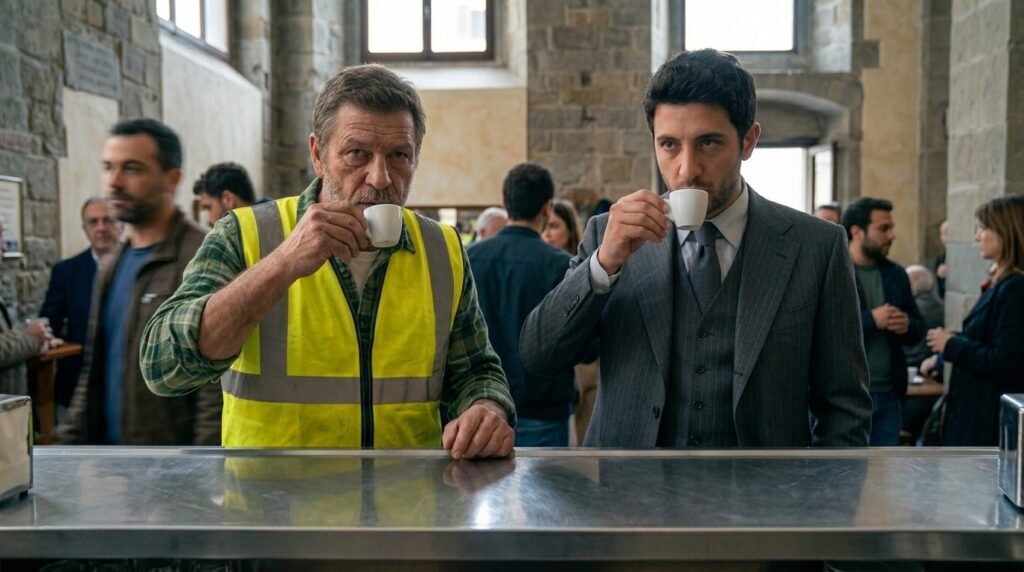
Italian coffee culture is built entirely around speed, accessibility, and socialization. The coffee shop, known as a “bar,” is not a co-working space. It is a daily, democratic right.
In cities like Rome or Naples, people walk into a bar multiple times a day. They do not sit down. They stand at the long, polished zinc counter. They order a single shot of espresso (un caffè), which usually costs around one single euro.
The barista pulls the shot in twenty seconds. The patron drinks it in three quick sips, standing shoulder-to-shoulder with strangers. They exchange a few loud words with the barista, leave a coin on the counter, and walk out the door. The entire interaction takes less than three minutes.
It is a culture that views coffee not as a long, drawn-out luxury, but as a quick, vital punctuation mark in the day. It is an egalitarian moment where a wealthy CEO and a construction worker stand side-by-side at the exact same counter, drinking the exact same beverage.
The Ethiopian Coffee Ceremony: The Art of Time
If Italy is about speed, the birthplace of coffee operates on the complete opposite end of the chronological spectrum.
In Ethiopia, where the Coffea arabica plant grows wild in the high-altitude forests, coffee is not something you grab in a paper cup on your way to a meeting. It is a profound, deeply respected social event.
The Ethiopian coffee ceremony is a ritual that can take up to two or three hours to complete.
It is traditionally performed by the woman of the household. She does not start with a bag of pre-roasted beans. She starts with raw, green coffee seeds. She washes them and roasts them in a flat pan over an open charcoal fire right in the living room.
The room fills with the intense, heavy smoke of roasting coffee, often mixed with the burning of frankincense. Once the beans are dark and oily, they are crushed by hand using a wooden mortar and pestle.
The grounds are placed into a traditional clay pot called a jebena and boiled with water.
The coffee is served to the guests in three distinct rounds. The first round, called Abol, is the strongest. The second, Tona, is slightly weaker. The third, Baraka, translates to “to be blessed.”
You cannot rush this process. To leave before the third cup is consumed is considered incredibly rude. Immersing myself in the history of this slow, deliberate ritual was the exact premise of (The First Time I Explored Coffee Culture Deeply), because it forced me to confront how impatient my own culinary habits had become.
The Japanese Kissaten: Absolute Mastery
When I look at the incredibly complex, flawless shading of a traditional Japanese snake tattoo, I am always in awe of the artist’s dedication. They spend decades mastering a single, highly specific craft until it reaches absolute perfection.
That exact same philosophy of uncompromising mastery exists in Japanese coffee culture, specifically in the traditional, old-school cafes known as Kissaten.
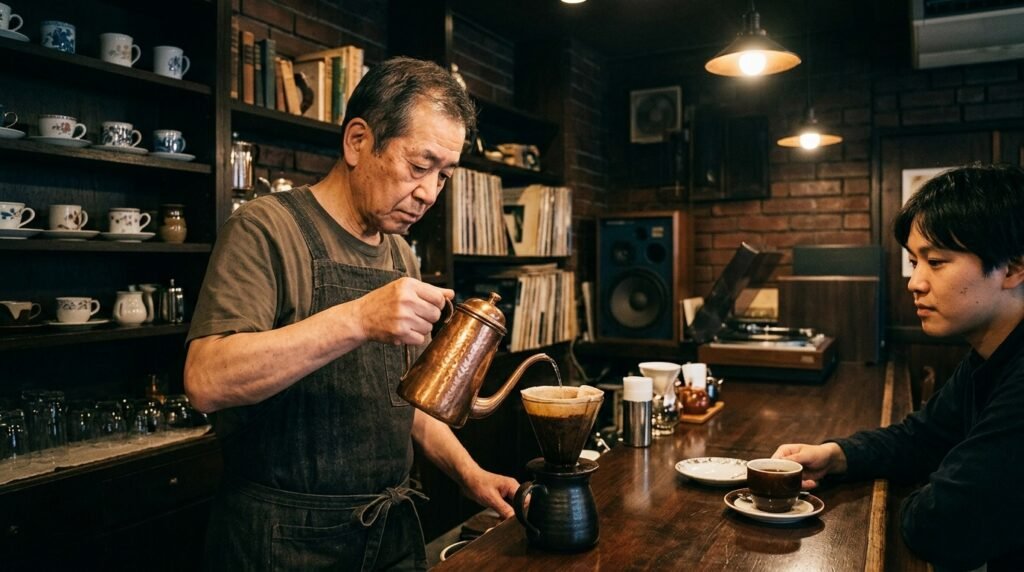
A Kissaten is fundamentally different from a modern, loud, bright Western coffee shop. They are often dark, moody, and incredibly quiet. They play soft jazz records. They are heavily steeped in the Showa-era aesthetic.
The master of the Kissaten (the master) does not use automated espresso machines. They rely entirely on slow, meticulous manual brewing methods.
They use intricate glass siphon brewers that look like 19th-century chemistry equipment, or they use the Nel Drip, a method that uses a thick, reusable cotton flannel cloth instead of a paper filter.
In a Kissaten, you do not ask for a caramel latte to go. You sit in absolute quiet, watching a master pour a thin, precise stream of hot water over heavily roasted, aged coffee beans for five agonizingly slow minutes.
The resulting liquid is thick, intense, and profoundly complex. It is a culture that treats the brewing of coffee not as a service industry job, but as a highly respected, lifelong artisan discipline.
Recognizing this level of obsessive dedication is the primary reason (What I Learned From Visiting Different Coffee Shops), as I began seeking out baristas who treated their water kettles like precision instruments.
The Nordic Fika: The Mandatory Pause
If you travel to the Nordic countries, specifically Sweden and Finland, you will encounter populations that consume more coffee per capita than anyone else on the planet.
But they don’t drink it the way Americans do.
In the United States, we use coffee as fuel for productivity. We drink it while we are typing emails, walking down the street, or driving our cars. It is a tool designed to make us work harder.
In Sweden, they have a cultural institution called Fika.
Fika roughly translates to “having coffee and a sweet treat,” but it means so much more than that. It is a cultural mandate to stop what you are doing.
In Swedish workplaces, you do not drink your coffee at your desk while staring at a spreadsheet. At 10:00 AM and again at 3:00 PM, everyone in the office stops working. They step away from their screens, gather in a communal area, and drink a cup of black filter coffee alongside a cinnamon bun or a pastry.
They talk to each other. They disconnect from the stress of the job.
Fika is not a break for productivity; it is a break from productivity. It is an acknowledgment that human beings are not machines. We need warmth, we need sugar, and we desperately need social connection to survive the long, dark, freezing Scandinavian winters.
The Middle Eastern Cezve: Hospitality and Destiny
As I continued my global research, I found myself fascinated by the ancient, unfiltered traditions of the Middle East, specifically in countries like Turkey and Lebanon.
Here, coffee is deeply intertwined with hospitality, respect, and even mysticism.
They do not use paper filters, and they do not use espresso machines. They use an incredibly fine grind of coffee—literally pulverized into a powder—and place it into a small, long-handled brass or copper pot called a cezve or an ibrik.
They add water and sugar directly to the powder, and bury the brass pot in hot sand or place it over a flame. The coffee is allowed to foam up, almost to the point of boiling over, before it is quickly removed from the heat.
This process is repeated several times to build a thick, rich foam on top of the liquid.
When it is poured into a tiny, ornate cup, the microscopic coffee grounds are poured in with the liquid. You have to wait for the muddy grounds to settle to the bottom of the cup before you take a sip. The coffee is incredibly thick, syrupy, and heavily spiced with cardamom.
But the ritual doesn’t end when the cup is empty.
Because the thick mud is left at the bottom of the cup, a tradition called tasseography emerged. The drinker turns their cup upside down onto the saucer, lets it cool, and a designated reader interprets the shapes and patterns left behind by the coffee grounds to tell the drinker’s fortune.
It is a beverage that literally dictates destiny.
Becoming a Global Brewer
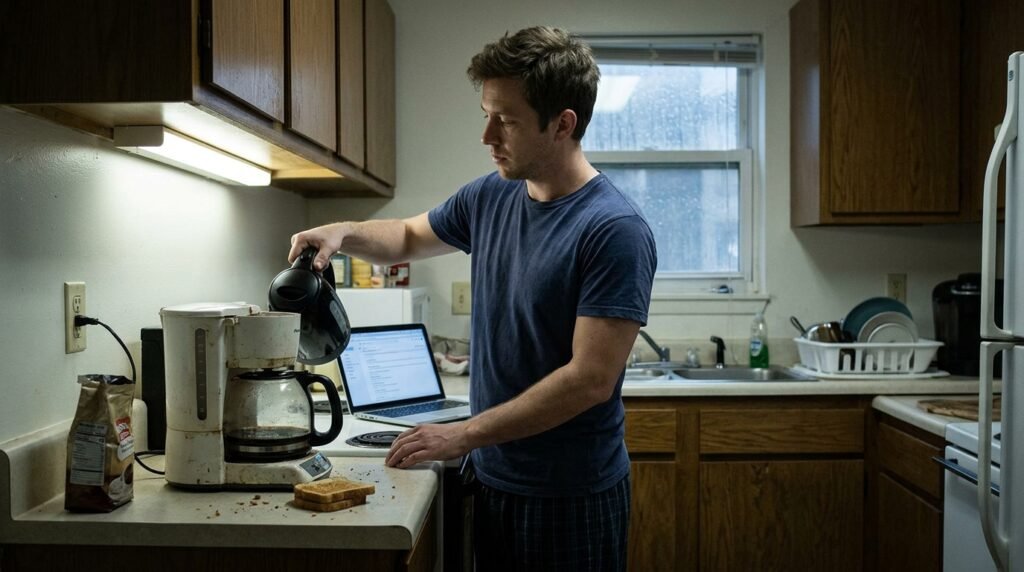
Before I understood this massive, diverse global tapestry, my kitchen was a boring, utilitarian place. I made coffee the exact same way every single morning, rushing through the process so I could get back to my computer monitor.
Learning about these different cultures completely rewired my brain.
I stopped viewing coffee as a rigid, universal commodity. I started viewing it as a highly adaptable cultural translator. Grasping the psychological weight of these rituals is exactly (Why Coffee Means More Than Just Caffeine to Me). I realized I was participating in a global human tradition every time I turned on my kettle.
Now, I don’t just ask myself “how” I want to make my coffee. I ask myself “where” I want to be.
If I wake up late and I need an immediate, sharp kick of energy before a deadline, I channel the Italians. I use my AeroPress to make a tiny, concentrated, heavy shot of coffee. I drink it in three sips standing at my kitchen counter, and I get to work.
If I wake up on a cold, rainy weekend and I feel overwhelmed by the demands of digital life, I channel the Nordic Fika. I deliberately turn my phone off. I brew a large French Press, cut a slice of sweet cake, sit at my dining table with my family, and refuse to look at a screen for thirty minutes.
And if I buy a highly expensive, rare bag of single-origin coffee, I channel the Japanese Kissaten. I pull out my glass V60. I dim the lights. I focus entirely on the physical flow rate of my gooseneck kettle, pouring the water with absolute, silent, uncompromising precision.
The Context Changes the Pixels
If you only ever drink coffee out of a cardboard cup while sitting in traffic, you are looking at a bad, unedited composite image. You are forcing a beautiful, ancient agricultural product into a stressful, unnatural environment.
You are missing the true context of the pixels.
I challenge you to expand your cultural lighting. The next time you brew a cup of coffee, try to borrow a ritual from a different part of the world.
Stop treating the beverage as a background task. Sit in silence for five minutes and appreciate the craftsmanship of the liquid. Or, put your laptop away, call a friend, and use the coffee as an excuse to simply exist in the same room together without talking about work.
When you finally adapt your environment to respect the history of the bean, the harsh, bitter utility of your morning routine will completely vanish. You will realize that coffee is not just a drink; it is one of the greatest, most diverse cultural experiences on the planet.
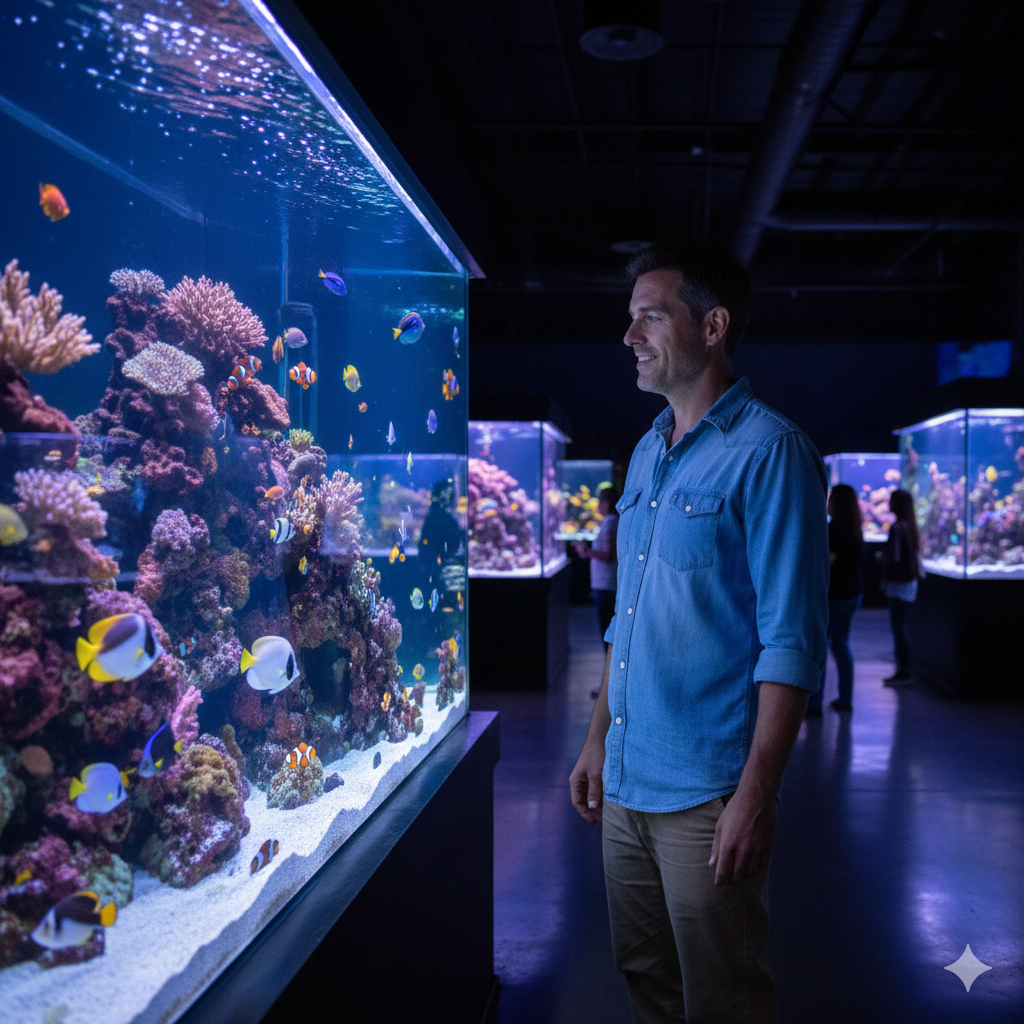
My name is Daniel Carter, I am 35 years old, and I live in the United States. I have been passionate about aquariums for many years, and what started as a simple hobby quickly became a lifelong interest in aquatic life, fish behavior, and responsible tank care.
Through TheBrightLance, I share real experiences, practical knowledge, and honest lessons learned from maintaining different types of aquariums. I enjoy testing equipment, studying fish behavior, improving maintenance routines, and helping beginners avoid common mistakes.
My goal is to make aquarism easier, more ethical, and more enjoyable for everyone — whether you are setting up your very first tank or looking to refine your techniques.