
When I am generating digital images, especially when I am trying to preserve the exact facial identity of a specific model from a reference file, it is incredibly easy to fall into a psychological trap.
If I type out a prompt, hit generate, and the resulting image looks synthetic, distorted, or the facial features don’t match the reference at all, my immediate impulse is to blame the hardware.
I start thinking that my base model isn’t advanced enough. I start convincing myself that if I just bought a more expensive graphics card, or paid for a premium cloud-computing subscription, the image would magically fix itself.
But nine times out of ten, the hardware is perfectly fine. The problem is my prompt. The problem is the raw data I am feeding the machine, or the parameters I set before I clicked the button.
For the first few years of my specialty coffee journey, I fell into this exact same trap in my kitchen.
Every time I brewed a sour, bitter, or muddy cup of coffee, I glared at my cheap French Press or my basic plastic drip machine. I was convinced that if I just spent three hundred dollars on a high-end, automatic pour-over machine, my mornings would transform into a luxurious café experience.
I almost pulled out my credit card. But then, I decided to do an audit of my routine. I realized I was blaming the camera before I even learned how to adjust the lighting.
Here is the honest, highly practical story of how I improved my coffee without buying new equipment, the invisible variables I finally learned to control, and how hacking my existing setup completely changed my morning mug.
The 98 Percent Rule
If you want to drastically improve the liquid in your mug without spending money on a new brewer, you have to look at the most abundant ingredient in the recipe.
A cup of black coffee is roughly 98 percent water. It is a mathematical certainty that if you use bad water, you will brew bad coffee.
For years, I was filling my cheap plastic drip machine with tap water straight from the kitchen sink. Depending on where you live, tap water is usually packed with heavy minerals like calcium and magnesium, along with heavy doses of chlorine used by municipal treatment plants.
When you heat up highly chlorinated, mineral-heavy water and pour it over delicate coffee grounds, a violent chemical reaction happens. The heavy metals bind to the fragile fruit and floral acids of the coffee, completely muting them.
You aren’t tasting the beans; you are tasting the plumbing.
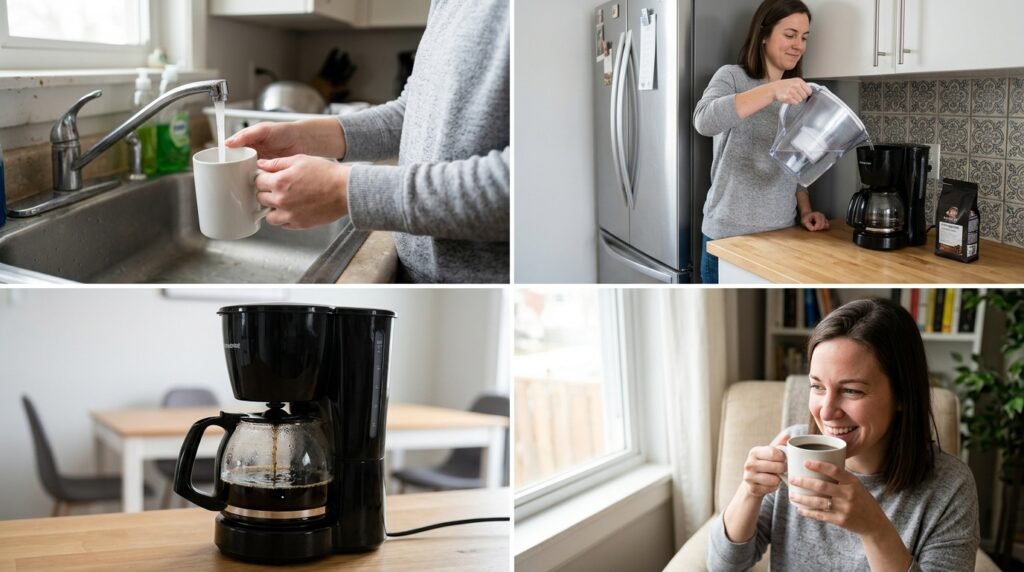
I didn’t buy a new coffee machine. I simply took the basic, inexpensive charcoal water filter pitcher that was already sitting in my refrigerator and started using it for my morning brew.
The change was instant and staggering. By stripping the chlorine and heavy minerals out of the water, the true flavor of the coffee bean was finally allowed to shine through. The liquid became vibrant, clean, and sweet.
Upgrading the Software, Not the Hardware
The second realization I had was about the beans themselves.
If I put a blurry, low-resolution reference image into my image-generation software, I cannot expect it to output a high-definition, photorealistic masterpiece. The output is entirely dependent on the quality of the input.
I was buying generic, pre-ground, dark roast coffee from the bottom shelf of the supermarket. This coffee had been roasted months ago, ground into a stale powder, and left to oxidize in a plastic tub.
I was blaming my twenty-dollar French Press for the terrible flavor, when in reality, a thousand-dollar espresso machine would have made that same stale coffee taste just as bad.
The brewer does not create flavor. It only extracts what is already there.
I decided to stop upgrading my kitchen counter and start upgrading my pantry. Grasping the massive difference in raw ingredient quality was the exact catalyst for (Why I Stopped Buying Cheap Coffee and Never Looked Back).
I started buying freshly roasted, whole-bean specialty coffee from a local roaster. I used the exact same cheap brewer I had always used, but because the input was suddenly packed with natural caramel, chocolate, and fruit notes, the output transformed into a masterpiece.
Hacking the Heat
Another massive flaw in my routine was how I managed my thermal energy.
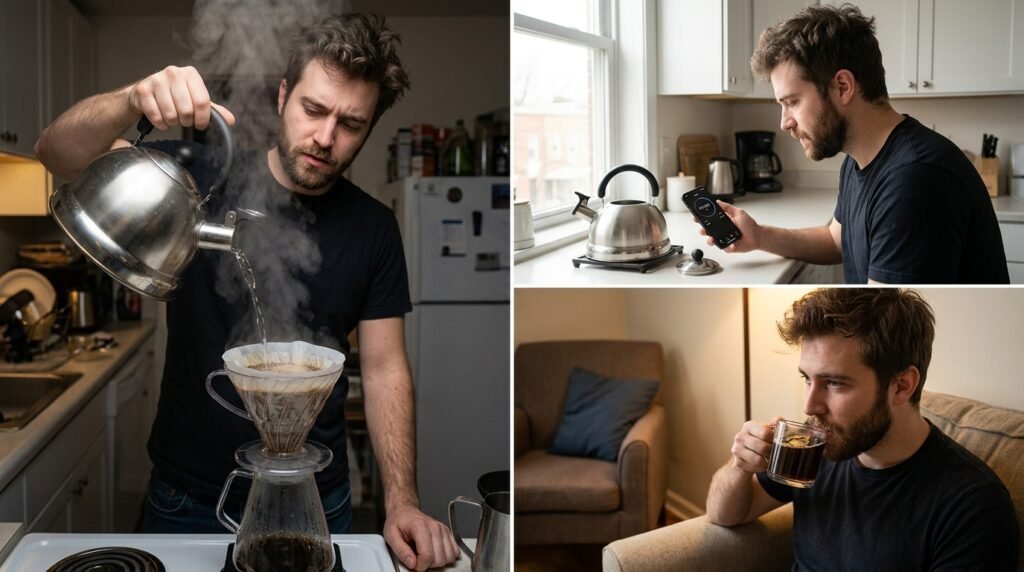
I used to put my standard, heavy whistling tea kettle on the stove and let it boil until it screamed. Then, I would immediately dump that rolling, violently boiling water directly onto my coffee grounds.
I didn’t know that boiling water is highly destructive to specialty coffee. The extreme kinetic energy instantly vaporizes the delicate aromatic oils and aggressively extracts the harsh, bitter tannins from deep inside the bean. My coffee always tasted like burnt ash.
I thought I needed to buy a two-hundred-dollar, temperature-controlled, digital gooseneck kettle to fix this problem.
I was wrong. I just needed to learn patience.
I kept using my cheap whistling kettle. But instead of pouring the liquid fire immediately, I adopted the “off-boil” technique. I let the kettle scream, then I pull it off the hot burner, take the lid off, and set a timer for exactly forty-five seconds.
During that short pause, the violent bubbling stops. The water naturally cools down to the golden brewing window of around 200°F (93°C).
When I pour this slightly cooler water over my coffee, it melts the sweet sugars perfectly without scarring the delicate oils. Understanding this thermal dynamic is precisely (The Small Changes That Made My Coffee Much Better). I fixed the bitterness in my cup without spending a single dime.
The Deep Clean Revelation
Perhaps the most embarrassing discovery of my equipment-free upgrade involved basic kitchen hygiene.
I had been using a standard glass French Press for months. After every use, I would just quickly rinse the glass beaker and the metal mesh plunger under warm tap water and leave it on the drying rack.
Coffee beans are packed with heavy, natural fats and lipids. When you brew coffee, those invisible oils coat every single surface they touch.
Hot water does not wash away fat.
Over the weeks, a microscopic layer of coffee oil had built up inside the metal mesh of my plunger. And because oil is organic, it physically went rancid. It spoiled.
Every single time I brewed a fresh cup of premium Ethiopian coffee, the hot water was melting the rancid, stale oils from last month and mixing them directly into my fresh beverage. It gave the coffee a harsh, metallic, sour taint.
I didn’t need to throw the French Press away. I just needed to actually clean it.
I disassembled the metal mesh plunger completely. I soaked all the parts in a bowl of hot water mixed with a heavy-duty coffee detergent (or a simple mix of baking soda and dish soap). The water immediately turned a disgusting, murky brown as the rancid oils finally dissolved.
When I reassembled the perfectly clean brewer and made a cup of coffee, it tasted like an entirely different beverage. The metallic taint was gone. The clarity was restored.
Hacking the Cheap Drip Machine
If you use a cheap, standard automatic drip machine, you might feel like you have absolutely no control over the brewing process. You just press a button and hope for the best.
But you can actually “hack” a cheap machine to dramatically improve the extraction.
The biggest flaw in cheap drip makers is the showerhead. It usually violently spits water into the exact center of the coffee bed, creating a massive crater. This causes “channeling,” where the water rushes through the middle, over-extracting the center and completely ignoring the dry coffee grounds on the edges.
You can fix this manually.
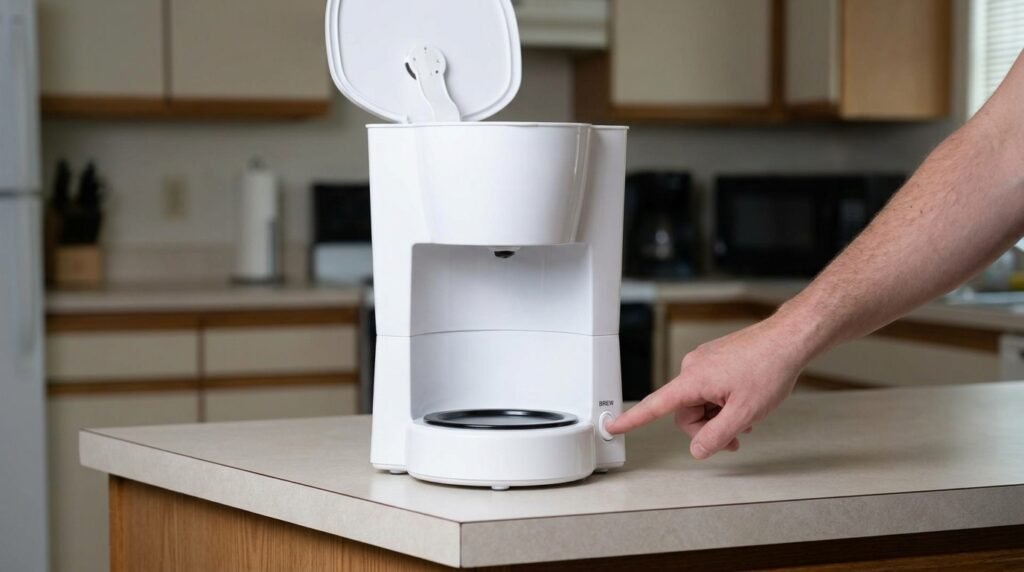
When I used to use my cheap drip machine, I would press the “brew” button and leave the plastic lid open. As soon as the machine started spitting hot water onto the coffee grounds, I would grab a spoon.
Once the coffee bed was fully wet, I would gently stir the slurry with my spoon. This physical agitation makes sure that every single coffee particle gets wet evenly. It completely destroys the dry pockets on the edges of the filter.
Then, I would close the lid and let the machine finish its cycle.
That simple, five-second physical intervention completely stopped the channeling. It forced the water to extract the coffee evenly, turning a weak, sour, unbalanced pot of coffee into a rich, full-bodied morning beverage.
Pre-Wetting the Paper
There was one more microscopic detail I fixed that elevated my coffee without requiring any new purchases.
Whenever I used paper filters in my drip machine or my pour-over cone, I used to just dump the dry coffee grounds directly into the dry paper.
Paper has a taste. If you don’t believe me, tear off a piece of a cheap coffee filter and chew on it. It tastes like cardboard, dry wood, and dust.
When you brew coffee through a dry paper filter, the hot water extracts that cardboard flavor and deposits it straight into your carafe. It adds a dusty, dull note to the finish of your beverage.
To fix this, I added a ten-second step to my routine. Before I put the coffee grounds into the filter, I pour a little bit of hot water over the empty paper. I let it soak completely, and then I dump that rinse water down the sink.
This simple action washes away the dusty paper taste, and it pre-heats the brewing vessel. Refining these tiny, procedural details is the foundation of (What I Do Differently Now When Making Coffee), because I finally realized that the process is just as important as the tools.
The Master of the Tools
It is incredibly tempting to browse specialty coffee websites and dream about expensive grinders, digital scales, and beautiful glass hourglass brewers.
I eventually bought those tools, and I love them. But I am incredibly grateful that I didn’t buy them immediately.
If I had purchased a five-hundred-dollar setup while I was still using tap water, boiling my beans to death, and pouring my water blindly, my coffee would have still tasted terrible. The expensive equipment would have only magnified my bad habits.
You cannot buy your way out of bad technique.
Just like generating a beautiful digital image, you have to master the prompt before you upgrade the hardware. You have to understand the parameters.
Before you spend another dollar on coffee equipment, look at what you are doing in your kitchen right now. Filter your water. Let your kettle cool down for forty-five seconds. Disassemble and deep-clean your brewer. Buy fresher beans, and stir the coffee bed to ensure an even extraction.
When you optimize the variables you already control, you will be absolutely shocked by the quality of the coffee you can produce. You will realize that the magic isn’t in the machine; the magic has always been in your hands.

My name is Daniel Carter, I am 35 years old, and I live in the United States. I have been passionate about aquariums for many years, and what started as a simple hobby quickly became a lifelong interest in aquatic life, fish behavior, and responsible tank care.
Through TheBrightLance, I share real experiences, practical knowledge, and honest lessons learned from maintaining different types of aquariums. I enjoy testing equipment, studying fish behavior, improving maintenance routines, and helping beginners avoid common mistakes.
My goal is to make aquarism easier, more ethical, and more enjoyable for everyone — whether you are setting up your very first tank or looking to refine your techniques.