
I stood in place over my stove on a rainy Sunday afternoon, completely mesmerized by a stainless steel saucepan.
I was trying to make homemade caramel for the very first time. I had poured a cup of plain, boring white sugar into the pan, turned on the heat, and waited. At first, nothing happened. But then, the edges began to melt into a clear syrup.
A few minutes later, the clear syrup turned golden. Then, it turned a deep, rich amber.
The smell filling my kitchen was incredible. It didn’t smell like flat, boring white sugar anymore. The heat had completely transformed its chemical structure. It smelled like toasted nuts, rich butter, and dark molasses. It was complex, heavy, and deeply comforting.
As I pulled the pan off the heat to stop the cooking process, a realization hit me. I had just witnessed the exact same chemical miracle that happens inside a coffee roaster.
But it also sparked a much deeper question. I had supplied the white sugar for my caramel experiment. Where does the sugar in a coffee bean come from?
I had been drinking specialty coffee for years, and I knew that certain origins tasted undeniably sweeter than others. Some tasted like chocolate truffles, while others tasted like ripe peaches. But I had never stopped to ask why.
Here is the honest, mouth-watering story of why some coffee origins taste sweeter than others, the brilliant agricultural science behind natural sugars, and how the earth itself acts as the ultimate pastry chef.
The Sweetness Misconception
If you talk to an average coffee drinker on the street and ask them to describe black coffee, the word “sweet” will almost never leave their lips.
Most people are conditioned to believe that coffee is inherently, aggressively bitter. They believe that the only way to experience sweetness in a coffee mug is to physically open a packet of artificial sweetener or pump a vanilla syrup into the cup.
For a long time, I was trapped in that exact same mindset.
I thought drinking black coffee was supposed to be a punishing, rugged experience. But when I finally upgraded my beans and bought a light-roast specialty coffee, my entire sensory world was flipped upside down.
Realizing that coffee could naturally taste like honey, caramel, and ripe berries without any added ingredients was a massive paradigm shift. Experiencing this culinary awakening is the exact definition of (How My Taste Changed After Drinking Better Coffee), because my palate finally learned to recognize agricultural sweetness instead of artificial sweetness.
Coffee is the seed of a tropical fruit. It contains naturally occurring fructose, glucose, and sucrose.
But the amount of sugar, and the type of sweetness you experience in your mug, is entirely dictated by the geographical origin of the bean.
The Altitude Sugar Factory
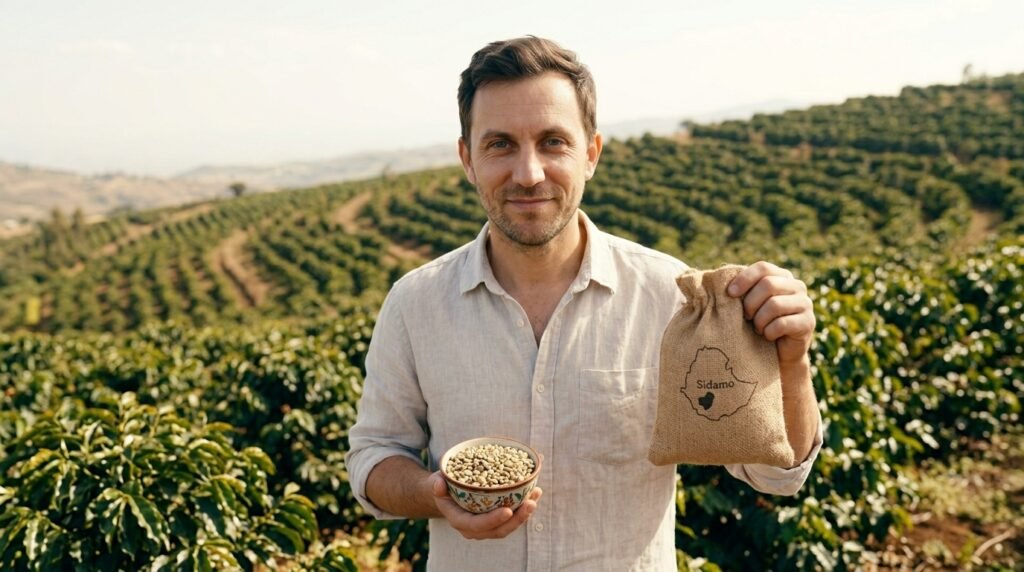
The very first geographical factor that determines the sweetness of a coffee bean is how high up a mountain the tree is planted.
Altitude is essentially nature’s sugar factory.
Imagine a coffee tree planted near sea level in a hot, humid, tropical environment. The plant is incredibly comfortable. It grows rapidly. The coffee cherries (the fruit that holds the bean) mature very quickly in the relentless heat.
Because the fruit ripens so fast, the plant doesn’t have the time to push complex nutrients into the seed. The resulting coffee is often porous, soft, and lacks any notable sweetness. It usually tastes a bit woody or earthy.
Now, imagine a coffee tree planted in the towering mountains of the Colombian Andes or the Ethiopian highlands.
At 2,000 meters above sea level, the climate is drastically different. The days are sunny and warm, but the nights are freezing cold. To survive the freezing night air, the coffee plant has to slow its metabolism down to an absolute crawl.
This daily pause in growth means the coffee cherry takes months longer to ripen on the branch.
During this extended maturation process, the plant furiously pumps complex organic acids and dense natural sugars deep into the seed to keep it alive. Unlocking the science behind this survival mechanism is precisely (What Makes Coffee From High Altitudes So Special?).
The higher the altitude, the more extreme the temperature swings, and the sweeter and denser the final coffee bean becomes. The mountain literally forces the plant to manufacture sugar.
The Fermentation Oven (Processing)
Altitude creates the sugar, but the local climate dictates how that sugar is preserved.
Once a farmer picks the ripe coffee cherries, they have to dry the seeds inside. How they process the fruit completely changes the type of sweetness you will taste in your mug.
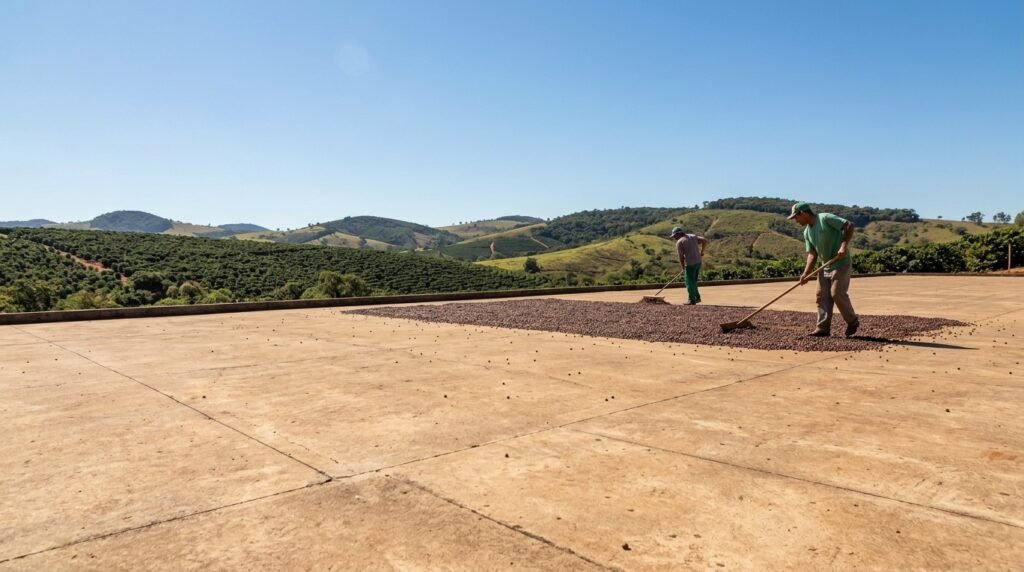
Let’s look at Brazil. Brazil is famous for its vast, relatively flat coffee-growing plateaus. They have a very predictable, hot, dry season. Because of this perfect weather, Brazilian farmers use a method called the “Natural Process.”
They take the whole, intact coffee cherries and lay them out in the blazing sun on massive concrete patios.
As the whole fruit dries and shrivels up like a raisin, the sticky, sugary fruit pulp begins to ferment. That fermenting sugar physically seeps directly into the cellular structure of the coffee seed.
This process infuses the bean with massive, heavy, syrupy sweetness. It is the reason Brazilian coffees famously taste like peanut butter cups, dark chocolate, and heavy molasses.
The “Honey” Compromise
Now, let’s look at Central America, specifically countries like Costa Rica.
Costa Rican farmers are famous for a processing method that produces arguably the sweetest coffees on the planet: the “Honey Process.”
They use a machine to rip the skin off the coffee cherry, but they intentionally leave the sticky, sugary fruit pulp (the “honey”) glued to the seed. Then, they lay these sticky seeds out in the sun.
As the sun beats down, that sticky fruit pulp literally caramelizes onto the outside of the bean, just like the sugar melting in my saucepan. The sugars bake into the seed.
When you brew a Honey Processed coffee from Costa Rica, it tastes astonishingly like a graham cracker covered in melted brown sugar. It is a rich, pastry-like sweetness that feels incredibly luxurious.
Learning how drastically these different processing methods alter the final flavor is exactly (How Coffee From the Same Plant Can Taste So Different), as it proves that human intervention can either wash the sugar away or bake it directly into the bean.
The Crisp, Fruity Sweetness of Africa
But what if you don’t want your coffee to taste like a heavy dessert? What if you want a sweet, refreshing cup?
For that, you have to look at the origins in East Africa.
Countries like Ethiopia and Kenya primarily use the “Washed Process.” They strip the fruit completely off the seed and wash it meticulously clean before drying it.
Because the fruit is gone, the heavy, fermenting sugars do not seep into the bean.
So, where does the sweetness come from? It comes purely from the intense, high-altitude genetics of the African plant itself.
When you brew a washed Ethiopian Guji coffee, the sweetness is not heavy like chocolate. It is bright, crisp, and vibrant. It tastes exactly like the natural, mouth-watering sweetness of a ripe peach, a juicy nectarine, or a spoonful of raw honey.
It is an elegant, refreshing sweetness. It is the difference between eating a slice of heavy chocolate cake and eating a bowl of fresh, perfectly ripe summer berries. Both are sweet, but the sensation on the palate is entirely different.
The Roaster’s Translation
The origin provides the raw sugar, but the coffee roaster is the person standing at the stove.
If a roaster takes a sweet, dense, high-altitude bean from Colombia and throws it into a roasting machine, they have to make a crucial decision.
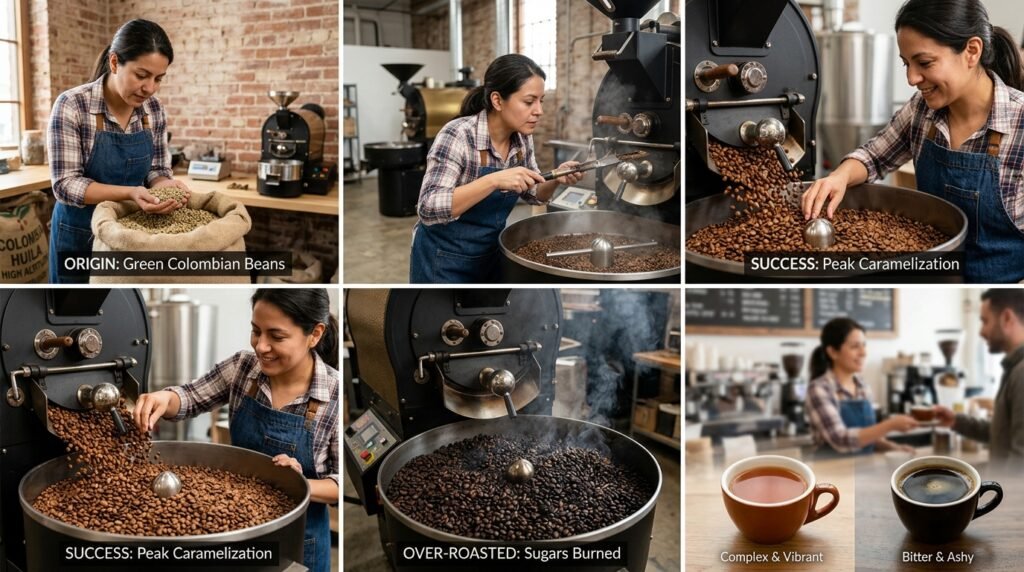
As the bean heats up, a chemical reaction occurs called the Maillard reaction. This is the exact same reaction that makes a seared steak taste delicious, or turns a piece of white bread into golden toast. The natural sugars inside the coffee bean begin to caramelize.
If the roaster is highly skilled, they will pull the beans out of the machine right when those sugars hit their absolute peak of caramelization. This is usually a Light or Medium roast. The coffee will taste incredibly sweet, complex, and vibrant.
But if the roaster leaves the beans in the machine too long—creating a Dark roast—those delicate sugars will literally burn.
Just like forgetting a pan of caramel on the stove, the sugar turns to black carbon. The sweetness is completely destroyed, replaced by the harsh, ashy, bitter taste of burnt wood.
This is why mass-produced commercial coffees taste so bitter. They buy cheap, low-altitude beans with very little natural sugar to begin with, and then they roast them so dark that any remaining sweetness is incinerated.
Finding Your Perfect Sugar
Once you understand that sweetness in coffee is a natural, geographical phenomenon, your entire buying strategy changes.
You no longer have to rely on artificial syrups to make your mornings enjoyable. You just have to figure out which origin produces the specific type of sweetness your palate craves.
If you have a massive sweet tooth and you love heavy, comforting, dessert-like flavors, you should be buying naturally processed coffees from Brazil or honey processed coffees from Costa Rica. You want those heavy, baked-in, chocolatey sugars.
If you prefer a balanced, classic sweetness that tastes like sweet caramel and crisp red apples, you should be buying washed coffees from the high-altitude mountains of Colombia.
And if you want a vibrant, elegant, refreshing sweetness that tastes like blooming flowers and ripe stone fruit, you should look exclusively toward the ancient, wild forests of Ethiopia.
Trust the Earth
My adventure making caramel on the stove taught me a lot about the fragility of sugar. It takes the perfect amount of heat, the perfect timing, and absolute attention to create something beautiful.
But making caramel is easy compared to growing specialty coffee.
The sweetness in your mug is the result of a plant battling freezing mountain nights. It is the result of a farmer carefully sun-baking sticky fruit pulp for weeks on end. It is the result of an artisan roaster perfectly caramelizing the seed without burning it.
The next time you brew a cup of high-quality, single-origin coffee, I urge you to leave the sugar bowl in the cabinet.
Drink it completely black. Let it cool down for a minute, take a slow sip, and let the liquid coat your tongue.
If you pay attention, you will find the chocolate, the caramel, the honey, and the peach. You will finally realize that when you buy the right origin, the earth is the only pastry chef you will ever need.

My name is Daniel Carter, I am 35 years old, and I live in the United States. I have been passionate about aquariums for many years, and what started as a simple hobby quickly became a lifelong interest in aquatic life, fish behavior, and responsible tank care.
Through TheBrightLance, I share real experiences, practical knowledge, and honest lessons learned from maintaining different types of aquariums. I enjoy testing equipment, studying fish behavior, improving maintenance routines, and helping beginners avoid common mistakes.
My goal is to make aquarism easier, more ethical, and more enjoyable for everyone — whether you are setting up your very first tank or looking to refine your techniques.