
Have you ever eaten a meal that was so incredibly spicy, loud, and complex that the very next day, all you craved was a simple piece of buttered toast?
Sensory fatigue is a very real phenomenon. When you constantly push your palate to the absolute limit, your brain eventually begs for a break. It craves harmony. It craves a baseline.
For the first few years of my specialty coffee journey, I completely ignored this biological need for rest. I was a flavor thrill-seeker. I only bought coffees that promised explosive, wild tasting notes. I wanted coffees that tasted like bright grapefruits, intense blueberry jams, and jasmine flowers. I loved the high-altitude African coffees that shocked my tongue with sharp, vibrant acidity.
But eventually, the thrill started to wear off.
Waking up at six in the morning and immediately drinking a beverage that tasted like a sour, complex fruit juice started to feel exhausting. I didn’t want to intellectually analyze my morning cup anymore. I didn’t want a challenge. I just wanted a warm, reliable, comforting beverage to ease me into the day.
I needed to find the culinary equivalent of a perfectly composed photograph—an image where the highlights aren’t blinding, the shadows aren’t pitch black, and everything exists in quiet, satisfying harmony.
That pursuit of harmony led me straight back to the largest coffee-producing nation on the planet. Here is the honest story of how I overcame my snobbery, and exactly why Brazilian coffee feels so flawlessly balanced to me.
The Stigma of the Giant
If you are going to fall in love with Brazilian coffee, you first have to unlearn decades of industry stereotypes.
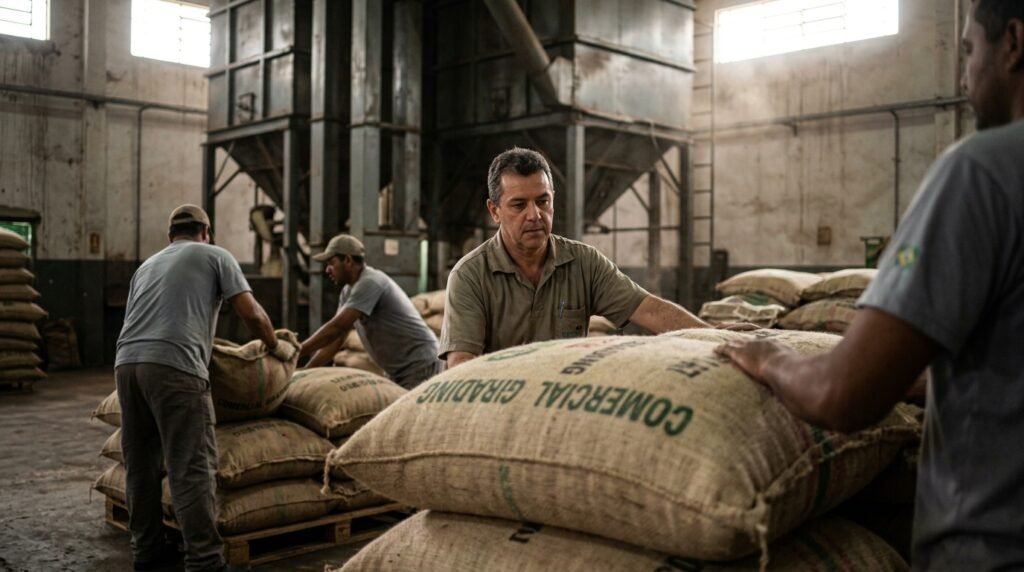
Brazil is the undisputed heavyweight champion of the coffee world. They produce roughly a third of all the coffee consumed on Earth. Because the country is so massive and its agricultural output is so staggering, it has historically been treated as the world’s coffee factory.
Massive commercial corporations have spent decades buying cheap, low-grade Brazilian beans in astronomical bulk. They use it as a cheap filler for those giant plastic tubs of dark roast sitting on supermarket shelves.
Because of this, Brazil developed an unfair reputation. Specialty coffee snobs (myself included) used to view it as “boring,” “flat,” and “generic.” We assumed that because it was produced in such high volume, it couldn’t possibly offer a premium, artisanal experience.
I was so blinded by this stereotype that I actively avoided buying it. Experiencing the shift away from this narrow mindset is precisely (How My Taste Changed After Drinking Better Coffee), because I finally realized that a country’s mass-market exports do not dictate the potential of its small, passionate farmers.
The Recommendation
My perspective shifted on a particularly gloomy, freezing winter morning.
I walked into my local specialty roastery feeling completely exhausted from a long work week. I didn’t want my usual bright, acidic Ethiopian pour-over. I looked at the barista and said, “I need something heavy. I need something that tastes like a melted chocolate bar. No fruit. No flowers. Just comfort.”
He didn’t hesitate. He reached past the African and Central American shelves and handed me a bag with a dark green label.
It was a single-origin coffee from the Cerrado Mineiro region of Brazil.
I looked at the bag skeptically. But the barista assured me that this was not the generic supermarket filler I was used to avoiding. He explained that it was a specific genetic variety called Yellow Catuai, grown on a small microlot farm, and naturally processed in the Brazilian sun.
I trusted him, bought the bag, and took it home to my kitchen.
The Aroma of a Bakery
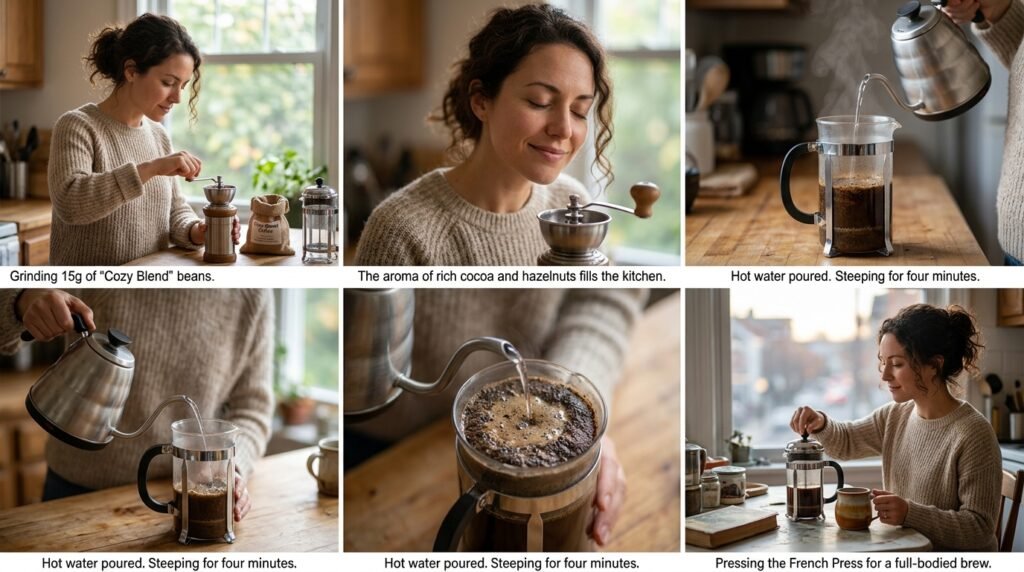
The next morning, I set up my brewing station. I decided to use a French Press instead of a paper filter, hoping the metal mesh would allow the heavy, natural oils of the coffee to shine through.
I broke the seal on the bag and poured 15 grams of the beans into my manual burr grinder.
The moment I started grinding, my kitchen completely transformed. It didn’t smell like a fruit orchard or a botanical garden. It smelled exactly like walking into a warm, high-end bakery at dawn.
The aroma was incredibly dense and rich. There were massive, undeniable notes of toasted hazelnuts, dark cocoa powder, and sweet, buttery caramel. It smelled so incredibly inviting and safe that my shoulders physically relaxed.
I boiled my water, poured it over the grounds in the French Press, and let it steep for exactly four minutes.
As the coffee brewed, a thick, dark crust formed at the top of the carafe. The steam rising off the water carried the scent of roasted peanuts and brown sugar. It was the most comforting smell I had ever experienced in my kitchen.
The Taste of Perfect Harmony
I pressed the plunger down slowly, watching the dark, heavy liquid separate from the grounds. I poured the coffee into my thickest ceramic mug.
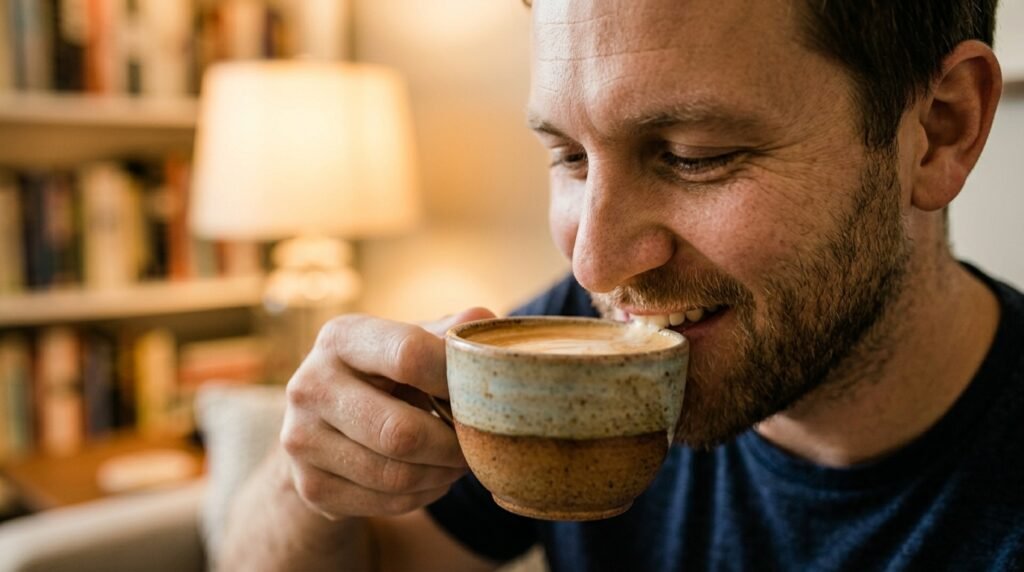
I let it cool for a minute, wrapped both hands around the warm ceramic, and took a slow sip.
My palate instantly understood why the barista had recommended it. It was exactly what I had asked for.
The very first thing I noticed was the texture. In the coffee world, we call this the “body.” Because Brazilian coffees are typically grown at lower altitudes than their African counterparts, the beans are less dense, which often translates to a heavier, creamier mouthfeel.
The liquid felt syrupy and thick. It coated my tongue completely.
And then the flavors settled in. There was absolutely zero sharpness. The bright, zesty acidity that I usually associated with specialty coffee was entirely absent. Instead, I was hit with a massive wave of milk chocolate.
Right behind the chocolate was the distinct, creamy flavor of peanut butter and toasted almonds. As I swallowed, a lingering, warm sweetness of praline and molasses stayed on my palate.
It was flawless.
It didn’t challenge me. It didn’t force me to sit there and decipher bizarre, exotic tasting notes. It just delivered a perfectly executed, highly refined version of the classic coffee profile I had grown up loving.
The Geography of the Baseline
I sat at my table, completely mesmerized by how satisfying that simple, heavy cup of coffee was. I needed to know why Brazil was capable of producing this specific profile so consistently.
I dove into the geography of the country.
Unlike the steep, towering, volcanic mountain ranges of Colombia or the extreme, freezing altitudes of the Ethiopian highlands, many of Brazil’s famous coffee-growing regions are situated on massive, rolling plateaus.
These plateaus generally sit at a lower altitude (often between 800 and 1,200 meters above sea level).
Because the altitude is lower, the climate is slightly warmer and more consistent. The coffee cherries do not endure the freezing night temperatures that force high-altitude plants to develop intense, sharp fruit acids.
Instead, the warmer climate allows the cherries to mature faster, developing deep, dense, sugary compounds. The soil is rich, and the predictable seasons create the perfect environment for cultivating heavy, nutty, and chocolatey flavors.
Understanding this geographical distinction is exactly (What I Learned From Drinking Coffee From Different Regions), because it taught me that lower acidity is not a flaw; it is simply a different expression of the earth.
The Power of the “Natural” Process
The other massive factor that makes Brazilian coffee feel so balanced and sweet is the way the farmers process the fruit after it is harvested.
Brazil is famous for championing the “Natural” process.
In many other countries, farmers strip the fruit off the seed immediately and wash it clean. But in Brazil, the vast, flat terrains and predictable dry seasons allow farmers to lay the entire, intact coffee cherries out in the sun to dry on massive concrete patios.
As the whole cherry dries and shrivels in the hot sun, the sticky, sugary fruit pulp slowly ferments and seeps directly into the coffee seed.
This infuses the bean with a massive amount of natural sweetness. It smooths out any harsh edges and amplifies the heavy body of the final cup.
When you combine the lower-altitude growing environment with the natural, sun-dried processing method, you get a coffee that is structurally designed to be a sweet, heavy, comforting baseline.
The Ultimate Espresso Foundation
As my coffee journey continued, I eventually bought an espresso machine for my house.
Pulling a great shot of espresso is incredibly difficult. Because the water is forced through the tightly packed coffee grounds at high pressure in just thirty seconds, it magnifies every single flavor note in the bean.
If you use a highly acidic, bright African coffee for espresso, the resulting shot can often taste overwhelmingly sour, like biting directly into a lemon. It is very hard to tame.
But when I put my Brazilian Yellow Catuai into the espresso grinder, the results were pure magic.
The low acidity and heavy body of the Brazilian beans created a thick, gorgeous layer of golden crema on top of the shot. The espresso tasted like a liquid dark chocolate truffle.
And when I poured a few ounces of steamed milk over that shot? It transformed into a dessert. The milk perfectly highlighted the peanut butter and caramel notes of the coffee, creating a latte that tasted like a melted candy bar without adding a single drop of artificial syrup.
Finding this perfect synergy between bean and machine is the core reason (The Brewing Method I Keep Coming Back To), as the French Press and the Espresso machine are practically designed to showcase Brazil’s heavy virtues.
Creating a Two-Bag System
Today, my pantry always tells a story of balance.
I no longer force myself to drink bright, challenging, highly acidic coffees every single day. I realized that my palate needs rest, and my mornings need variety.
I now operate on a strict two-bag system.
I always keep one bag of an exotic, bright, high-altitude coffee (usually an Ethiopian or a Kenyan) for the days when I want a vibrant, waking jolt of fruit and flowers.
But sitting right next to it, without fail, is a bag of high-quality, naturally processed specialty coffee from Brazil.
Brazil is my anchor. It is my safety net.
When it is pouring rain outside, I reach for Brazil. When I am stressed out and just need a moment of quiet comfort, I reach for Brazil. When I have friends over for dinner and I want to serve a coffee that I know absolutely everyone at the table will love, I serve Brazil.
It is the great unifier. It doesn’t polarize people. It just wraps them in a familiar, beautifully executed embrace.
A Plea to the Coffee Snobs
If you are a specialty coffee enthusiast who has spent the last few years chasing the wildest, strangest, most acidic coffees on the planet, I want to offer you a piece of advice.
Stop running for just a moment. Give your palate a break.
The next time you visit your favorite local roaster, do not walk past the South American shelf. Look for a single-origin coffee from the Cerrado Mineiro, Sul de Minas, or Mogiana regions of Brazil. Make sure it is a natural or pulped-natural process.
Take it home, grind it slightly coarser than usual, and brew it in a French Press.
When you take that first sip, and the perfect harmony of milk chocolate, toasted hazelnut, and sweet caramel washes over your tongue, you will understand exactly what you have been missing.
You will realize that a coffee doesn’t need to be wild or aggressive to be a masterpiece. Sometimes, the most beautiful experience in the world is simply finding a perfect, quiet, and reliable balance.

My name is Daniel Carter, I am 35 years old, and I live in the United States. I have been passionate about aquariums for many years, and what started as a simple hobby quickly became a lifelong interest in aquatic life, fish behavior, and responsible tank care.
Through TheBrightLance, I share real experiences, practical knowledge, and honest lessons learned from maintaining different types of aquariums. I enjoy testing equipment, studying fish behavior, improving maintenance routines, and helping beginners avoid common mistakes.
My goal is to make aquarism easier, more ethical, and more enjoyable for everyone — whether you are setting up your very first tank or looking to refine your techniques.