
I carried a glass of moderately expensive Pinot Noir at a dinner party when I realized I was a massive hypocrite.
The host of the party was standing at the head of the table, passionately explaining the story behind the bottle of wine we were drinking. He talked about the specific region in France where the grapes were grown. He talked about the limestone in the soil, the cool breeze that rolled through the valley at night, and how that specific climate gave the wine its tart, cherry-like acidity.
Everyone at the table nodded in quiet reverence. We all understood and accepted that the geographical origin of the grapes fundamentally dictated the quality and flavor of the drink in our glasses.
The next morning, I woke up, walked into my kitchen, and scooped a dark, oily powder out of a giant plastic tub. The label simply said “Premium Dark Roast.”
There was no country listed. There was no region. There was certainly no mention of the soil or the climate. I was drinking a mysterious, anonymous agricultural product, and I didn’t care at all.
That was the moment the hypocrisy hit me. Why did I respect the terroir of my evening wine, but treat my morning coffee like a factory-made chemical?
That single realization sparked a massive shift in my daily routine. I stopped buying generic bags of brown powder and started treating coffee like the complex, diverse, and globally fascinating crop that it actually is. Here is the honest story of why I started paying attention to coffee origin, and how learning a little bit of geography completely revolutionized my mornings.
The Illusion of “The Blend”
Before that dinner party, my coffee-buying strategy was embarrassing.
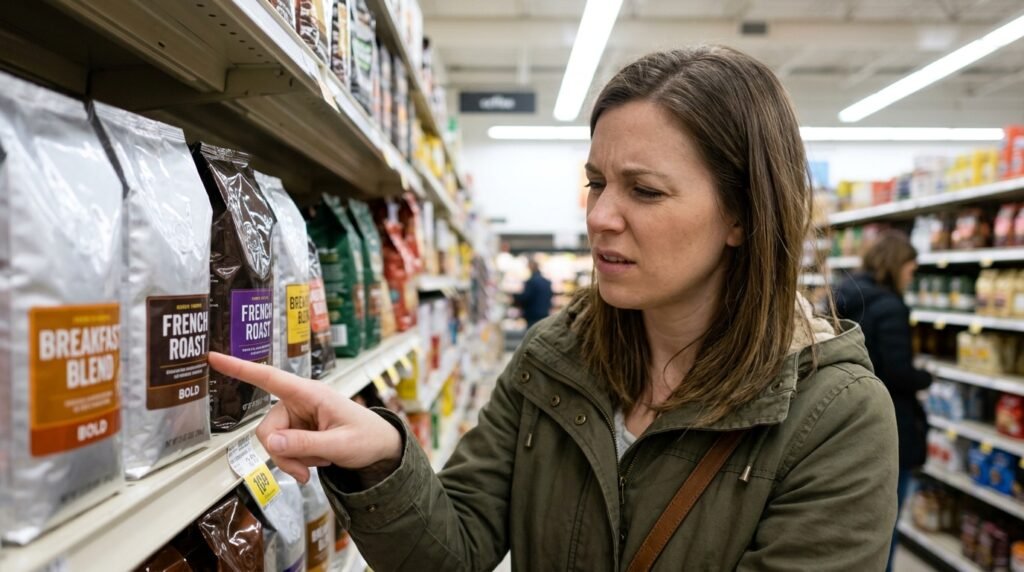
I would walk down the supermarket aisle and base my decisions entirely on marketing adjectives. I looked for words like “Bold,” “Rich,” “Breakfast Blend,” or “French Roast.”
I didn’t realize that “French Roast” is not a place in France. It is just a roasting style—specifically, burning the beans until they turn black. I didn’t realize that “Breakfast Blend” is a meaningless term designed to hide the fact that the company mixed cheap, defective beans from four different continents into one massive vat.
Commercial coffee companies do not want you to pay attention to origin.
Their entire business model relies on absolute, boring consistency. If a massive coffee chain wants their coffee to taste exactly the same in New York, Tokyo, and London, 365 days a year, they cannot rely on the beautiful, unpredictable nuances of a single farm. They have to blend away all the unique geographical characteristics and roast the life out of the beans.
By buying those blends, I was actively paying companies to destroy the flavor of the earth. I was drinking the agricultural equivalent of gray paint.
The Kitchen Geography Test
I decided I needed to test my newfound theory. If origin really mattered as much as it did with wine, I needed to prove it to myself.
I went to a local specialty coffee roaster and intentionally bypassed the “House Blend.” Instead, I looked for single-origin coffees. I bought one bag from the Huila region of Colombia, and one bag from the Yirgacheffe region of Ethiopia.
I brought them home, ground them exactly the same way, and brewed two separate mugs of pour-over coffee.
I sat at my kitchen table and took a sip of the Colombian coffee. It was heavy, rich, and deeply comforting, with massive notes of milk chocolate and sweet caramel.
I rinsed my mouth with water, picked up the Ethiopian mug, and took a sip.
My brain struggled to process the contrast. The Ethiopian coffee was light, translucent, and exploded with the vibrant flavor of fresh lemons and jasmine flowers. There was no chocolate. There was no heavy caramel. It tasted like an elegant, sweet, citrusy tea.
I sat there staring at the two mugs. Experiencing this aggressive, undeniable contrast was the exact moment (How I Learned That Not All Coffee Is the Same), because I finally had physical proof that coffee is not a singular, generic flavor.
These two beverages were from the exact same plant species. They were roasted by the exact same person. They were brewed with the exact same water. The only difference was the dirt they grew in, and they tasted like they were from completely different planets.
Understanding the “Why” (Terroir)
That side-by-side taste test turned me into an obsessive researcher. I needed to understand the science behind what I had just tasted.
Why did the Colombian coffee taste like chocolate, while the Ethiopian coffee tasted like flowers?
The answer brought me right back to the wine party: Terroir.
Terroir encompasses all the environmental factors that affect a crop. It includes the minerals in the soil, the amount of rainfall, the angle of the sun, and the ambient temperature. Coffee is a sponge for its environment.
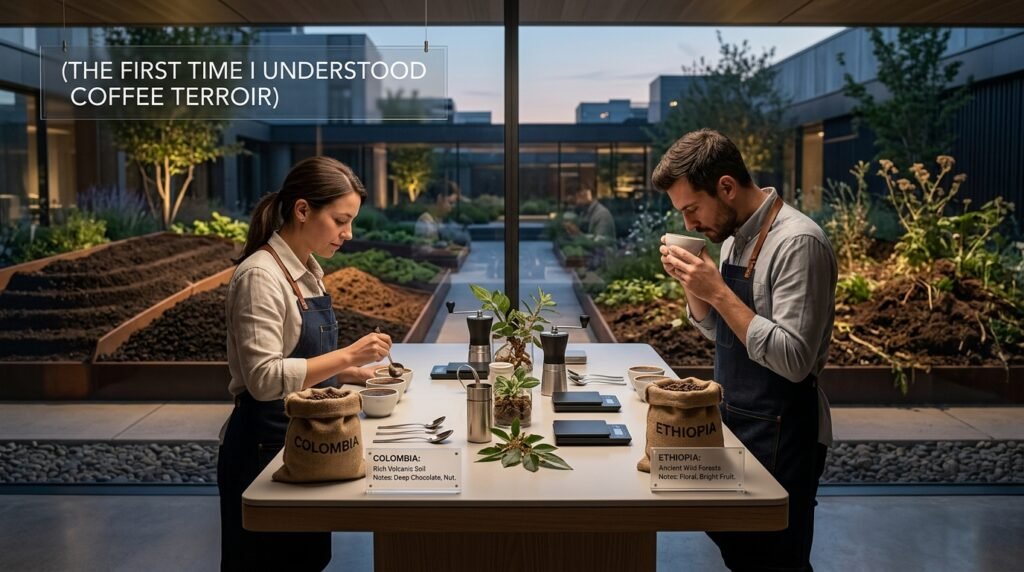
The coffee grown in Colombia was planted in rich, volcanic soil along the steep slopes of the Andes mountains. That specific dirt is packed with nutrients that naturally push the bean’s flavor profile toward deep, sweet, comforting chocolate and nut notes.
The coffee grown in Ethiopia was grown in ancient, wild, high-altitude forests. The soil is different, the climate is different, and the plant genetics are wild and untamed. The environment naturally fosters delicate, bright, floral, and fruity compounds.
When you learn to appreciate this, coffee stops being a beverage and becomes a liquid map. Grasping this scientific reality was precisely (The First Time I Understood Coffee Terroir), because it taught me that the flavor in my cup was actually authored by the earth itself months before the roaster ever touched it.
The Altitude Cheat Code
As I paid closer attention to the labels on single-origin coffee bags, I noticed another crucial detail linked to origin: Elevation.
Great coffee roasters always print the altitude on the bag, usually as MASL (Meters Above Sea Level).
I learned that altitude is perhaps the single most important geographical factor for coffee quality. When a coffee tree grows near sea level, it is hot. The coffee cherry ripens very quickly. Because it grows so fast, the seed inside is soft, porous, and usually tastes incredibly bland and earthy.
But when a coffee tree is planted high up a mountain—say, 1,800 meters above sea level in Costa Rica or Kenya—the plant struggles. The air is thin. The days are warm, but the nights are freezing.
This drastic temperature shift forces the coffee cherry to mature at an agonizingly slow pace. This slow growth pushes massive amounts of complex sugars and bright organic acids deep into the seed.
When I started paying attention to origin, I started looking specifically for high-altitude regions. I knew that if a coffee came from the towering mountains of the Ethiopian Guji region or the high peaks of the Colombian Andes, the altitude guaranteed a sweet, complex, and vibrant cup.
The Global Flavor Compass
Once you start paying attention to origin, walking into a coffee shop feels completely different. You aren’t just looking for caffeine; you are navigating a global flavor compass.
I quickly developed a mental map of what I could expect from different parts of the world.
The Americas (South and Central): When I want comfort, I look west. Coffees from Brazil, Colombia, Guatemala, and Honduras generally offer the classic, universally loved profile. They are known for a heavier body, lower acidity, and deep, resonant notes of milk chocolate, toasted nuts, caramel, and brown sugar. If it is a cold, rainy morning, this is my origin of choice.
Africa (East): When I want an adventure, I look to Africa. Coffees from Ethiopia, Kenya, and Rwanda are the wild children of the coffee world. They are famous for being incredibly bright, light-bodied, and intensely fruity. They offer explosive notes of jasmine, peach, blueberry, grapefruit, and black tea. They challenge the palate and completely redefine what coffee can be.
Asia (Indonesia): When I want something savory and intense, I look to the islands. Coffees from Sumatra or Java are heavily influenced by the humid jungle climate. They are massive, heavy, earthy, and deeply spicy. They often taste like dark cocoa, cedar wood, and pipe tobacco.
Knowing this compass gave me absolute control over my morning routine. I was no longer playing a guessing game at the supermarket. I was curating my sensory experience.
The Ethical Side of Origin
But my shift toward single-origin coffee wasn’t just about flavor. It was also about humanity.
When you buy a massive, anonymous plastic tub of blended coffee, you have no idea who grew it. You have no idea if the farmers were paid fairly. The commodity coffee market is notoriously ruthless, often forcing farmers to sell their crops at a loss just to survive.
When a specialty roaster prints the origin on the bag—when they name the specific country, the region, and sometimes even the exact name of the farmer or the cooperative—they are offering transparency.
Traceability is the foundation of ethical coffee.
By paying attention to the origin, I was ensuring that I was buying coffee from roasters who respected the farmers enough to put their names on the packaging. Delving into the stories behind these specific farms is essentially (What I Discovered About Coffee Farming Around the World), because it humanized the beverage. It wasn’t just brown water anymore; it was someone’s livelihood, cultivated with immense pride on a steep mountainside.

Breaking the Blend Habit
Making the switch from generic blends to single-origin coffees requires a leap of faith, and usually, a slightly larger budget.
Specialty, single-origin coffee is more expensive than commercial supermarket dust. But the value you receive in return is immeasurable.
You are trading a flat, burnt, anonymous liquid for a vibrant, sweet, and ethically sourced agricultural miracle. You are trading mindless consumption for a daily moment of mindfulness.
I no longer wake up and just drink “coffee.” I wake up and decide where I want to travel.
Some days, I travel to a high-altitude farm in Huila, Colombia, to enjoy a sweet, chocolatey sunrise. Other days, I travel to the ancient, wild forests of Yirgacheffe, Ethiopia, to wake up my senses with a burst of jasmine and lemon.
Start Your Own Journey
If your current coffee routine feels a little stale, or if you still view coffee merely as a bitter tool to fix your grogginess, I highly encourage you to start reading the labels.
Stop buying blends that hide the identity of the bean. Go to a local roaster or hop online and order a bag of single-origin coffee. Choose a country you have never tasted before.
When it arrives, smell the beans. Brew it carefully. Take a sip and close your eyes.
Try to taste the soil. Try to taste the altitude. Try to appreciate the thousands of miles that tiny seed traveled to get to your kitchen counter.
Once you start paying attention to the origin, the invisible walls around your palate will collapse. You will never look at a bag of coffee the same way again, and your mornings will become a fascinating, delicious exploration of the world.

My name is Daniel Carter, I am 35 years old, and I live in the United States. I have been passionate about aquariums for many years, and what started as a simple hobby quickly became a lifelong interest in aquatic life, fish behavior, and responsible tank care.
Through TheBrightLance, I share real experiences, practical knowledge, and honest lessons learned from maintaining different types of aquariums. I enjoy testing equipment, studying fish behavior, improving maintenance routines, and helping beginners avoid common mistakes.
My goal is to make aquarism easier, more ethical, and more enjoyable for everyone — whether you are setting up your very first tank or looking to refine your techniques.