
My kitchen table looked like a highly caffeinated chemistry lab.
There were three different ceramic mugs lined up in a row. Next to them sat a digital scale dusted with brown powder, a gooseneck kettle letting off a thin trail of steam, and a notebook filled with frantic scribbles.
I was on a mission.
For months, I had been randomly buying different bags of specialty coffee. I would walk into a local roastery, point at a bag that had a cool design or a funny name, and take it home. Most of it was good. Some of it was great. But I realized I was essentially wandering blindly through the coffee world.
I didn’t have a specific preference. If someone asked me, “What kind of coffee do you like?” I couldn’t give them a straight answer. I would just mumble something about liking it “fresh.”
I wanted a signature cup. I wanted to find that one specific flavor profile that I could rely on every single morning—the coffee that felt like it was made specifically for my palate.
So, I decided to stop guessing and start testing. I set up a blind tasting experiment in my own kitchen to finally narrow down the vast world of agriculture into my ultimate daily brew. Here is the honest, messy, and incredibly delicious story of how I discovered my favorite type of coffee, and how you can run this exact same experiment to find yours.
The Problem with Having Too Many Options
The specialty coffee world is a blessing and a curse.
When you finally leave the supermarket aisle behind and step into a real roastery, the sheer volume of choices is paralyzing. You are instantly hit with an overwhelming wall of data. There are coffees from Central America, East Africa, and Southeast Asia. There are washed processes, natural processes, and honey processes. There are light roasts, medium roasts, and experimental fermentations.
It is exhausting.
I realized that by constantly bouncing from one random bag to another, my palate was getting confused. I couldn’t accurately compare a heavy, dark Indonesian coffee I drank on Monday to a bright, floral African coffee I drank two weeks later. Human memory is terrible at holding onto precise flavor notes.
To actually discover my favorite, I needed contrast. I needed to taste them side-by-side, at the exact same temperature, on the exact same morning.
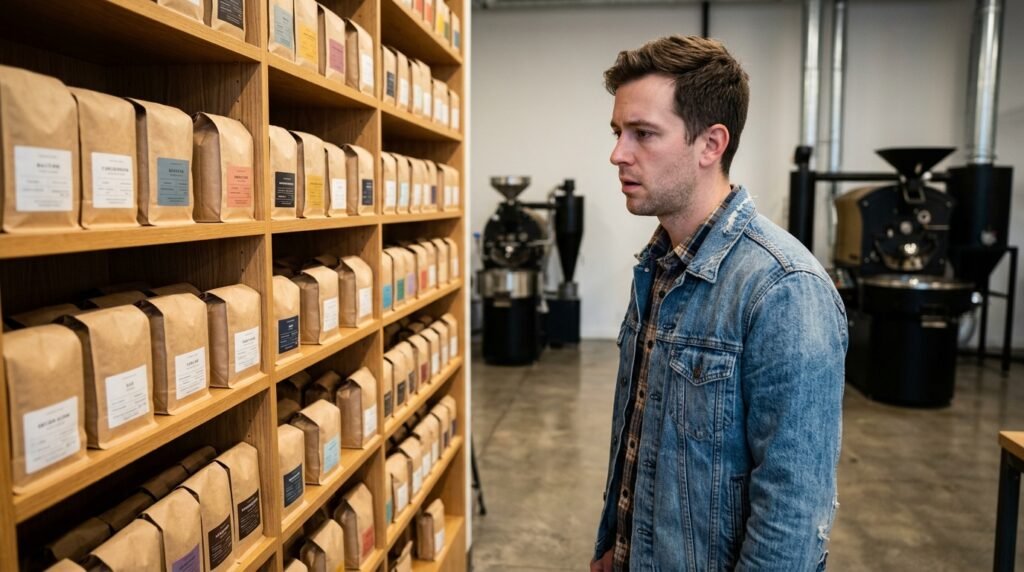
I went to my favorite local roaster and asked the barista to give me three small bags of completely different coffees. I wanted the three main pillars of flavor: something heavy and chocolatey, something bright and citrusy, and something wildly fruity.
He smiled, packed up three unmarked bags, and wrote a single letter on the bottom of each: A, B, and C.
Setting Up the Control Variables
If you are going to run a science experiment in your kitchen, you have to control the variables.
I knew that if I brewed one coffee in a French Press and another in a V60 pour-over, the comparison would be useless. The brewer changes the texture and the flavor drastically. Figuring out this baseline rule took me a while, but realizing (What I Learned After Trying 4 Brewing Methods) taught me that consistency is the only way to fairly judge the beans themselves.
I decided to use a standard ceramic V60 cone for all three cups.
I used the exact same ratio for each: 15 grams of coffee to 225 grams of water. I ground them all on the exact same medium-fine setting on my manual burr grinder. I heated my filtered water to exactly 205 degrees Fahrenheit.
Everything was locked in. The only difference between the three mugs sitting on my table was the agricultural genetics of the seeds inside.
Tasting Cup A: The Comforting Heavyweight
I started with Cup A.
I brought it to my nose and inhaled. It smelled incredibly familiar and safe. There were deep notes of toasted almonds, brown sugar, and a heavy dose of dark cocoa.
I took a sip. It coated my tongue like a warm blanket. It was thick, syrupy, and exceptionally smooth. There was almost zero acidity, meaning it didn’t make the sides of my mouth water at all. It just tasted like a perfectly refined, upgraded version of the classic diner coffee I grew up with.
I looked at my tasting notes. I wrote down: “Comforting. Peanut butter. Milk chocolate. Heavy.”
I later found out this was a pulped natural coffee from the Minas Gerais region of Brazil. It was delicious. In fact, understanding the appeal of this profile is exactly (How Tasting Brazilian Coffee Changed My Morning Routine), because there are days when you just want a heavy, uncomplicated hug in a mug.
But as I swallowed it, I realized something important. It was safe, but it didn’t excite me. It didn’t make me want to stop what I was doing and analyze the flavors. I wanted something with a little more mystery.

Tasting Cup B: The Sharp Awakening
I rinsed my mouth with a glass of room-temperature water to completely cleanse my palate. Then, I moved on to Cup B.
The dry aroma of this one was entirely different. It didn’t smell like dessert; it smelled like a fruit orchard. I picked up sharp notes of green apple and lime zest.
I took a sip, and my eyes widened immediately.
It was explosive. The liquid felt very light and thin in my mouth, almost like drinking water, but the flavor was incredibly aggressive. It was highly acidic, completely lacking the heavy chocolate foundation of Cup A. It tasted like biting into a crisp, slightly underripe Granny Smith apple, followed by a rush of grapefruit.
I wrote down: “Sharp. Citrus. Zesty. Wake-up juice.”
This turned out to be a washed coffee from the high altitudes of Kenya.
While I deeply respected the complexity of it, it was almost too aggressive for my daily palate. I could appreciate the bright, tomato-like acidity, but drinking an entire mug of it at 7:00 AM felt a bit too challenging. It was a coffee that demanded my absolute attention, but it lacked the comforting sweetness I craved.
Tasting Cup C: The Ultimate Epiphany
I cleansed my palate one more time. I picked up Cup C.
Before the liquid even touched my lips, the aroma completely stopped me in my tracks. It didn’t smell like the heavy chocolate of Brazil, and it didn’t smell like the sharp citrus of Kenya.
It smelled like a blooming flower garden.
The steam rising from the mug carried an intense, intoxicating perfume of jasmine blossoms and sweet, ripe stone fruit. It was so elegant that I actually closed my eyes to take another breath.
I took a slow sip.
My brain struggled to categorize what I was tasting. It had the light, tea-like body of the Kenyan coffee, but none of the sharp, aggressive sourness. It had a sweetness to it, but not the heavy, brown-sugar sweetness of the Brazilian coffee.
It tasted vividly and undeniably like a fresh, juicy peach.
As the coffee washed over my palate, the peach notes were perfectly balanced by a delicate floral flavor, like drinking a high-end Earl Grey tea infused with honey. There was no bitterness. It finished incredibly clean, leaving a lingering, sweet perfume in the back of my throat.
I put the mug down. I didn’t even need to write any notes. I just knew.
This was it. This was the flavor profile I had been searching for.
Unlocking the Mystery of Cup C
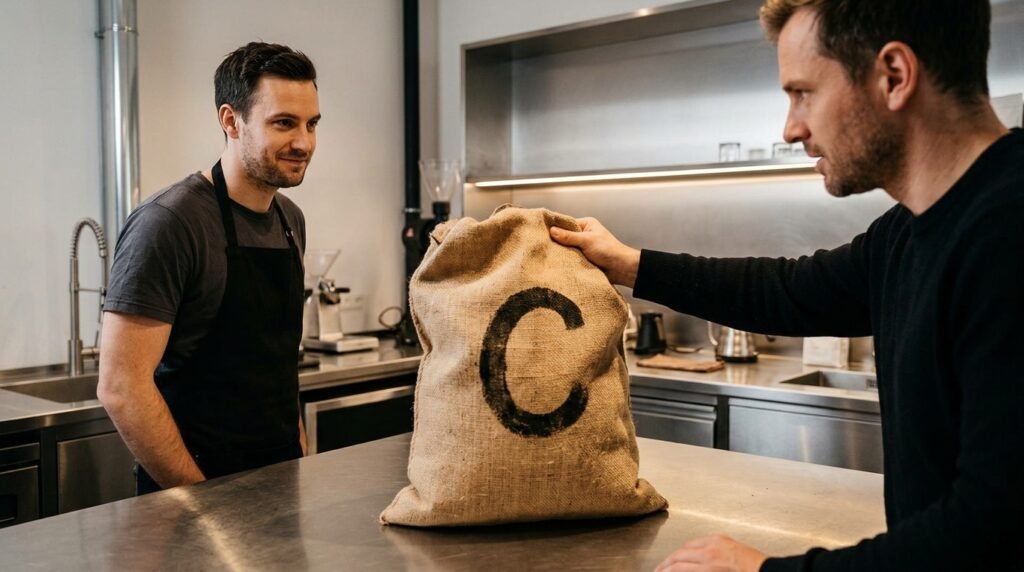
I drove back to the roastery later that afternoon with the empty bag marked “C”. I slammed it on the counter and looked at the barista.
“What is this?” I asked. “I need to know everything about it.”
He laughed, fully expecting this reaction. He turned the bag around and peeled off the tape covering the label.
It read: Ethiopia Guji. Washed Process. Heirloom Variety.
He explained that the Guji region of Ethiopia is globally famous for producing these exact, delicate, floral flavor profiles. Because the coffee grows in ancient, wild forests at incredibly high altitudes, the seeds mature very slowly.
This slow maturation is the key to the magic. I began diving into the botany, and discovering the science behind this is exactly (Why Some Coffee Origins Taste Sweeter Than Others). The cool mountain air forces the plant to push complex sugars into the cherry, resulting in that stunning, natural peach flavor without any of the sharp, biting acidity.
Furthermore, because it was a “Washed” process, the fruit had been stripped off the seed immediately after harvesting. This allowed the pure, elegant genetics of the Heirloom plant to shine through, unclouded by heavy fermentation.
Refining the Preference
Discovering my love for Ethiopian Guji wasn’t the end of the journey; it was the true beginning.
Once I knew my baseline preference, I could start fine-tuning it. I knew I loved floral notes, tea-like bodies, and stone fruit sweetness. This meant I was officially a fan of high-altitude African coffees.
I started exploring neighboring regions. I bought bags from Yirgacheffe, which offered similar floral notes but often leaned more toward lemon and bergamot rather than peach. I tried coffees from Sidamo, which sometimes offered a slightly heavier, berry-like sweetness.
I also started experimenting with the processing method.
I bought a “Natural” processed Guji. Because the farmers had left the fruit on the seed to dry in the sun, that delicate peach flavor I loved transformed into a wild, explosive, syrupy blueberry jam flavor. It was incredible, but it solidified my ultimate preference: I prefer the clean, structured elegance of the Washed process for my daily morning cup.
The Joy of Having a “Daily Driver”
Today, I no longer wander blindly through the coffee aisle.
When I walk into a new specialty shop, I don’t feel overwhelmed by the wall of choices. I walk straight up to the barista and say, “Do you have any washed Ethiopian coffees? Specifically from the Guji region?”
Having a favorite type of coffee is like finding your favorite pair of jeans. It just fits perfectly.
It doesn’t mean I never drink anything else. I still love a heavy Colombian coffee on a cold winter afternoon, and I still enjoy the wild funk of a natural-processed Costa Rican bean on the weekends.
But my Ethiopian Guji is my anchor. It is my daily driver.
When my alarm goes off at 6:00 AM, I know exactly what is waiting for me in the kitchen. I know the exact smell of the jasmine when the burr grinder crushes the beans. I know exactly how the water will bloom in the filter. And I know exactly how that sweet, peachy liquid will taste on the first sip.
It provides a moment of guaranteed, predictable joy before the chaos of the day begins.
How to Run Your Own Experiment
If you are currently drinking random bags of coffee and feeling a bit lost, I highly encourage you to stop guessing and start comparing.
You don’t need a fancy kitchen lab to do this.
Go to a local roaster. Tell them you want to run a palate test. Ask them for three small, distinct samples:
-
A washed South American (for chocolate and nuts).
-
A washed African (for florals and tea-like acidity).
-
A natural processed coffee from anywhere (for wild, syrupy fruit).
Brew them side-by-side on a quiet Saturday morning. Keep your water temperature and ratio identical. Taste them black. Let them cool down for a few minutes before taking your sips.
Pay attention to where your tongue gravitates. Do you want the comforting chocolate hug? Or do you want the bright, floral awakening?
Once you identify the core profile that makes you close your eyes and smile, you have unlocked the map. You will finally know exactly what to look for, and your mornings will be permanently upgraded.

My name is Daniel Carter, I am 35 years old, and I live in the United States. I have been passionate about aquariums for many years, and what started as a simple hobby quickly became a lifelong interest in aquatic life, fish behavior, and responsible tank care.
Through TheBrightLance, I share real experiences, practical knowledge, and honest lessons learned from maintaining different types of aquariums. I enjoy testing equipment, studying fish behavior, improving maintenance routines, and helping beginners avoid common mistakes.
My goal is to make aquarism easier, more ethical, and more enjoyable for everyone — whether you are setting up your very first tank or looking to refine your techniques.