
If I could travel back in time and give my younger self one single piece of advice, it wouldn’t be about stock markets or career choices. It would be about the supermarket coffee aisle.
For the better part of my twenties, I walked into grocery stores with a completely flawed strategy. I approached buying coffee the exact same way I approached buying paper towels, laundry detergent, or canned beans.
I looked for the biggest container, the flashiest label, and the deepest discount.
I thought I was a genius. I thought I was hacking my grocery budget. I would proudly walk out of the store with a massive, three-pound bag of “Premium Dark French Roast” that I had scored for half price. I would lug it home, put it in my pantry, and feel a deep sense of satisfaction knowing I wouldn’t have to buy coffee again for at least two months.
I had absolutely no idea that my frugality was actually destroying my mornings.
I didn’t realize that by stocking up on bulk coffee, I was making a fundamental error in how I treated the beverage. I was treating a fresh agricultural product like a non-perishable chemical.
It took me years, hundreds of terrible cups of coffee, and a lot of frustration to finally realize my error. Here is the honest story of the biggest mistake I ever made when buying coffee, the science of why it ruined my mornings, and the simple change that completely transformed my daily cup.
The Illusion of the “Bulk Deal”
To understand the mistake, you have to understand the trap of the bulk deal.
When you stand in a massive supermarket aisle, the sheer volume of choices is designed to overwhelm you. There are shiny bags with gold foil, rustic-looking burlap sacks, and giant plastic tubs all competing for your attention.
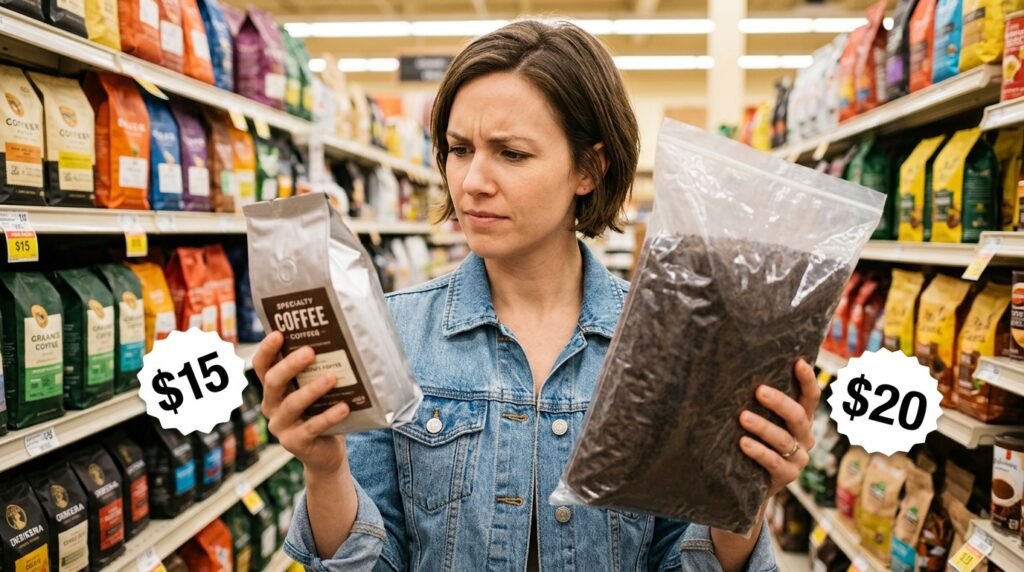
Human psychology naturally gravitates toward value. When I saw a bag of coffee that cost $15 for 12 ounces sitting next to a massive bag that cost $20 for 3 pounds, my brain immediately made a calculation.
Why would I pay almost the same amount of money for a fraction of the product?
I bought the big bag. Always.
My routine was to open that massive bag on a Monday morning. For the first two or three days, the coffee tasted… fine. It wasn’t mind-blowing, but it tasted like a standard, slightly bitter cup of caffeine.
But as the weeks dragged on, something strange would happen. By week three, the coffee started tasting flat. By week five, it tasted like cardboard and old wood. By week eight, I was forcing myself to drink a liquid that was aggressively sour and completely devoid of any pleasant aroma.
I used to blame everything else. I cleaned my coffee machine obsessively. I bought filtered water. I bought different mugs.
I never stopped to think that the giant bag sitting in my cabinet was actively dying.
The Myth of the “Best By” Date
The reason I felt so confident buying in bulk was because of the numbers printed on the back of the bag.
I would look at the label, and it would proudly declare: “Best By: November 2026.”
If it was currently March, I felt perfectly safe. The factory was telling me that this coffee had over a year of life left in it. I trusted that date completely.
But nobody ever told me that a “Best By” date on a bag of commercial coffee is a massive, industry-wide illusion.
That date does not mean the coffee will taste good until November. It does not mean the flavors will remain vibrant and complex. It simply means that, according to food safety regulations, the coffee will not grow dangerous mold or bacteria before that date.
It is a metric of survival, not a metric of flavor.
Coffee is not a dry good. It is the roasted seed of a tropical fruit. When a coffee bean is roasted, it becomes a volatile, fragile capsule of aromatic oils and complex chemical compounds.
The moment that bean leaves the roasting machine, the clock starts ticking. Oxygen is the enemy. As the beans interact with the air, they begin to oxidize. The delicate floral notes, the bright fruity acidity, and the sweet caramel flavors physically evaporate into the atmosphere.
When I bought a three-pound bag of coffee that had been sitting in a warehouse for six months, it was already stale before I even brought it to the register. And by keeping it open in my pantry for another two months, I was essentially brewing the dusty remains of a dead ingredient.
Realizing this deception was a massive wake-up call, which is why learning (Why I Check Coffee Dates Before Buying) became my absolute first rule of survival in the grocery store. I completely stopped looking at the “Best By” date and started hunting exclusively for the “Roasted On” date.
The Turning Point: The Local Roastery
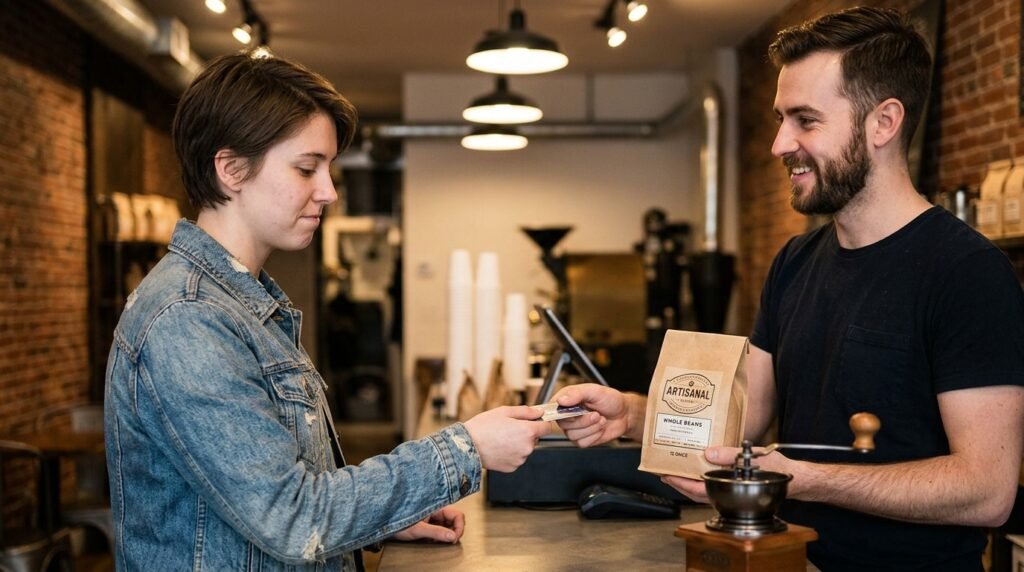
The day my perspective shifted permanently was the day I ran out of my bulk coffee and decided to treat myself to a small cup from a local specialty roaster down the street.
I walked in, completely intending to just buy a brewed cup of black coffee.
While I was waiting for my drink, I looked at their retail shelves. They were selling small, 12-ounce bags of whole beans. I picked one up. It didn’t have a “Best By” date. Instead, it had a small sticker on the back that simply said: Roasted On: Tuesday. It was Thursday.
I was holding a bag of coffee that had been raw, green, and unroasted just forty-eight hours prior.
The barista noticed me looking at the bag and smiled. “That’s a washed Heirloom variety from the Guji region of Ethiopia,” he said. “It’s incredible right now. The peach and jasmine notes are explosive.”
I looked at the price. It was $22 for a small bag. My brain screamed at me that it was a terrible financial decision. But my curiosity won. I bought the bag, along with a cheap manual hand grinder, and took it home.
The Taste of Real Freshness
The next morning, I opened the bag of Ethiopian Guji.
I didn’t even have to put my nose near the bag. The moment I broke the seal, the entire kitchen filled with an aroma so sweet and intense that it stopped me in my tracks. It smelled vibrantly alive. It smelled like a blooming garden and fresh fruit.
I ground the beans, boiled my water, and brewed a simple pour-over.
When I took that first sip, I realized the true magnitude of the mistake I had been making for the past decade.
The coffee was entirely different from the bitter, flat liquid I was used to. It was juicy. It was sweet. I could actually taste the floral notes the barista had promised. It danced on my palate and finished clean, without a single trace of harshness.
It was a completely transformative experience. Looking back at my old habits, there is so much (What I Wish I Knew When I Started Drinking Coffee), but the realization that coffee is a fresh baked good—not a canned vegetable—is the lesson that hurts the most to think about.
I had been depriving myself of this incredible culinary joy just to save a few dollars a month on bulk purchases.
The Economics of Wasting Coffee
As I sat there drinking my spectacular cup of fresh Ethiopian coffee, I started to do the math on my “frugal” bulk buying habit.
Yes, the massive three-pound bag from the supermarket was cheaper per ounce.
But I thought about how much of that bag I actually enjoyed. The first week was decent. The second week was okay. But for the remaining six weeks, I hated my coffee. I drank it out of pure, stubborn obligation because I had already paid for it.
Worse yet, I remembered how many times I had gotten down to the last quarter of the bulk bag, found it completely undrinkable, and simply thrown it in the trash out of sheer frustration.
I wasn’t saving money. I was paying for a massive volume of a product that brought me zero joy, and I was throwing a significant portion of it away.
When I bought the small, 12-ounce bag of fresh specialty coffee, I paid more upfront. But every single cup I brewed over the next two weeks was an absolute masterpiece. I savored every drop. I never threw a single bean away because I was so excited to drink it.
By shifting away from bulk purchasing and only buying what I could consume in two weeks, I finally realized (How I Stopped Wasting Good Coffee) and turned my morning routine into an affordable daily luxury rather than a cheap, bitter chore.
The “Small Batch” Rule
Today, my coffee buying strategy is the exact opposite of what it used to be.
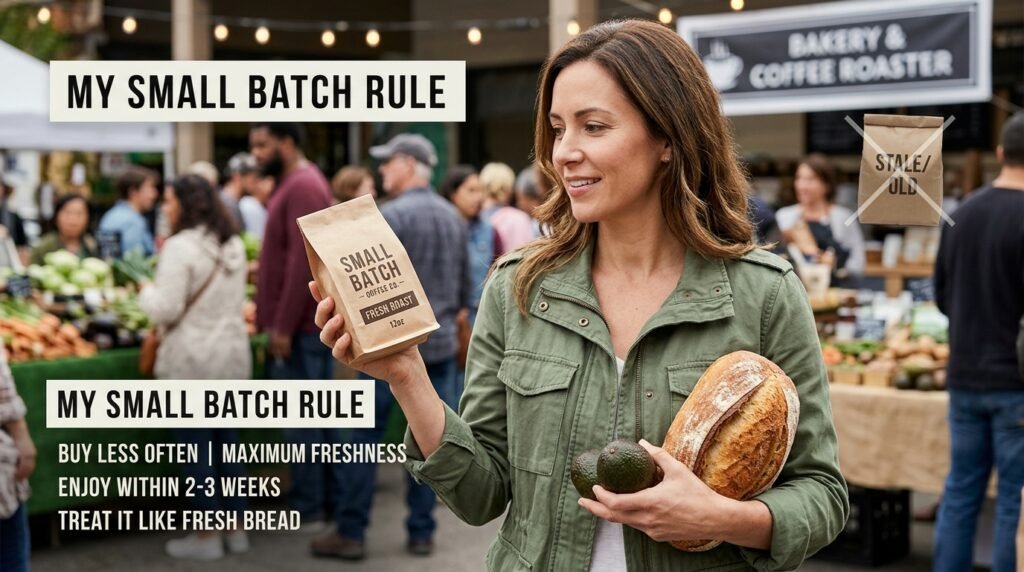
I have a strict “Small Batch” rule. I never buy more coffee than I can reasonably consume in a fourteen to twenty-one-day window.
For me, that usually means buying one 12-ounce bag at a time.
I treat coffee the exact same way I treat fresh bread from a bakery or ripe avocados from a farmer’s market. You wouldn’t buy twenty loaves of artisanal sourdough bread and expect the last loaf to taste good a month later. You buy one loaf, you enjoy it while it is perfectly fresh, and then you go back for more.
Coffee demands that exact same level of respect.
How to Fix the Mistake
If you are currently looking at a giant, two-pound plastic tub of coffee in your pantry right now, don’t panic. You don’t have to throw it away. But when it runs out, I highly encourage you to completely change your strategy.
Here is my personal checklist for avoiding the biggest mistake in coffee buying:
1. Ignore the Aisles, Find a Roaster The best way to guarantee freshness is to skip the supermarket entirely. Find a local specialty coffee roaster in your city. If you don’t have one, find a reputable roaster online who roasts their coffee to order and ships it the very same day.
2. Look for the “Roasted On” Date Never buy a bag of coffee that doesn’t tell you the exact day it was roasted. Ideally, you want to buy coffee that was roasted between 3 and 7 days ago. This allows the beans to properly rest and degas, putting them in the perfect window for brewing.
3. Buy Whole Bean Only As I’ve mentioned before, grinding coffee exponentially speeds up the staling process. A bag of fresh whole beans will taste amazing for about three to four weeks. A bag of fresh ground coffee will taste stale in a matter of days. Invest in a simple hand grinder.
4. Embrace the Small Bag Resist the urge to buy the massive bulk bag, no matter how good the discount looks. Buy the standard 10 or 12-ounce bag. Let it run out. Let yourself miss it for a day, and then go buy a fresh bag.
A New Respect for the Ritual
Making the switch from bulk commodity coffee to small-batch specialty coffee completely changed my life.
I no longer view my morning coffee as an automated, necessary evil. I view it as a ritual.
When I open a fresh bag of Ethiopian or Colombian beans, I am experiencing the product exactly as the farmer and the roaster intended. I am tasting the vibrant acidity, the natural sweetness, and the complex floral notes before oxygen has a chance to steal them away.
Buying coffee is no longer a chore I do once every two months to stock my pantry. It is a weekly exploration of flavor.
It took a lot of bad, stale, bitter cups for me to finally figure it out. But now that I have corrected the biggest mistake I ever made, my mornings have never tasted better. And honestly, I wouldn’t trade that daily joy for any bulk discount in the world.

My name is Daniel Carter, I am 35 years old, and I live in the United States. I have been passionate about aquariums for many years, and what started as a simple hobby quickly became a lifelong interest in aquatic life, fish behavior, and responsible tank care.
Through TheBrightLance, I share real experiences, practical knowledge, and honest lessons learned from maintaining different types of aquariums. I enjoy testing equipment, studying fish behavior, improving maintenance routines, and helping beginners avoid common mistakes.
My goal is to make aquarism easier, more ethical, and more enjoyable for everyone — whether you are setting up your very first tank or looking to refine your techniques.