
There were three identical white ceramic mugs sitting on my kitchen island.
A friend of mine, who had been patiently listening to me obsess over specialty coffee for months, decided it was time to put my newfound arrogance to the test. While I was in the other room, he brewed three different coffees from my pantry, poured them into the identical mugs, and hid the empty bags.
He crossed his arms, smiled a highly skeptical smile, and told me to prove it. He wanted me to identify the country of origin for each mug using nothing but my nose and my tongue.
I was terrified. It is one thing to read a label that says “Ethiopia” and convince your brain that you taste peaches. It is an entirely different beast to stare at three cups of identical black liquid and try to pull a geographical map out of thin air.
I felt exactly the way I do when I am analyzing a complex, highly detailed image. When I craft a meticulous prompt to generate an image or set up a camera for a photograph, I have to look for specific visual “tells”—the direction of the shadows, the warmth of the lighting, the focal length of the lens. I realized I had to treat these three mugs exactly the same way. I needed to stop drinking and start analyzing the sensory “tells.”
I took a deep breath, grabbed a spoon, and began the blind tasting.
Here is the honest, step-by-step story of how I learned to identify coffee by origin, the specific flavor markers I look for to map the globe, and how this simple kitchen game completely elevated my morning routine.
The Myth of the “Super Palate”
Before we dive into the geographical markers, I have to dismantle a massive myth that keeps most people from trying this.
You do not need to be a certified sommelier or a professional Q-Grader to identify coffee origins. You do not need a genetically superior tongue. You just need a basic vocabulary and a willingness to pay attention.
When I first started drinking specialty coffee, I thought the professionals who could blind-taste a coffee and say, “This is a washed Kenyan SL-28,” possessed some sort of culinary superpower.
But as I stood in front of those three white mugs, I realized it isn’t magic; it is simply a process of elimination.
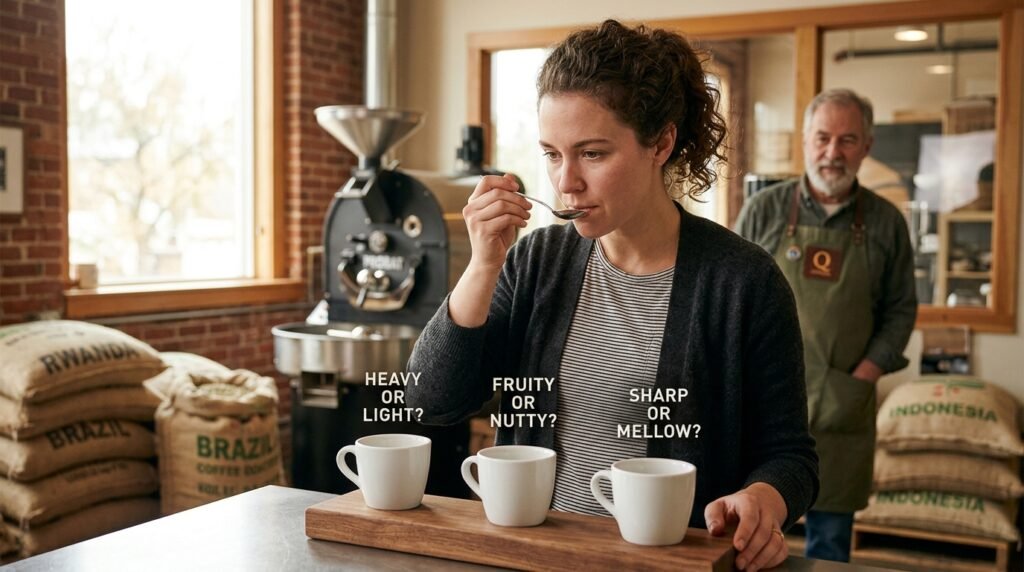
You aren’t magically plucking a country’s name out of the ether. You are asking your palate a series of very specific, binary questions. Is it heavy or light? Is it fruity or nutty? Is the acidity sharp or mellow?
Once you answer those three questions, the global map shrinks dramatically. Learning to ask these internal questions was the defining moment of (How I Started Recognizing Good Coffee Without Being an Expert), because it gave me a framework. I wasn’t guessing blindly; I was following a sensory compass.
Step 1: Evaluating the “Body” (The Weight Test)
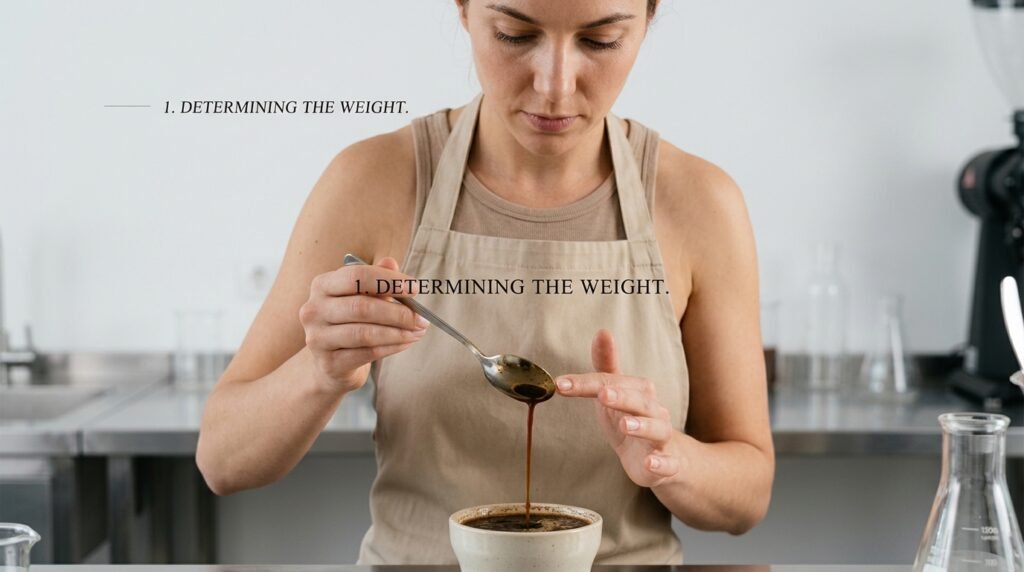
The very first thing I did during my blind taste test was take a small sip from the first mug and simply focus on the physical weight of the liquid. In the coffee world, this is called the “body” or the “mouthfeel.”
This is the easiest “tell” to learn, and it instantly splits the coffee world in half.
Some coffees feel heavy. They coat the roof of your mouth. They feel syrupy, thick, and almost creamy, like drinking whole milk. Other coffees feel incredibly light, transient, and clean, passing over your tongue with the delicate weight of a fine green tea or skim milk.
The Heavyweights: If the coffee feels thick, syrupy, and heavy, my brain immediately travels to lower-altitude or high-humidity regions. I start thinking about South America (Brazil) or Southeast Asia (Indonesia).
The Lightweights: If the coffee feels light, elegant, and tea-like, my brain instantly jumps to extreme altitudes. I start thinking about East Africa (Ethiopia, Kenya) or high-elevation Central American washed coffees.
The first mug on my kitchen island was incredibly light. It didn’t coat my tongue at all. It was crisp and delicate. So, before I even analyzed the flavor, I had already crossed South America and Asia off my mental list. I knew I was likely dealing with an African coffee.
Step 2: Searching for Acidity (The Spark Test)
Once I determined the weight of the liquid, I moved on to the second question: Does this coffee have a spark?
Acidity in specialty coffee is not the harsh, stomach-churning sourness of cheap, stale diner coffee. It is a vibrant, mouth-watering brightness. It is the sharp, refreshing snap you feel on the sides of your tongue when you bite into a crisp green apple or a fresh citrus fruit.
This is a massive geographical marker.
If I take a sip and there is absolutely zero bright acidity—if the coffee is just smooth, mellow, and comforting—I know I am likely drinking a naturally processed Brazilian coffee or an earthy Sumatran coffee.
The comforting lack of that sharp acidic spark is exactly (What I Noticed About South American Coffees), as those regions prioritize deep, heavy sweetness over vibrant, fruity high notes.
But the first mug in my blind test was exploding with acidity.
It made my mouth water instantly. The acidity wasn’t subtle; it was loud and sharp. It tasted vividly like pink grapefruit and lemon zest.
So, I had a coffee that was incredibly light-bodied and intensely acidic. My compass was pointing directly at East Africa. Now, I just had to narrow down the specific country.
Step 3: Isolating the Flavor Notes (The Fruit vs. Earth Test)
The final step in identifying the origin is finding the dominant flavor category. I don’t try to find wildly specific notes like “toasted macadamia nut” right away. I start broad.
Is the dominant flavor category Earth/Spice, Chocolate/Caramel, or Fruit/Floral?
The Earth and Spice: If the coffee tastes like cedar wood, wet soil, pipe tobacco, or dark baking spices, I am immediately planting my flag in Indonesia. The unique wet-hulling process of Sumatra creates this unmistakable, savory, heavy profile.
The Chocolate and Caramel: If the coffee tastes like a dessert—milk chocolate, toasted almonds, brown sugar, or rich caramel—I am securely in The Americas. If it is pure, heavy peanut butter and cocoa, I guess Brazil. If it is caramel with a tiny hint of red apple acidity, I guess Colombia.
The Fruit and Floral: If the coffee tastes like a botanical garden or a fruit orchard, I am in East Africa.
The first mug in my test was overwhelmingly fruity. But what kind of fruit?
It didn’t taste like delicate peaches or jasmine flowers, which are the classic markers of an Ethiopian Guji. Instead, it was aggressive. It tasted like dark, jammy blackberries and black currant, mixed with that sharp grapefruit acidity.
I put the mug down. I looked at my friend and smiled.
“Mug number one is light-bodied, highly acidic, and tastes like black currant,” I said confidently. “It’s the Kenyan SL-28.”
He checked his hidden notes, raised his eyebrows in surprise, and nodded. I had nailed it.
Decoding the Middle Ground (Central America)
The second mug in the lineup was much trickier.
When I took a sip, the body wasn’t heavy like a Brazilian, but it wasn’t tea-like like a Kenyan. It was right in the middle—smooth and velvety.
The acidity was present, but it wasn’t a loud grapefruit. It was a gentle, crisp sweetness, like a perfectly ripe cherry or a red apple.
The dominant flavors were beautifully balanced. It tasted like sweet milk chocolate and toasted pecans, but there was a distinct, syrupy sweetness that reminded me of caramelized brown sugar or a graham cracker.
This is where the mental map requires a bit of nuance. When a coffee is perfectly balanced—when it has a medium body, a gentle fruit acidity, and a deep chocolatey sweetness—it is almost always from Central or South America.
But that massive hit of brown-sugar sweetness gave it away.
I knew that Costa Rican farmers frequently use the “Honey Process,” where they leave the sticky fruit pulp on the bean to bake in the sun, infusing the seed with a rich, pastry-like caramel flavor.
“Mug number two is perfectly balanced with a massive brown sugar note,” I stated. “It’s the Honey Processed Costa Rican Tarrazú.”
My friend sighed, slightly annoyed that he hadn’t stumped me yet. Two for two.
The Ultimate Comfort Coffee
There was only one mug left. By process of elimination, I already had a strong suspicion of what it was, but I needed to verify the sensory tells.
I brought the third mug to my lips and took a large slurp.
It was unmistakable. The liquid was thick, heavy, and coated my entire palate. There was absolutely no bright fruit acidity. It was pure, unadulterated comfort.
The flavor profile was a massive, dense wave of dark cocoa powder, roasted peanuts, and dark molasses. It didn’t challenge my palate; it just gave it a warm hug. It tasted exactly like the nostalgic, classic coffee profile that the world has fallen in love with, but elevated to an artisanal level.
“Mug number three is heavy, low-acid, and tastes like a peanut butter cup,” I said. “It’s the natural process from Brazil.”
My friend threw his hands up in defeat, walked into the other room, and brought out the three empty bags. I had correctly identified every single one.
Why This Game Actually Matters
Identifying those three coffees wasn’t just a fun party trick. It was a profound culinary milestone.
It proved that the hours I had spent researching altitudes, soil compositions, and processing methods had actually rewired my brain and my tongue. I wasn’t just consuming caffeine anymore; I was reading the agricultural history of the bean.
Creating this internal flavor compass is the core of (What I Learned From Drinking Coffee From Different Regions), because it transforms a passive morning routine into an active, engaging sensory exploration.
When you learn how to identify coffee by origin, you gain absolute control over your daily experience. You stop relying on marketing buzzwords like “bold” or “premium.”
If you wake up and want a tea-like, floral experience to gently wake up your senses, you know exactly which African country to look for. If you want a heavy, chocolatey anchor on a rainy afternoon, you know exactly which South American region to buy.

Train Your Own Palate
If you want to develop this skill, you do not need expensive classes. You just need curiosity and a willingness to do a side-by-side comparison in your own kitchen.
Human memory is flawed. If you drink a Colombian coffee on Monday and an Ethiopian coffee on Friday, your brain will struggle to remember the subtle differences in body and acidity.
You have to drink them at the exact same time.
Go to a local specialty roaster. Buy one bag from Brazil (or Colombia), one bag from Ethiopia (or Kenya), and one bag from Indonesia (Sumatra).
Brew a small cup of each on a quiet Saturday morning. Set them next to each other. Do not add milk or sugar.
Take a sip of the Brazilian coffee. Notice the heavy weight and the chocolate flavor. Then, rinse your mouth with water and immediately take a sip of the Ethiopian coffee.
The contrast will be so violent and obvious that your brain will permanently log the difference. You will instantly understand the heavy comfort of the Americas versus the bright, floral tea of Africa.
Keep practicing this contrast. Pay attention to the weight, search for the acidic spark, and isolate the dominant flavor. Before long, you won’t need the label on the bag to tell you where your coffee came from. Your palate will draw the map for you.

My name is Daniel Carter, I am 35 years old, and I live in the United States. I have been passionate about aquariums for many years, and what started as a simple hobby quickly became a lifelong interest in aquatic life, fish behavior, and responsible tank care.
Through TheBrightLance, I share real experiences, practical knowledge, and honest lessons learned from maintaining different types of aquariums. I enjoy testing equipment, studying fish behavior, improving maintenance routines, and helping beginners avoid common mistakes.
My goal is to make aquarism easier, more ethical, and more enjoyable for everyone — whether you are setting up your very first tank or looking to refine your techniques.