
If you have ever driven through a completely unfamiliar city using a modern GPS navigation app on your phone, you have likely experienced a very specific type of modern blindness.
You type your destination into the search bar, mount the glowing screen to your dashboard, and start driving. For the next thirty minutes, your brain completely checks out. You do not look at the architecture of the buildings passing by. You do not notice the layout of the neighborhoods, the street art, or the local parks.
You simply stare at the glowing blue line on your screen, waiting for a robotic voice to tell you exactly when to turn left.
When you finally arrive at your destination, you are physically there, but you have absolutely no mental map of how you achieved it. You optimized the trip for pure, flawless efficiency, but in doing so, you completely erased the actual experience of the journey.
For the first decade of my adult life, my relationship with my morning coffee was the exact equivalent of following a blue GPS line.
I did not care about the journey. The only thing I cared about was the destination: waking up.
I bought the cheapest, mass-produced pre-ground coffee I could find. I dumped it into a plastic automatic machine, pressed a button, and aggressively drank the dark, bitter liquid in my car on the way to work. I was completely blind to the agricultural miracle and the centuries of human history floating inside my travel mug.
But when I finally put the GPS away and started looking out the window, my entire worldview shattered.
Here is the honest, deeply reflective story of how coffee traditions changed my perspective, how exploring the ancient rituals of different global cultures forced me to slow down, and how a simple roasted seed completely rewired the way I interact with time, society, and myself.
The Illusion of the Shortcut
To understand the magnitude of this perspective shift, you have to understand the modern trap of the shortcut.
We live in a society that worships convenience. We are constantly sold the idea that faster is always better. We want fast food, fast internet, and fast coffee. We have built massive, sprawling drive-thru empires designed to hand us a 16-ounce paper cup of caffeinated liquid through a car window in under sixty seconds.
We have stripped all the friction out of the coffee experience. But when you strip away the friction, you also strip away the soul.
I operated in this frictionless void for years. But my perspective began to crack the day I walked into an independent, local specialty roastery and ordered a manual pour-over.
The barista didn’t just hand me a cup. I had to stand there and watch as they weighed the beans, ground them, and slowly poured hot water over a glass cone in precise, concentric circles. It took five minutes.
When I finally took a sip, the liquid didn’t taste like burnt ash. It tasted like sweet caramel, ripe berries, and jasmine flowers. The realization that I had been drinking a heavily processed, inferior product my entire life was a massive shock.
I suddenly realized that the “shortcut” of the drive-thru wasn’t actually saving me time; it was robbing me of an incredible culinary experience.

The Middle Eastern Lesson: Redefining “Wasted” Time
As I fell deeper into the world of specialty coffee, my curiosity pushed me to look beyond my own borders. I started researching how other cultures interacted with this beverage, and the very first tradition that completely broke my brain came from the Middle East.
In countries like Turkey, the traditional preparation of coffee fundamentally outlaws the concept of speed.
They do not use paper filters to separate the liquid from the grounds. They grind the roasted beans into a microscopic, flour-like powder. This powder is mixed with cold water and sugar in a small brass pot called a cezve, which is then buried in a bed of scorching hot sand.
As the heat transfers through the brass, the thick, dark liquid foams up violently. It is poured directly into a tiny, ornate porcelain cup—mud and all.
If you try to drink Turkish coffee with the frantic, rushed energy of an American commuter, you will end up with a mouth full of gritty, bitter sand. You are physically forced to sit down. You have to wait for the heavy mud to settle to the bottom of the cup before you can take a careful, deliberate sip.
Learning about the psychological weight of this specific ritual was the foundation of (Why Coffee Is So Important in Different Cultures). It completely changed my perspective on patience.
In my old life, waiting five minutes for a drink felt like “wasted time.” But the Turkish tradition taught me that waiting is actually part of the recipe. The pause is not an inconvenience; it is a mandatory period of reflection.
The Italian Lesson: The Shared Pulse
The next tradition that challenged my worldview came from the bustling, ancient streets of Italy.
In the United States, we often equate efficiency with isolation. We sit alone in our cars in the drive-thru lane, or we put on noise-canceling headphones while we order through an app. We want our coffee fast, and we want to be left alone.
Italy possesses an incredibly fast, highly efficient coffee culture, but it is the exact opposite of isolated.
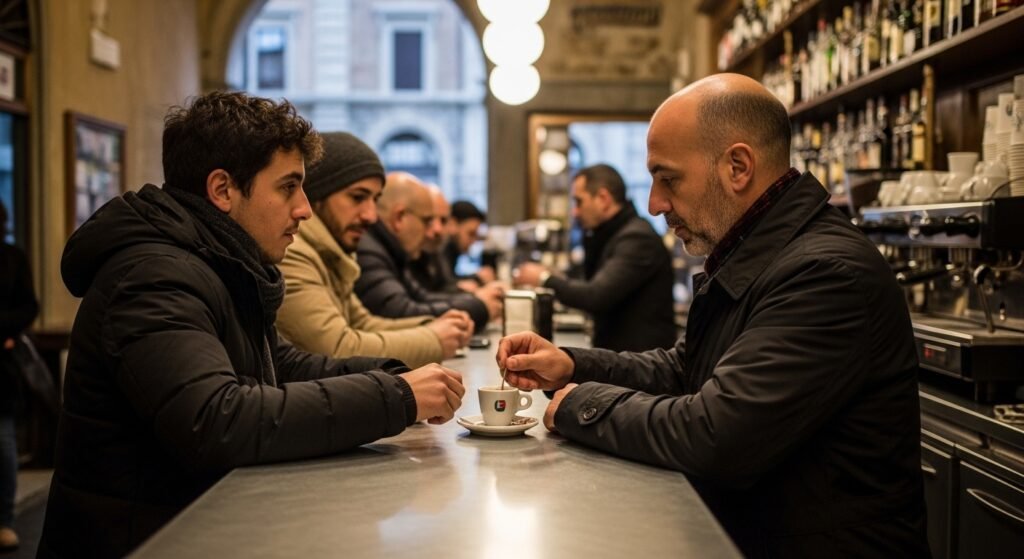
In cities like Rome or Florence, the concept of ordering a massive paper cup of coffee to-go is practically nonexistent. The culture revolves entirely around the local bar.
When Italians need coffee, they walk into the bar, but they do not sit down at a private table with a laptop. They walk straight up to the banco, the long zinc or marble counter. They order un caffè—a single, heavy shot of espresso.
The barista pulls the shot in twenty-five seconds. The patron stands shoulder-to-shoulder with their neighbors, businessmen, and construction workers alike. They add a packet of sugar, stir it once, and drink it in three quick sips. They exchange a loud, animated greeting with the barista, leave a coin on the counter, and walk out.
The entire transaction takes less than three minutes.
But it is an intensely communal three minutes. It is a shared, electric pulse. Recognizing this beautiful dynamic perfectly illustrates (How Coffee Became Part of My Lifestyle Without Me Realizing).
The Italian tradition changed my perspective on social interaction. It proved to me that connecting with your community does not always require a three-hour dinner party. Sometimes, all it takes is ninety seconds of shared space and a heavy porcelain cup.
The Ethiopian Lesson: Respecting the Roots
While the Middle East taught me patience and Italy taught me communal efficiency, the ultimate shift in my perspective came from the biological birthplace of the coffee plant: Ethiopia.
In the modern world, we are completely detached from the agricultural reality of our food. We buy coffee in plastic bags and assume it just magically appears on supermarket shelves.
But the traditional Ethiopian coffee ceremony forcefully reconnects you to the earth.
When a guest is invited into an Ethiopian home, the host does not press a button on a machine. The ritual begins with raw, green, unroasted coffee seeds. The host washes the seeds in water and then roasts them in a flat iron pan over an open charcoal fire, right in the middle of the living room.
The intense, heavy smoke of the roasting beans fills the air, often mingled with the sweet, ancient scent of burning frankincense. The host walks around the room, wafting the smoke toward the guests so they can appreciate the aromatic transformation of the seed.
Once the beans are dark and oily, they are crushed by hand in a wooden mortar and pestle. The coffee is boiled in a traditional clay pot and served in three distinct rounds.
The ceremony can take hours.
When I first learned about this incredible, labor-intensive process, I felt a deep sense of embarrassment. I realized that by throwing cheap coffee into a plastic machine and gulping it down in traffic, I was deeply disrespecting a plant that other cultures treat with absolute, uncompromising reverence.
Bringing the Traditions Home
Once my perspective had been thoroughly dismantled by these global traditions, I could no longer look at my own kitchen the same way.
I could not unsee the beauty of the Turkish patience, the Italian community, and the Ethiopian reverence. I decided I needed to build my own tradition.
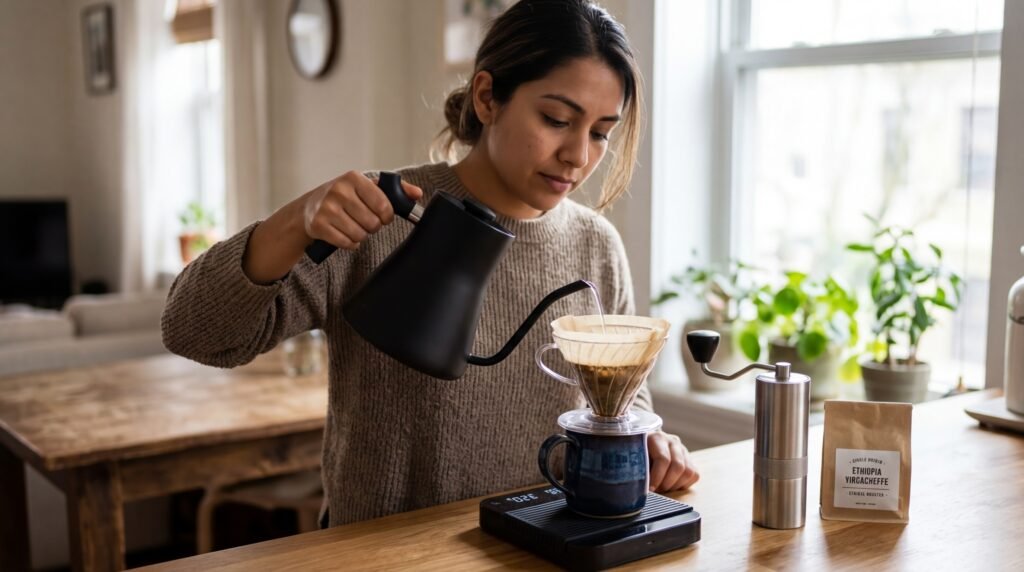
I bought a manual stainless steel burr grinder. I bought a digital scale. I bought a glass V60 pour-over cone and a gooseneck kettle. I stopped buying generic, anonymous coffee and started buying single-origin beans from a local, ethical roaster.
I deliberately removed the GPS navigation from my morning routine. I stopped looking for the shortcut.
The Anchor in the Chaos
Now, when my alarm goes off, I do not reach for my phone. I walk into the kitchen, and I engage with the physical world.
I weigh the beans. I turn the metal crank on the hand grinder, feeling the dense resistance of the roasted seeds breaking apart. I listen to the mechanical crunch. I smell the explosive, sweet aromatics that instantly fill the room.
I wait for the water to reach exactly 200 degrees Fahrenheit. And then, I pour in slow, steady circles.
For exactly fifteen minutes every single morning, the chaotic demands of the digital world simply do not exist. I am not reacting to emails. I am not reading stressful news headlines. I am anchored to the kitchen counter, participating in a quiet, analog ritual.
Understanding the profound mental health benefits of this daily anchor is the ultimate reason (Why Coffee Means More Than Just Caffeine to Me). The caffeine is just a biological byproduct. The true medicine is the deliberate intentionality of the process.
A New Way to See the World
The traditions of coffee did not just teach me how to brew a better-tasting beverage. They taught me how to live a better life.
They taught me that convenience is often a trap. When we rush through our routines just to get to the next task on our to-do list, we miss the actual texture of being alive. We miss the smell of the roasting beans. We miss the quiet conversation at the counter. We miss the bloom of the hot water.
If your mornings currently feel like a stressful, high-speed blur, I highly encourage you to look at the traditions that have kept this incredible beverage alive for centuries.
Throw away the plastic drip machine. Buy a manual grinder. Buy a heavy ceramic mug.
Force yourself to slow down. Force yourself to participate in the journey, rather than just blindly speeding toward the destination. When you finally allow the coffee to dictate your pace, your entire perspective will shift, and you will realize that the greatest moments of your day are often the ones you used to rush through.
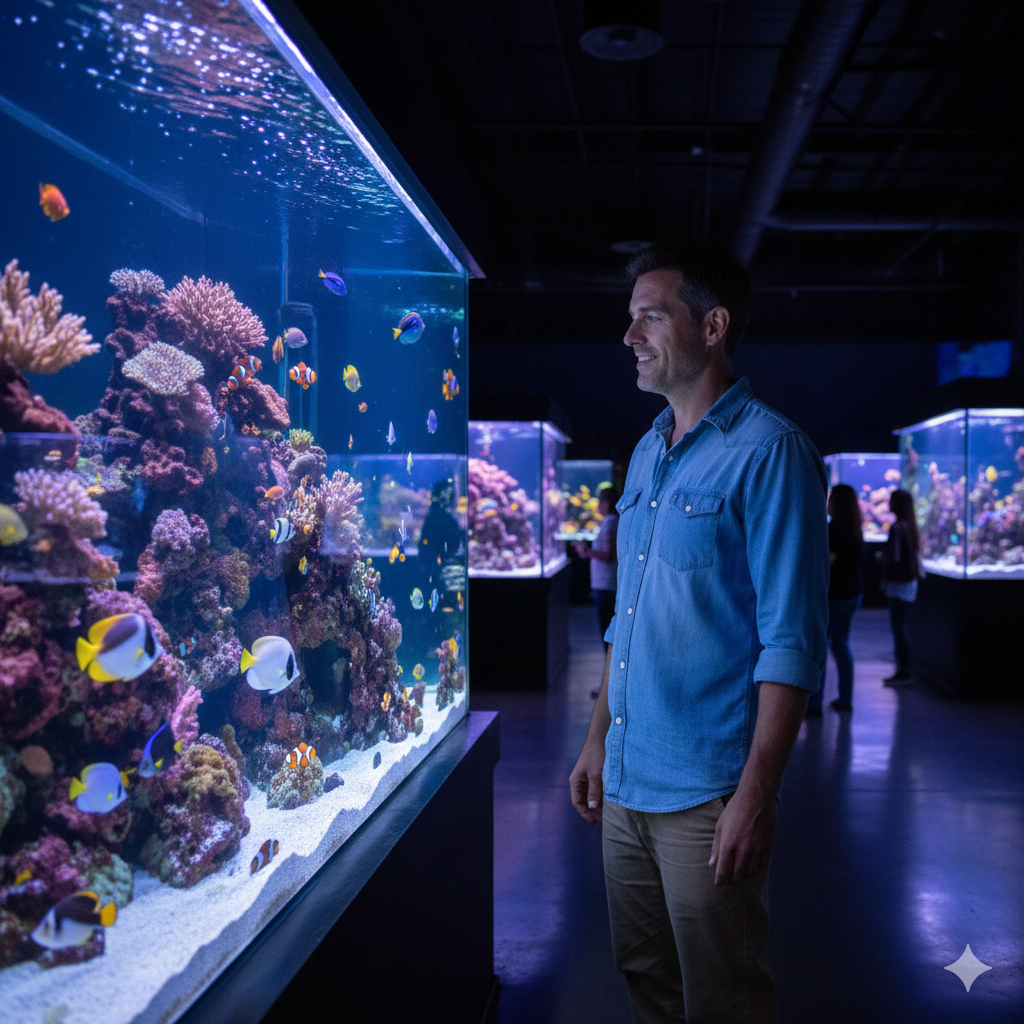
My name is Daniel Carter, I am 35 years old, and I live in the United States. I have been passionate about aquariums for many years, and what started as a simple hobby quickly became a lifelong interest in aquatic life, fish behavior, and responsible tank care.
Through TheBrightLance, I share real experiences, practical knowledge, and honest lessons learned from maintaining different types of aquariums. I enjoy testing equipment, studying fish behavior, improving maintenance routines, and helping beginners avoid common mistakes.
My goal is to make aquarism easier, more ethical, and more enjoyable for everyone — whether you are setting up your very first tank or looking to refine your techniques.