
When you spend the majority of your week staring at a glowing laptop screen, typing out thousands of words, or meticulously adjusting the visual details of a digital project, your home office can quickly start to feel like a deserted island.
The silence of a quiet apartment can be deafening. It is just you, the clicking of your keyboard, and the hum of your computer fan. While that level of extreme isolation is sometimes necessary to meet a strict deadline, spending too many consecutive days in that quiet bubble is terrible for the human spirit.
You start to feel disconnected from the physical world.
Whenever I feel that heavy, invisible digital fatigue creeping in, I do not power through it. I close my laptop, put it in my backpack, put on my jacket, and walk out the front door. I don’t go to a park, and I don’t go to a library.
I walk directly to my favorite local independent coffee shop.
The absolute moment I push open that heavy glass door, the isolation immediately evaporates. A wave of warm, roasted air hits my face, a chaotic symphony of human murmurs fills my ears, and my shoulders physically drop. I am instantly grounded.
Here is the honest, deeply psychological story of why coffee shops feel like home to me, the vital sociological concept of the “Third Place,” and why the modern café is so much more than just a retail store that sells caffeinated beverages.
The Magic of the “Third Place”
To understand why coffee shops feel so inherently comforting, you have to look at modern sociology.
In the 1980s, an urban sociologist named Ray Oldenburg coined a term called the “Third Place.”
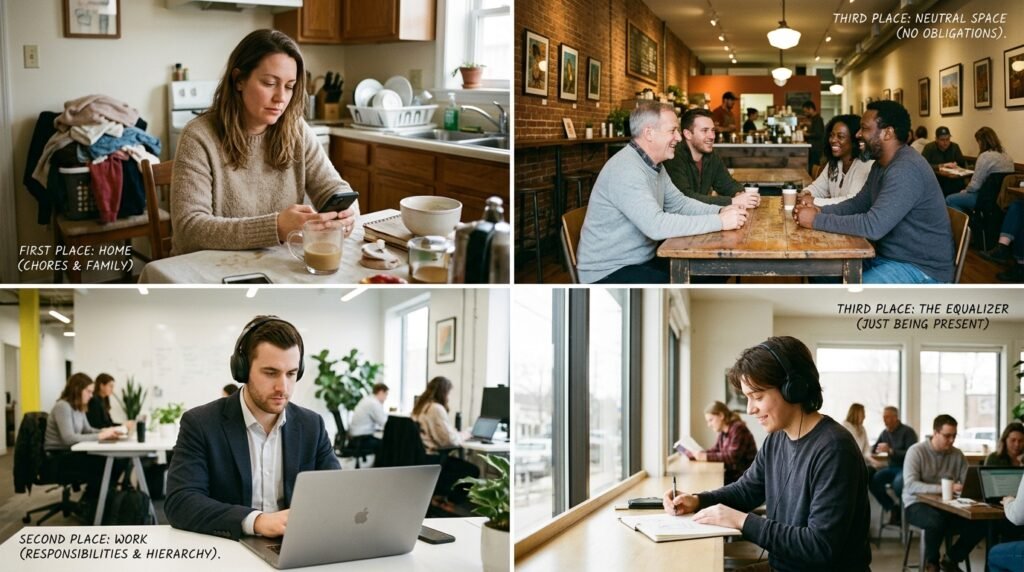
According to his theory, your “First Place” is your home. It is where you sleep, eat, and spend time with your family. It is deeply personal, but it is also full of chores, responsibilities, and the stress of daily maintenance.
Your “Second Place” is your workplace or your school. It is where you perform duties, earn a living, and adhere to strict professional hierarchies. It is transactional and inherently stressful.
Oldenburg argued that for humans to be truly happy and mentally healthy, we desperately need a “Third Place.”
A Third Place is a neutral public space. It is a place where you are not obligated to be. There is no boss telling you what to do, and there are no dishes waiting in the sink. It is an equalizer, where people from all different walks of life can gather, exist, and just be present without any heavy expectations.
For me, the specialty coffee shop is the ultimate modern Third Place. Realizing the profound psychological value of these spaces was the absolute core of (What I Learned From Visiting Different Coffee Shops). I wasn’t just exploring different menus; I was exploring different sanctuaries.
The Comfort of Ambient Noise
One of the most paradoxical things about working in a coffee shop is the noise.
If I am trying to write a complex article at home and someone turns on a television in the next room, I lose my mind. I cannot focus. The specific, decipherable noise is incredibly distracting.
But the noise inside a bustling coffee shop works completely differently.
It is a beautiful, chaotic symphony. You hear the mechanical, high-pitched crunch of the commercial burr grinder crushing fresh beans. You hear the aggressive, violent hiss of the steam wand texturing milk in a steel pitcher. You hear the heavy clatter of ceramic mugs hitting wooden tables, and the low, indecipherable murmur of a dozen different conversations happening at once.
Because your brain cannot focus on just one specific sound, all of the noise blurs together into a blanket of “white noise.”
This ambient hum is actually scientifically proven to increase creativity and focus. It provides just enough sensory stimulation to keep your brain awake, but not enough specific information to distract you.
When I put my headphones on and play some light instrumental music underneath that cafe hum, I enter an absolute flow state. The chaotic energy of the room actually anchors my focus to the screen.
Alone, But Together
Another massive reason coffee shops feel like home is the specific type of socialization they provide.
When you work remotely, the loneliness is very real. But sometimes, you do not have the mental energy to go to a loud party or hold a demanding, hours-long conversation with a friend. You just want to be around other human beings without the pressure of actively entertaining them.
The coffee shop provides the perfect solution: the concept of being “alone, together.”
I can sit at a small corner table with my laptop, completely immersed in my own digital world, but I am surrounded by life.
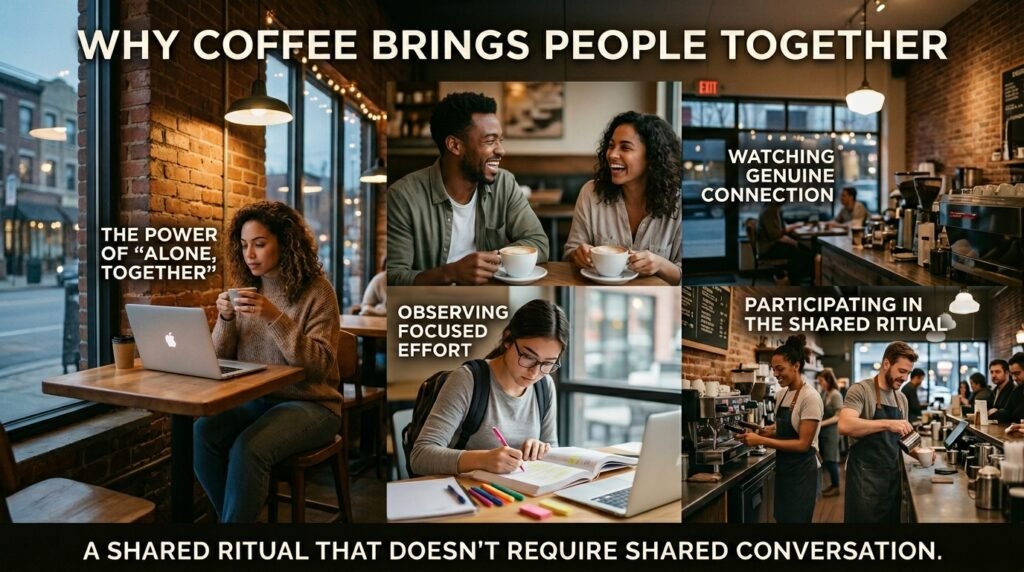
I can look up from my screen and watch two friends laughing over a cappuccino. I can see a college student intensely highlighting a textbook. I can watch the baristas moving behind the counter in a highly choreographed, graceful dance of extraction.
I am participating in society simply by occupying the same physical space. I don’t have to speak a single word, but I feel completely connected to the community. Understanding this subtle, powerful dynamic perfectly illustrates (Why Coffee Brings People Together). It is a shared ritual that doesn’t require a shared conversation.
The Familiarity of the Cast
If you go to the same local coffee shop frequently enough, you start to recognize the recurring cast of characters.
You start to recognize the baristas. You learn their names, and they learn your standard order. There is a profound, simple comfort in walking up to a counter and having another human being smile, remember exactly how you like your Ethiopian pour-over, and ask how your week is going.
You also start to recognize the other regulars.
You see the older gentleman who always sits by the window reading the physical newspaper. You see the graphic designer who always claims the large table in the back to sketch on their tablet. You never actually learn their names, but you share a quiet, unspoken bond. You are all seeking the exact same sanctuary.
It becomes an extension of your living room. The physical architecture might be industrial brick and exposed metal, but the emotional architecture is incredibly warm.
The Luxury of the Crafted Cup
Beyond the sociology and the ambient noise, there is also the very literal, physical comfort of the beverage itself.
I love brewing coffee in my own kitchen. I love the technical process of dialing in the grinder, measuring the water on the scale, and pouring with a gooseneck kettle.
But sometimes, I just want to surrender the control.
There is an immense luxury in paying a trained professional to do the work for you. When I order a pour-over at a high-end specialty cafe, I get to sit back and watch someone else obsess over the variables.
I get to watch them pre-heat the ceramic mug, measure the beans, and expertly manage the bloom phase.
When they finally walk over to my table and place that steaming, perfectly extracted, ruby-red liquid in front of me, it feels like a gift. I didn’t have to clean the equipment, I didn’t have to do the math, and I don’t have to wash the mug when I am finished.
All I have to do is lift the heavy ceramic to my lips, take a sip, and enjoy the flawless explosion of sweet, complex flavor. That momentary release of responsibility is a massive psychological relief.
The Change of Scenery (Breaking the Block)
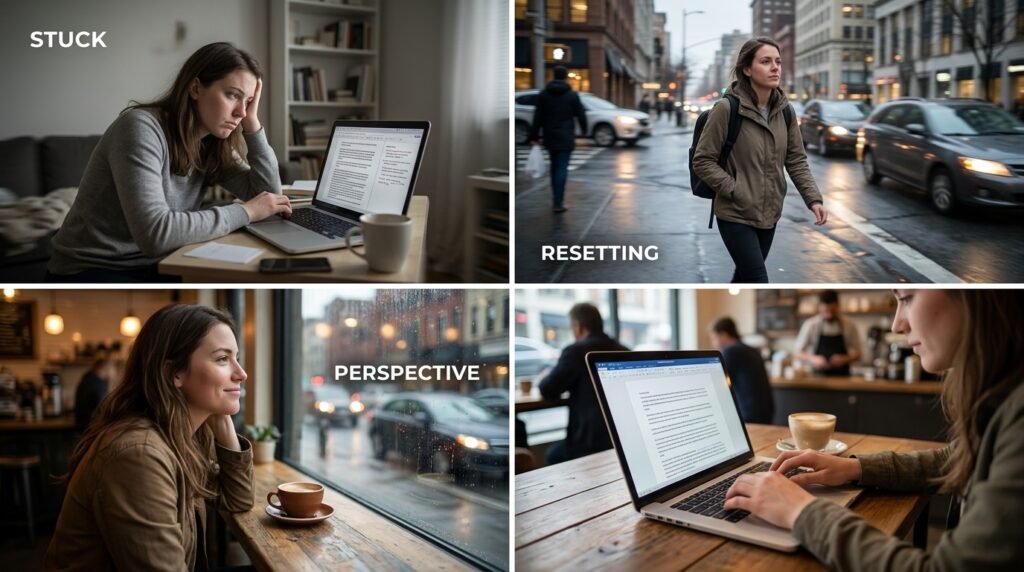
Whenever I hit a severe wall of creative block—when the words simply refuse to flow onto the page, or when an image edit looks entirely wrong and I cannot figure out why—staring at the same blank wall in my apartment only makes the frustration worse.
The coffee shop acts as a massive reset button for my brain.
The physical act of packing my bag, walking down the street, feeling the cold air on my face, and changing my physical environment completely disrupts the negative thought loop.
When I sit down at a wooden table in the cafe, look out the large glass window at the passing traffic, and take my first sip of professionally brewed coffee, the creative blockage almost always shatters.
The new environment forces my brain to build new neural pathways. The change in lighting, the smell of the roasted beans, and the different chair completely reboot my perspective. I can open my laptop, look at the exact same project that was frustrating me thirty minutes ago, and suddenly see the obvious solution.
The Anchor in a Fast World
We are currently living in an era where everything is designed to be consumed as quickly as possible.
We order food on apps so we don’t have to talk to anyone. We buy items online so we don’t have to go into a store. We speed through our tasks to get to the next one.
The local, independent coffee shop is one of the last remaining spaces in modern society that actively encourages you to slow down and stay awhile.
They provide comfortable chairs, free internet, and warm lighting, specifically because they want you to linger. They are not trying to rush you out the door.
Acknowledging this deliberate hospitality is exactly (How Coffee Became a Social Habit in My Life). I stopped treating coffee like a drive-thru transaction and started treating it as an immersive experience.
If you are currently feeling trapped in the quiet isolation of your own home office, or if the stress of your workplace is overwhelming you, I highly encourage you to find your local Third Place.
Do not go to a massive corporate chain. Find a small, independently owned roastery.
Walk in, order a beautiful single-origin coffee, and find a quiet corner. Do not put your headphones on immediately. Just sit there for ten minutes. Listen to the hiss of the espresso machine, smell the heavy caramelized sugars in the air, and watch the community exist around you.
You will quickly realize that the liquid in the cup is only half of the magic. The true magic is the space itself. It is a sanctuary. It is an anchor. And if you go there often enough, it will eventually feel exactly like home.
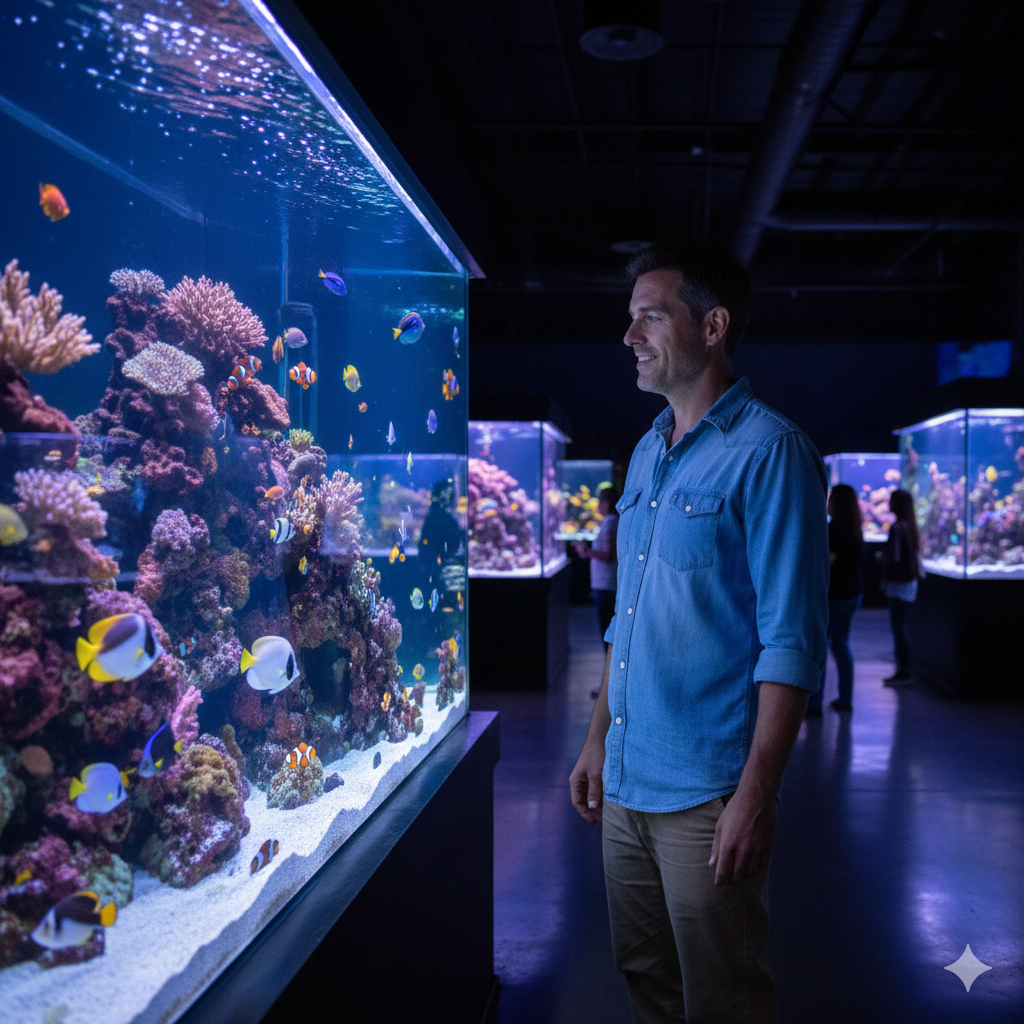
My name is Daniel Carter, I am 35 years old, and I live in the United States. I have been passionate about aquariums for many years, and what started as a simple hobby quickly became a lifelong interest in aquatic life, fish behavior, and responsible tank care.
Through TheBrightLance, I share real experiences, practical knowledge, and honest lessons learned from maintaining different types of aquariums. I enjoy testing equipment, studying fish behavior, improving maintenance routines, and helping beginners avoid common mistakes.
My goal is to make aquarism easier, more ethical, and more enjoyable for everyone — whether you are setting up your very first tank or looking to refine your techniques.