
I remember standing in the middle of a beautiful, minimalist specialty coffee shop, holding a small twelve-ounce bag of beans in my hands, and feeling a sudden surge of absolute indignation.
I looked at the price tag printed on the bottom of the bag. It said twenty-four dollars.
For a brief second, the frugal, supermarket-shopper part of my brain took over. I scoffed internally. I thought to myself, This is just roasted agricultural dirt. It’s just a plant that grows on trees. How on earth can anyone justify charging twenty-four dollars for a tiny bag of brown seeds?
I reluctantly bought the bag because I wanted to try it, but I left the shop feeling like I had just been scammed by a clever marketing campaign.
That evening, still slightly annoyed by the price, I decided to look up the specific farm printed on the front of the bag. I typed the name of the Colombian cooperative into a search engine, clicked on a video documentary, and sat back in my chair.
Thirty minutes later, the video ended. I looked over at the bag of coffee sitting on my kitchen counter, and my annoyance was completely gone. In its place was a profound, overwhelming sense of guilt and deep respect.
I realized that twenty-four dollars wasn’t a scam. It was an absolute, unbelievable bargain.
Here is the honest, humbling story of what I discovered about coffee farming around the world, the brutal, beautiful reality of the people who grow our morning beverage, and how learning the truth completely changed how I value every single drop in my mug.
The Myth of the Machine
Before watching that documentary, my mental image of a coffee farm was completely wrong.
I pictured massive, perfectly flat fields of green bushes stretching out to the horizon. I imagined giant, automated tractors and harvesting machines driving down the neat rows, effortlessly shaking the coffee beans into massive metal bins, exactly like harvesting wheat or corn in the American Midwest.
That might be true for the massive, low-grade commercial farms that produce cheap supermarket dust, but it is not the reality for specialty coffee.
Great coffee requires struggle. To get those complex, dense, sweet flavor profiles, the coffee trees have to be planted at extreme altitudes.
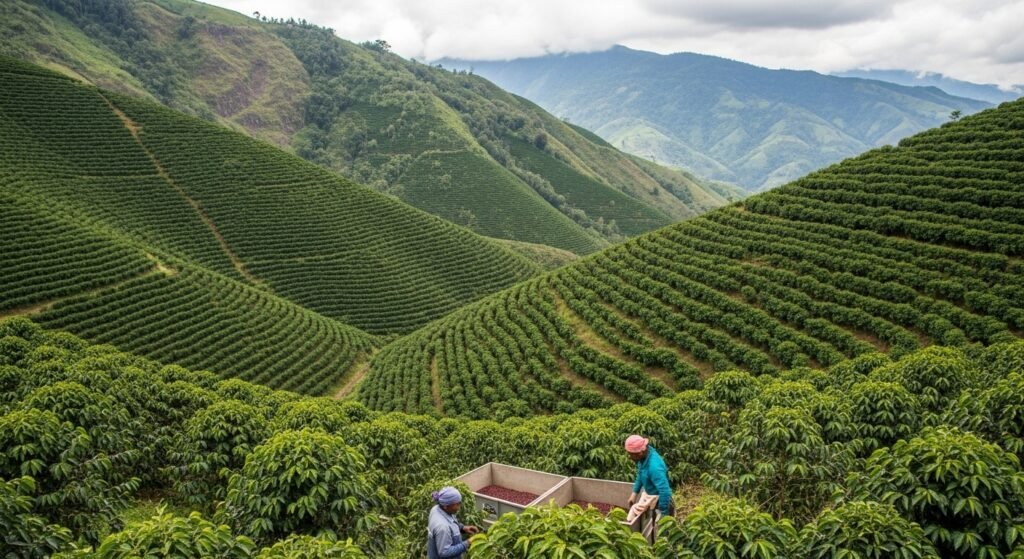
When you look at farms in places like Colombia, Guatemala, or Rwanda, they are not flat. The coffee trees are planted on the sides of towering, jagged volcanic mountains. The inclines are often so violently steep—sometimes hitting forty-five-degree angles—that it is physically impossible to use a tractor, a truck, or a machine of any kind.
The realization of this extreme geography is exactly (What Makes Coffee From High Altitudes So Special?), because the sheer inaccessibility of the terrain is what gives the plant the cold nights and complex soils it desperately needs to thrive.
But because machines cannot climb a volcano, every single piece of work has to be done by human hands.
The Brutal Reality of the Harvest
When the coffee fruit (the cherry) is finally ready to be harvested, the true grueling labor begins.
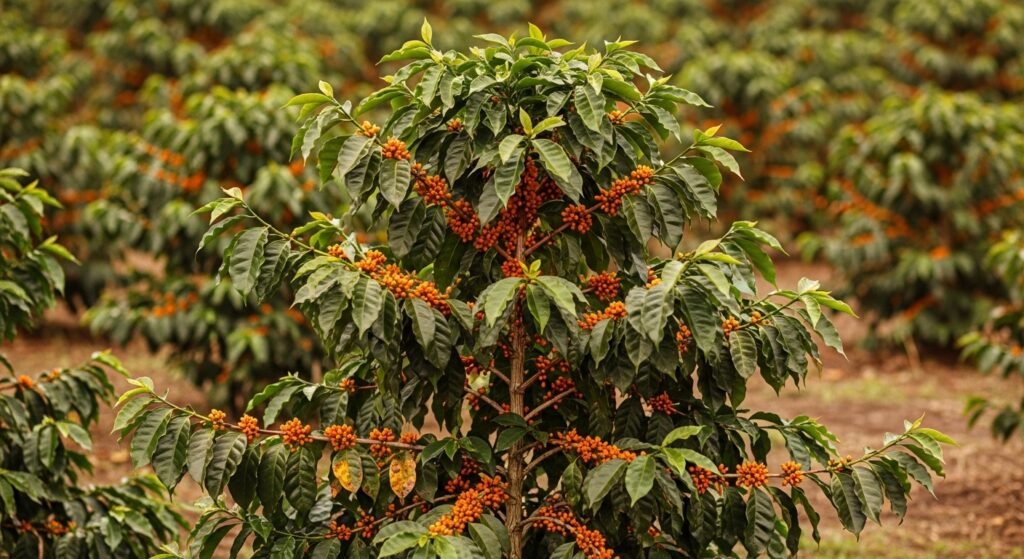
I learned that coffee cherries do not ripen all at once. If you look at a single branch of a coffee tree, you will see green cherries, yellow cherries, and deep, blood-red cherries all living right next to each other.
In cheap commercial farming, workers just strip the entire branch bare. They mix the bitter, unripe green cherries with the ripe red ones, which is exactly why cheap coffee tastes harsh and sour.
But in the specialty coffee world, the standard is absolute perfection.
The pickers have to walk up and down those treacherously steep mountain slopes carrying heavy woven baskets. They must visually inspect every single branch and use their fingers to carefully pluck only the perfectly ripe, deep red cherries, leaving the green ones behind to mature.
Because they can’t strip the branch, the pickers have to return to the exact same tree, hiking up the exact same steep mountain, four or five different times over the course of a single harvest season.
Watching this grueling, meticulous selection process was a massive wake-up call, perfectly explaining (The First Time I Noticed Coffee Quality Actually Matters). The quality in the cup isn’t created by the roaster; it is created by a human being who refused to pick an unripe piece of fruit on a steep mountainside.
The Invisible Enemies
But the struggle doesn’t end with the harvest. Coffee farmers are constantly fighting a war against invisible enemies.
I discovered that the Arabica coffee plant—the species that produces the beautiful, sweet, floral flavors we all love—is incredibly fragile. It is the agricultural equivalent of a delicate orchid.
It is highly susceptible to diseases. The most terrifying of these is a fungus called La Roya, or Coffee Leaf Rust.
When this microscopic fungus blows in on the wind, it lands on the leaves of the coffee tree. It rapidly multiplies, covering the leaves in an orange, rusty powder. The fungus stops the tree from photosynthesizing, completely suffocating the plant.
In the 2010s, an outbreak of La Roya swept across Central America, absolutely devastating the industry. Thousands of farmers lost their entire livelihoods in a matter of months. Entire mountainsides of ancient coffee trees had to be burned to the ground to stop the spread.
Farming coffee isn’t just planting a seed and waiting; it is a constant, stressful vigil to protect the crop from microscopic destruction.
The Climate Threat
Beyond diseases, the farmers are battling the sky itself.
Coffee requires an incredibly specific microclimate to survive. It needs the perfect balance of rainy seasons to grow the fruit and dry seasons to process the harvest.
But global weather patterns are becoming dangerously unpredictable.
I learned about farmers in regions who rely on a specific two-month dry window to sun-dry their coffee beans on concrete patios. Recently, unseasonal, violent rainstorms have been interrupting those dry seasons. When it rains on drying coffee, the beans rot, mold, and are completely ruined.
Furthermore, as global temperatures slowly rise, the “Coffee Belt” is physically shifting. The cool mountain air that the Arabica plant needs to develop its sugars is disappearing at lower elevations.
Understanding this fragile environmental balance is exactly (How Climate Affects the Taste of Coffee (My Discovery)), because farmers are literally being forced to abandon their ancestral land and move higher and higher up the mountains just to find the cool air their crops need to survive.
The Art of Processing
Even if the farmer manages to beat the diseases, survive the weather, and hand-pick the perfect cherries, the hardest part of their job is just beginning.
I used to think “processing” was just a matter of throwing the beans in an oven to dry them. I was incredibly naive.
Processing is an intense, high-stakes culinary science that happens outdoors.
If a farmer in Ethiopia is producing a “Natural” processed coffee, they lay the freshly picked, sticky fruit out on raised mesh beds in the sun. But they cannot just walk away.
If the fruit sits still for too long, it will ferment too aggressively and taste like rotting vinegar. So, farm workers have to walk up and down the drying beds, using wooden rakes or their bare hands to turn and flip the millions of coffee cherries every thirty minutes, all day long, under the blistering African sun.
They do this for up to three weeks straight for a single batch.
If a farmer in Costa Rica is doing a “Honey” process, they have to carefully monitor the sticky mucilage on the bean to ensure it caramelizes perfectly without attracting insects.
Every single step of the drying process requires a human being making a conscious, sensory decision. The farmer is acting as a master chef, manipulating sugars and fermentation to create the exact flavor profile that will eventually end up in your mug.
The Economic Divide
Perhaps the most sobering discovery I made about coffee farming was the economic reality of the people doing the hardest work.
Coffee is one of the most heavily traded commodities on the planet, second only to crude oil. But the global “C-Price” (the commercial market price for a pound of coffee) is often dictated by stock traders in New York or London, completely detached from the actual cost of farming.
For years, the global price of coffee dropped so low that many farmers were actually losing money on every single pound they produced. They couldn’t even afford to feed their families, let alone invest in their farms.
This is the dark side of cheap, supermarket coffee. When you buy a massive tub of coffee for five dollars, you are participating in a system that often exploits the farmer.
This realization completely justified the specialty coffee price tag for me.
The Power of Direct Trade
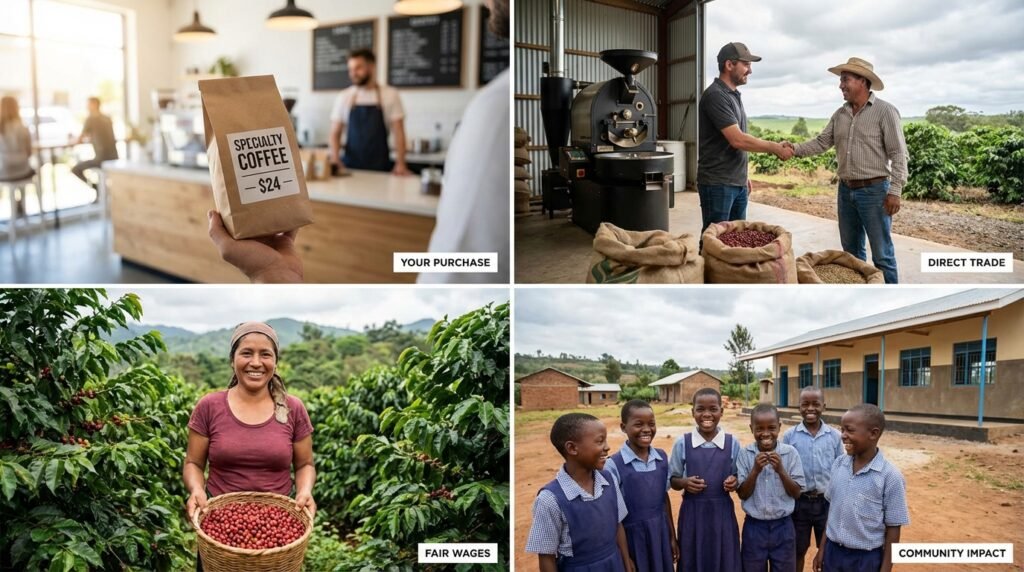
When you buy a twenty-four-dollar bag of coffee from a reputable specialty roaster, that money actually travels down the chain.
Many specialty roasters use a model called “Direct Trade” or “Fair Trade.” This means they bypass the massive commodity stock market entirely. They fly directly to the farms in Guatemala, Rwanda, or Peru, shake hands with the farmers, taste their crops, and agree to pay them a premium price based entirely on the quality of the cup.
This premium price allows the farmers to pay their pickers a living wage. It allows them to build better infrastructure, buy better organic fertilizers, and send their children to school.
I discovered that buying specialty coffee isn’t about being a snob. It is an act of ethical consumption.
A New Morning Ritual
When that documentary finally finished, I walked into my kitchen and looked at my expensive bag of Colombian coffee with completely new eyes.
I didn’t see a bag of brown powder anymore.
I saw the steep, volcanic incline of the Andes mountains. I saw the calloused hands of the picker who hiked up that mountain four times to find the perfect red cherries. I saw the meticulous farmer who stayed awake at night worrying about leaf rust and unexpected rain. I saw the workers who stood in the hot sun, raking the beans every thirty minutes so they wouldn’t rot.
I realized that by the time that single coffee bean reached my kitchen grinder, it had been touched by dozens of human hands. It had survived diseases, pests, weather anomalies, and a global ocean voyage.
Honor the Chain
If you love coffee, I highly encourage you to spend an hour researching the specific farm or cooperative printed on the front of your bag.
Watch a video of the harvest in Ethiopia. Look at pictures of the wet mills in Costa Rica. Read about the economic struggles of farmers in Honduras.
When you truly understand the sheer magnitude of the human labor and agricultural miracles required to produce a single cup of coffee, your complaints about the price tag will instantly vanish.
You will stop taking your morning routine for granted. You will realize that coffee is not a factory product; it is a global human achievement. And when you finally take that first sip, you won’t just taste the chocolate or the fruit; you will taste the profound dedication of the farmers who brought it to life.
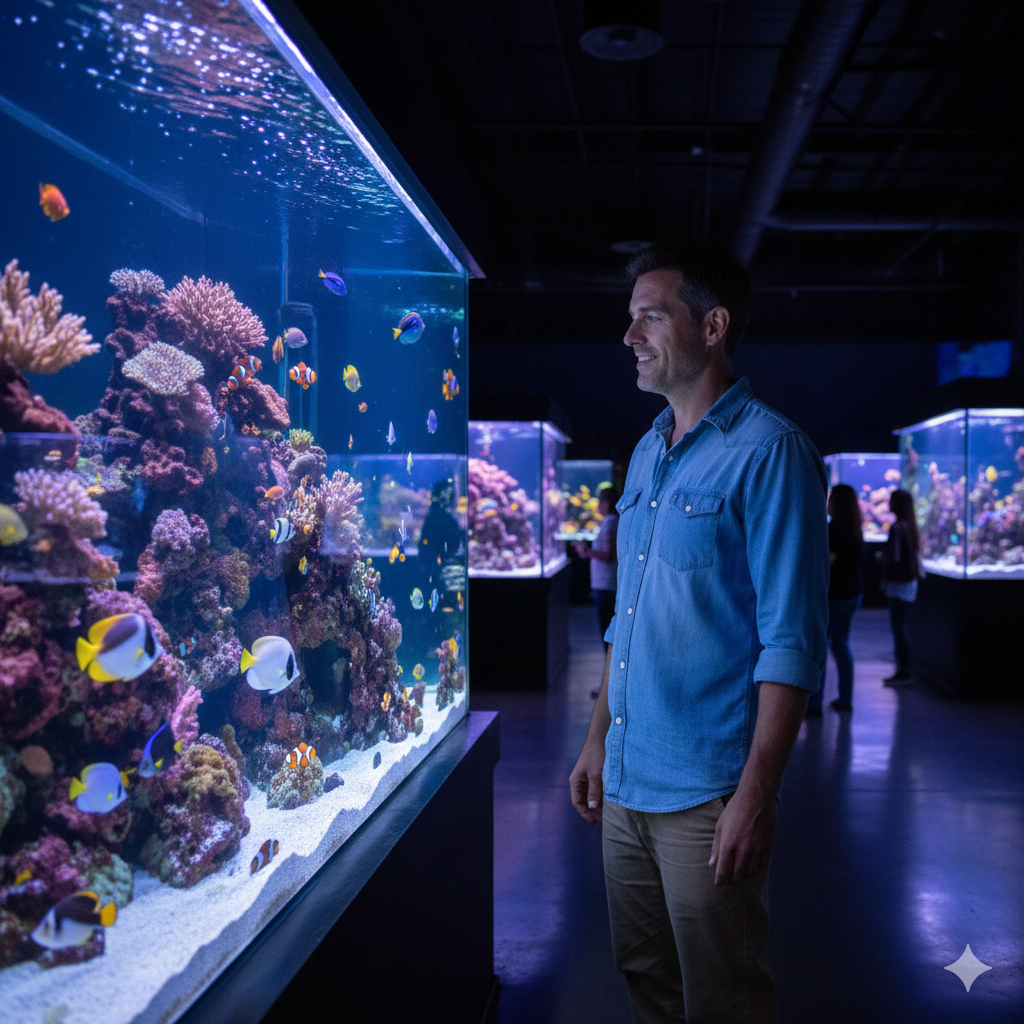
My name is Daniel Carter, I am 35 years old, and I live in the United States. I have been passionate about aquariums for many years, and what started as a simple hobby quickly became a lifelong interest in aquatic life, fish behavior, and responsible tank care.
Through TheBrightLance, I share real experiences, practical knowledge, and honest lessons learned from maintaining different types of aquariums. I enjoy testing equipment, studying fish behavior, improving maintenance routines, and helping beginners avoid common mistakes.
My goal is to make aquarism easier, more ethical, and more enjoyable for everyone — whether you are setting up your very first tank or looking to refine your techniques.