
I own a very specific, slightly obnoxious personal rule whenever I visit a new specialty coffee shop for the very first time.
If the café looks like they genuinely care about their craft—if they have expensive grinders, digital scales on the drip bar, and baristas who look like they take their jobs incredibly seriously—I refuse to look at the menu.
Instead, I walk straight up to the counter, politely introduce myself, and issue a challenge. I ask them to ignore their daily batch brew, ignore the standard crowd-pleasing options, and brew me the absolute weirdest, most polarizing coffee they currently have in the building.
I tell them I want the coffee that scares casual customers away.
Usually, this little game results in a fantastic, high-altitude African coffee. The barista will proudly hand me a washed Kenyan coffee that is aggressively acidic and tastes like bright pink grapefruit, or a naturally processed Ethiopian bean that tastes intensely like blueberry pie. I love those profiles, but after a few years in the specialty scene, they stopped surprising me.
But a few months ago, this little counter-challenge completely backfired on me in the best way possible.
A barista in a small, dimly lit roastery smiled when I asked for their weirdest bean. He didn’t reach for an African coffee. Instead, he pulled a small, unmarked silver bag from underneath the counter, weighed out the beans, and started brewing a manual pour-over in total silence.
When he finally slid the glass carafe across the wooden bar, my sensory reality completely fractured. Here is the honest, mind-bending story of the most unique coffee flavor I’ve ever tried, the wild agricultural science behind it, and how it completely redefined what I thought a coffee bean was capable of becoming.
The Olfactory Illusion
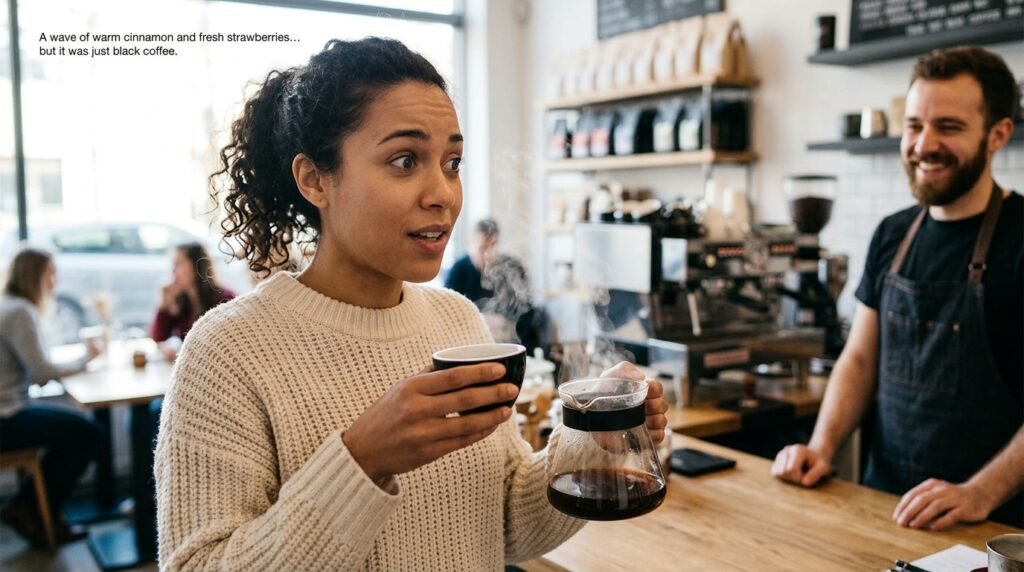
Before I even poured the coffee into my ceramic tasting cup, the steam rising from the glass carafe hit my face.
I actually physically pulled my head back and looked around the café. I thought the barista had accidentally spilled a bottle of flavored syrup, or that someone had just opened a fresh box of pastries right next to me.
It did not smell like roasted coffee. It didn’t smell like nuts, chocolate, or even the bright, floral fruit notes I was used to.
It smelled exactly like a warm, freshly baked cinnamon roll covered in vanilla icing.
Right behind the massive wave of cinnamon spice, there was an unmistakable, aggressive scent of ripe, sugary strawberries. It was so intense, so dessert-like, and so incredibly specific that I accused the barista of adding artificial flavoring to the grounds.
He just laughed, shook his head, and told me to taste it.
The Taste of Pink Bubblegum
I poured the dark ruby liquid into my cup. I let it cool for a full two minutes, knowing that extreme heat hides the true flavor of a beverage.
I took a deep breath, braced myself, and took a slow sip.
My brain completely stalled. The texture of the liquid was bizarrely thick and creamy. It didn’t feel like water; it felt like drinking melted ice cream or a heavy yogurt. It coated my entire palate with a dense, syrupy weight.
And then the flavor exploded.
The cinnamon aroma translated directly onto my tongue, but it was immediately followed by a massive, undeniable wave of classic, pink bubblegum. It tasted like strawberry yogurt mixed with a handful of crushed cinnamon candies.
There was no bitterness. There was no “coffee” flavor at all in the traditional sense. It was a loud, chaotic, incredibly sweet culinary illusion.
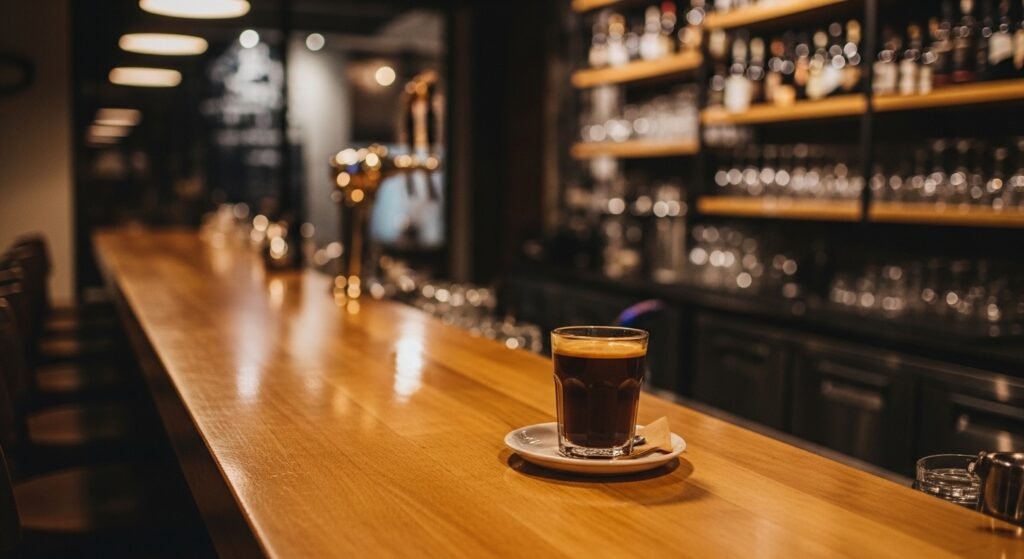
I sat the cup down on the wooden bar and stared at the dark liquid in sheer disbelief. Experiencing this wild deviation from the norm was the exact moment I fully grasped (Why Some Coffees Taste So Different (My Personal Discovery)), because I finally had physical proof that a coffee bean is just a blank canvas waiting for the farmer to paint on it.
The Secret of the Silver Bag
I drank the entire cup in a state of absolute fascination. It was so weird, so challenging, and so delicious that I demanded to see the silver bag it came from.
The barista placed the bag on the counter. The label read: Colombia. Pink Bourbon Variety. Anaerobic Natural Fermentation.
I recognized the country, and I recognized the genetic variety (Pink Bourbon is a highly sought-after, naturally sweet coffee plant mutation). But the final three words—Anaerobic Natural Fermentation—were completely foreign to me.
I had learned about the standard “Washed” process, where water cleans the bean. I knew about the traditional “Natural” process, where the fruit dries in the sun.
But I had never heard of Anaerobic coffee.
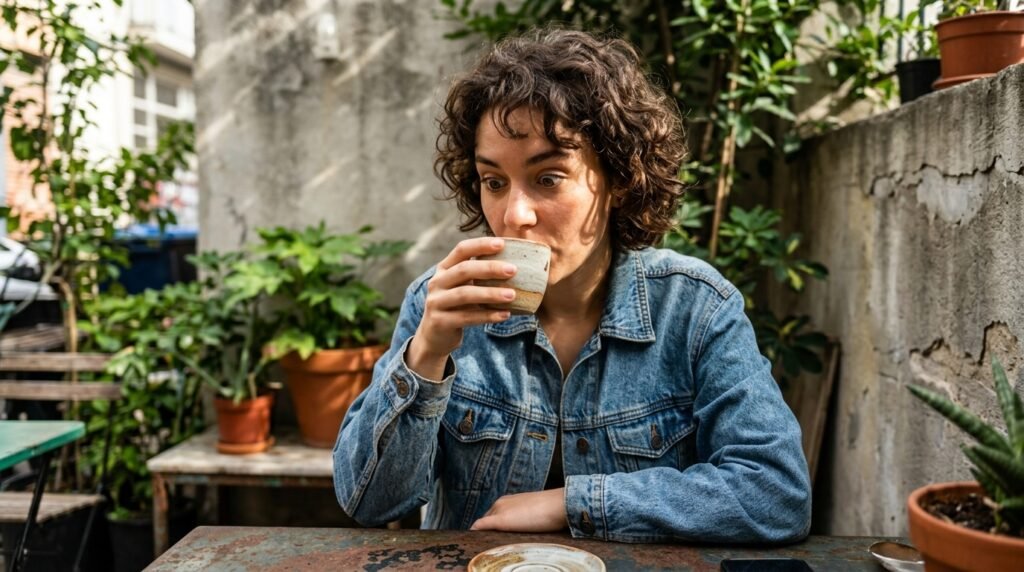
The barista leaned over the counter and gave me a crash course in the bleeding edge of modern coffee agriculture. He explained that I wasn’t just tasting the dirt of Colombia; I was tasting a highly controlled, scientific experiment.
The Science of Oxygen Deprivation
To understand why this coffee tasted like cinnamon rolls and pink bubblegum, you have to look at the craft beer and wine industries.
For centuries, winemakers and brewers have used controlled, sealed tanks to ferment their grapes and grains. They control the temperature, they control the oxygen, and they introduce specific yeasts to create highly specific flavors.
Recently, innovative coffee farmers in places like Colombia and Costa Rica started stealing these techniques.
When the farmer harvested the Pink Bourbon coffee cherries for my cup, they didn’t just lay them out in the sun. Instead, they took the perfectly ripe, intact fruit and sealed them inside massive, food-grade plastic barrels or stainless steel tanks.
They pumped all the oxygen out of the tanks, creating an “anaerobic” (oxygen-free) environment.
Then, they let the coffee cherries sit in the sealed tanks for days.
The Flavor Incubator
When you seal organic fruit in an oxygen-deprived environment, the biological chemistry completely changes.
Without oxygen, the natural yeasts and bacteria on the skin of the coffee cherry begin to consume the fruit sugars in a very specific, stressed manner. They start to produce massive amounts of lactic acid (the same acid found in yogurt) or acetic acid.
As the pressure builds inside the sealed tank, these intense, funky, highly complex acids and fermented sugars are physically forced deep into the cellular structure of the coffee seed.
The tank acts as an incubator for bizarre flavors.
Depending on the exact temperature of the tank and how many hours the farmer leaves the cherries inside, they can chemically engineer the coffee to taste like almost anything. They can make it taste like passionfruit, mango, cinnamon, gingerbread, or, in my case, strawberry bubblegum.
It was hard to believe this was the same agricultural product I had been drinking my whole life. Understanding this radical transformation is the core of (How Coffee From the Same Plant Can Taste So Different), as the fermentation tank overrides the traditional flavor of the seed and replaces it with wild, engineered complexity.
The Controversy in the Cup
After my mind was thoroughly blown by this science lesson, the barista told me something very interesting.
He told me that many people in the specialty coffee industry absolutely hate anaerobic coffees. There is a massive, ongoing debate among purists and buyers.
The argument against anaerobic coffee is actually quite philosophical.
The foundation of specialty coffee has always been Terroir—the belief that you should be able to taste the specific soil, the altitude, and the climate of the farm in your cup. If you drink a washed Ethiopian coffee, you are tasting the ancient African dirt.
But anaerobic fermentation is so loud, so aggressive, and so intense that it completely masks the terroir.
If a farmer takes a bean from Colombia and a bean from Brazil, and puts them both through the exact same 72-hour anaerobic fermentation process, they will likely taste very similar. The fermentation overrides the geography.
Some purists argue that these coffees are “cheating.” They argue that the farmer is artificially flavoring the coffee with fermentation rather than letting the natural terroir speak for itself.
Choosing Experience Over Purity
I sat at the bar, reflecting on the purists’ debate, and then I took the last, cold sip of my bubblegum-flavored coffee.
I decided that I didn’t care about the controversy.
I understand the purist mindset. I love a clean, crisp, washed coffee that perfectly reflects the volcanic soil it grew in. I deeply respect the geography of the coffee belt.
But I also believe that agriculture is an art form. If a Colombian farmer has the scientific knowledge, the patience, and the innovation to take a raw coffee cherry, seal it in a tank, and manipulate its chemistry until it tastes like a cinnamon roll, that farmer deserves to be celebrated.
It is a testament to human ingenuity. It proves that coffee is not a static, boring commodity. It is an evolving, dynamic canvas.
Looking back at (My First Experience With Freshly Roasted Coffee), I realized how far my palate had traveled. I went from being easily impressed by simple freshness to actively chasing down wild, fermented bubblegum flavors in dimly lit roasteries.
The Fatigue of the Extreme
As much as I loved that single cup of anaerobic coffee, I did not buy the bag to take home.
And that is the great paradox of these wild, unique processing methods. They are incredible, mind-bending experiences, but they are incredibly fatiguing.
Drinking a coffee that tastes like strawberry yogurt and cinnamon is a fun adventure for a Saturday afternoon at a café. But it is not what I want to drink at six o’clock in the morning on a random Tuesday before a stressful meeting.
It is too loud. It demands too much attention.
These experimental coffees are the culinary equivalent of a massive, heavily frosted slice of funfetti cake. It is amazing for a celebration, but if you eat it every single day for breakfast, you will quickly become exhausted by it.
I prefer to keep anaerobic coffees as a rare, specialized treat. They are the exciting detours on my coffee journey, not the main highway.
Issue Your Own Challenge
The world of specialty coffee is currently going through a massive experimental renaissance.
Farmers are no longer just growing beans; they are becoming mad scientists. They are experimenting with thermal shock processing, carbonic maceration (a technique stolen from winemaking), and wild yeast inoculations.
If you are currently stuck in a flavor rut, drinking the same comforting, chocolatey cup of coffee every single morning, I highly encourage you to play the barista’s game.
The next time you visit a high-end, reputable specialty coffee shop, do not look at the menu.
Walk up to the counter and politely ask the barista to brew you the strangest, most experimental, most unique coffee they have in their arsenal. Tell them you want an anaerobic fermentation, or a carbonic macerated bean.
When they hand you the cup, forget everything you think you know about what coffee is supposed to taste like. Keep an open mind.
When the overwhelming flavor of cinnamon spice, tropical mango, or pink bubblegum washes over your palate, you will finally realize that the boundaries of coffee flavor are completely imaginary. You will discover an entirely new universe of taste, and you will never view a simple brown bean the exact same way again.
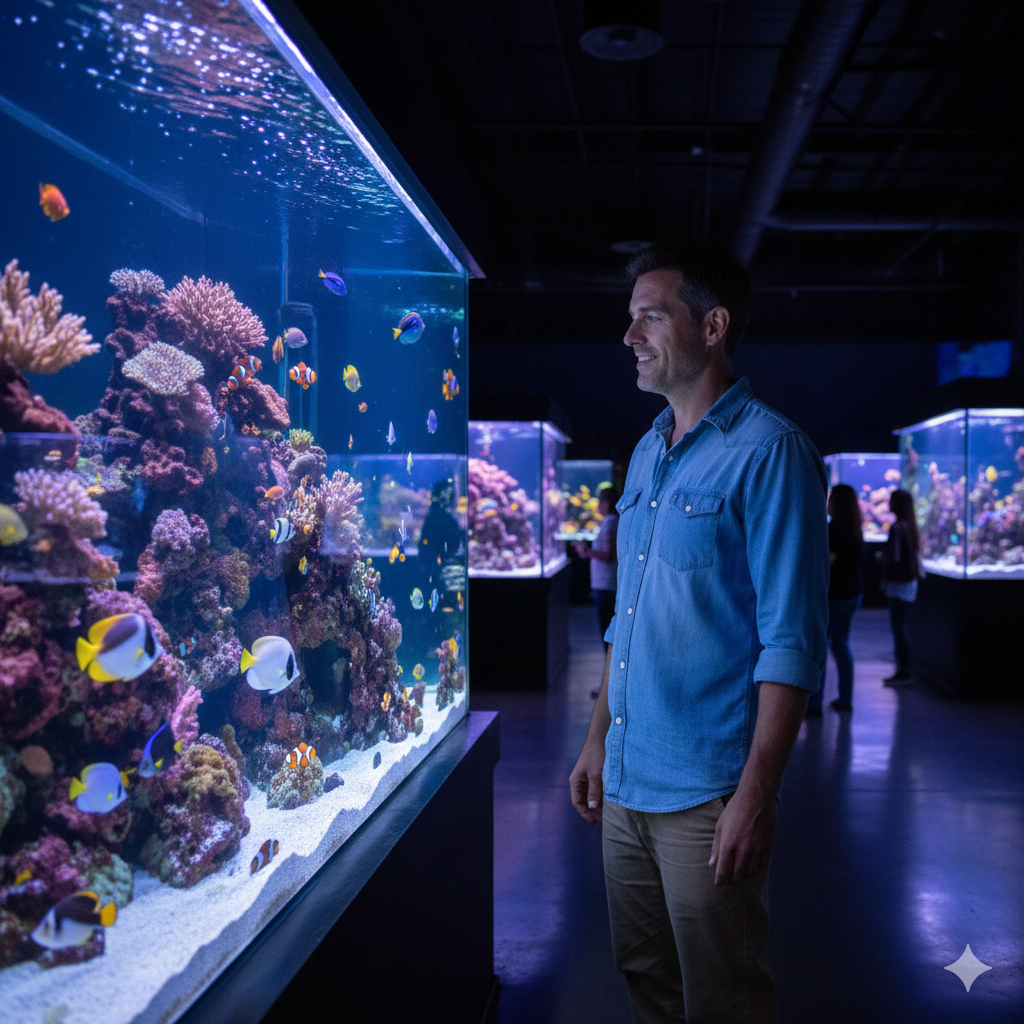
My name is Daniel Carter, I am 35 years old, and I live in the United States. I have been passionate about aquariums for many years, and what started as a simple hobby quickly became a lifelong interest in aquatic life, fish behavior, and responsible tank care.
Through TheBrightLance, I share real experiences, practical knowledge, and honest lessons learned from maintaining different types of aquariums. I enjoy testing equipment, studying fish behavior, improving maintenance routines, and helping beginners avoid common mistakes.
My goal is to make aquarism easier, more ethical, and more enjoyable for everyone — whether you are setting up your very first tank or looking to refine your techniques.