
I have a specific drawer in my kitchen that I affectionately refer to as the graveyard.
It is packed to the brim with empty, crumpled, brightly colored coffee bags. Whenever I finish a particularly spectacular bag of specialty beans, I can never bring myself to throw the packaging away. I just flatten it out and toss it into the drawer.
The other day, I pulled the drawer open and dumped the contents onto my kitchen counter. There were dozens of bags scattered across the wood, creating a massive, chaotic mosaic of global geography.
There were bags from the high-altitude volcanic slopes of Colombia. There were bags from the ancient, wild forests of Ethiopia. There were bags from the humid, dense jungles of Indonesia, and the bright, sunny peaks of Costa Rica.
Looking at that pile of empty bags, I realized that I hadn’t just been consuming a morning beverage for the past few years. I had been taking an intensive, daily masterclass in global agriculture.
Every single region I explored had fundamentally changed the way I understand flavor, chemistry, and farming. Tasting the differences between these continents completely rewired my palate.
If you are currently stuck drinking the same generic, blended supermarket coffee every day, you are missing out on the greatest culinary world tour available. Here is the honest breakdown of exactly what I learned from drinking coffee from different regions, and how each continent taught me a completely different lesson about what coffee can be.
South America Taught Me the Definition of Balance
When I first started exploring single-origin coffees, I began my journey in South America. It felt like the safest place to start.
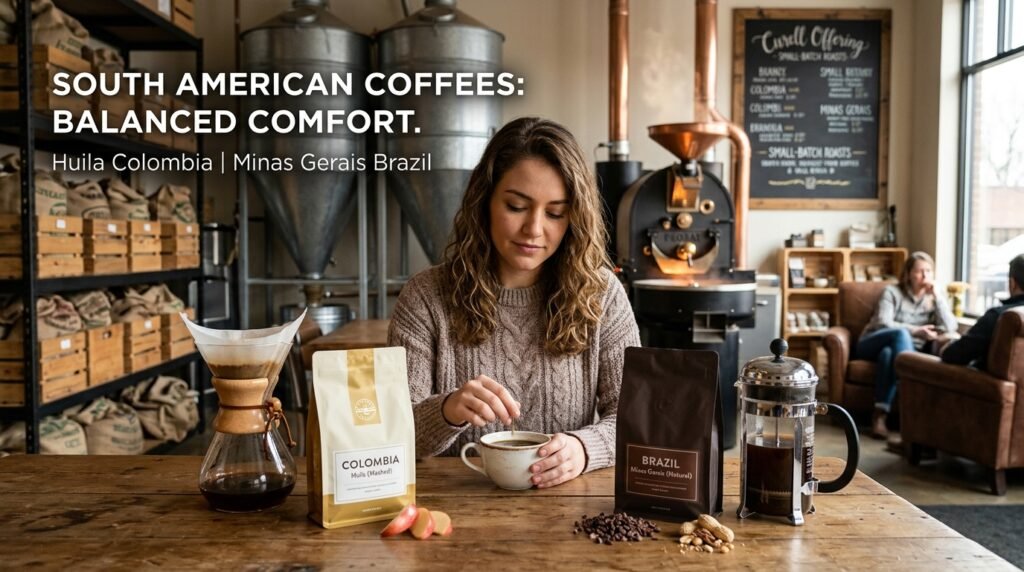
I bought a bag of washed coffee from the Huila region of Colombia, and a bag of naturally processed coffee from the Minas Gerais region of Brazil.
Before this, I thought “good coffee” just meant “strong coffee.” But brewing these South American beans taught me my very first lesson: the power of balance and comfort.
When I drank the Brazilian coffee, it was heavy, syrupy, and coated my mouth with intense, undeniable notes of peanut butter and dark cocoa. There was absolutely no sourness. It was like drinking a melted candy bar.
When I drank the Colombian coffee, the chocolate notes shifted to a sweet, golden caramel, accompanied by a crisp, refreshing acidity that tasted exactly like a red apple.
These countries taught me why South American coffees are the undisputed baseline of the global coffee industry. They deliver the classic, nostalgic flavor profile that 99% of humanity associates with a “perfect cup of coffee.”
I realized that (What I Noticed About South American Coffees) was their incredible reliability. They don’t try to shock your palate. They don’t try to be overly complex or aggressively weird. They are designed to be a warm, comforting hug on a cold morning. South America taught me that sometimes, absolute balance and chocolatey sweetness are all you really need.
Africa Taught Me That Acidity is a Virtue
After spending a few months in the comforting arms of South America, I decided to take a risk and cross the ocean to East Africa.
I bought a bag of washed Heirloom coffee from the Guji region of Ethiopia, and a bag of SL-28 coffee from the Nyeri region of Kenya.
I brewed the Ethiopian coffee first. When I took my first sip, my brain completely stalled. It didn’t taste like the heavy chocolate of Brazil. It tasted like I was drinking a delicate, sweet tea infused with jasmine flowers and ripe peaches.
The next day, I brewed the Kenyan coffee. It was explosive. It hit my palate with the sharp, mouth-watering tartness of a pink grapefruit, followed by a massive wave of dark blackberry jam.
Africa taught me the most shocking lesson of my entire coffee journey: acidity is not a flaw; it is a profound virtue.
For my entire life, I thought “acidic coffee” meant bitter, stomach-churning, stale diner coffee. But Africa taught me about vibrant acidity. It taught me the crisp, juicy snap of a fresh fruit.
Because coffees in East Africa are grown at staggering altitudes—often over 2,000 meters above sea level—the cold mountain air forces the coffee cherries to mature incredibly slowly. This intense environment is exactly (Why Some Coffee Origins Taste Sweeter Than Others), as the plant packs complex organic acids and sugars deep into the seed to survive the cold.
Africa completely destroyed my preconceptions. It taught me that coffee is, fundamentally, the seed of a tropical fruit, and when treated with respect, it can taste like a blooming orchard.
Asia Taught Me the Power of the Elements
Once I understood the chocolate of the Americas and the vibrant fruit of Africa, I thought I had the coffee world completely figured out.
Then, I bought a bag of coffee from Sumatra, Indonesia.
I brewed it in a French Press, poured it into my mug, and took a deep breath. It didn’t smell like caramel, and it didn’t smell like jasmine. It smelled like a dense, wet forest. There were heavy aromas of cedar wood, dark spices, and fresh pipe tobacco.
When I tasted it, it was thick, savory, and incredibly earthy. It felt like an entirely different beverage.
Indonesia taught me a massive lesson about how the local weather dictates the flavor of the bean.
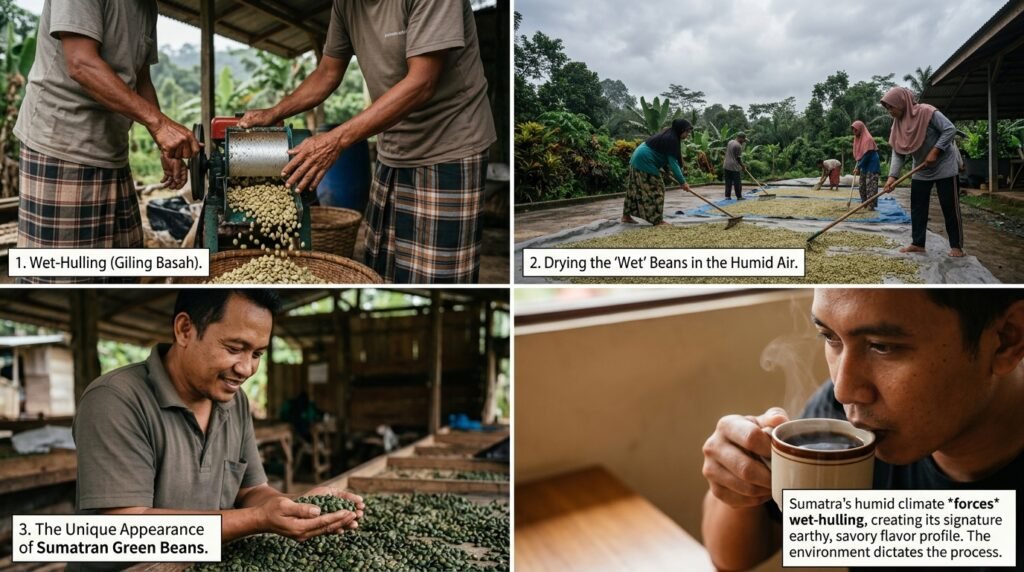
In Sumatra, the climate is overwhelmingly humid, and it rains almost constantly. If farmers tried to dry their coffee normally in the sun, it would rot. So, they were forced to invent a unique processing method called “Wet-Hulling,” where they strip the protective layers off the bean while it is still wet and squishy to speed up the drying process.
This exposure to the humid jungle air fundamentally alters the cellular structure of the bean. It mutes all the bright, fruity acids and aggressively amplifies the heavy, savory, woody notes.
Asia taught me that the environment will always have the final say. Understanding this forced adaptation is the core of (What Makes Coffee Taste Different Around the World?), proving that farmers are entirely at the mercy of their local climate, and the resulting flavors are a testament to their survival skills.
Central America Taught Me About Microclimates
My final major lesson came when I started exploring the narrow strip of land that connects North and South America.
I bought coffees from Costa Rica, Guatemala, and Honduras. Because these countries are geographically so close to each other, I assumed they would all taste roughly the same.
I could not have been more wrong.
Central America taught me the concept of the “microclimate.” Because the topography of this region is so violently dramatic—with active volcanoes, deep valleys, and two different oceans pushing wind across the land—the weather can change drastically from one mile to the next.
When I drank a coffee from the Antigua region of Guatemala, it was grown in deep volcanic ash. It tasted smoky, complex, and full of rich cocoa and baking spices.
But when I drank a coffee from the Tarrazú region of Costa Rica, just a short distance away on the map, it was entirely different. It was bright, incredibly clean, and tasted like green apples and sweet honey.
Central America taught me to stop painting regions with a broad brush. You cannot simply say “I like Central American coffee.” You have to narrow it down to the specific mountain, the specific valley, and the specific soil type. It taught me that coffee is hyper-local.
The Importance of the Roaster’s Translation
Drinking coffee from all these different regions also taught me a vital lesson about the person standing between the farmer and my kitchen: the coffee roaster.
I realized that all of these beautiful, regional flavor differences can be completely destroyed in fifteen minutes if the roaster makes a mistake.
If a roaster takes a delicate, floral Ethiopian bean and roasts it too dark, the jasmine and peach notes will literally burn away, leaving behind nothing but the taste of carbon and ash. If they take a heavy Sumatran bean and roast it too light, it will taste like sour, raw vegetables.
I learned that the roaster’s job is not to “create” flavor. Their job is to act as a translator.
A great specialty roaster analyzes the green beans, understands the region they came from, and applies the exact amount of heat necessary to translate the farmer’s hard work into a language my palate can understand.
I stopped buying coffee from massive corporations that burn their beans to hide defects. I started exclusively buying from local artisans who treat each specific region with the unique respect it deserves.
How This Changed My Morning Routine
Before this global tasting journey, my morning routine was an automated, thoughtless chore. I just wanted caffeine in my bloodstream.
Today, my morning routine is an active, deliberate choice.
I keep a mental map of the world in my pantry.
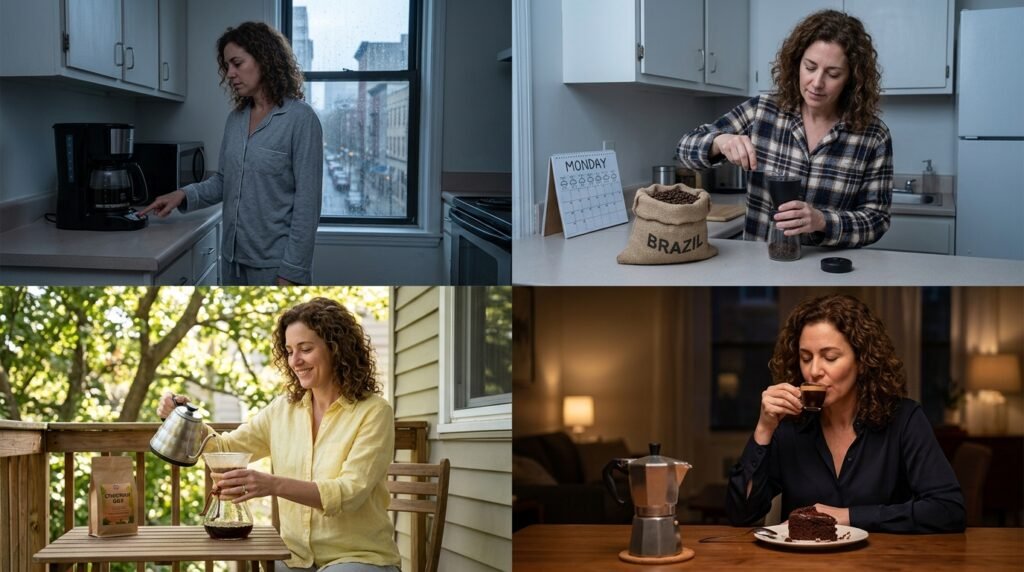
If I wake up on a gloomy, rainy Monday, and I have a long, stressful workday ahead of me, I do not want to be challenged by my coffee. I reach for South America. I brew a heavy Brazilian or Colombian coffee because I need that chocolatey, nutty comfort to ground me.
If it is a bright, sunny Saturday morning, and I have the time to sit on my porch and truly engage with my beverage, I travel to East Africa. I brew a bright Ethiopian Guji or a sharp Kenyan SL-28. I want that vibrant, juicy, floral complexity to wake up my senses and make me smile.
And if I am eating a heavy, rich dessert after dinner, I might brew a small cup of Indonesian coffee, letting the earthy, spicy notes cut through the sugar.
The End of “Just Coffee”
Drinking coffee from different regions completely ruined the concept of “just coffee” for me.
I can never go back to buying a generic, anonymous blend from a supermarket shelf. I know too much. I know what I am missing.
I know that there is a farmer in Ethiopia harvesting ancient genetics that taste like peaches. I know there is a farmer in Colombia cultivating volcanic soil to produce the perfect caramel apple acidity. I know there is a farmer in Sumatra battling the jungle humidity to bring me a heavy, spicy cup.
When you start paying attention to the regions, you stop drinking a factory product and start drinking a global story.
Your Passport Awaits
If you are currently stuck in a flavor rut, drinking the exact same brand of coffee every single week, I highly encourage you to start building your own graveyard of empty, colorful bags.
You don’t need a professional palate to do this. You just need a sense of curiosity.
Find a reputable specialty roaster online or in your city. Buy one bag from South America, one bag from East Africa, and one bag from Southeast Asia.
Brew them on different days. Drink them black. Close your eyes, let the liquid cool for a moment, and try to find the chocolate, the fruit, and the earth.
I promise you, once you taste the profound differences between these regions, you will never view your morning routine the same way again. You will realize that the world is far too massive, and agriculture is far too beautiful, to ever settle for a boring cup of coffee.
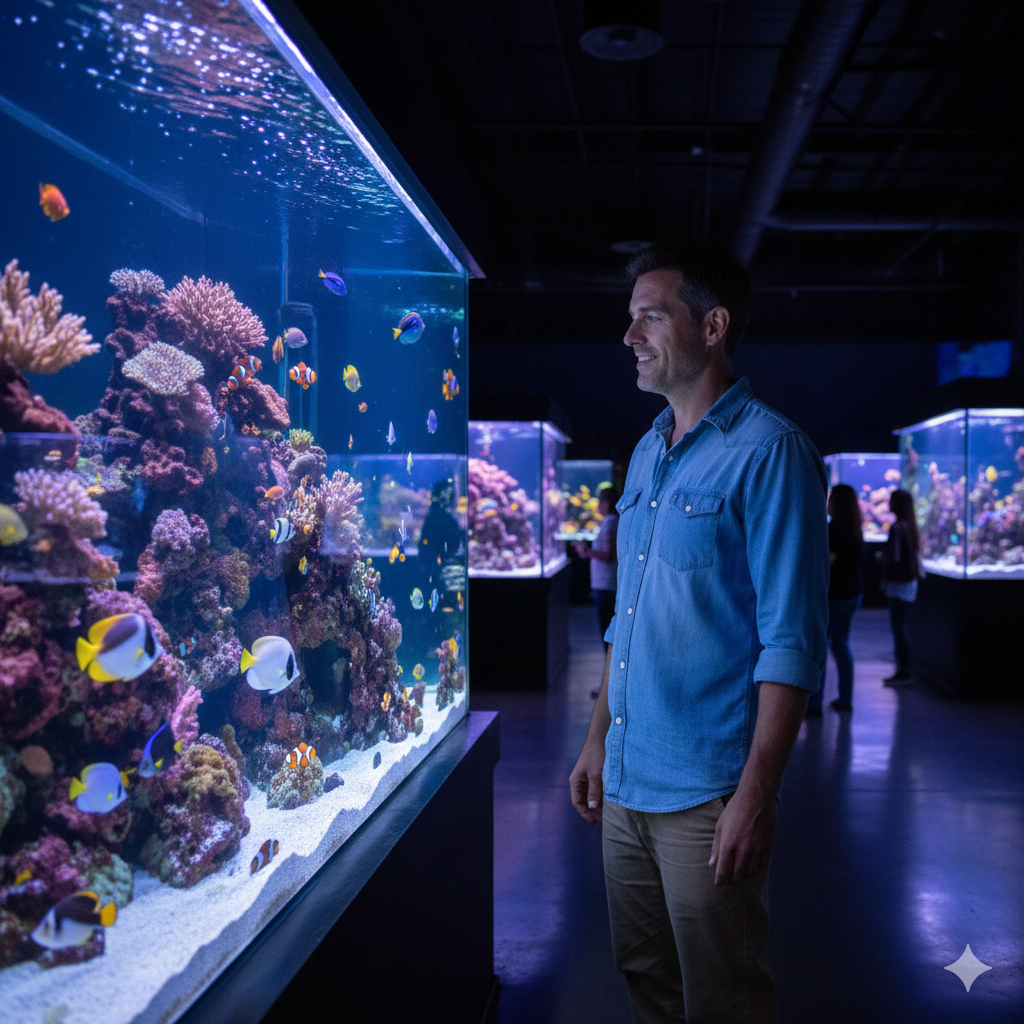
My name is Daniel Carter, I am 35 years old, and I live in the United States. I have been passionate about aquariums for many years, and what started as a simple hobby quickly became a lifelong interest in aquatic life, fish behavior, and responsible tank care.
Through TheBrightLance, I share real experiences, practical knowledge, and honest lessons learned from maintaining different types of aquariums. I enjoy testing equipment, studying fish behavior, improving maintenance routines, and helping beginners avoid common mistakes.
My goal is to make aquarism easier, more ethical, and more enjoyable for everyone — whether you are setting up your very first tank or looking to refine your techniques.