
The Silent Teachers of My Glass Box
For over a decade now, my life has revolved around a world contained within glass. Not some skyscraper office with a panoramic view, but something far more intimate and, dare I say, insightful: my aquariums. It started with a simple ten-gallon tank and a handful of guppies, a classic beginner’s setup. But what began as a casual hobby quickly morphed into an all-consuming passion, a constant learning experience fueled by the silent observations of my finned companions. I’m Lucas Anderson, by the way, and I live here in Orlando, Florida. I’m just a regular guy who fell head-over-heels for the world of aquariums, and I’ve learned more from watching my fish than I ever could have imagined.
You see, keeping fish isn’t just about throwing in some food and hoping for the best. It’s about creating a miniature ecosystem, understanding the delicate balance of nature, and, most importantly, learning to read the subtle cues of your inhabitants. Each species has its own unique personality, its own quirks and preferences. And by paying close attention, you can unlock a wealth of knowledge about their behavior, their needs, and their place in the grand scheme of things.
I’ve made my share of mistakes, of course. Clouded water, mysterious illnesses, unexplained deaths… I’ve seen it all. But each failure has been a valuable lesson, pushing me to research, to experiment, and to become a more responsible and knowledgeable aquarist. And through it all, the fish have been my silent teachers, patiently guiding me towards a deeper understanding of their world.
The Schooling Secrets of Tetras and Barbs
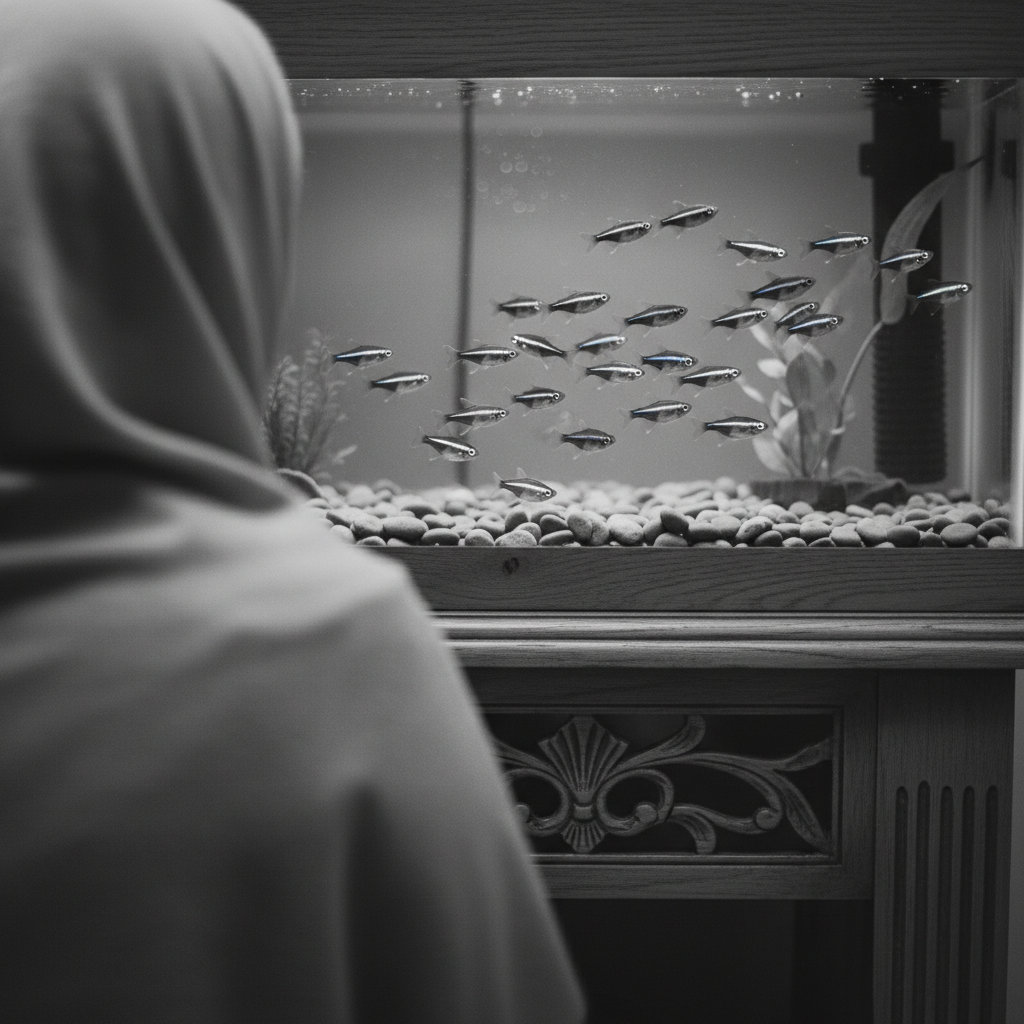
One of the first things that truly captivated me was the schooling behavior of small fish like tetras and barbs. I started with neon tetras, those iridescent jewels that seem to glow in the right light. Initially, I just admired their beauty, their synchronized swimming a mesmerizing dance in the water. But as I observed them more closely, I began to understand the underlying reasons for their behavior.
Safety in Numbers: A Lesson in Collective Intelligence
The most obvious reason for schooling is, of course, safety in numbers. A single small fish is an easy target for predators. But a school of hundreds or even thousands of fish can confuse and overwhelm a predator, making it difficult to single out an individual. It’s a form of collective intelligence, where the group as a whole is smarter and more resilient than any single member.
I saw this firsthand when I introduced a slightly larger fish into my community tank, a peaceful but assertive species. The tetras, initially scattered and nervous, quickly reformed their school, swimming tighter and more erratically whenever the larger fish approached. It was a clear display of their survival instinct, a coordinated response to a perceived threat.
But schooling is more than just a defensive mechanism. It also allows fish to forage more efficiently, to find food and resources more effectively. By swimming together, they can cover more ground, share information about food sources, and even help each other find mates.
I remember one instance where I introduced a new type of flake food to my tank. The tetras, initially hesitant, cautiously approached the surface. One brave individual took a bite, and almost immediately, the entire school followed suit. It was a perfect example of how social learning can benefit the entire group.
Beyond the School: Individual Personalities Emerge
While schooling is a dominant behavior, it’s important to remember that each fish is an individual with its own personality. I’ve noticed that some tetras are bolder than others, venturing out from the school to explore new areas or investigate potential food sources. Others are more timid, preferring to stay close to the safety of the group. These individual differences contribute to the overall diversity and resilience of the school.
Observing these subtle variations has taught me a valuable lesson about the importance of individual expression, even within a seemingly uniform group. It’s a reminder that we all have our own unique strengths and weaknesses, and that we can all contribute to the collective good in our own way.
The Bottom-Dwelling Wisdom of Corydoras Catfish
While the tetras captivated me with their schooling behavior, the Corydoras catfish, those adorable little scavengers that patrol the bottom of my tank, taught me a different kind of lesson. These humble creatures are often overlooked, but they play a vital role in maintaining a healthy aquarium ecosystem. And by observing their behavior, I’ve learned a lot about patience, diligence, and the importance of attention to detail.
The Unsung Heroes of the Aquarium: Cleanliness and Balance
Corydoras catfish are natural scavengers, constantly sifting through the substrate in search of uneaten food and decaying organic matter. They’re like tiny vacuum cleaners, helping to keep the tank clean and prevent the buildup of harmful toxins. Without them, my tank would quickly become a mess, a breeding ground for algae and bacteria.
I’ve learned to appreciate their tireless work, their constant dedication to maintaining a healthy environment. They don’t ask for much, just a clean substrate and a steady supply of food. But their contribution is invaluable.
I remember one time when I accidentally overfed my fish. The uneaten food quickly sank to the bottom, creating a cloudy mess. I was worried that the tank would become polluted, but the Corydoras catfish quickly went to work, diligently cleaning up the mess. Within a few hours, the water was clear again, and the tank was back to normal. It was a testament to their effectiveness and a reminder of their importance.
Beyond Scavenging: Social Interactions and Playful Behavior
While their scavenging behavior is essential, Corydoras catfish are also surprisingly social creatures. They prefer to live in groups, and they often engage in playful interactions with each other. I’ve seen them chasing each other around the tank, playfully nipping at each other’s fins, and even forming little “piles” on the substrate, all huddled together for warmth and comfort.
These social interactions have taught me about the importance of community, the need for connection and belonging. Even in the seemingly solitary world of the aquarium, fish crave companionship and social interaction.
I also noticed that different species of Corydoras have slightly different personalities and preferences. Some are more active and outgoing, while others are more shy and reserved. Some prefer to scavenge in open areas, while others prefer to hide under plants and decorations. Observing these subtle differences has made me appreciate the diversity of the natural world and the importance of providing a varied and stimulating environment for my fish.
The Solitary Majesty of the Betta Fish
No discussion of aquarium fish would be complete without mentioning the Betta fish, also known as the Siamese fighting fish. These stunning creatures are prized for their vibrant colors, their flowing fins, and their unique personalities. But they also come with a reputation for aggression, a trait that has earned them their fighting fish moniker. Keeping Bettas has taught me a lot about understanding individual needs, managing aggression, and the importance of providing a stimulating and enriching environment.
The Myth of the Solitary Warrior: Understanding Betta Behavior
It’s true that male Betta fish are territorial and will fight with each other if kept in the same tank. This is why they’re often sold individually in small cups, a practice that I find cruel and inhumane. But Bettas are not inherently aggressive. They’re simply defending their territory, their resources, and their right to survive.
In a well-maintained aquarium, with plenty of space, hiding places, and enrichment, a Betta fish can thrive. They can even be kept with other peaceful fish, as long as they’re not similar in appearance or temperament. I’ve successfully kept Bettas in community tanks with tetras, Corydoras catfish, and other peaceful species, with no aggression whatsoever.
The key is to understand their needs and to provide an environment that minimizes stress and promotes well-being. This means providing plenty of space, a varied diet, and a stimulating environment with plants, decorations, and hiding places. It also means avoiding overcrowding, aggressive tank mates, and sudden changes in water parameters.
I learned this the hard way when I first started keeping Bettas. I kept them in small, bare tanks, and they were constantly stressed and lethargic. It wasn’t until I upgraded to larger, more enriched tanks that I saw a dramatic improvement in their health and behavior. They became more active, more colorful, and more interactive.
Individual Personalities: The Unique Charm of Each Betta
Just like any other fish species, Bettas have their own unique personalities. Some are bold and curious, readily exploring their environment and interacting with their owners. Others are more shy and reserved, preferring to hide and observe from a distance. Some are playful and energetic, while others are more laid-back and relaxed.
I’ve had Bettas that would greet me at the front of the tank whenever I approached, eagerly anticipating feeding time. I’ve had others that would follow my finger as I moved it along the glass, seemingly fascinated by my presence. And I’ve had others that would simply ignore me, content to do their own thing.
Each Betta has taught me something different about the importance of individual expression, the beauty of diversity, and the rewards of patience and understanding. They’ve shown me that even the most misunderstood creatures can thrive in the right environment, with the right care and attention.

The Unexpected Lessons of Algae Control
Let’s be honest, algae is the bane of every aquarist’s existence. It’s unsightly, it can cloud the water, and it can even harm your fish. But algae can also be a valuable teacher, forcing you to understand the underlying causes of its growth and to develop strategies for controlling it. I’ve battled algae in my tanks for years, and I’ve learned a lot in the process.
The Balance of Light, Nutrients, and Water Quality
Algae growth is primarily driven by an imbalance of light, nutrients, and water quality. Too much light, too many nutrients, or poor water quality can all contribute to an algae bloom. Understanding this relationship is the first step towards controlling algae growth.
I’ve learned to carefully monitor the light levels in my tanks, adjusting the duration and intensity of the lighting to minimize algae growth. I’ve also learned to control the nutrient levels by limiting feeding, performing regular water changes, and using specialized filtration media to remove excess nutrients from the water.
Water quality is also crucial. Poor water quality can create an environment that favors algae growth over the growth of beneficial bacteria and plants. I’ve learned to maintain good water quality by performing regular water changes, using a high-quality filter, and avoiding overcrowding.
I remember one particularly stubborn algae bloom that plagued my community tank for months. I tried everything I could think of, but nothing seemed to work. It wasn’t until I started testing my water regularly that I discovered the problem: my nitrate levels were sky-high. I was overfeeding my fish, and the excess nitrates were fueling the algae growth. Once I reduced the feeding and started performing more frequent water changes, the algae finally began to recede.
The Power of Natural Solutions: Algae Eaters and Plant Competition
While chemical treatments can be effective for controlling algae, I prefer to use natural solutions whenever possible. Algae-eating fish and invertebrates can be a valuable asset in the fight against algae. Siamese algae eaters, Otocinclus catfish, and Nerite snails are all excellent algae eaters that can help to keep your tank clean and algae-free.
Plant competition is another natural way to control algae growth. Healthy, thriving plants compete with algae for nutrients, effectively starving the algae and preventing it from taking over. I’ve learned to cultivate a variety of fast-growing plants in my tanks, creating a lush and vibrant environment that is less susceptible to algae blooms.
I’ve also learned to embrace the beauty of certain types of algae. A thin layer of green algae on the rocks and driftwood can actually add a natural and aesthetically pleasing touch to the aquarium. It can also provide a food source for algae-eating fish and invertebrates.
The key is to maintain a balance, to control the algae without completely eliminating it. This requires patience, observation, and a willingness to experiment. But the rewards are well worth the effort: a healthy, beautiful, and algae-free aquarium.
The Ongoing Journey: Lifelong Learning in the Aquarium
Keeping fish is not a static hobby. It’s a constant learning process, a journey of discovery that never truly ends. New species are discovered, new technologies are developed, and new insights are gained all the time. I’m constantly reading books, watching videos, and talking to other aquarists to learn more about the hobby. And I’m always experimenting with new techniques and approaches in my own tanks.
The Importance of Observation and Experimentation
The most important thing I’ve learned is the importance of observation. Pay attention to your fish, to their behavior, their health, and their interactions with each other. Notice any changes in their appearance, their appetite, or their activity level. These subtle cues can often be the first signs of a problem.
Don’t be afraid to experiment. Try new foods, new plants, new decorations, and new filtration methods. See what works best for your fish and for your particular aquarium setup. But always do your research first, and always proceed with caution. Don’t make any sudden changes that could stress your fish.
I’ve learned to keep a detailed journal of my aquarium activities, recording everything from water changes to feeding schedules to plant growth. This helps me to track my progress, identify any patterns or trends, and learn from my mistakes.
I’ve also learned to be patient. Things don’t always go according to plan in the aquarium. Algae blooms can happen, fish can get sick, and plants can die. It’s important to be patient and persistent, to keep learning and experimenting until you find a solution.

Sharing the Knowledge: Helping Others Discover the Joy of Aquariums
One of the most rewarding aspects of the aquarium hobby is the opportunity to share my knowledge and experience with others. I’ve volunteered at local aquarium clubs, given presentations at schools and community centers, and helped countless beginners get started with their first tanks.
There’s nothing quite like seeing the look on someone’s face when they first witness the beauty and wonder of a well-maintained aquarium. It’s a reminder of why I love this hobby so much, and it inspires me to keep learning and sharing my knowledge with others.
I believe that everyone can enjoy the aquarium hobby, regardless of their experience level or their budget. It’s a hobby that can be enjoyed by people of all ages and backgrounds. And it’s a hobby that can provide endless hours of enjoyment, relaxation, and learning.
So, if you’re considering getting started with an aquarium, I encourage you to take the plunge. Do your research, ask questions, and don’t be afraid to make mistakes. The rewards are well worth the effort. And who knows, you might just discover a whole new world of beauty, wonder, and learning, all contained within a glass box.
The Future of My Aquatic Obsession
Looking ahead, I’m excited to continue my journey in the world of aquariums. I’m planning to expand my collection, experimenting with new species and new techniques. I’m also interested in exploring the world of planted aquariums, creating lush and naturalistic environments that mimic the beauty of the underwater world.
Dreaming of Discus and Brackish Water Setups
I’ve always been fascinated by Discus fish, those majestic and elegant creatures that are often referred to as the “kings of the aquarium.” They’re notoriously difficult to keep, requiring pristine water quality and a specialized diet. But I’m determined to master the art of keeping Discus, and I’m currently researching the best methods for creating a suitable environment for them.
I’m also intrigued by the idea of setting up a brackish water aquarium, a tank that contains a mix of fresh and saltwater. Brackish water environments are home to a unique variety of fish and invertebrates, including mudskippers, archerfish, and fiddler crabs. I’m excited to learn more about these fascinating creatures and to create a thriving brackish water ecosystem in my home.
But more than anything, I’m looking forward to continuing to learn from my fish, to observe their behavior, to understand their needs, and to appreciate their unique beauty and wonder. They’re my silent teachers, my constant companions, and my inspiration for a lifelong journey of learning and discovery.
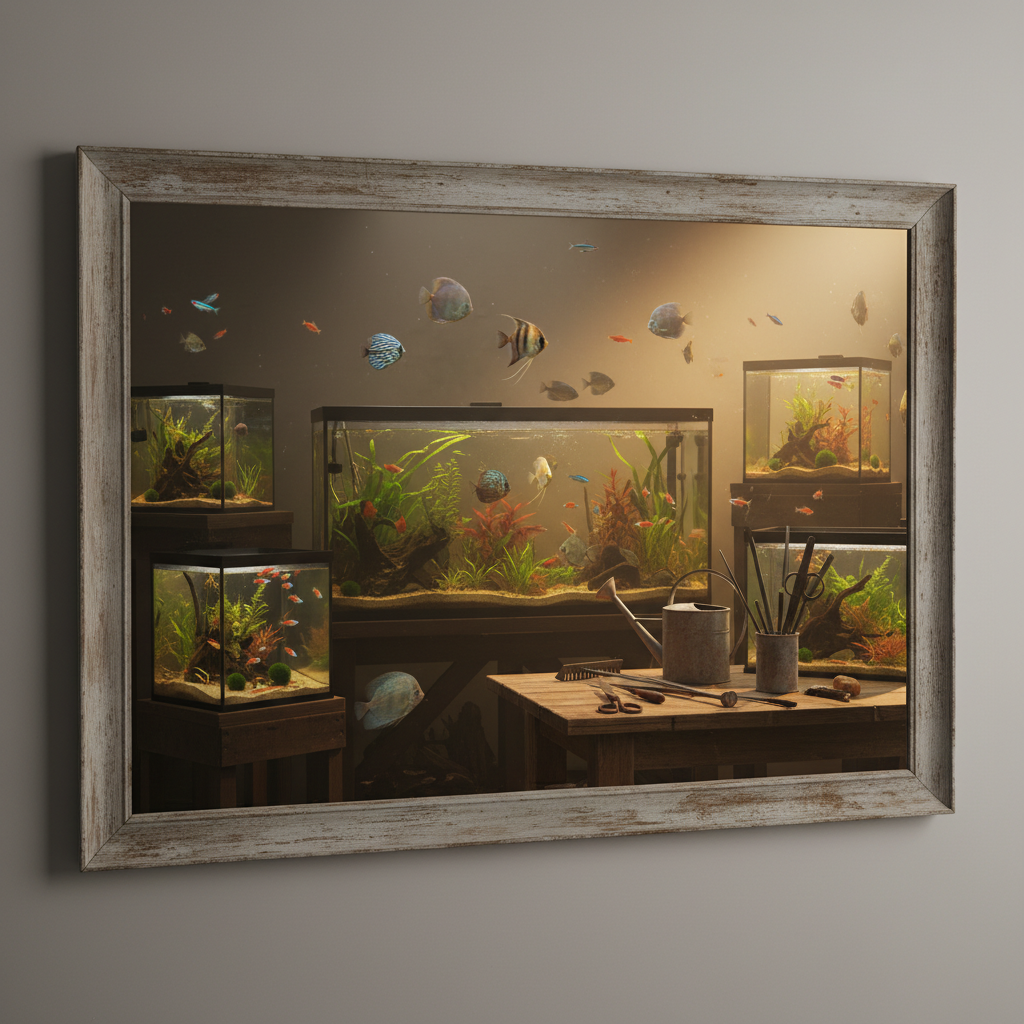
And as I sit here, reflecting on all that I’ve learned from these underwater companions, I can’t help but feel grateful. Grateful for the beauty, the tranquility, and the endless opportunities for learning that the aquarium hobby has brought into my life. It’s more than just a hobby; it’s a passion, a lifestyle, and a constant source of inspiration. So, the next time you see someone gazing intently into an aquarium, remember that they’re not just looking at fish. They’re looking at a world of wonder, a world of learning, and a world of endless possibilities. And who knows, they might just be learning something valuable about themselves in the process.
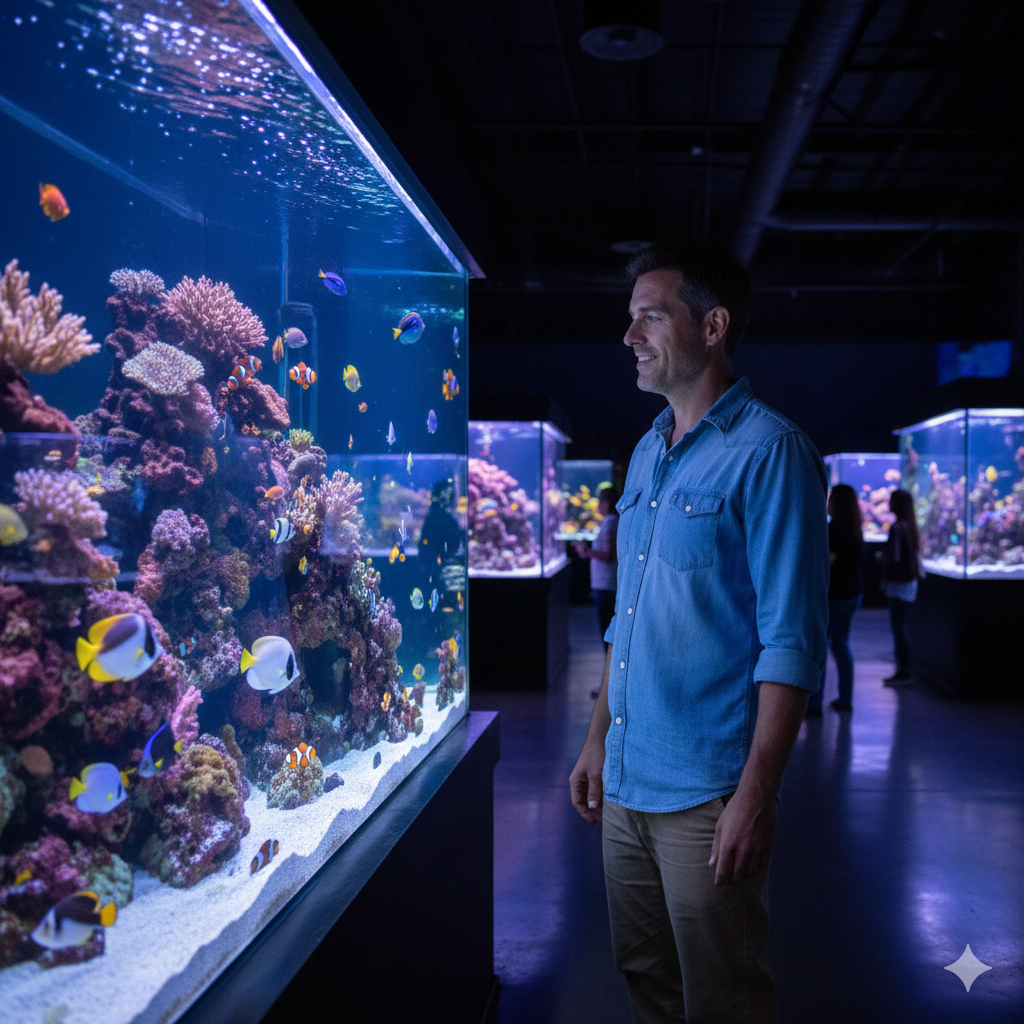
My name is Daniel Carter, I am 35 years old, and I live in the United States. I have been passionate about aquariums for many years, and what started as a simple hobby quickly became a lifelong interest in aquatic life, fish behavior, and responsible tank care.
Through TheBrightLance, I share real experiences, practical knowledge, and honest lessons learned from maintaining different types of aquariums. I enjoy testing equipment, studying fish behavior, improving maintenance routines, and helping beginners avoid common mistakes.
My goal is to make aquarism easier, more ethical, and more enjoyable for everyone — whether you are setting up your very first tank or looking to refine your techniques.