
The Silent Alarms of an Unbalanced Aquarium
Anyone who’s kept an aquarium for any length of time knows this truth: balance is everything. It’s a delicate dance between water chemistry, beneficial bacteria, plant life, and the needs of your finned friends. When that balance tips, even slightly, the consequences can range from a minor nuisance to a full-blown aquatic disaster. I’ve been keeping aquariums for over a decade now, and let me tell you, I’ve seen it all – from algae blooms that turned my tank into a green swamp to mysterious fish illnesses that wiped out entire schools. It’s part of the learning curve, and while it can be frustrating, each imbalance has taught me something valuable about the complex ecosystem I’m trying to create within a glass box.
I live in Orlando, Florida, and the warm climate here presents its own unique set of challenges. Water temperatures can fluctuate wildly, especially during the summer months, and that can throw everything off. But regardless of where you live, understanding the signs of an imbalance is crucial. It’s like learning to read your aquarium’s language – a language spoken in cloudy water, listless fish, and the relentless spread of unwanted algae.
So, what do I do when I sense that something’s not quite right in my aquarium? I don’t panic. I’ve learned that the key is to stay calm, observe carefully, and address the problem methodically. Here’s my go-to strategy.
Step 1: The Detective Work – Observation and Testing
The first step is always observation. I spend time just watching my tank, paying close attention to the behavior of my fish, the condition of my plants, and the overall appearance of the water. Are the fish swimming actively, or are they huddled near the bottom, gasping for air? Are the plants vibrant and green, or are they covered in algae and starting to decay? Is the water crystal clear, or is it cloudy or discolored? These are all important clues that can point to the underlying cause of the imbalance.
Visual Clues: What Your Tank is Telling You
Cloudy water, for instance, can indicate a bacterial bloom, an excess of dissolved organics, or even suspended particles from the substrate. Algae growth, while natural to some extent, can become a problem if it’s excessive. Different types of algae can also indicate different issues. Green algae often thrives in high-light environments with excess nutrients, while brown algae (diatoms) are common in new tanks or tanks with low light. Black beard algae (BBA) is notoriously difficult to get rid of and often indicates an imbalance in CO2 levels.
Fish behavior is another critical indicator. If your fish are flashing (rubbing against objects in the tank), it could be a sign of parasites. If they’re staying near the surface, it could indicate low oxygen levels. If they’re isolating themselves and refusing to eat, it could be a sign of stress or illness.
The Importance of Water Testing
Visual clues are helpful, but they’re not always enough. That’s why regular water testing is essential. I use a liquid test kit to measure the levels of ammonia, nitrite, nitrate, pH, and KH (carbonate hardness). These parameters provide a snapshot of the water chemistry and can help identify potential problems before they become serious.
Ammonia and nitrite should always be at zero in a fully cycled aquarium. The presence of either indicates that the biological filter is not functioning properly. Nitrate is a byproduct of the nitrogen cycle and should be kept below a certain level (usually 20-40 ppm) through regular water changes. pH measures the acidity or alkalinity of the water, and it’s important to maintain a stable pH level that’s appropriate for the fish and plants you’re keeping. KH measures the buffering capacity of the water, which is its ability to resist changes in pH. Low KH can lead to pH swings, which can be stressful for fish.
I typically test my water once a week, but I’ll test more frequently if I suspect a problem. Keeping a log of your test results is also a good idea, as it can help you track trends and identify patterns over time.

Step 2: Identifying the Root Cause
Once I’ve gathered my data – both visual observations and water test results – it’s time to start piecing together the puzzle and identifying the root cause of the imbalance. This often involves a process of elimination, considering various factors and ruling out possibilities one by one.
Overfeeding: A Common Culprit
One of the most common causes of aquarium imbalances is overfeeding. Uneaten food decomposes and releases ammonia, which can overload the biological filter and lead to a spike in ammonia and nitrite levels. I’ve definitely been guilty of this in the past, especially when I first started keeping fish. I thought I was being generous, but I was actually doing more harm than good. Now, I only feed my fish what they can consume in a few minutes, and I make sure to remove any uneaten food promptly.
Insufficient Water Changes
Another common cause is infrequent or insufficient water changes. Water changes help remove nitrates, dissolved organics, and other waste products that can accumulate in the aquarium over time. I typically do a 25-50% water change once a week, depending on the size of my tank and the bioload (the amount of waste produced by the fish and other inhabitants). Neglecting water changes is like neglecting to take out the trash in your house – eventually, things will start to smell and become unhealthy.
Overcrowding and Incompatible Tank Mates
Overcrowding can also contribute to imbalances. Too many fish in a small space can overwhelm the biological filter and lead to a buildup of waste products. It’s important to research the adult size and temperament of the fish you’re keeping and ensure that you have enough space for them to thrive. Similarly, keeping incompatible tank mates can cause stress and lead to health problems. For example, keeping aggressive fish with peaceful fish can create a stressful environment that weakens their immune systems.
Equipment Malfunctions and Substrate Issues
Sometimes, the problem lies with the equipment. A malfunctioning filter, heater, or air pump can all disrupt the delicate balance of the aquarium. It’s important to regularly inspect your equipment and make sure it’s functioning properly. Finally, issues with the substrate can also cause imbalances. If the substrate is too compacted, it can create anaerobic zones where harmful bacteria can thrive. Regularly vacuuming the substrate during water changes can help prevent this.
Step 3: Taking Corrective Action – A Gradual Approach
Once I’ve identified the root cause of the imbalance, it’s time to take corrective action. However, it’s important to do this gradually and avoid making any sudden changes that could further stress the fish. The key is to restore balance slowly and steadily.
Addressing Ammonia and Nitrite Spikes
If I’m dealing with an ammonia or nitrite spike, the first thing I do is perform a large water change (50-75%). This helps to immediately reduce the levels of these toxic compounds. I also add a water conditioner that neutralizes ammonia and nitrite, such as Seachem Prime. Additionally, I cut back on feeding to reduce the bioload and give the biological filter a chance to catch up.
In severe cases, I may consider using a product that contains beneficial bacteria to help boost the biological filter. However, I’m always cautious when using these products, as some of them can contain unwanted additives. I prefer to rely on natural methods whenever possible.
Controlling Algae Growth
If algae is the problem, I start by addressing the underlying cause. If it’s due to excess nutrients, I’ll increase the frequency of water changes and reduce feeding. If it’s due to high light levels, I’ll reduce the photoperiod (the amount of time the lights are on each day). I also manually remove as much algae as possible, using an algae scraper or a toothbrush.
In some cases, I may consider adding algae-eating fish or invertebrates to the tank. However, I’m careful to choose species that are compatible with my existing fish and that won’t become a problem themselves. For example, I’ve had good luck with Otocinclus catfish, which are small and peaceful algae eaters.

Adjusting pH and KH
If the pH is unstable or the KH is too low, I’ll take steps to adjust these parameters. I typically use crushed coral or aragonite in the filter or substrate to raise KH and buffer the pH. However, it’s important to do this gradually, as sudden changes in pH can be harmful to fish. I monitor the pH and KH levels closely and make small adjustments as needed until I reach the desired levels.
Sometimes, tap water can be the source of pH or KH problems. If this is the case, I may consider using reverse osmosis (RO) water or a water softener to improve the water quality. However, RO water lacks essential minerals and trace elements, so it’s important to remineralize it before adding it to the aquarium.
The Importance of Patience
No matter what corrective action I take, I always remember to be patient. It takes time for an aquarium to re-establish its balance, and rushing the process can often do more harm than good. I monitor the water parameters closely, observe the fish for any signs of stress, and make adjustments as needed until everything is back on track.
Step 4: Prevention – Maintaining a Healthy Ecosystem
Once I’ve restored balance to my aquarium, my focus shifts to prevention. Maintaining a healthy ecosystem is an ongoing process that requires consistent effort and attention. Here are some of the key things I do to prevent imbalances from occurring in the first place.
Regular Water Changes and Substrate Vacuuming
I continue to perform regular water changes and vacuum the substrate to remove nitrates, dissolved organics, and other waste products. I also make sure to dechlorinate the tap water before adding it to the aquarium, as chlorine can be harmful to fish and beneficial bacteria.
Proper Filtration and Circulation
I ensure that my filter is properly sized for my tank and that it’s functioning efficiently. I also clean the filter media regularly to remove debris and maintain good water flow. Good circulation is important for distributing nutrients and oxygen throughout the tank and preventing dead spots where harmful bacteria can thrive.
Balanced Lighting and CO2 Levels
If I have live plants in my aquarium, I make sure to provide them with adequate lighting and CO2. The amount of light and CO2 needed will depend on the type of plants I’m keeping. I also monitor the nutrient levels in the water to ensure that the plants are getting the nutrients they need to thrive. Healthy plants help to consume nitrates and compete with algae, contributing to a balanced ecosystem.
Quarantine New Arrivals
Whenever I add new fish or plants to my aquarium, I quarantine them for at least two weeks before introducing them to the main tank. This helps to prevent the introduction of diseases or parasites that could disrupt the balance of the ecosystem. I observe the new arrivals closely for any signs of illness and treat them accordingly before adding them to the main tank.
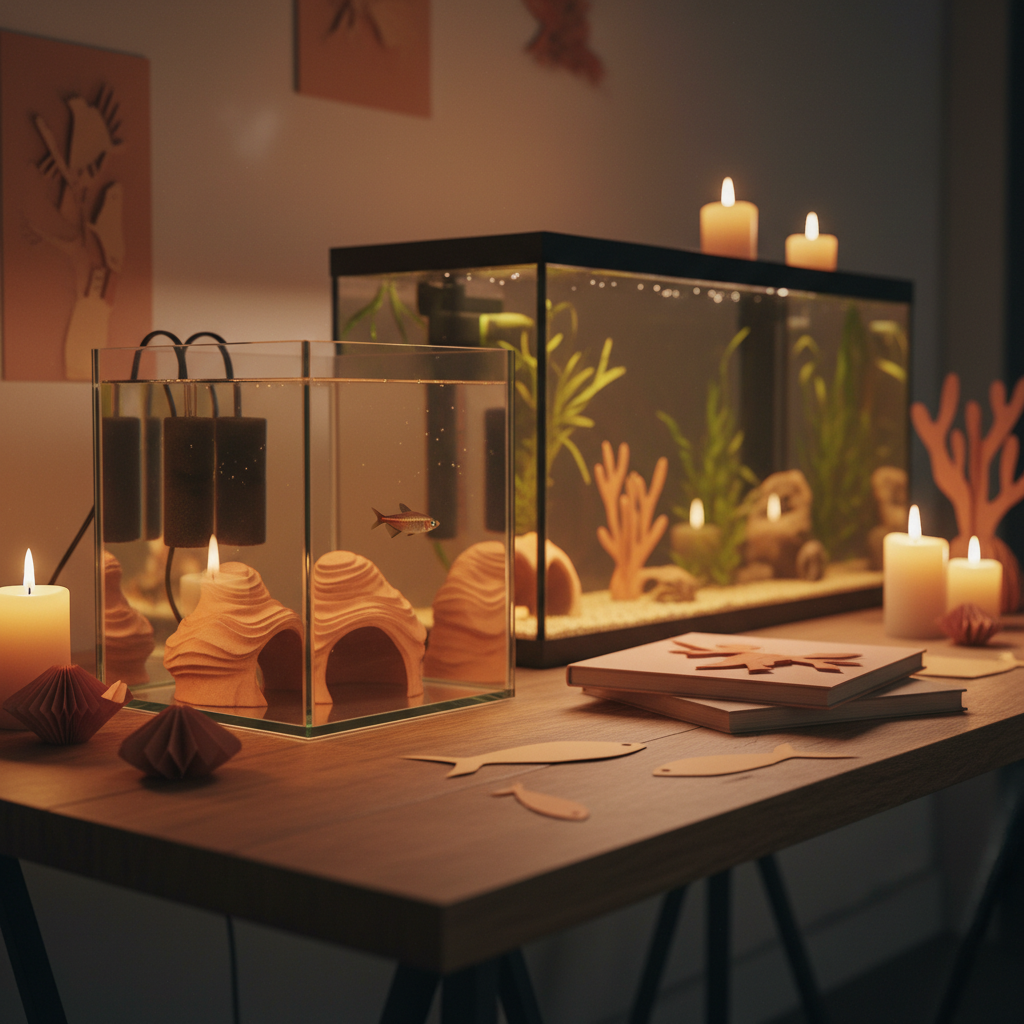
Careful Stocking and Feeding Practices
I’m careful not to overcrowd my aquarium and to choose tank mates that are compatible with each other. I also avoid overfeeding my fish and make sure to remove any uneaten food promptly. I feed my fish a varied diet that includes high-quality flakes, pellets, and frozen foods.
The Importance of Observation and Adaptation
Finally, I continue to observe my aquarium closely and adapt my maintenance practices as needed. Every aquarium is unique, and what works for one tank may not work for another. I’m always learning and experimenting, and I’m not afraid to make changes if something isn’t working. The key is to be proactive and to address problems before they become serious.
Case Study: The Great Green Algae Bloom of 2018
I remember one particularly challenging experience I had back in 2018. It was the height of summer, and the temperature in my apartment was consistently above 80 degrees Fahrenheit. Despite my best efforts, I couldn’t seem to keep the water temperature in my aquarium below 82 degrees. As a result, I experienced a massive green algae bloom that turned my tank into a pea soup. It was a complete disaster.
I tried everything I could think of to get rid of the algae. I increased the frequency of water changes, reduced the photoperiod, and even added a UV sterilizer to the tank. But nothing seemed to work. The algae just kept coming back stronger than ever.
Finally, I realized that the problem wasn’t just the high water temperature. It was also the fact that I was overfeeding my fish. The high temperature was increasing their metabolism, which meant they were eating more food. But I wasn’t adjusting my feeding schedule accordingly. As a result, there was an excess of nutrients in the water, which was fueling the algae bloom.
Once I realized this, I cut back on feeding and started adding a liquid carbon supplement to the tank. Liquid carbon helps to inhibit algae growth and provide plants with a source of carbon for photosynthesis. Within a few weeks, the algae bloom started to subside, and the water gradually cleared up. It was a long and frustrating process, but I eventually managed to restore balance to my aquarium.
That experience taught me the importance of understanding the complex interplay of factors that can affect an aquarium’s ecosystem. It also taught me the importance of being patient and persistent when dealing with problems. Sometimes, it takes time to figure out what’s going wrong, and it may require a combination of different approaches to solve the problem.
The Enduring Allure of the Balanced Aquarium
Keeping an aquarium is a challenging but rewarding hobby. It requires a commitment to learning, patience, and consistent effort. But the rewards are well worth it. A healthy and balanced aquarium is a beautiful and fascinating microcosm of the natural world. It’s a source of endless fascination and a reminder of the delicate balance that exists in nature.
Over the years, I’ve learned that the key to success in aquascaping is to approach it with a spirit of curiosity and a willingness to learn from your mistakes. There will be times when things go wrong, and you’ll feel like giving up. But if you persevere, you’ll eventually develop the knowledge and skills you need to create and maintain a thriving aquatic ecosystem. And that’s a truly rewarding experience.

So, the next time your aquarium loses its balance, don’t panic. Take a deep breath, observe carefully, and follow the steps I’ve outlined in this article. With a little patience and effort, you can restore balance to your aquarium and create a thriving aquatic ecosystem that you can enjoy for years to come. And remember, every challenge is an opportunity to learn and grow as an aquarist. Happy fishkeeping!
My name is Daniel Carter, I am 35 years old, and I live in the United States. I have been passionate about aquariums for many years, and what started as a simple hobby quickly became a lifelong interest in aquatic life, fish behavior, and responsible tank care.
Through TheBrightLance, I share real experiences, practical knowledge, and honest lessons learned from maintaining different types of aquariums. I enjoy testing equipment, studying fish behavior, improving maintenance routines, and helping beginners avoid common mistakes.
My goal is to make aquarism easier, more ethical, and more enjoyable for everyone — whether you are setting up your very first tank or looking to refine your techniques.