
The Dreaded Moment: Spotting the Problem
Okay, let’s be honest. As much as I love my aquariums – and trust me, I really love them – there’s always that little bit of anxiety that creeps in when something just doesn’t look quite right. It’s that feeling in the pit of your stomach when you glance over at your tank and something’s off. Maybe the water’s a little cloudy, or one of your fish is acting strangely. Whatever it is, that’s the moment I know it’s time to put on my detective hat and start investigating.
I’ve been keeping freshwater aquariums for over a decade now, and I’ve learned (mostly through trial and error, I admit) that addressing problems early is absolutely crucial. A small issue that’s ignored can quickly snowball into a major crisis, potentially wiping out your entire tank. So, when that “something’s not right” feeling hits, I don’t procrastinate. I dive in, armed with my knowledge and a good dose of patience.
But where do I even begin? Over the years, I’ve developed a systematic approach to troubleshooting aquarium issues. I have a mental checklist of things I examine first, things that, in my experience, are often the root cause of many common aquarium problems. I’m going to share that checklist with you now, hoping it saves you some heartache and helps you keep your underwater world thriving.
My First Line of Defense: Visual Inspection
Before I even think about grabbing test kits or doing water changes, I start with a thorough visual inspection. This might seem obvious, but you’d be surprised how much you can learn just by carefully observing your aquarium. I spend a good five to ten minutes just watching, looking for any deviations from the norm.
Water Clarity and Color
First and foremost, I check the water. Is it crystal clear, or is there a haze? A cloudy tank is a major red flag. It could indicate a bacterial bloom, excessive algae growth, or even suspended particles from the substrate. I also pay attention to the color of the water. A greenish tint usually points to algae, while a yellowish or brownish hue can suggest the presence of tannins from driftwood or decaying organic matter. I remember once adding a new piece of driftwood to my tank, and within a week, the water turned a murky brown. I panicked at first, thinking something terrible was happening, but after a little research, I realized it was just the tannins leaching out. A few water changes and some activated carbon in my filter cleared it right up.
Fish Behavior
Next, I observe my fish closely. Are they behaving normally? Are they swimming actively, eating well, and interacting with each other peacefully? Any changes in behavior are a cause for concern. Are they gasping at the surface? This could indicate low oxygen levels. Are they flashing against objects in the tank? This could be a sign of parasites. Are they isolating themselves or showing signs of lethargy? This could mean they’re sick or stressed. I had a scare a few years ago when one of my favorite angelfish started hiding in the corner of the tank and refused to eat. I initially thought it was just being moody, but after a few days, I noticed white spots on its fins. It turned out it had ich, a common parasitic infection. Thankfully, I caught it early and was able to treat it successfully with medication.
Plant Health
If you have live plants in your aquarium, their health is another important indicator of water quality. Are the leaves vibrant and green, or are they turning yellow or brown? Are they growing vigorously, or are they stunted and wilting? Yellowing leaves can indicate nutrient deficiencies, while brown spots can be a sign of algae or poor water circulation. I once neglected to fertilize my plants for a few weeks, and they started to look pale and sickly. A little bit of liquid fertilizer brought them back to life in no time.
Visual Signs on Fish
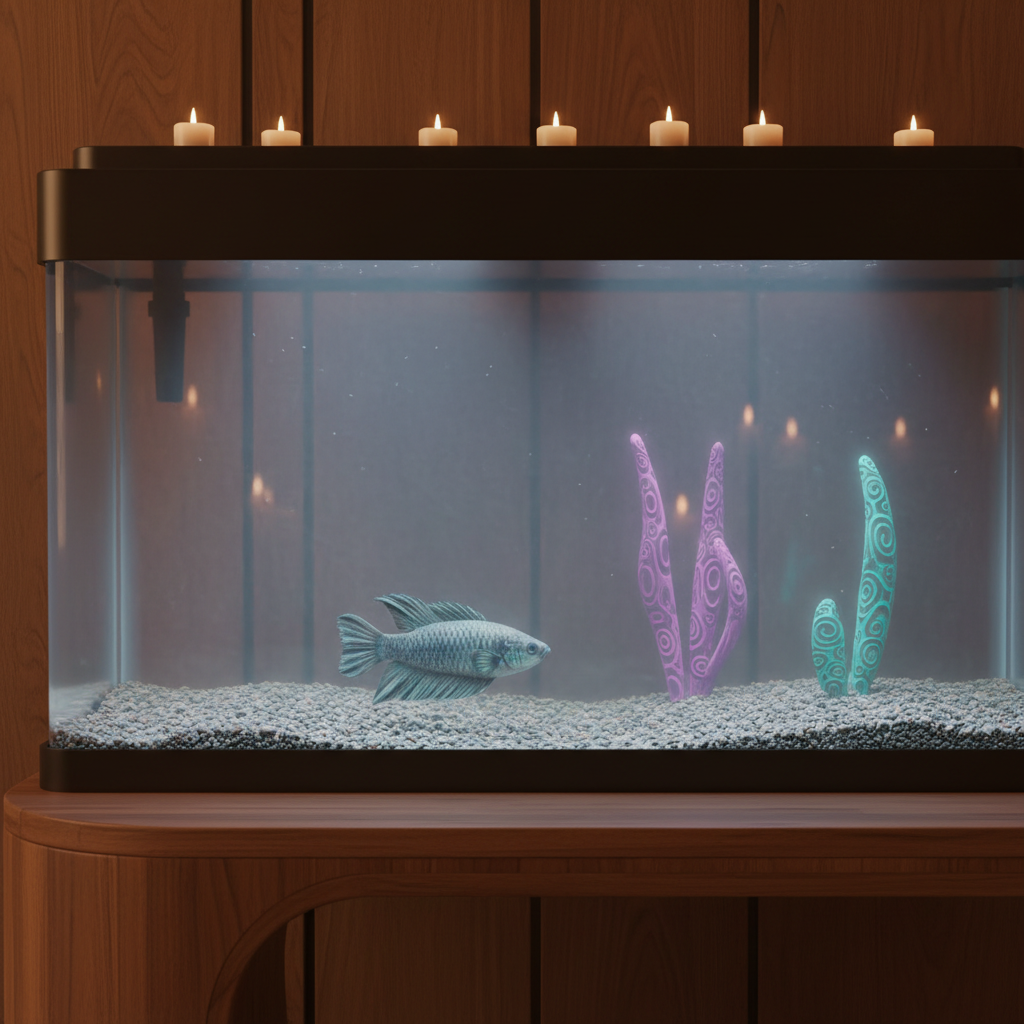
Finally, I carefully examine my fish for any visible signs of disease or injury. Are there any white spots, fuzzy patches, or open sores? Are their fins frayed or clamped? Are their eyes cloudy or bulging? These are all telltale signs of potential problems. I always keep a magnifying glass handy to get a closer look at any suspicious spots or blemishes. It’s amazing how much detail you can see with just a little bit of magnification.
The Numbers Game: Water Parameter Testing
After the visual inspection, it’s time to break out the test kits. I know, I know, testing water parameters can be a bit tedious, but it’s absolutely essential for maintaining a healthy aquarium. Water parameters are like the vital signs of your tank. They tell you what’s going on chemically and biologically, and they can often reveal problems that aren’t immediately obvious from a visual inspection.
Ammonia, Nitrite, and Nitrate: The Nitrogen Cycle
The first and most important parameters I test for are ammonia, nitrite, and nitrate. These are the key players in the nitrogen cycle, the biological process that breaks down fish waste and converts it into less harmful substances. Ammonia and nitrite are highly toxic to fish, even in small amounts, while nitrate is less toxic but can still be harmful at high levels. A properly cycled aquarium should have zero ammonia and zero nitrite, with a measurable amount of nitrate. If I detect any ammonia or nitrite, it means the nitrogen cycle is not functioning properly, and I need to take immediate action to correct it. This usually involves doing a large water change and adding a bacterial supplement to help boost the beneficial bacteria population. I remember when I first started keeping aquariums, I didn’t understand the importance of the nitrogen cycle, and I lost several fish due to ammonia poisoning. It was a painful lesson, but it taught me the importance of regular water testing and maintenance.
pH: Acidity vs. Alkalinity
The next parameter I test is pH, which measures the acidity or alkalinity of the water. Most freshwater fish prefer a pH between 6.5 and 7.5, but the ideal pH can vary depending on the species. It’s important to maintain a stable pH, as sudden fluctuations can stress fish and make them more susceptible to disease. If the pH is too high or too low, I can adjust it using commercially available pH adjusters. However, I prefer to make small, gradual adjustments, as drastic changes can be harmful. I also try to identify the underlying cause of the pH imbalance, such as excessive carbon dioxide levels or the presence of certain rocks or substrates.
GH and KH: General and Carbonate Hardness
I also test for GH (general hardness) and KH (carbonate hardness). GH measures the concentration of calcium and magnesium ions in the water, while KH measures the water’s buffering capacity, its ability to resist changes in pH. These parameters are important for maintaining stable water chemistry and providing essential minerals for fish and plants. If the GH or KH is too low, I can add commercially available mineral supplements to increase them. Again, I prefer to make small, gradual adjustments to avoid stressing my fish.

Temperature: Keeping it Consistent
Finally, I check the water temperature. Most tropical fish prefer a temperature between 75 and 82 degrees Fahrenheit. I use a reliable aquarium heater to maintain a consistent temperature, and I monitor the temperature regularly with a thermometer. Sudden temperature fluctuations can stress fish and make them more susceptible to disease. I once had a heater malfunction during a cold snap, and the temperature in my tank plummeted overnight. Fortunately, I caught it in time and was able to replace the heater before any of my fish were seriously affected.
Filter Functionality: The Heart of Your Aquarium
Your filter is the heart of your aquarium. It’s responsible for removing waste, clarifying the water, and providing a home for beneficial bacteria. If your filter isn’t functioning properly, it can quickly lead to a buildup of toxins and a decline in water quality. That’s why I always check its functionality.
Flow Rate and Media Condition
The first thing I check is the flow rate. Is the filter providing adequate circulation throughout the tank? A weak flow rate can indicate a clogged filter, a failing pump, or a buildup of debris in the intake tube. I also inspect the filter media. Is it clean and free of debris? Dirty filter media can reduce the filter’s efficiency and harbor harmful bacteria. I clean my filter media regularly, but I never replace it all at once, as this can disrupt the nitrogen cycle. I usually clean half of the media at a time, allowing the beneficial bacteria to repopulate.
Mechanical, Chemical, and Biological Filtration
I also make sure that all three types of filtration – mechanical, chemical, and biological – are functioning properly. Mechanical filtration removes particulate matter, such as fish waste and uneaten food. Chemical filtration removes dissolved pollutants, such as chlorine and chloramine. Biological filtration converts harmful ammonia and nitrite into less harmful nitrate. I use a combination of filter floss, sponges, activated carbon, and bio-balls to provide all three types of filtration. I replace the activated carbon regularly, as it loses its effectiveness over time. I also monitor the bio-balls to make sure they’re not clogged with debris.
Regular Maintenance is Key
Regular filter maintenance is essential for keeping your aquarium healthy. I clean my filter at least once a month, and I replace the filter media as needed. I also inspect the filter’s impeller and motor to make sure they’re running smoothly. A well-maintained filter will provide years of reliable service and help keep your fish happy and healthy.
Substrate Examination: The Hidden World Below
Often overlooked, the substrate at the bottom of your aquarium can be a significant source of problems if not properly maintained. I take a look at it to see if there are any issues. It’s like the basement of your aquarium – if it’s messy, the whole house can suffer.
Detritus Buildup
One of the biggest problems with substrate is the buildup of detritus, which is a fancy word for decaying organic matter. Detritus can accumulate from uneaten food, fish waste, and decaying plant matter. Over time, it can create anaerobic zones in the substrate, where oxygen is depleted and harmful bacteria can thrive. These bacteria can produce toxic gases, such as hydrogen sulfide, which can be deadly to fish. I use a gravel vacuum to remove detritus from the substrate during water changes. This helps to keep the substrate clean and prevent the buildup of harmful gases.
Substrate Type and Depth
The type and depth of your substrate can also affect water quality. Fine substrates, such as sand, can become compacted and restrict water flow, leading to anaerobic zones. Coarse substrates, such as gravel, allow for better water flow but can also trap debris. I prefer to use a medium-sized gravel substrate, as it provides a good balance between water flow and debris trapping. I also maintain a substrate depth of about 2 inches, which allows for adequate root growth for plants without creating excessive anaerobic zones.

Planting and Root Systems
If you have live plants in your aquarium, their root systems can also affect the substrate. Plant roots help to oxygenate the substrate and prevent the buildup of anaerobic zones. However, decaying plant roots can also contribute to detritus buildup. I trim my plant roots regularly to prevent them from becoming too long and decaying. I also use root tabs to provide essential nutrients for my plants. These tabs release nutrients slowly over time, providing a sustained source of food for the plants and helping to keep the substrate healthy.
Equipment Check: Heaters, Lights, and More
Beyond the filter, other equipment plays a vital role in your aquarium’s ecosystem. A malfunctioning heater or inadequate lighting can throw everything off balance. So, I make sure to check everything.
Heater Functionality and Placement
As I mentioned earlier, a reliable heater is essential for maintaining a consistent water temperature. I check my heater regularly to make sure it’s functioning properly. I also make sure it’s properly placed in the tank, away from direct contact with the substrate or decorations. A heater that’s too close to the substrate can overheat, while a heater that’s not properly submerged can burn out. I use a submersible heater with a built-in thermostat, which allows me to set the desired temperature and maintain it automatically.
Lighting Intensity and Duration
Lighting is another important factor, especially if you have live plants. Plants need adequate light to photosynthesize and grow. The intensity and duration of lighting can also affect algae growth. Too much light can lead to excessive algae growth, while too little light can stunt plant growth. I use a timer to control the lighting duration, providing my plants with about 8-10 hours of light per day. I also use a full-spectrum LED light, which provides the optimal wavelengths for plant growth. I adjust the lighting intensity based on the needs of my plants and the amount of algae growth in the tank.
Air Pumps and Circulation
Finally, I check my air pump and circulation devices. Air pumps help to oxygenate the water, which is essential for fish and beneficial bacteria. Circulation devices, such as powerheads, help to distribute nutrients and prevent dead spots in the tank. I make sure my air pump is providing adequate aeration and that my circulation devices are properly positioned to maximize water flow. I also clean my air stones and circulation devices regularly to prevent them from becoming clogged with debris.
The Final Piece: Observing and Adjusting
After going through my checklist, I take a step back and observe the aquarium as a whole. Are there any lingering signs of problems? Are the fish behaving normally? Are the plants growing well? Based on my observations, I make any necessary adjustments. This might involve doing a water change, adjusting the lighting, adding fertilizer, or treating the fish for disease.

The key is to be proactive and to address problems early. Don’t wait until your fish are dying or your plants are wilting to take action. By regularly inspecting your aquarium, testing your water parameters, and maintaining your equipment, you can prevent many common problems and keep your underwater world thriving. Remember that keeping an aquarium is an ongoing process of learning and adjustment. There will be challenges along the way, but with patience and perseverance, you can create a beautiful and healthy environment for your fish and plants. And trust me, the reward is well worth the effort. It’s incredibly satisfying to watch your aquarium flourish, knowing that you’ve created a little slice of paradise in your own home. The peace and tranquility that a healthy aquarium brings is something truly special, and it’s something I wouldn’t trade for anything. So, keep learning, keep observing, and keep enjoying the wonderful world of aquariums!
My name is Daniel Carter, I am 35 years old, and I live in the United States. I have been passionate about aquariums for many years, and what started as a simple hobby quickly became a lifelong interest in aquatic life, fish behavior, and responsible tank care.
Through TheBrightLance, I share real experiences, practical knowledge, and honest lessons learned from maintaining different types of aquariums. I enjoy testing equipment, studying fish behavior, improving maintenance routines, and helping beginners avoid common mistakes.
My goal is to make aquarism easier, more ethical, and more enjoyable for everyone — whether you are setting up your very first tank or looking to refine your techniques.