
My Early Days in Aquascaping and the Pumping Dilemma
When I first dipped my toes – or rather, my entire arm – into the world of aquascaping over a decade ago, I was brimming with enthusiasm but painfully short on knowledge. Like many beginners, I was captivated by the visual appeal of a thriving aquarium, envisioning a miniature underwater paradise in my living room. Little did I know that beneath the surface of shimmering water and colorful fish lay a complex web of biological processes and technical requirements. One of the earliest and most persistent challenges I faced was choosing the right aquarium pump. It sounds simple enough, right? A pump is just a pump. Boy, was I wrong.
I remember my initial forays into aquarium stores, overwhelmed by the sheer variety of pumps on display. Canister filters, powerheads, air pumps, wave makers – the options seemed endless, each promising superior performance and crystal-clear water. Blinded by marketing jargon and lacking a clear understanding of my tank’s specific needs, I made several ill-advised purchases that ultimately cost me time, money, and, most tragically, the well-being of my fish.
The Underpowered Air Pump Fiasco
My first mistake was grossly underestimating the importance of oxygenation. I had a small, 10-gallon tank initially, and I figured a tiny air pump would suffice. It was cheap, quiet (or so the label claimed), and barely noticeable. I set it up with an air stone, expecting a gentle stream of bubbles to keep my fish happy and healthy. What I got was far from that.
Within a few weeks, I noticed my fish acting lethargic. They were hanging near the surface, gasping for air. The plants weren’t thriving, and the water started to get a bit cloudy, even with regular water changes. It finally dawned on me that the tiny air pump was woefully inadequate for the task. The flow was minimal, and the oxygen it introduced into the water was negligible. I had essentially created a stagnant, oxygen-deprived environment. The cheap pump wasn’t providing enough surface agitation to facilitate proper gas exchange. This led to a buildup of carbon dioxide and a depletion of oxygen, stressing my fish and hindering the growth of my aquatic plants. It was a harsh lesson, but one that taught me the crucial role of proper aeration.
I upgraded to a more powerful air pump with a larger air stone, and within days, the difference was remarkable. My fish became more active, their colors brightened, and the plants started to show signs of new growth. It was a clear demonstration of how a seemingly small piece of equipment could have a profound impact on the overall health of the aquarium ecosystem. This experience instilled in me the importance of researching and selecting equipment based on the specific needs of my tank, rather than simply opting for the cheapest or most convenient option.
The Overkill Powerhead Predicament
Emboldened by my success with the air pump upgrade, I decided to tackle another perceived problem: insufficient water circulation in my larger, 29-gallon tank. I had read about the benefits of strong water flow for nutrient distribution and waste removal, so I went out and bought a powerful powerhead, figuring “more is better.” I was wrong again.
The powerhead I chose was designed for much larger tanks, and the resulting current in my 29-gallon aquarium was practically a hurricane. My poor fish were being tossed around like ragdolls, struggling to swim against the relentless flow. The plants were uprooted and scattered, and the substrate was constantly being stirred up, creating a perpetual cloud of debris. The tank looked like a miniature washing machine, and my fish were clearly stressed and unhappy.
I quickly realized that I had overcorrected and created an equally undesirable environment. While strong water flow can be beneficial, it’s crucial to match the flow rate to the size and inhabitants of the tank. Some fish prefer gentle currents, while others thrive in more turbulent conditions. Similarly, some plants are delicate and easily damaged by strong flow, while others can tolerate or even benefit from it.
This experience taught me the importance of balance and moderation. I replaced the overpowered powerhead with a smaller, adjustable model that allowed me to fine-tune the flow rate to suit the needs of my fish and plants. I also learned to observe my aquarium closely, paying attention to the behavior of my fish and the growth of my plants to identify any signs of stress or imbalance. It’s all about finding the “sweet spot” where the water flow is strong enough to promote healthy circulation but gentle enough to avoid disrupting the ecosystem.
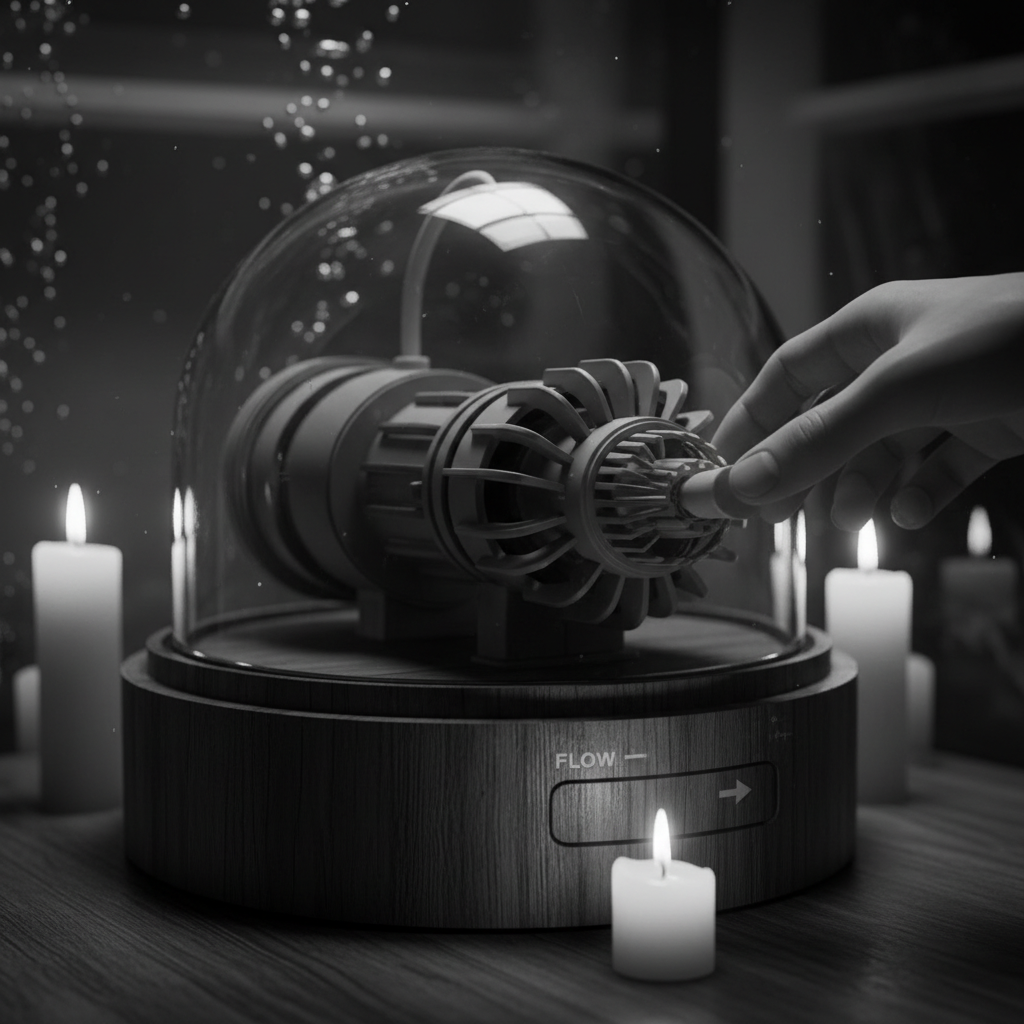
Canister Filter Confusion: Flow Rate vs. Tank Size
Moving beyond air pumps and powerheads, I ventured into the world of canister filters. These external filtration systems promised superior water clarity and biological filtration, and I was eager to upgrade from my hang-on-back filter. However, I quickly discovered that choosing the right canister filter was not as straightforward as I had imagined. The main challenge was understanding the relationship between flow rate and tank size.
The Under-Filtration Trap
Initially, I opted for a canister filter with a flow rate that was seemingly adequate for my 55-gallon tank. However, after a few months, I noticed that the water clarity was not as good as I had hoped, and the levels of nitrates were consistently high. I realized that while the flow rate might have been sufficient on paper, it wasn’t taking into account the actual bioload of my tank, which was quite high due to a large number of fish and plants.
The problem was that the filter wasn’t processing enough water volume per hour to effectively remove waste products and maintain optimal water quality. The under-filtration led to a buildup of organic matter, which fueled the growth of algae and contributed to the elevated nitrate levels. It was a classic case of choosing a filter based on the manufacturer’s recommendations without considering the specific needs of my aquarium.
The Over-Filtration Myth (and the Truth)
Determined to avoid the under-filtration trap, I decided to go in the opposite direction and purchase a canister filter with a significantly higher flow rate than recommended for my tank. I reasoned that “over-filtration” was better than under-filtration, and that the extra flow would only improve water quality. While there’s a grain of truth to the idea of over-filtration being *less bad* than under-filtration, I learned that there *is* such a thing as too much flow, especially when it comes to canister filters.
The excessively high flow rate caused several problems. First, it created strong currents throughout the tank, stressing my fish and uprooting my plants, similar to the powerhead fiasco. Second, it reduced the contact time between the water and the filter media, diminishing the effectiveness of the biological filtration. The water was rushing through the filter so quickly that the beneficial bacteria didn’t have enough time to break down the waste products. Finally, the powerful pump consumed a significant amount of energy, increasing my electricity bill unnecessarily.
The lesson here is that choosing a canister filter is not just about flow rate, but also about finding the right balance between flow rate, tank size, and bioload. A good rule of thumb is to aim for a flow rate that is at least four to six times the volume of the tank per hour, but to adjust the flow rate based on the specific needs of your aquarium. Also, always check that your fish and plant species aren’t being overly disturbed by the flow rate.
The Noise Factor: When Silence is Golden (and Expensive)
Beyond flow rate and filtration capacity, another crucial factor that I often overlooked in my early days was the noise level of aquarium pumps. A noisy pump can be a constant source of annoyance, especially if the aquarium is located in a living room or bedroom. I learned this the hard way, after purchasing a series of pumps that sounded like miniature jet engines.
The Budget-Friendly Buzzsaw
My first foray into aquarium pumps was driven primarily by price. I opted for the cheapest models I could find, figuring that they all performed essentially the same function. What I didn’t realize was that the lower price often came at the expense of quality and noise reduction. These budget-friendly pumps were incredibly loud, emitting a constant buzzing and rattling that permeated the entire house. It was like living next to a construction site, and it drove me absolutely crazy.
I tried everything to dampen the noise, from placing the pump on a rubber mat to wrapping it in towels, but nothing seemed to work. The vibrations were so intense that they resonated through the entire aquarium stand, amplifying the noise even further. Eventually, I had to concede defeat and replace the noisy pumps with quieter models. The experience taught me that sometimes, it’s worth investing a little more money to get a pump that won’t drive you insane.
The Silent Assassin (and its Price Tag)
After suffering through the noisy pumps, I decided to splurge on a high-end, “silent” aquarium pump. The price tag was significantly higher than anything I had purchased before, but I was desperate for some peace and quiet. The pump lived up to its promise, operating almost silently. I could finally enjoy my aquarium without being bombarded by a constant barrage of noise. Or so I thought…
While the pump itself was indeed quiet, it soon became apparent that the vibrations were still being transmitted to the aquarium stand, creating a subtle but noticeable hum. It wasn’t as bad as the buzzing of the budget-friendly pumps, but it was still enough to be annoying. I realized that even the quietest pump could become a source of noise if it wasn’t properly isolated from its surroundings.
This experience taught me the importance of not only choosing a quiet pump, but also taking steps to minimize vibrations. I placed the pump on a thick foam pad, and I made sure that all the tubing was properly secured to prevent rattling. These simple measures made a significant difference, and I was finally able to enjoy my aquarium in peace and quiet. I’ve since found that certain brands are just naturally quieter than others. Do your research and read reviews!

The Maintenance Misconceptions: Cleanliness is Next to Fishliness
Choosing the right aquarium pump is only half the battle. Maintaining it properly is equally important, both for its longevity and for the health of your aquarium. In my early days, I was woefully ignorant of the maintenance requirements of aquarium pumps, leading to a series of avoidable problems.
The Neglect Nightmare
My initial approach to pump maintenance was, to put it mildly, neglectful. I assumed that as long as the pump was running, it was doing its job. I rarely bothered to clean it, inspect it, or even check for any signs of wear and tear. This neglect eventually caught up with me.
Over time, debris and algae accumulated inside the pump, reducing its efficiency and increasing its noise level. The impeller became clogged, causing the motor to overheat and eventually burn out. The pump went from a quiet hum to a loud grinding noise, and then finally, it stopped working altogether. I was left with a dead pump, a cloudy tank, and a lot of regret. Regular cleaning is key to avoiding such disaster.
The Overzealous Obsession
After experiencing the consequences of neglect, I swung to the opposite extreme and became obsessively focused on pump maintenance. I cleaned the pump every week, disassembling it completely and scrubbing every nook and cranny. While this level of attention was certainly better than neglect, it was also unnecessary and potentially harmful.
The frequent cleaning disrupted the biological balance of the pump, killing off the beneficial bacteria that had colonized the filter media. It also wore down the pump’s components, shortening its lifespan. I was essentially over-maintaining the pump, doing more harm than good. It’s easy to get carried away!
I eventually learned to strike a balance between neglect and obsession. I now clean my aquarium pumps every few months, depending on the type of pump and the bioload of the tank. I use a soft brush to remove any debris or algae, and I avoid using harsh chemicals that could harm the beneficial bacteria. I also inspect the pump regularly for any signs of wear and tear, and I replace any worn parts as needed.
Wave Makers and Reef Tanks: A Salty Tale
While my primary experience lies with freshwater aquariums, I did briefly venture into the world of reef tanks a few years ago. This foray exposed me to a whole new level of complexity when it comes to aquarium pumps, particularly the use of wave makers. Wave makers are specialized pumps designed to create strong, turbulent water flow in reef tanks, mimicking the natural conditions of coral reefs.
The Beginner’s Bluff
I jumped into reef keeping with the same overconfidence that I displayed when I started with freshwater tanks. I figured that if I could handle a freshwater aquarium, a reef tank would be a piece of cake. I quickly learned that I was sorely mistaken. Reef tanks are far more demanding and require a much deeper understanding of water chemistry, lighting, and circulation.
I purchased a wave maker without fully understanding its purpose or how to properly use it. I simply plugged it in and let it run, assuming that it would automatically create the ideal conditions for my corals. The result was a chaotic mess. The wave maker created strong, oscillating currents that stirred up the substrate, clouded the water, and stressed my corals.
The Coral Comeuppance
The corals, which are particularly sensitive to water flow, began to bleach and die. I realized that I had created an unsuitable environment for them. The wave maker was too powerful for my tank, and I hadn’t properly acclimated the corals to the strong currents.
I sought advice from experienced reef keepers, who explained the importance of choosing the right wave maker for the size and shape of the tank, as well as the specific needs of the corals. They also emphasized the need to gradually increase the flow rate over time, allowing the corals to adapt to the new conditions. I ended up selling the reef tank and returning to my freshwater roots, but the experience taught me a valuable lesson about the importance of humility and continuous learning in the aquarium hobby. It also made me appreciate the relative simplicity of freshwater aquariums.

Lessons Learned: My Aquarium Pump Do’s and Don’ts
After years of trial and error, I’ve compiled a list of do’s and don’ts when it comes to choosing and maintaining aquarium pumps. These are based on my personal experiences and the hard-earned lessons I’ve learned along the way.
Do Your Research
Before buying any aquarium pump, take the time to research the different types of pumps available and their specific applications. Consider the size of your tank, the type of fish and plants you keep, and your budget. Read reviews and ask for recommendations from experienced aquarists. Don’t just grab the cheapest pump on the shelf without understanding its capabilities and limitations.
Don’t Overlook Flow Rate
Flow rate is a critical factor to consider when choosing an aquarium pump. Make sure the pump has a flow rate that is appropriate for the size and bioload of your tank. As a general rule, aim for a flow rate that is at least four to six times the volume of the tank per hour. However, adjust the flow rate based on the specific needs of your aquarium.
Do Prioritize Quiet Operation
A noisy aquarium pump can be a constant source of annoyance. Choose a pump that is known for its quiet operation. Read reviews and look for pumps that have features such as vibration dampening and noise reduction. Also, take steps to minimize vibrations by placing the pump on a foam pad and securing the tubing.
Don’t Neglect Maintenance
Regular maintenance is essential for the longevity and performance of aquarium pumps. Clean the pump every few months, depending on the type of pump and the bioload of the tank. Inspect the pump regularly for any signs of wear and tear, and replace any worn parts as needed. Neglecting maintenance can lead to reduced efficiency, increased noise, and premature pump failure.
Do Observe Your Aquarium Closely
Pay attention to the behavior of your fish and the growth of your plants. These are important indicators of water quality and circulation. If you notice any signs of stress or imbalance, adjust the flow rate or maintenance schedule accordingly. Your aquarium is a dynamic ecosystem, and it requires constant monitoring and adjustments.

Final Thoughts: The Journey of a Thousand Gallons Begins with a Single Pump
Choosing the right aquarium pump can seem like a daunting task, especially for beginners. However, with a little research, planning, and patience, you can find the perfect pump for your needs. Remember to consider the size of your tank, the type of fish and plants you keep, your budget, and your tolerance for noise. And most importantly, don’t be afraid to experiment and learn from your mistakes. The aquarium hobby is a journey of continuous learning, and every mistake is an opportunity to improve your skills and knowledge. So, embrace the challenge, enjoy the process, and create a thriving underwater paradise for yourself and your fish. I am still learning new things after all these years, but I can safely say that my fish are happier than they’ve ever been!

My name is Daniel Carter, I am 35 years old, and I live in the United States. I have been passionate about aquariums for many years, and what started as a simple hobby quickly became a lifelong interest in aquatic life, fish behavior, and responsible tank care.
Through TheBrightLance, I share real experiences, practical knowledge, and honest lessons learned from maintaining different types of aquariums. I enjoy testing equipment, studying fish behavior, improving maintenance routines, and helping beginners avoid common mistakes.
My goal is to make aquarism easier, more ethical, and more enjoyable for everyone — whether you are setting up your very first tank or looking to refine your techniques.