
Decoding the Underwater World: Subtle Fish Behaviors You’re Probably Missing
You know, after keeping aquariums for over a decade, I’ve realized that most beginners focus solely on the flashy aspects: the vibrant colors, the exotic species, the intricate aquascaping. And while those things are definitely part of the fun, they often overshadow the most crucial aspect of fishkeeping: understanding fish behavior. It’s like appreciating a painting just for its colors without understanding the artist’s intent or the story it’s trying to tell.
When I started, I was guilty of this too. I’d meticulously research water parameters and meticulously decorate my tanks, but I often missed the subtle cues my fish were giving me. These cues are the key to unlocking a deeper connection with your aquatic companions and, more importantly, ensuring their health and well-being. I’m talking about the almost imperceptible fin flickers, the subtle shifts in social dynamics, and the seemingly random hiding spots that actually speak volumes about your fish’s comfort level.
So, what exactly are these subtle behaviors, and how can you learn to recognize them? Let’s dive in, shall we? I’m going to share some of the most common, yet often overlooked, fish behaviors that I’ve learned to spot over the years, and explain what they might be telling you about your aquarium.
The Language of Fins: Decoding Fin Movements
One of the first things I learned was to pay close attention to my fish’s fins. They’re like little flags, signaling everything from happiness to stress. A healthy, relaxed fish will typically have its fins extended and moving fluidly. However, clamped fins – fins held close to the body – are almost always a sign of distress. This could be due to poor water quality, illness, or even bullying from other fish. I remember one time when my usually boisterous gourami suddenly started clamping his fins. I immediately tested the water, and sure enough, the ammonia levels were spiking. A quick water change resolved the issue, and he was back to his old self in no time.
Fin nipping, on the other hand, is a social behavior that can quickly escalate into a problem. It’s often a sign of aggression, overcrowding, or incompatible tank mates. I once had a particularly aggressive serpae tetra who would constantly nip at the fins of my angelfish. It was a constant source of stress for both fish, and I eventually had to rehome the tetra to a more suitable environment. It’s important to identify the culprit and address the underlying cause of the nipping to prevent further harm.
Another subtle fin behavior to watch out for is rapid fin fluttering or shaking. This can indicate a variety of issues, from parasites to poor oxygen levels. If you notice your fish exhibiting this behavior, it’s crucial to investigate further and take appropriate action.
The Art of Hiding: Understanding Why Fish Seek Shelter
We all love to create beautiful aquascapes with plenty of hiding places, but do we really understand why fish seek shelter? Hiding is a natural behavior for many fish species, especially when they feel threatened or stressed. A healthy aquarium should provide ample hiding spots, such as caves, plants, and driftwood. If your fish are constantly hiding, it could be a sign that they’re feeling insecure or intimidated by their tank mates.
I recall a time when I introduced a new group of corydoras catfish to my community tank. For the first few days, they barely came out of hiding. I was worried that they were sick, but I soon realized that they were simply adjusting to their new environment. Over time, they gradually became more confident and started exploring the tank more openly. This experience taught me the importance of patience and allowing new fish to acclimate at their own pace.
However, excessive hiding can also be a sign of illness. If a fish that is usually active suddenly starts spending all its time hiding, it’s important to check for other symptoms, such as lethargy, loss of appetite, or physical abnormalities. It’s always better to err on the side of caution and consult with a veterinarian or experienced aquarist if you’re concerned about your fish’s health. Sometimes, a seemingly simple change, like rearranging the decorations to create more shaded areas, can make a world of difference. Think about it – wouldn’t you want a safe space to retreat to if you felt vulnerable?
The Social Dance: Observing Interactions Between Fish
The social dynamics within an aquarium are often more complex than we realize. Fish communicate with each other through a variety of visual cues, including body posture, fin movements, and color changes. Observing these interactions can provide valuable insights into the overall health and stability of your aquarium.
For example, chasing is a common behavior, especially among territorial species. However, excessive chasing can be a sign of aggression and can lead to stress and injury. It’s important to monitor these interactions closely and intervene if necessary. This might involve rehoming the aggressor, providing more space, or adding more hiding places to break up territories.
Another interesting social behavior is schooling or shoaling. Many fish species naturally form schools for protection and social interaction. A healthy school will typically move in a coordinated manner, with all the fish swimming in the same direction. However, if the school is disorganized or if some fish are lagging behind, it could be a sign of stress or illness. I once had a school of rummy-nose tetras that suddenly started behaving erratically. I soon discovered that the water temperature had dropped significantly due to a faulty heater. Correcting the temperature restored their normal schooling behavior.
Furthermore, subtle color changes can also indicate social status or mood. Some fish species, such as bettas and cichlids, will display brighter colors when they’re feeling confident and dominant, and duller colors when they’re feeling submissive or stressed. Learning to recognize these color changes can help you understand the social hierarchy within your aquarium and identify potential problems before they escalate. Have you ever noticed how a betta flares its gills and displays vibrant colors when challenged by another male? It’s a clear display of dominance, and understanding these signals is crucial for maintaining a peaceful community tank.
Feeding Frenzies and Picky Eaters: Decoding Eating Habits
A fish’s eating habits can tell you a lot about its health and well-being. A healthy fish will typically have a good appetite and will eagerly consume food. However, a sudden loss of appetite can be a sign of illness, stress, or poor water quality. I remember one time when my angelfish stopped eating. I was initially concerned, but I soon realized that they were simply bored with their diet. I started offering them a wider variety of foods, including live and frozen options, and their appetite quickly returned.
Furthermore, the way a fish eats can also provide clues about its health. A fish that struggles to swim to the surface to eat may be weak or have a swim bladder problem. A fish that spits out food may have a parasite or an infection. It’s important to observe your fish closely during feeding time and take note of any unusual behavior.
Another common issue is overfeeding. Overfeeding can lead to a variety of problems, including poor water quality, obesity, and digestive issues. It’s important to feed your fish only what they can consume in a few minutes and to remove any uneaten food from the tank. A good rule of thumb is to feed small portions once or twice a day, rather than large portions once a day. Trust me, I’ve learned this the hard way. A few years ago, I was overfeeding my goldfish, and they developed a serious case of swim bladder disorder. It was a painful experience for both me and the fish, and it taught me the importance of responsible feeding practices.

Substrate Signals: What Bottom Dwellers Tell You
Don’t forget about the bottom dwellers! These often-overlooked members of the aquarium community can provide valuable insights into the overall health of your tank. Corydoras catfish, for example, are known for their scavenging behavior. They constantly sift through the substrate in search of food. If they’re not actively foraging, it could be a sign that they’re not feeling well or that the substrate is too dirty. I’ve found that regularly vacuuming the substrate is essential for keeping my corydoras happy and healthy.
Similarly, snails can also be indicators of water quality. If snails are constantly climbing up the glass, it could be a sign that the oxygen levels are low or that there are other water quality issues. While snails are often seen as pests, they can actually be beneficial to the aquarium ecosystem by consuming algae and decaying organic matter. However, it’s important to control their population to prevent them from becoming a nuisance.
Finally, the color and texture of the substrate itself can also provide clues about the health of your aquarium. A healthy substrate will typically be clean and free of excessive algae or debris. A substrate that is covered in algae or that smells foul could be a sign of poor water quality or inadequate filtration. Regular water changes and proper filtration are essential for maintaining a healthy substrate.
The Unseen Currents: Reacting to Water Flow
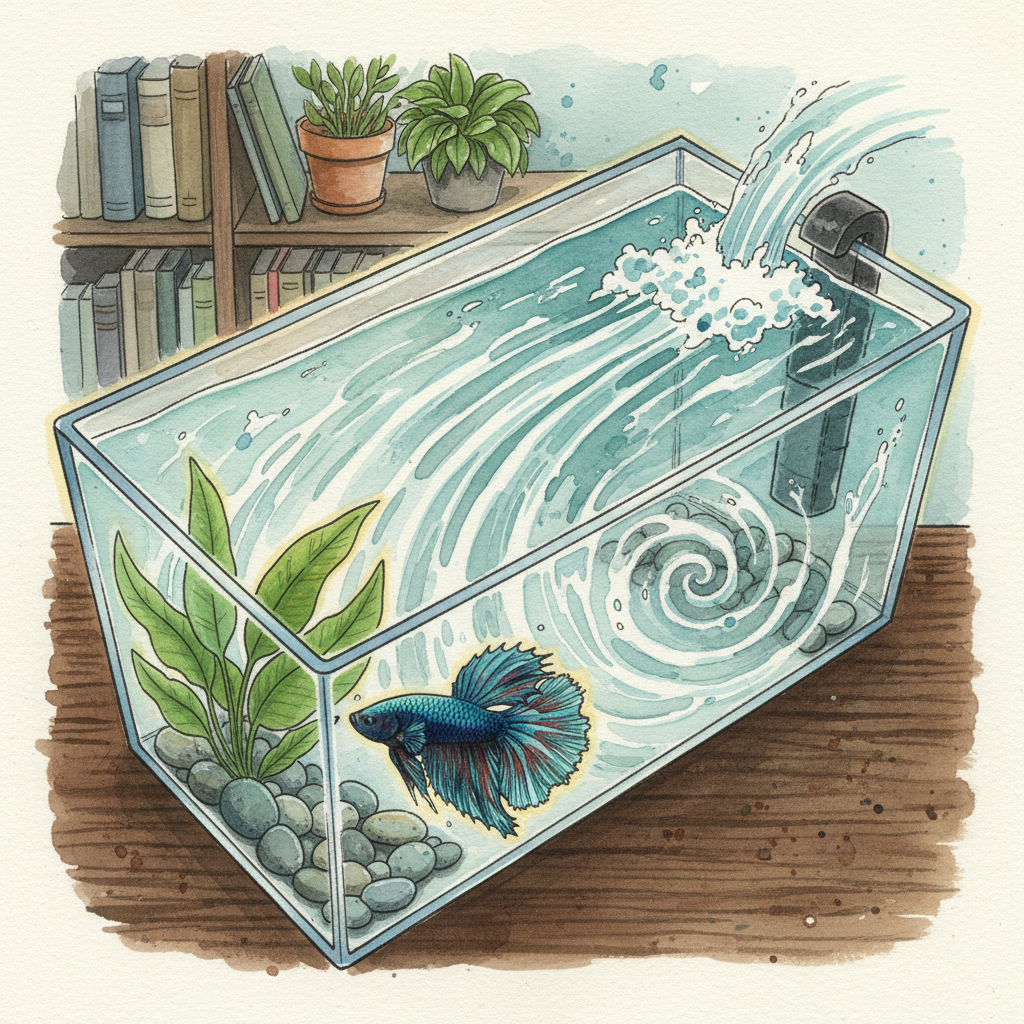
The water flow within your aquarium is more important than many hobbyists realize. Fish are surprisingly sensitive to currents, and their behavior can be significantly affected by the strength and direction of the flow. Some fish species, such as danios and white cloud mountain minnows, prefer a strong current, while others, such as bettas and gouramis, prefer a more gentle flow.
Observing how your fish react to the water flow can help you determine whether the current is appropriate for their needs. If fish are constantly struggling to swim against the current, it’s a sign that the flow is too strong. On the other hand, if the water surface is stagnant and there is no visible movement, it’s a sign that the flow is too weak. Adjusting the flow rate of your filter or adding a powerhead can help create a more suitable environment for your fish.
I remember once setting up a new tank and not paying enough attention to the water flow. My bettas were constantly hiding in the corners, and they seemed stressed and lethargic. I eventually realized that the filter was creating too much current for them. I added a sponge filter to reduce the flow, and they immediately became more active and comfortable. This experience taught me the importance of considering the specific needs of each fish species when setting up an aquarium. Thinking about their natural habitats and the conditions they’ve evolved to thrive in can make a big difference. Are you creating a raging river or a calm, still pond?
Breathing Patterns: A Window into Respiratory Health
Fish breathe by extracting oxygen from the water through their gills. Observing their breathing patterns can provide valuable insights into their respiratory health. A healthy fish will typically breathe slowly and regularly, with its gills moving smoothly. However, rapid or labored breathing can be a sign of respiratory distress. This could be due to a variety of factors, including low oxygen levels, gill parasites, or exposure to toxins.
If you notice your fish gasping for air at the surface of the water, it’s a clear sign that the oxygen levels are too low. This can be caused by overcrowding, poor water circulation, or high temperatures. Increasing the water circulation, adding an air stone, or performing a water change can help increase the oxygen levels. I once had a power outage that lasted for several hours. When the power came back on, I noticed that my fish were all gasping for air at the surface. I immediately added an air stone and performed a large water change, which helped restore the oxygen levels and saved my fish.
Another sign of respiratory distress is flared gills. This can indicate a gill infection or parasite. If you notice your fish exhibiting this behavior, it’s important to consult with a veterinarian or experienced aquarist for diagnosis and treatment. Sometimes, a simple change in water parameters or the addition of a medication can make a big difference. Think of it as a fishy version of a cough or shortness of breath – it’s a sign that something isn’t quite right.
Beyond the Surface: The Rewards of Attentive Observation
Ultimately, understanding subtle fish behaviors is about more than just keeping your fish alive. It’s about fostering a deeper connection with these fascinating creatures and creating a thriving aquarium ecosystem. By paying attention to the small details, you can learn to anticipate their needs, prevent problems before they arise, and create a truly harmonious environment. It’s a continuous learning process, and the more you observe, the more you’ll discover.
Don’t be afraid to experiment and try new things. Every aquarium is different, and what works for one person may not work for another. The key is to be patient, observant, and willing to learn from your mistakes. And remember, the most important thing is to enjoy the journey! The satisfaction of watching your fish thrive in a healthy and well-maintained aquarium is truly rewarding.

So, the next time you’re admiring your aquarium, take a moment to look beyond the surface. Observe your fish’s behavior, pay attention to the subtle cues they’re giving you, and you might just be surprised at what you discover. After all, the underwater world is full of secrets waiting to be unveiled.
My name is Daniel Carter, I am 35 years old, and I live in the United States. I have been passionate about aquariums for many years, and what started as a simple hobby quickly became a lifelong interest in aquatic life, fish behavior, and responsible tank care.
Through TheBrightLance, I share real experiences, practical knowledge, and honest lessons learned from maintaining different types of aquariums. I enjoy testing equipment, studying fish behavior, improving maintenance routines, and helping beginners avoid common mistakes.
My goal is to make aquarism easier, more ethical, and more enjoyable for everyone — whether you are setting up your very first tank or looking to refine your techniques.