
My Aquarium Gear Graveyard: Lessons Learned the Hard Way
Alright, folks, let’s talk about something that every aquarist, from newbie to seasoned pro, has encountered: gear mishaps. I’m Lucas Anderson, and after over a decade knee-deep in the freshwater aquarium hobby here in sunny Orlando, Florida, I’ve amassed my fair share of aquarium “oops” moments. And believe me, some of those “oops” have cost me more than just a little frustration. They’ve cost me time, money, and, sadly, even a few fish.
This isn’t going to be a sales pitch for the most expensive, top-of-the-line equipment. In fact, it’s quite the opposite. I’m here to share my hard-won wisdom about the gear mistakes I’ve made, hoping you can learn from my blunders and avoid building your own aquarium gear graveyard. Because let’s face it, the hobby should be enjoyable, not a constant battle against faulty equipment and avoidable errors.
The Filter Fiasco: Size Matters (A Lot)
My first major mistake? Skimping on filtration. I started with a small, 10-gallon tank, and like many beginners, I figured a filter rated for 10 gallons would be just fine. I mean, the box said it was for 10 gallons, right? Wrong. So, so wrong.
What I didn’t realize then was that filter ratings are often… optimistic, to put it politely. A filter rated for a 10-gallon tank might *technically* be able to cycle that amount of water, but it won’t do it efficiently, especially when you factor in things like fish waste, uneaten food, and plant debris. The result? Cloudy water, fluctuating parameters, and stressed-out fish. It was a constant uphill battle against ammonia spikes and nitrite outbreaks.
I stubbornly persisted with that undersized filter for far too long, constantly doing water changes and trying every chemical fix under the sun. It was exhausting, expensive, and ultimately, unsuccessful in creating a truly stable and healthy environment. I eventually upgraded to a filter rated for a 20-gallon tank, and the difference was night and day. The water cleared up, the fish became more active and colorful, and my stress levels plummeted.
The Lesson Learned
Always, always over-filter. Aim for a filter rated for at least twice the size of your tank. This gives you a buffer against fluctuations and allows the filter to handle unexpected spikes in waste production. Plus, a larger filter generally means more biological filtration capacity, which is the key to a healthy and stable aquarium.
Consider this: a filter rated for 20 gallons on a 10-gallon tank won’t be working at its maximum capacity. The beneficial bacteria will only grow to the amount needed to process the waste in your tank. This means you have a safety net in case you add more fish, overfeed, or experience a temporary disruption to the biological filter (like during medication). This is much better than scrambling to fix problems caused by an inadequate filter. It’s an investment in stability, and stability is the foundation of a successful aquarium.
The Heater Hysteria: Cheap Isn’t Always Cheerful
Next up: heaters. Ah, heaters. I thought, “Hey, they all do the same thing, right? Keep the water warm.” Wrong again. I initially bought a cheap, no-name heater from an online retailer. It was advertised as “fully submersible” and “temperature adjustable.” What it actually was was a ticking time bomb.
One cold winter night, I woke up to a horrific smell. The heater had malfunctioned, overheating the water to a scalding temperature. The glass had shattered, and the tank looked like a murky soup. Sadly, I lost almost all of my fish. It was devastating.
I learned a valuable lesson that day: you get what you pay for. Cheap heaters are often poorly made with unreliable thermostats and substandard materials. They are prone to malfunction and can pose a serious threat to your fish. While the initial cost might be tempting, the potential consequences are far greater.
Investing in Reliability
Now, I only buy heaters from reputable brands with a proven track record. I also make sure they have features like automatic shut-off and temperature safety limits. These features might add a little to the price tag, but they are well worth the peace of mind. I also use a separate thermometer to monitor the water temperature and ensure the heater is functioning correctly.
Think of it like this: you wouldn’t buy the cheapest tires for your car, would you? You understand the importance of reliable equipment when it comes to safety. The same principle applies to aquarium heaters. Your fish are living creatures that depend on you to provide a safe and stable environment. Don’t compromise their well-being to save a few bucks.
Furthermore, consider the long-term cost. A cheap heater might fail within a year, forcing you to buy a replacement. A quality heater, on the other hand, can last for many years, providing reliable and consistent performance. In the long run, investing in quality is often the more economical choice.
The Lighting Labyrinth: Too Much, Too Little, Just Right?
Lighting was another area where I stumbled early on. I initially thought that any old light would do. After all, it just needs to illuminate the tank, right? Well, not exactly. I quickly learned that different types of light have different effects on both fish and plants.
My first mistake was using a standard incandescent bulb. It produced a lot of heat and didn’t provide the right spectrum of light for plant growth. My plants struggled to survive, and the algae flourished. It was a green, slimy mess.
Then, I went to the other extreme and bought a powerful LED light fixture. It looked great, but it was far too intense for my fish. They became stressed and started hiding. I also ended up with another algae problem, this time a different type that was even more difficult to get rid of.
Finding the Sweet Spot
Eventually, I realized that the key to successful aquarium lighting is balance. You need to provide enough light for your plants to thrive, but not so much that it stresses your fish or encourages algae growth. The ideal light will depend on the specific needs of your plants and fish. Research is key. Different plants require different light intensities and spectrums. Similarly, some fish prefer dim lighting, while others thrive under brighter conditions.
I now use a combination of LED and fluorescent lights to achieve the right balance. I also use a timer to control the photoperiod (the amount of time the lights are on each day). This helps to prevent algae growth and maintain a consistent environment for my fish and plants.
Don’t underestimate the impact of lighting on the overall health and appearance of your aquarium. Proper lighting can enhance the colors of your fish, promote healthy plant growth, and create a visually stunning display. It’s an investment that is well worth the effort.
The Substrate Snafu: Inert vs. Active
Ah, substrate. The unsung hero (or villain) of the aquarium world. I initially thought that any gravel would do. I grabbed the cheapest bag I could find at the local pet store and dumped it into my tank. Big mistake. That gravel was completely inert, meaning it didn’t provide any nutrients for my plants. My plants struggled, and I had to rely on liquid fertilizers, which were messy and inconvenient.
Then, I tried using a nutrient-rich substrate designed for planted tanks. This was a step in the right direction, but I didn’t do my research properly. The substrate released ammonia initially, which is great for jump-starting the nitrogen cycle, but it also caused a massive algae bloom. I had to do daily water changes for weeks to keep the ammonia levels under control.
Choosing Wisely
The key to choosing the right substrate is to consider the needs of your plants and fish. If you’re not planning on keeping live plants, an inert substrate like gravel or sand is perfectly fine. However, if you want to create a planted aquarium, you’ll need to choose a substrate that provides nutrients for your plants. There are many different types of nutrient-rich substrates available, each with its own pros and cons. Do your research and choose one that is appropriate for your skill level and the needs of your plants.
Also, consider the grain size of the substrate. Fine sand can be difficult to clean and can compact over time, restricting root growth. Coarse gravel can trap food and debris, leading to anaerobic conditions. A medium-sized gravel or a specialized aquarium substrate is generally the best choice.
The substrate is more than just a pretty layer at the bottom of your tank. It’s an important part of the ecosystem that supports your plants and helps to maintain water quality. Choose wisely and you’ll be rewarded with a thriving and beautiful aquarium.
The Decoration Debacle: Safety First
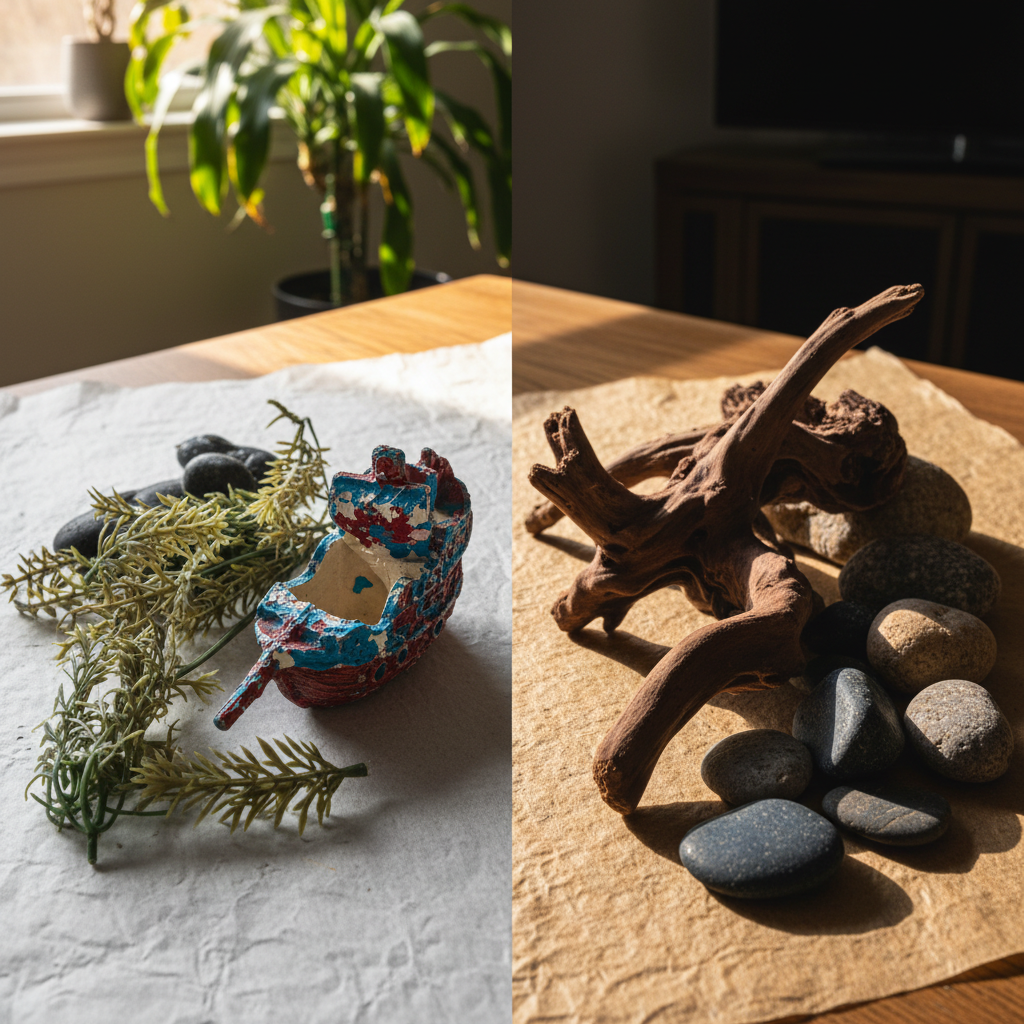
Decorations are where things got… interesting. My initial approach to decorating my aquarium was, shall we say, less than scientific. I just grabbed whatever looked cool at the pet store, without really considering the potential consequences. I had plastic plants with sharp edges, resin ornaments with tiny holes, and even a decorative skull that I thought looked “edgy.”
The sharp edges on the plastic plants scratched my fish. The tiny holes in the resin ornaments became breeding grounds for bacteria. And the decorative skull? Well, it just looked tacky. But more importantly, it leached harmful chemicals into the water.
Prioritizing Safety and Functionality
I learned the hard way that not all aquarium decorations are created equal. Some decorations can be harmful to your fish, either physically or chemically. Always choose decorations that are made from inert, aquarium-safe materials. Avoid decorations with sharp edges or small holes that could trap fish. And be wary of decorations that are painted or coated, as the paint or coating could leach harmful chemicals into the water.
I now prefer to use natural decorations, such as driftwood and rocks. These decorations not only look more natural, but they also provide hiding places for your fish and can even contribute to the biological filtration process. Just make sure to thoroughly clean and prepare any natural decorations before adding them to your tank.
Remember, the primary purpose of aquarium decorations is to create a safe and comfortable environment for your fish. Choose decorations that are both aesthetically pleasing and functionally beneficial. Your fish will thank you for it.
The Testing Trauma: Knowledge is Power
Testing the water. Oh, the bane of many a beginner aquarist’s existence. I initially thought that testing my water was a waste of time and money. The water looked clear, the fish seemed happy, so everything must be fine, right? Wrong. I was flying blind, completely unaware of the invisible threats lurking in my tank.
I eventually learned that regular water testing is essential for maintaining a healthy aquarium. It allows you to monitor the levels of ammonia, nitrite, nitrate, pH, and other important parameters. By tracking these parameters, you can identify potential problems before they become serious and take corrective action.
Embracing the Test Kit
My first testing attempts were, shall we say, less than accurate. I used cheap test strips that were difficult to read and often gave unreliable results. I also didn’t understand the significance of the different parameters. I just saw a bunch of numbers and didn’t know what to do with them.
I eventually invested in a liquid test kit. These kits are more accurate and reliable than test strips, and they also come with detailed instructions that explain the significance of each parameter. I also started reading books and articles about aquarium water chemistry. The more I learned, the better I became at interpreting my test results and taking appropriate action.
Now, I test my water regularly (at least once a week) and keep a detailed log of my results. This allows me to track trends and identify potential problems early on. It’s an essential part of my aquarium maintenance routine.
Don’t be intimidated by water testing. It’s not as complicated as it seems. With a little practice and knowledge, you can become a water testing pro and keep your aquarium healthy and thriving.
Remember, the aquarium is a closed ecosystem, and even small changes in water chemistry can have a significant impact on your fish and plants. Regular water testing is your best defense against these invisible threats. Think of it as preventative medicine for your aquarium.
The Powerhead Predicament: Flowing the Right Way
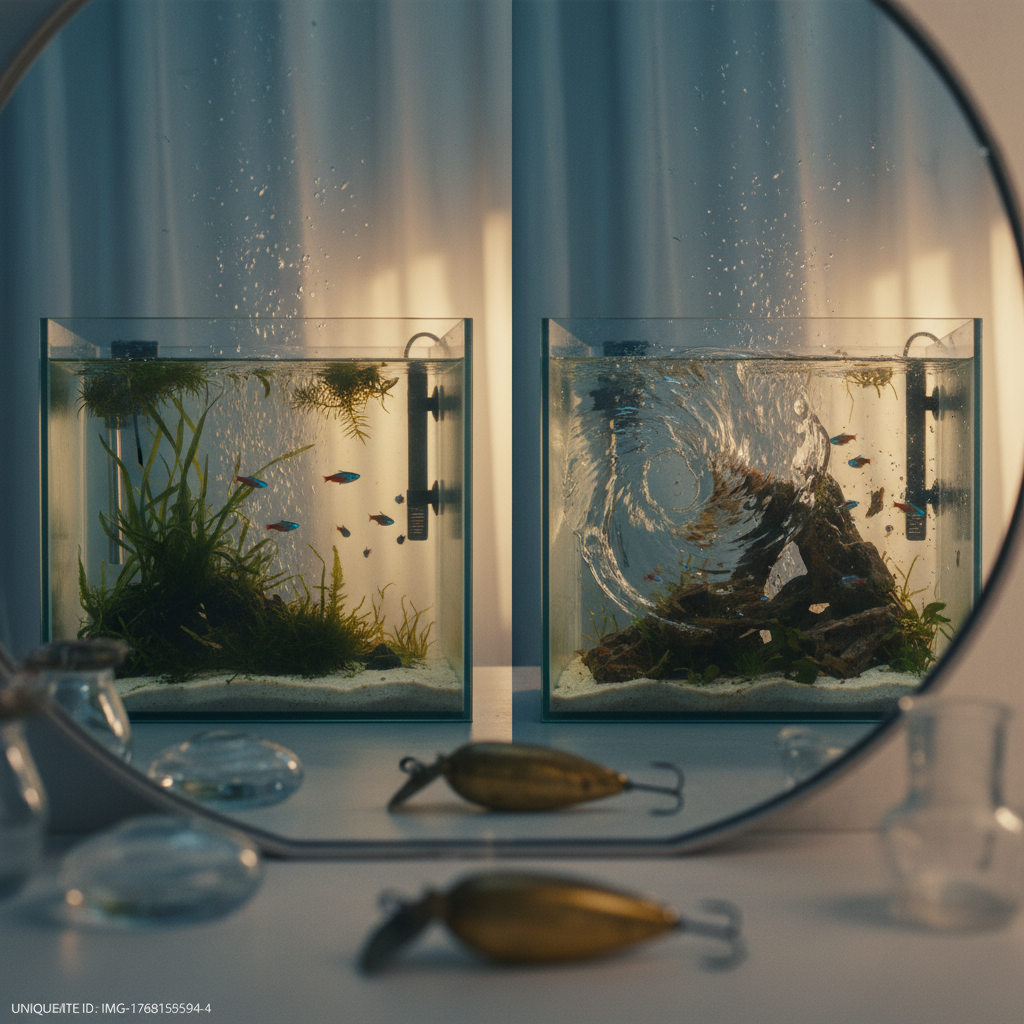
Then came the powerhead saga. I thought more flow was always better. After all, wouldn’t that just help filter the water more efficiently? Turns out, you can overdo it. I bought a massive powerhead for my relatively small tank, creating what felt like a Class 5 rapid inside my glass box. My poor fish were constantly fighting the current, plants were uprooted, and detritus swirled around like a never-ending snow globe. It was chaos.
I hadn’t considered the specific needs of my fish. Many fish species prefer gentle currents, while others thrive in stronger flow. My fish were clearly stressed by the excessive current and spent most of their time hiding behind decorations. I also didn’t realize that excessive flow can actually hinder filtration by preventing detritus from settling in areas where the filter can remove it.
Finding the Right Rhythm
The key to using powerheads effectively is to match the flow rate to the needs of your fish and plants. Consider the natural environment of your fish species. Do they live in fast-flowing rivers or slow-moving streams? Choose a powerhead that provides a flow rate that is similar to their natural habitat. Also, consider the size and shape of your tank. A small tank will require a smaller powerhead than a large tank.
I now use a smaller powerhead with an adjustable flow rate. This allows me to fine-tune the current to the needs of my fish and plants. I also use the powerhead to create targeted flow in specific areas of the tank, such as around rocks and driftwood. This helps to prevent detritus from accumulating and promotes healthy plant growth.
Don’t just blindly add a powerhead to your tank. Take the time to understand the needs of your fish and plants and choose a powerhead that provides the right amount of flow for your specific aquarium.
Final Thoughts: The Journey of a Thousand Gallons Begins with a Single Drop
So, there you have it – my collection of aquarium gear gaffes. It’s been a journey filled with frustration, learning, and, ultimately, a deeper appreciation for the delicate balance of the aquarium ecosystem. The truth is, you’re going to make mistakes in this hobby. It’s unavoidable. But the key is to learn from those mistakes and keep striving to improve. Don’t be afraid to experiment, to ask questions, and to seek advice from other aquarists. The aquarium hobby is a community, and we’re all here to help each other.
And remember, it’s not about having the most expensive gear or the fanciest setup. It’s about creating a healthy and thriving environment for your fish and plants. With a little knowledge, patience, and a willingness to learn from your mistakes, you can create a beautiful and rewarding aquarium that you can enjoy for years to come. Now, if you’ll excuse me, I need to go check on my tanks… and maybe order a new heater. Just kidding (mostly)!
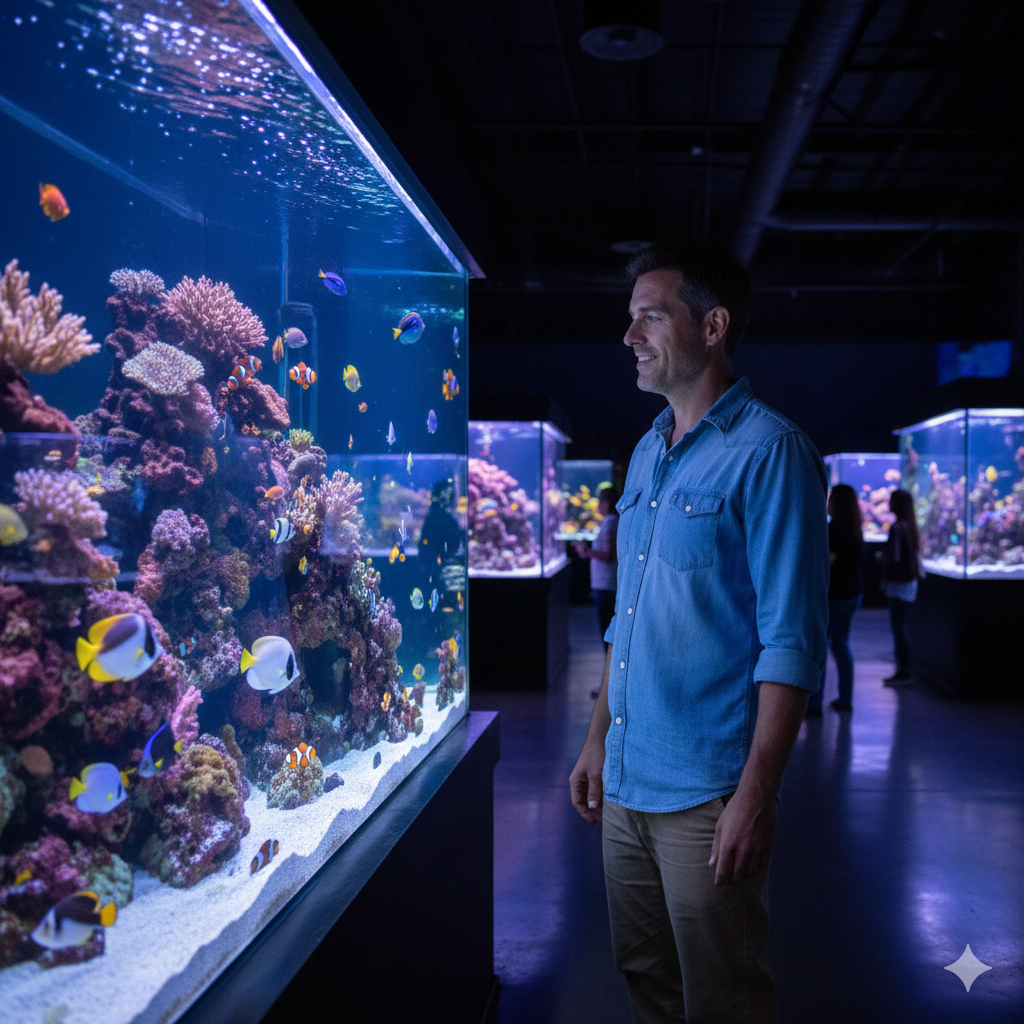
My name is Daniel Carter, I am 35 years old, and I live in the United States. I have been passionate about aquariums for many years, and what started as a simple hobby quickly became a lifelong interest in aquatic life, fish behavior, and responsible tank care.
Through TheBrightLance, I share real experiences, practical knowledge, and honest lessons learned from maintaining different types of aquariums. I enjoy testing equipment, studying fish behavior, improving maintenance routines, and helping beginners avoid common mistakes.
My goal is to make aquarism easier, more ethical, and more enjoyable for everyone — whether you are setting up your very first tank or looking to refine your techniques.