
The Siren Song of Shiny New Aquarium Tech
Okay, let’s be honest. We’ve all been there. That irresistible urge to upgrade our aquariums with the latest and greatest technology. That new filter promises crystal-clear water. That fancy LED system vows to unlock the vibrant colors of your fish and plants. That automated dosing system will make you the envy of every aquarist on the block. And trust me, I get it. I’ve fallen prey to the siren song of shiny new aquarium tech more times than I care to admit.
But here’s the thing: upgrading your aquarium technology isn’t always a straightforward path to success. In fact, it can be fraught with pitfalls if you’re not careful. Over the years, I’ve made my fair share of mistakes – costly mistakes, time-consuming mistakes, and even, in some cases, fish-endangering mistakes. I’m writing this to share my hard-earned lessons so you can avoid repeating them.
Think of me as your friendly neighborhood aquarist, sharing war stories from the trenches. I’m Lucas Anderson, and I’ve been keeping freshwater aquariums for over a decade now. I’m not a scientist or a professional aquarist, just a hobbyist who’s learned a lot through trial and error. My passion is creating simple, healthy setups that allow fish to thrive. And part of that means understanding how technology can help – and hinder – that goal.
Mistake #1: Jumping the Gun Without Research
This is perhaps the most common mistake, and one I’ve made countless times. You see a new product advertised, read a glowing review (which may or may not be genuine), and immediately click “add to cart.” The thrill of the purchase is intoxicating, but the consequences can be disastrous.
Before you buy anything, you need to do your research. I’m not just talking about reading a few product descriptions. I mean deep, thorough research. Read multiple reviews from different sources. Watch videos demonstrating the product in action. Compare it to other similar products. And most importantly, consider whether it’s actually what your aquarium needs.
Case Study: The Overkill Filter. I remember once I had a 20-gallon community tank. I was battling some persistent algae issues, and I saw an advertisement for a high-powered canister filter designed for tanks up to 75 gallons. I thought, “Wow, that’s exactly what I need!” I didn’t consider that such a powerful filter would create too much flow for my small tank, stressing out my fish. And, more importantly, I didn’t consider that algae problems are rarely solved by just a better filter. They are more often solved by correcting light, nutrients, and CO2 balance. I bought the filter, installed it, and within a week, my fish were hiding in the corners, clearly stressed. I ended up having to buy a flow regulator and it all became an unnecessary expense.
The Lesson: Don’t let the hype sway you. Understand the technology, its limitations, and whether it’s truly the right fit for your specific aquarium setup.
Don’t Believe Everything You Read (Especially Online)
Online reviews can be incredibly helpful, but they can also be misleading. Be wary of overly positive reviews that sound like they were written by the manufacturer. Look for reviews that are balanced, mentioning both the pros and cons of the product. And always consider the source. Is the reviewer a reputable aquarist with a proven track record? Or are they just a random person who bought the product and wrote a quick review after a week of use?
I also find it helpful to look for reviews on independent forums and social media groups. These communities often provide more honest and unbiased feedback than you’ll find on retail websites.

Mistake #2: Neglecting Compatibility
This is where things can get really tricky. You might find a piece of technology that seems perfect on paper, but it’s not compatible with your existing equipment or your aquarium environment.
For example, you might buy a fancy new LED light fixture, only to discover that it’s not compatible with your existing timer. Or you might buy an automated dosing system, only to realize that it requires a different type of tubing than you currently use. Or, even worse, you might buy a protein skimmer (a common piece of equipment for saltwater tanks) for your freshwater tank (don’t do that!).
Real-World Example: The Conflicting Controllers. I once decided to upgrade my aquarium lighting with a fancy programmable LED system. I already had an automatic feeder that was controlled by a separate timer. I didn’t realize that the two systems were interfering with each other, causing the lights to turn on and off at random times and the feeder to dispense food inconsistently. It took me weeks to figure out the problem and find a solution.
The Solution: Meticulously check compatibility before you buy anything. Read the product specifications carefully. Ask questions in online forums. And if possible, test the product with your existing equipment before you make a final purchase.
The Importance of Tank Parameters
Compatibility also extends to your aquarium’s environment. Some technologies are designed for specific water parameters. For example, some protein skimmers are only effective in saltwater tanks with high salinity. Other technologies, like CO2 injectors, require careful monitoring of pH levels.
Before you introduce any new technology to your aquarium, make sure you understand how it will affect your water parameters and whether your fish and plants can tolerate those changes. A sudden shift in pH, temperature, or salinity can be devastating to your aquarium’s ecosystem.
Mistake #3: Overcomplicating Things
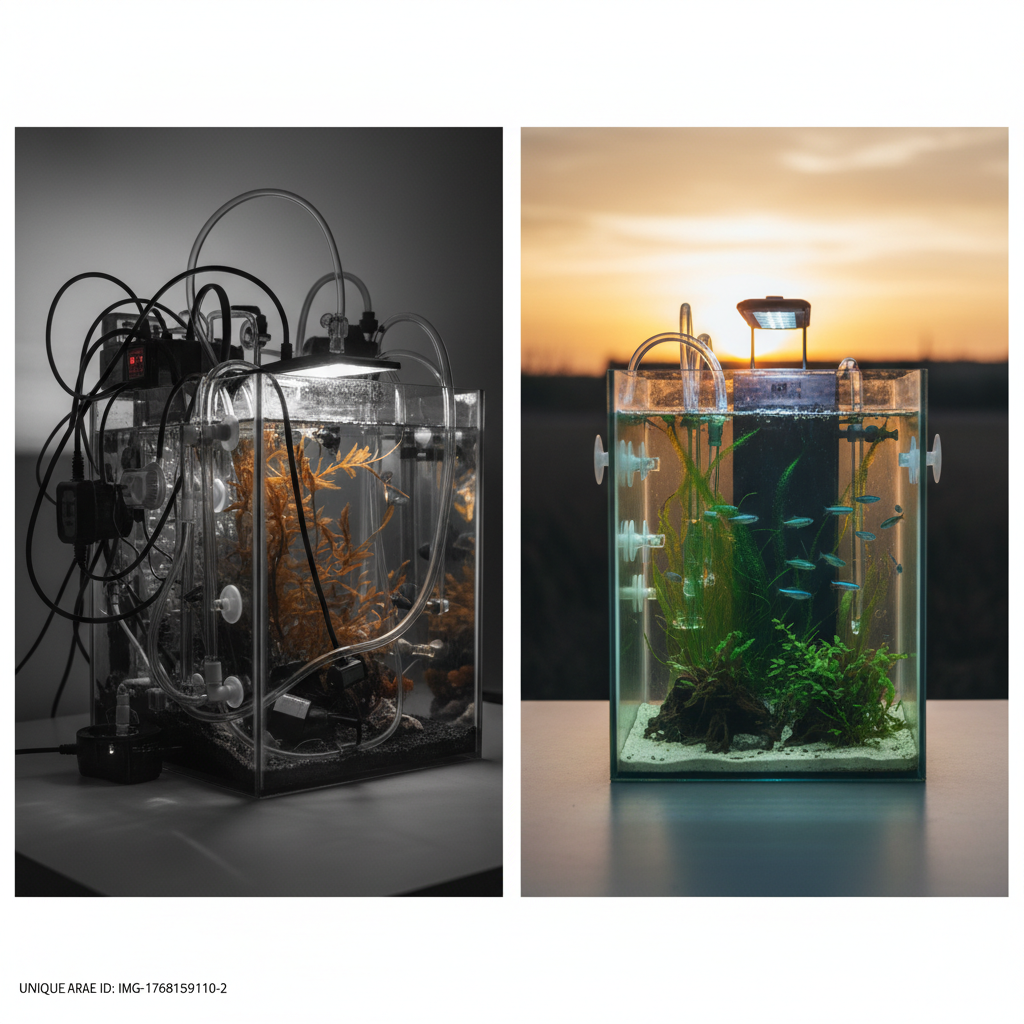
This is a mistake I see a lot of beginners make, and it’s something I’m constantly trying to avoid myself. We live in a world of ever-increasing complexity, and it’s easy to get caught up in the idea that more technology equals better results. But that’s not always the case.
Sometimes, the simplest solutions are the best. A well-maintained sponge filter can often be just as effective as a complicated canister filter. A simple timer can be just as effective as a programmable LED controller. And a healthy dose of common sense can be just as effective as any fancy gadget.
My “High-Tech” Disaster: I went through a phase where I was convinced I needed a fully automated, “smart” aquarium. I installed an automatic water changer, a pH controller, a nutrient dosing system, and even a webcam so I could monitor my tank remotely. It was a complete disaster. The system was constantly malfunctioning, the water parameters were all over the place, and I spent more time troubleshooting the technology than actually enjoying my aquarium. Eventually, I ripped it all out and went back to basics. I was much happier (and so were my fish!).
The Takeaway: Don’t overcomplicate things. Start with the basics and add technology only when it’s truly necessary. Remember, the goal is to create a healthy and stable environment for your fish, not to impress your friends with your fancy gadgets.
The KISS Principle: Keep It Simple, Stupid
The KISS principle is a timeless adage that applies to all aspects of life, including aquarium keeping. The more complex your system, the more likely it is to fail. And the more difficult it will be to troubleshoot when something goes wrong.
Before you add any new technology to your aquarium, ask yourself: is this really necessary? Will it significantly improve the health and well-being of my fish and plants? Or am I just adding complexity for the sake of complexity?
Mistake #4: Forgetting the Fundamentals
This is perhaps the most important mistake of all. No matter how advanced your technology, it’s no substitute for good aquarium keeping practices.
Regular water changes, proper filtration, appropriate feeding, and careful observation are all essential for a healthy aquarium. You can’t just throw a bunch of fancy gadgets into your tank and expect everything to be fine. You still need to do the work.
My Wake-Up Call: I once got so caught up in automating my aquarium that I started neglecting the fundamentals. I stopped doing regular water changes, I overfed my fish, and I didn’t bother to test the water parameters. As a result, my tank became overrun with algae, my fish started getting sick, and I almost lost the entire ecosystem. It was a harsh reminder that technology is only a tool, not a magic bullet.
The Bottom Line: Don’t let technology distract you from the fundamentals. Focus on creating a healthy and stable environment for your fish, and use technology to supplement, not replace, good aquarium keeping practices.
The Importance of Observation
One of the most important things you can do as an aquarist is to observe your fish and plants closely. Are they behaving normally? Are they eating well? Are they showing any signs of stress or disease?
Technology can help you monitor certain aspects of your aquarium, such as temperature and pH, but it can’t replace the human eye. You need to be able to recognize the subtle signs that something is wrong and take action before it’s too late.
Mistake #5: Ignoring the Learning Curve
Every new piece of technology comes with a learning curve. Don’t expect to be an expert overnight. Take the time to read the instructions carefully, watch videos, and experiment with the settings until you understand how everything works.
And don’t be afraid to ask for help. There are countless online forums and social media groups where you can connect with other aquarists and get advice. Most aquarists are more than happy to share their knowledge and experiences.
My Tech Support Nightmare: I bought a new protein skimmer and I was so excited to set it up. I didn’t read the instructions carefully, and I ended up flooding my entire living room with saltwater. It took me hours to clean up the mess, and I almost ruined my hardwood floors. It was a valuable lesson in the importance of reading the manual.
The Key: Be patient, persistent, and willing to learn. Don’t get discouraged if you don’t understand something right away. Keep experimenting and asking questions, and eventually, you’ll master the technology.
Test, Test, Test
Before you fully integrate any new technology into your aquarium, test it thoroughly. Run it in a separate container or quarantine tank to make sure it’s working properly and that it’s not going to harm your fish or plants.
Monitor the water parameters closely and observe your fish for any signs of stress. If you notice anything unusual, stop using the technology and investigate the problem.

Mistake #6: Not Budgeting Properly
Aquarium technology can be expensive. Before you start upgrading your tank, create a budget and stick to it. It’s easy to get carried away and spend more money than you can afford.
And remember, the initial purchase price is not the only cost. You also need to factor in the cost of maintenance, replacement parts, and electricity.
My Financial Fiasco: I once got so obsessed with upgrading my aquarium that I maxed out my credit card. I bought every new gadget that came out, without considering whether I actually needed it or whether I could afford it. It took me years to pay off the debt, and it was a stressful and unnecessary burden.
Smart Spending: Prioritize your spending. Focus on the technologies that will have the biggest impact on the health and well-being of your fish and plants. And don’t be afraid to buy used equipment. There are plenty of great deals to be found on online marketplaces and in local aquarium clubs.
The Hidden Costs of Technology
In addition to the initial purchase price, you also need to consider the hidden costs of technology. For example, some LED lights consume a lot of electricity. Some filters require expensive replacement cartridges. And some automated systems require regular maintenance and calibration.
Before you buy any new technology, do your research and understand the total cost of ownership. This will help you avoid any unpleasant surprises down the road.
Mistake #7: Being Afraid to Ask for Help
No one expects you to know everything about aquarium technology. If you’re struggling with something, don’t be afraid to ask for help. There are countless resources available, including online forums, social media groups, local aquarium clubs, and even your local fish store.
My Moment of Humility: I spent weeks trying to figure out how to program my new LED controller. I read the instructions, watched videos, and experimented with the settings, but I just couldn’t get it to work. Finally, I swallowed my pride and asked for help in an online forum. Within minutes, someone had provided me with a step-by-step guide that solved the problem. I felt foolish for not asking for help sooner.
The Power of Community: The aquarium hobby is full of passionate and knowledgeable people who are eager to share their expertise. Don’t be afraid to tap into this community. You’ll be surprised how much you can learn.
Local Fish Stores: A Valuable Resource
Your local fish store can be a valuable resource for information and advice. The staff are often experienced aquarists who can answer your questions and help you choose the right technology for your tank.
Support your local fish store by buying your equipment from them. They’ll appreciate your business, and you’ll have access to their expertise and support.
My Current Philosophy: Measured and Mindful Upgrades
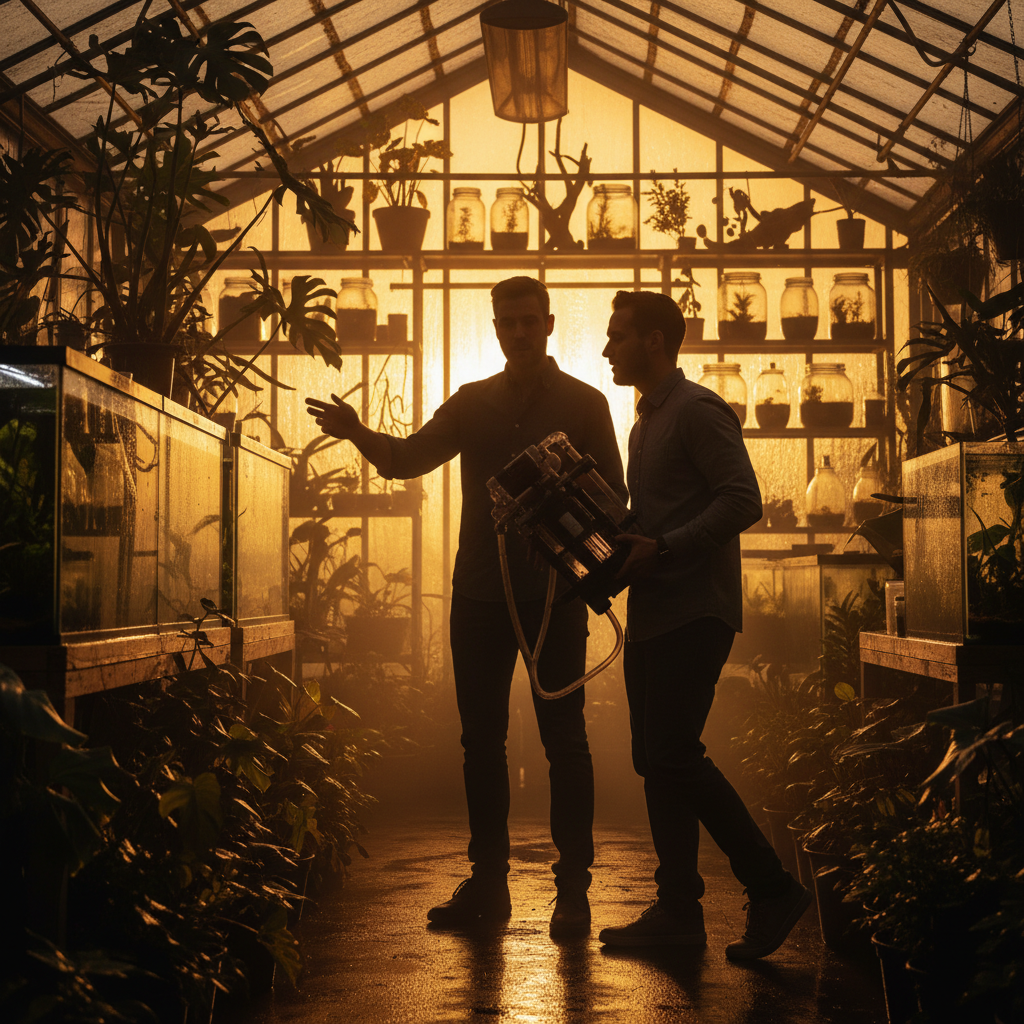
These days, I approach aquarium technology with a healthy dose of skepticism. I’ve learned that more technology doesn’t always equal better results. I focus on creating a balanced and sustainable ecosystem, and I only add technology when it’s truly necessary to improve the health and well-being of my fish and plants.
I still enjoy experimenting with new gadgets, but I’m much more careful about doing my research, considering compatibility, and budgeting properly. And I’m always mindful of the fundamentals of good aquarium keeping.
Ultimately, the goal is to create a beautiful and thriving aquarium that brings you joy and relaxation. Don’t let technology become a source of stress and frustration. Use it wisely, and it can be a valuable tool for achieving your aquarium goals.
So, before you rush out and buy that newfangled gizmo, take a deep breath. Think about what you really need. And remember: a happy, healthy aquarium starts with knowledge, patience, and a genuine love for the aquatic world.
My name is Daniel Carter, I am 35 years old, and I live in the United States. I have been passionate about aquariums for many years, and what started as a simple hobby quickly became a lifelong interest in aquatic life, fish behavior, and responsible tank care.
Through TheBrightLance, I share real experiences, practical knowledge, and honest lessons learned from maintaining different types of aquariums. I enjoy testing equipment, studying fish behavior, improving maintenance routines, and helping beginners avoid common mistakes.
My goal is to make aquarism easier, more ethical, and more enjoyable for everyone — whether you are setting up your very first tank or looking to refine your techniques.