
The Early Warning System for a Happy Aquarium
I’ve been keeping freshwater aquariums for over a decade now, and one thing I’ve learned is that prevention is a thousand times easier than cure. I’m Lucas Anderson, by the way, and I live in sunny Orlando, Florida. Over the years, I’ve seen countless beginner aquarists (and even some experienced ones) struggle with problems that could have been avoided if they had just been a little more observant. Think of your aquarium as a miniature ecosystem – delicate and easily thrown out of balance. My goal is to share the “early warning system” I’ve developed over the years, so you can spot potential issues before they become full-blown disasters. Let’s face it, nobody wants to wake up to a tank full of sick or, worse, dead fish. So, how do I stay ahead of the curve?
Daily Observations: Your First Line of Defense
This is the most crucial part. It only takes a few minutes each day, but it can save you hours of troubleshooting and, potentially, the lives of your fish. What exactly am I looking for? Several things. First, I observe my fish. Are they acting normally? Are they eating with their usual enthusiasm? Are their colors bright and vibrant, or are they looking pale and listless? Any change in behavior is a red flag. For example, if a normally active fish is suddenly spending all its time hiding, something is definitely wrong. Maybe it’s bullying from another fish, or maybe it’s a sign of illness. Similarly, if a fish that usually rushes to the surface for food is suddenly uninterested, I immediately start investigating. Are they scratching against objects in the tank? This could indicate parasites. Are their fins clamped close to their bodies? This is often a sign of stress or illness. I also pay close attention to their breathing. Are they gasping at the surface? This could indicate a lack of oxygen or the presence of toxins in the water.
Beyond fish behavior, I also scrutinize the physical appearance of my aquarium. Is the water crystal clear, or is it cloudy or discolored? Cloudy water can indicate a bacterial bloom, overfeeding, or inadequate filtration. Green water usually points to an algae bloom, often caused by excessive light or nutrients. I also check the plants. Are they healthy and growing, or are they showing signs of nutrient deficiency or algae growth? Yellowing leaves, stunted growth, or excessive algae are all warning signs. I even keep an eye on the snails (if you have them). A sudden increase in snail population can indicate an overabundance of food, which can lead to water quality problems. Essentially, I’m looking for anything that deviates from the norm. The key is to establish a baseline of what “normal” looks like in your aquarium, so you can quickly identify any changes.
For example, I once noticed that one of my neon tetras was swimming erratically and had a slightly bloated belly. I immediately isolated it in a quarantine tank and treated it for early signs of dropsy. Because I caught it early, I was able to save the fish and prevent the disease from spreading to the rest of the tank. Another time, I noticed a slight ammonia smell coming from my aquarium. I immediately tested the water and found that the ammonia levels were elevated. I performed a large water change and increased the frequency of my water changes for the next few weeks. This prevented a major ammonia spike that could have wiped out my entire fish population. These are just two examples of how daily observations can help you catch problems early and prevent them from escalating.
Water Quality: The Foundation of a Healthy Aquarium

Maintaining good water quality is absolutely essential for the health and well-being of your fish. It’s like breathing clean air for us – without it, we quickly become ill. I regularly test my water for ammonia, nitrite, nitrate, and pH. These are the key parameters that can tell you a lot about the health of your aquarium. Ammonia and nitrite are toxic to fish, even in small amounts. They are produced by fish waste and decaying organic matter. Beneficial bacteria in your filter convert ammonia into nitrite, and then nitrite into nitrate. Nitrate is less toxic than ammonia and nitrite, but it can still be harmful at high levels. That’s why regular water changes are so important – they help to remove nitrate and replenish essential minerals.
Understanding the Nitrogen Cycle
The nitrogen cycle is the biological process that converts ammonia into less harmful substances. It’s the backbone of a healthy aquarium. When you first set up your aquarium, it takes time for the beneficial bacteria to colonize your filter and establish the nitrogen cycle. During this time, ammonia and nitrite levels can spike, which can be deadly to fish. This is why it’s so important to cycle your aquarium before adding fish. There are several ways to cycle an aquarium. One way is to add a small amount of ammonia to the tank each day until the ammonia and nitrite levels reach zero. Another way is to use a commercially available “starter bacteria” product. These products contain live bacteria that will help to jumpstart the nitrogen cycle. Once the nitrogen cycle is established, you’ll need to maintain it by performing regular water changes and avoiding overfeeding. Overfeeding can lead to an increase in ammonia production, which can overwhelm the beneficial bacteria and cause the nitrogen cycle to crash.
Testing, Testing, 1, 2, 3…
I use both liquid test kits and test strips to monitor my water quality. Liquid test kits are more accurate, but they are also more time-consuming to use. Test strips are quicker and easier to use, but they are less accurate. I typically use liquid test kits for my weekly water tests and test strips for quick checks in between. When testing your water, it’s important to follow the instructions carefully. Make sure to use a clean test tube or vial for each test, and don’t contaminate the reagents. Also, be sure to read the results carefully and compare them to the recommended levels for your fish species. Different fish species have different water quality requirements. For example, some fish prefer soft, acidic water, while others prefer hard, alkaline water. It’s important to research the specific water quality requirements of your fish before you add them to your aquarium. If your water parameters are outside of the recommended range, you’ll need to take steps to correct them. This might involve performing a water change, adding chemicals to adjust the pH, or using a filter media to remove ammonia, nitrite, or nitrate.
I remember one instance where my pH suddenly dropped. I had recently added some driftwood to the tank, and it was leaching tannins into the water, which lowered the pH. Fortunately, I caught it early and was able to raise the pH by adding some crushed coral to the filter. This prevented the pH from dropping too low and harming my fish. Another time, I had a sudden ammonia spike after a power outage. The power outage killed off some of the beneficial bacteria in my filter, which caused the ammonia levels to rise. I performed a large water change and added some “starter bacteria” to the filter to help re-establish the nitrogen cycle. This prevented a major ammonia spike that could have wiped out my entire fish population.
Filtration: Keeping the Water Crystal Clear
A good filter is the heart of your aquarium. It removes debris, uneaten food, and other pollutants from the water, keeping it clean and clear. There are several types of aquarium filters available, each with its own strengths and weaknesses. Hang-on-back (HOB) filters are popular for smaller tanks because they are relatively inexpensive and easy to install. Canister filters are more powerful and versatile, and they are a good choice for larger tanks. Sponge filters are simple and inexpensive, and they are a good option for breeding tanks or quarantine tanks. Undergravel filters are an older type of filter that is less popular today because they can be difficult to maintain.
Mechanical, Chemical, and Biological Filtration
A good filter should provide all three types of filtration: mechanical, chemical, and biological. Mechanical filtration removes particulate matter from the water, such as uneaten food and fish waste. This is typically accomplished using a sponge or filter floss. Chemical filtration removes dissolved pollutants from the water, such as ammonia, nitrite, and nitrate. This is typically accomplished using activated carbon or other chemical filter media. Biological filtration is the most important type of filtration. It’s the process by which beneficial bacteria convert ammonia and nitrite into less harmful substances. This is typically accomplished by providing a large surface area for the bacteria to colonize, such as a sponge, ceramic rings, or bio-balls.
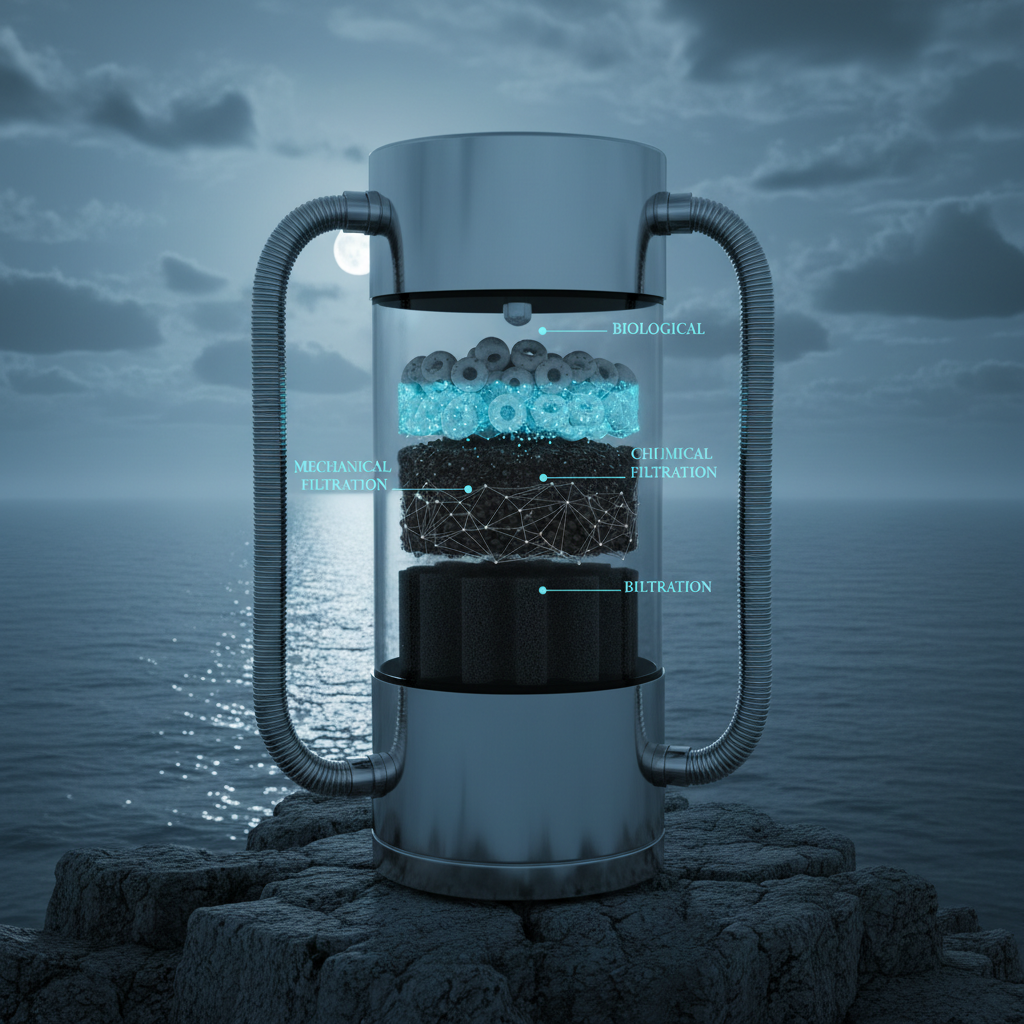
I personally prefer canister filters for my larger tanks. They provide excellent filtration and are very versatile. I use a combination of mechanical, chemical, and biological filter media in my canister filters. For mechanical filtration, I use a coarse sponge to remove large particles and a fine sponge to remove smaller particles. For chemical filtration, I use activated carbon to remove dissolved pollutants and a phosphate remover to control algae growth. For biological filtration, I use ceramic rings and bio-balls to provide a large surface area for beneficial bacteria to colonize. I regularly clean my filter to remove accumulated debris and maintain its efficiency. I typically clean my mechanical filter media every week or two, and my chemical and biological filter media every few months. When cleaning my filter media, I never use soap or hot water. This can kill the beneficial bacteria that are essential for biological filtration. Instead, I rinse the filter media in used aquarium water. This will remove the debris without harming the bacteria.
I once neglected to clean my filter for too long, and it became clogged with debris. This caused the water flow to decrease, which reduced the efficiency of the filter. The ammonia levels in my tank started to rise, and my fish became stressed. I immediately cleaned the filter and performed a large water change. This helped to bring the ammonia levels back down and relieve the stress on my fish. This experience taught me the importance of regular filter maintenance. Another time, I accidentally used soap to clean my filter media. This killed off all of the beneficial bacteria in my filter, which caused the nitrogen cycle to crash. The ammonia and nitrite levels in my tank skyrocketed, and I lost several fish. This was a devastating experience, and it taught me the importance of using the correct cleaning methods.
Feeding: Moderation is Key
Overfeeding is one of the most common mistakes that aquarists make. It can lead to a variety of problems, including poor water quality, algae growth, and obesity in fish. Fish only need a small amount of food to stay healthy. A good rule of thumb is to feed your fish only as much as they can eat in two to three minutes. Any uneaten food will sink to the bottom of the tank and decompose, which can lead to water quality problems.
Choosing the Right Food
It’s also important to choose the right type of food for your fish. Different fish species have different dietary requirements. Some fish are herbivores, meaning they eat primarily plants. Others are carnivores, meaning they eat primarily meat. Still others are omnivores, meaning they eat both plants and meat. Make sure to choose a food that is formulated for the specific dietary needs of your fish. I feed my fish a variety of foods, including flakes, pellets, frozen foods, and live foods. Flakes are a good staple food, but they can be messy and tend to break down quickly. Pellets are more dense and nutritious than flakes, and they don’t break down as quickly. Frozen foods are a good source of protein and other nutrients. Live foods are the most natural and nutritious food for fish, but they can be difficult to obtain and keep alive.
I typically feed my fish once or twice a day. I feed them a small amount of food each time, and I make sure that they eat all of the food within a few minutes. I also skip feeding them one day a week. This gives their digestive systems a break and helps to prevent obesity. When feeding frozen foods, I always thaw them first before adding them to the tank. This prevents the frozen food from shocking the fish and causing them to become ill. When feeding live foods, I make sure that they are clean and disease-free. I typically quarantine live foods for a few days before feeding them to my fish. This helps to prevent the introduction of diseases into my aquarium.

I once overfed my fish for several weeks, and they became obese. They were sluggish and had difficulty swimming. I immediately reduced the amount of food I was feeding them and started feeding them more vegetables. It took several weeks for them to lose the excess weight and regain their health. This experience taught me the importance of moderation when feeding fish. Another time, I accidentally fed my fish a batch of contaminated live food. The live food was infected with a parasite that caused my fish to become ill. I immediately treated the fish with medication and performed a large water change. Fortunately, I was able to save most of the fish, but it was a stressful experience. This taught me the importance of being careful when feeding live foods.
Substrate: More Than Just Decoration
The substrate is the material that covers the bottom of your aquarium. It can be gravel, sand, or even bare bottom. The substrate plays an important role in the health of your aquarium. It provides a surface area for beneficial bacteria to colonize, and it helps to filter out debris and uneaten food. The type of substrate you choose will depend on the type of fish you keep. Some fish prefer sand, while others prefer gravel. Some fish, such as Corydoras catfish, need a sand substrate to sift through for food. Others, such as African cichlids, need a gravel substrate to dig in and create spawning nests.
Maintaining a Healthy Substrate
It’s important to maintain a healthy substrate by regularly vacuuming it. This will remove accumulated debris and uneaten food, preventing the buildup of harmful bacteria. I use a gravel vacuum to clean my substrate. A gravel vacuum is a simple device that sucks up debris from the substrate and deposits it into a bucket. I typically vacuum my substrate every week or two, depending on the bioload of my aquarium. When vacuuming my substrate, I make sure to only vacuum a portion of it each time. This will prevent the removal of too many beneficial bacteria. I also avoid vacuuming around plant roots, as this can damage the plants.
I once neglected to vacuum my substrate for too long, and it became heavily contaminated with debris. This caused the water quality in my tank to deteriorate, and my fish became stressed. I performed a large water change and vacuumed the substrate thoroughly. This helped to improve the water quality and relieve the stress on my fish. This experience taught me the importance of regular substrate maintenance. Another time, I accidentally introduced a snail infestation into my aquarium. The snails were eating all of my plants and creating a mess in the tank. I tried several methods to get rid of the snails, but nothing worked. Finally, I had to remove all of the substrate and plants from the tank and sterilize them. This was a drastic measure, but it was the only way to get rid of the snails. This taught me the importance of being careful when introducing new plants or decorations into my aquarium.
For example, I had a tank with a very fine sand substrate. It looked beautiful, but I quickly realized that it was trapping a lot of detritus and becoming anaerobic (lacking oxygen) in certain areas. This caused pockets of hydrogen sulfide to form, which is toxic to fish. I switched to a coarser sand substrate and added some Malaysian trumpet snails, which help to aerate the substrate. This solved the problem and improved the overall health of the tank.
Lighting: More Than Just Aesthetics
Lighting is another important factor in the health of your aquarium. It provides the energy that plants need to grow, and it also affects the behavior of your fish. The type of lighting you choose will depend on the type of plants you keep. Some plants require high light, while others require low light. Some fish also prefer dim lighting, while others prefer bright lighting. It’s important to research the specific lighting requirements of your plants and fish before you choose a lighting system. There are several types of aquarium lighting available, including fluorescent lights, LED lights, and metal halide lights. Fluorescent lights are the most common type of aquarium lighting. They are relatively inexpensive and provide a good amount of light. LED lights are more energy-efficient than fluorescent lights, and they last longer. Metal halide lights are the most powerful type of aquarium lighting. They are used for high-light plants, such as reef corals.
I use LED lights in my aquariums. They are energy-efficient, long-lasting, and provide a good amount of light for my plants. I also use a timer to control the lighting schedule. I typically keep the lights on for 8-10 hours a day. This provides enough light for my plants to grow without causing algae problems. Algae thrive on excessive light and nutrients. I also adjust the intensity of the lighting depending on the needs of my plants. Some plants require more light than others. It is all about balance. I’ve found that consistent light is very important to the health of my aquarium. I once had a power outage that lasted for several days. The plants in my aquarium started to suffer from a lack of light, and the fish became stressed. I added a battery-powered air pump to keep the water oxygenated, and I covered the aquarium with a blanket to keep it dark. Fortunately, the power came back on before the plants and fish suffered too much damage.
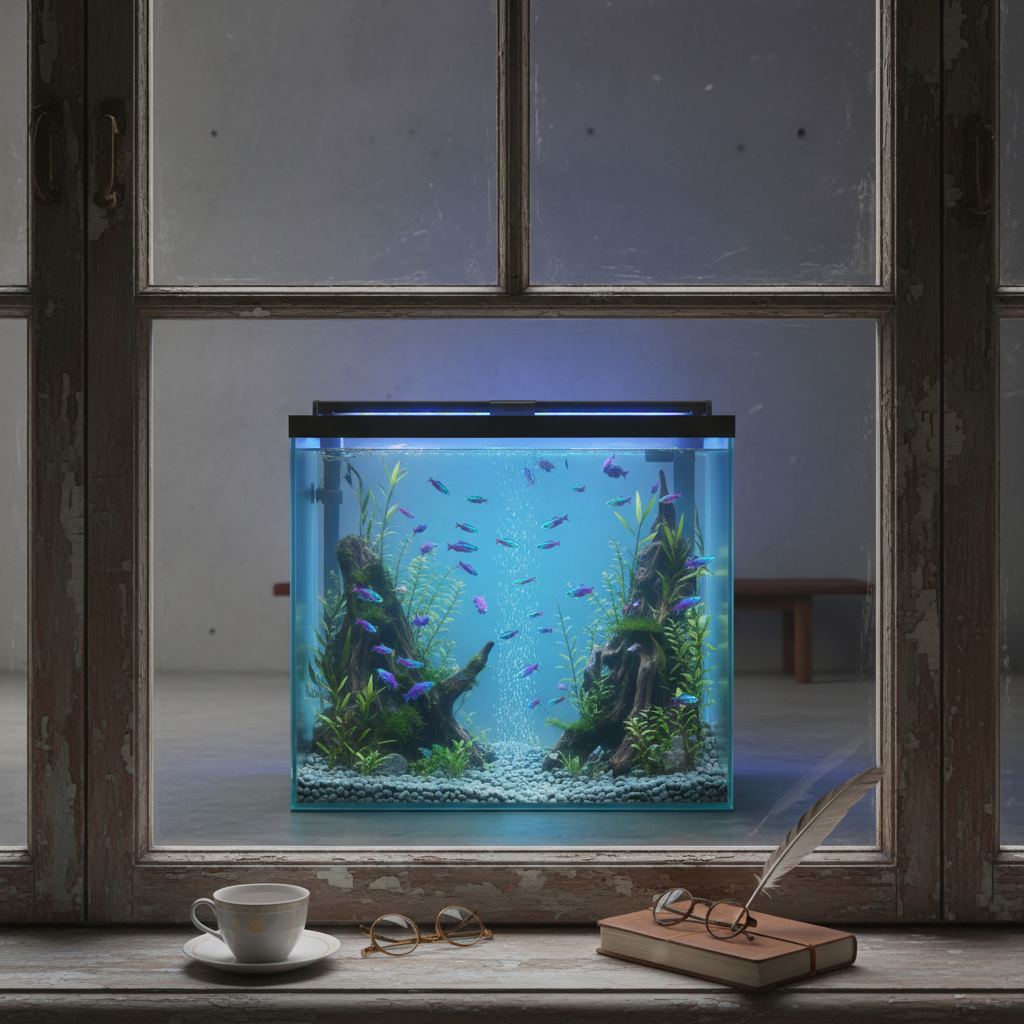
Another time, I had an algae bloom in my aquarium. I tried several methods to get rid of the algae, but nothing worked. Finally, I realized that I was leaving the lights on for too long. I reduced the lighting schedule to 6 hours a day, and the algae problem disappeared. This taught me the importance of controlling the lighting in my aquarium. The interplay between light, nutrients, and CO2 (if you’re running a CO2 system) is very important to the health and stability of a planted tank. Understanding these relationships is crucial for preventing problems before they arise.
By paying close attention to these key areas – daily observations, water quality, filtration, feeding, substrate, and lighting – I’ve been able to maintain healthy and thriving aquariums for years. It’s not about being perfect, but about being proactive and responding quickly to any changes or warning signs. Remember, your aquarium is a living ecosystem, and it requires constant care and attention. Take the time to learn about your fish and plants, and you’ll be rewarded with a beautiful and rewarding hobby.
My name is Daniel Carter, I am 35 years old, and I live in the United States. I have been passionate about aquariums for many years, and what started as a simple hobby quickly became a lifelong interest in aquatic life, fish behavior, and responsible tank care.
Through TheBrightLance, I share real experiences, practical knowledge, and honest lessons learned from maintaining different types of aquariums. I enjoy testing equipment, studying fish behavior, improving maintenance routines, and helping beginners avoid common mistakes.
My goal is to make aquarism easier, more ethical, and more enjoyable for everyone — whether you are setting up your very first tank or looking to refine your techniques.