
Navigating the Aquarium Heating Maze: A Beginner’s Guide to Avoiding Costly Mistakes
So, you’re diving into the wonderful world of aquariums! That’s fantastic. I remember when I first started, I was so excited to set up my own little underwater ecosystem. I envisioned vibrant fish, lush plants, and a perfectly balanced environment. What I didn’t envision was the sheer amount of information – and potential pitfalls – involved in choosing the right equipment.
One of the most crucial pieces of equipment for many aquariums is a reliable heater and thermometer. Maintaining a consistent and appropriate temperature is absolutely vital for the health and well-being of your fish and plants. But with so many options available, how do you choose the right ones? Trust me, I’ve made my fair share of mistakes in this area, and I’m here to share those experiences so you don’t have to repeat them.
Why Temperature Matters: A Fish’s Perspective
Think about it: fish are cold-blooded. Their body temperature is directly influenced by the temperature of their surroundings. Sudden or extreme temperature fluctuations can stress them, weaken their immune systems, and even lead to death. Different species have different temperature requirements. For example, tropical fish like bettas and tetras thrive in warmer water (around 78-82°F or 25-28°C), while goldfish prefer cooler temperatures (around 68-74°F or 20-23°C). Trying to keep a goldfish and a betta in the same tank would be a recipe for disaster, temperature-wise.
I learned this lesson the hard way early on. I had a community tank with a mix of fish, and I mistakenly assumed that a “moderate” temperature would be fine for everyone. I was wrong. Some of my fish became lethargic, others developed diseases, and eventually, I lost a few. It was a heartbreaking experience, and it taught me the importance of researching the specific temperature needs of each species I planned to keep. Now, I meticulously check compatibility charts and temperature ranges before introducing any new fish to my tanks.
Common Heater Mistakes: From Underpowered to Overcooked
Choosing the right heater isn’t just about picking one that looks nice. It’s about understanding your tank’s needs and selecting a heater that can reliably maintain the correct temperature, even during temperature swings in your home. Here are some common mistakes I see beginners make:
Underestimating Heater Wattage: The “Almost Enough” Trap
This is probably the most common mistake. People often buy a heater that’s too small for their tank, thinking they can save a few bucks. The general rule of thumb is 5 watts per gallon of water. However, this is just a guideline. Several factors can affect how much wattage you need, including the ambient temperature of your room, the size and shape of your tank, and whether you have a glass or acrylic tank.
For example, if you live in a cold climate or keep your tank in a drafty room, you’ll need a higher wattage heater. I live in Florida, where it’s generally warm, but even here, during the occasional cold snap, I need to make sure my heaters are up to the task. I once underestimated the wattage needed for a 20-gallon tank I kept in my garage. The heater struggled to maintain the desired temperature, and my fish became stressed. I ended up having to buy a stronger heater, which cost me more in the long run. The lesson? It’s always better to err on the side of caution and get a heater that’s slightly overpowered rather than underpowered.
Overheating Your Tank: The Silent Killer
On the other hand, an overpowered heater can be just as dangerous. If your heater malfunctions and gets stuck in the “on” position, it can quickly overheat your tank, potentially cooking your fish. This is why it’s crucial to choose a heater with a built-in thermostat and safety features. Even with these features, it’s still important to monitor the temperature regularly.
I had a close call with this a few years ago. I came home from work one day to find my tank alarmingly warm. My heater’s thermostat had failed, and the water temperature had soared to over 90°F (32°C). Luckily, I caught it in time and was able to take steps to cool the tank down. But it was a terrifying experience, and it reinforced the importance of having a reliable thermometer and being vigilant about monitoring the temperature.
Ignoring Heater Placement: The Hot Spot Hazard
Where you place your heater in the tank is just as important as the wattage. You want to ensure that the heat is distributed evenly throughout the tank. Placing the heater near the filter intake or outlet is a good way to achieve this. This allows the water circulation to distribute the heat throughout the tank.
I initially made the mistake of placing my heater in a corner of the tank, away from the filter. This created a hot spot in that area, while the rest of the tank remained cooler. My fish tended to congregate in the warmer area, which wasn’t healthy for them. Once I moved the heater closer to the filter, the temperature became much more consistent throughout the tank.

Choosing the Wrong Type of Heater: Not All Heaters Are Created Equal
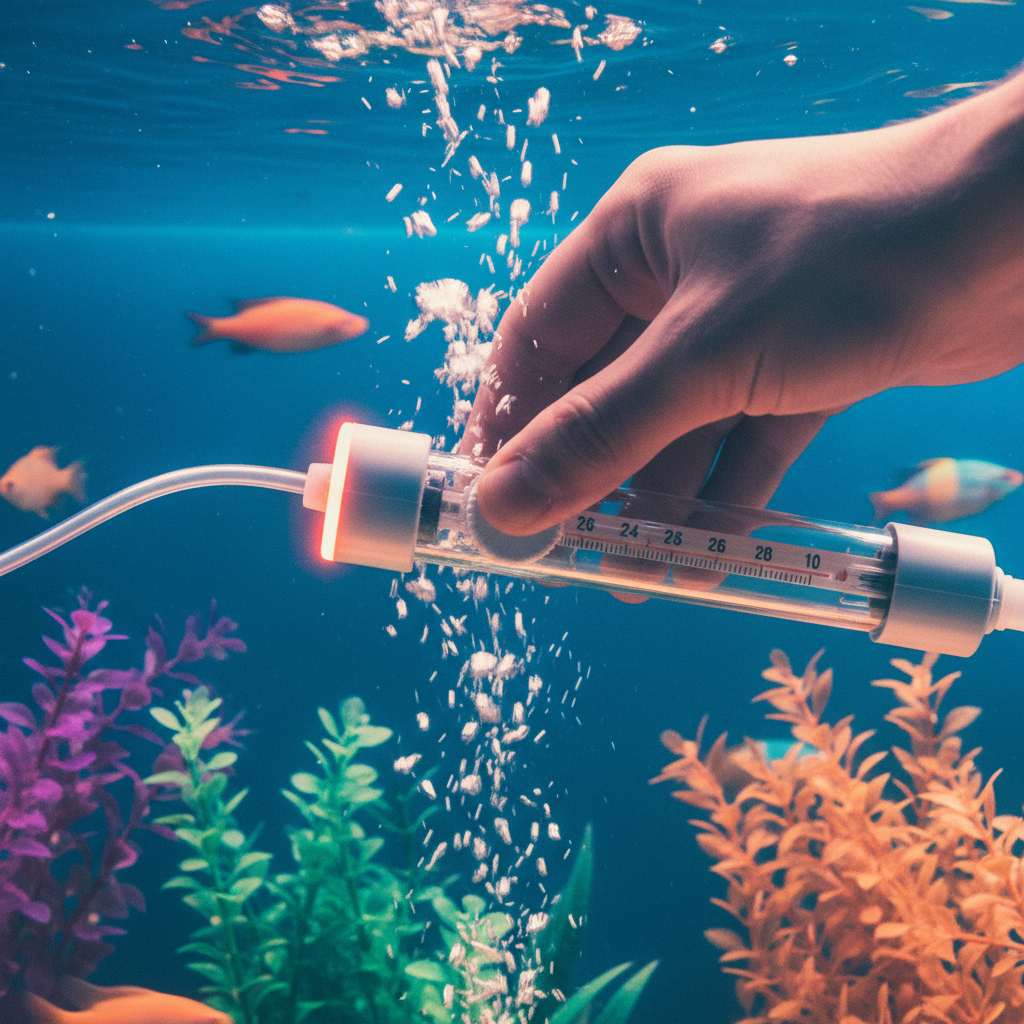
There are several different types of aquarium heaters available, each with its own pros and cons. Submersible heaters are the most common and are placed directly inside the tank. They’re generally reliable and affordable. Substrate heaters are buried under the substrate and provide gentle, even heating. They’re often used in planted tanks to promote root growth. And then there are in-line heaters, which are connected to an external filter. They’re more expensive but can be a good option for larger tanks.
I started with a cheap, basic submersible heater, and it worked fine for a while. However, it wasn’t very accurate, and the temperature would fluctuate quite a bit. I eventually upgraded to a higher-quality submersible heater with a digital thermostat, and it made a huge difference in the stability of the tank’s temperature. Choosing the right type of heater depends on your tank size, your budget, and your specific needs.
Thermometer Troubles: Accuracy is Key
A reliable thermometer is just as important as a good heater. You need to be able to accurately monitor the temperature of your tank to ensure that your fish are comfortable and healthy. Here are some common thermometer mistakes to avoid:
Relying on Inaccurate Thermometers: The False Sense of Security
Not all thermometers are created equal. Some are simply more accurate than others. Cheap, stick-on thermometers can be notoriously unreliable. They often give inaccurate readings, which can lead to problems. Digital thermometers are generally more accurate and easier to read.
I once had a stick-on thermometer that consistently read a few degrees lower than the actual temperature. I didn’t realize it until I started noticing my fish acting strangely. I then used a more accurate digital thermometer and discovered that the water was actually much colder than I thought. I immediately adjusted the heater, and my fish quickly recovered. This experience taught me the importance of investing in a reliable thermometer and verifying its accuracy regularly.
Ignoring Thermometer Placement: Getting the Big Picture
Just like with heaters, thermometer placement is important. You want to place the thermometer in a location where it will give you an accurate reading of the overall tank temperature. Avoid placing it near the heater or filter outlet, as this can give you a skewed reading.
I made the mistake of placing my thermometer near the heater, and it always read a few degrees higher than the actual temperature in the rest of the tank. This led me to believe that my tank was warmer than it actually was, and I ended up underheating it. Once I moved the thermometer to a more central location, I got a much more accurate reading.
Failing to Calibrate Your Thermometer: Ensuring Accuracy Over Time
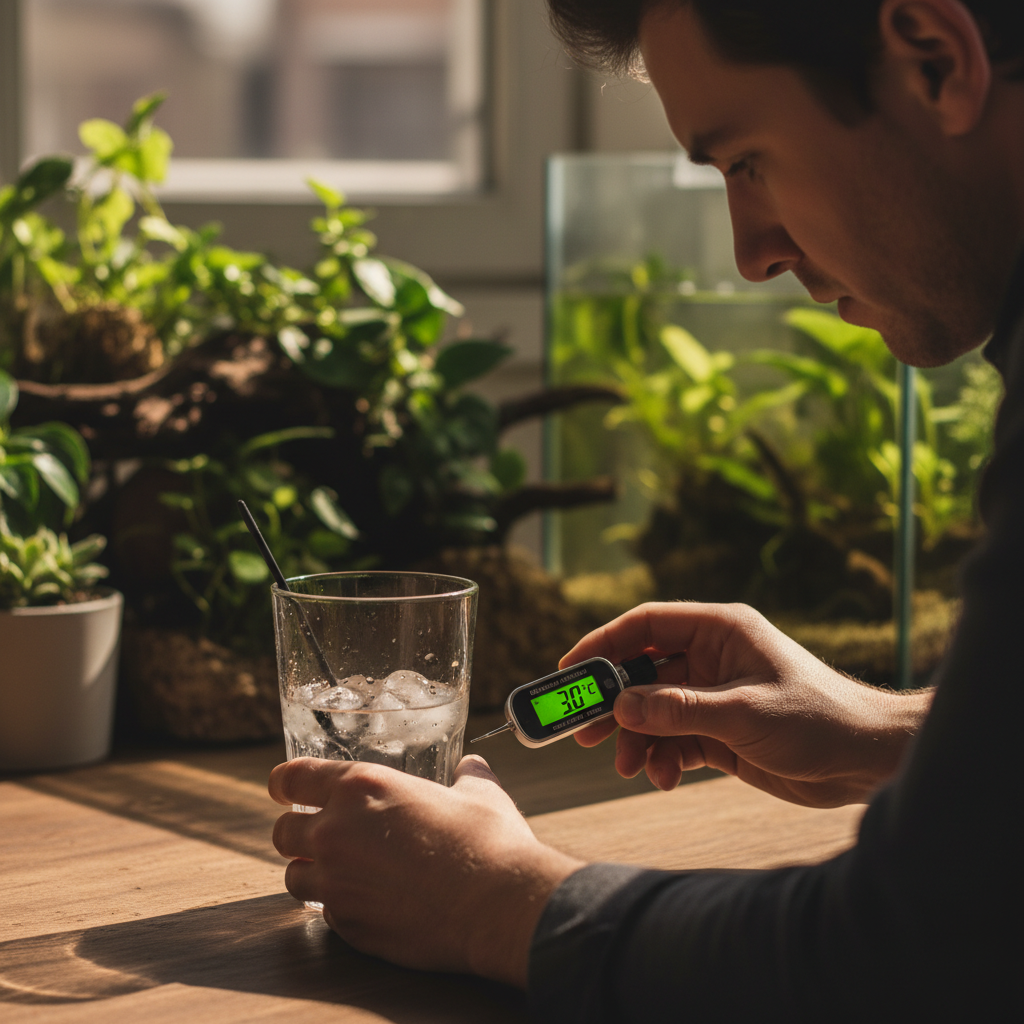
Even the most accurate thermometers can drift over time. It’s a good idea to calibrate your thermometer periodically to ensure that it’s still giving you accurate readings. You can do this by comparing it to a known accurate thermometer or by using an ice bath. An ice bath should read 32°F (0°C). If your thermometer is off, you can adjust it accordingly or replace it.
I calibrate my digital thermometers every few months to make sure they’re still accurate. It’s a simple process that takes just a few minutes, but it can save you a lot of headaches in the long run. Don’t just assume your thermometer is accurate; verify it regularly.
Beyond the Basics: Advanced Heating Considerations
Once you’ve mastered the basics of choosing and using aquarium heaters and thermometers, you can start exploring some more advanced techniques. These techniques can help you create a more stable and optimal environment for your fish.
Using Multiple Heaters: Redundancy and Safety
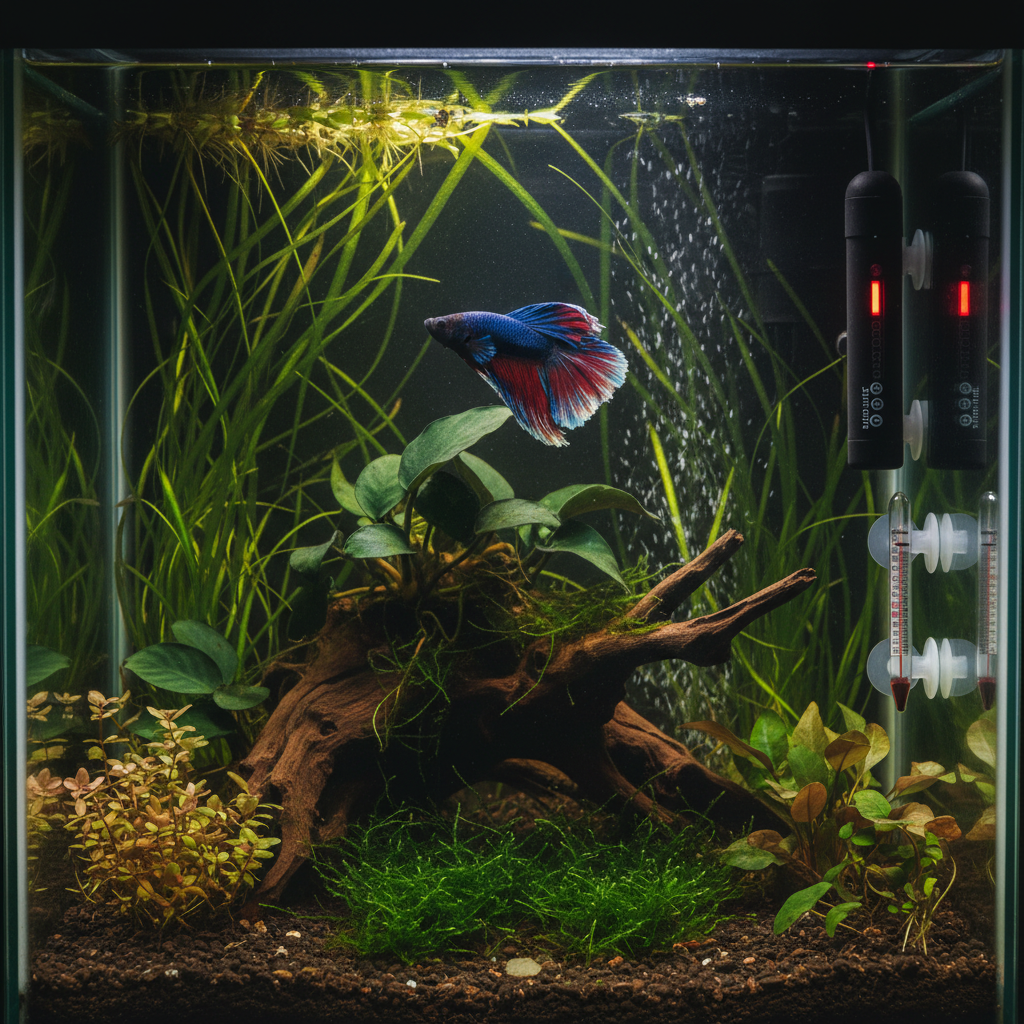
For larger tanks, it’s often a good idea to use multiple heaters instead of a single, large heater. This provides redundancy in case one heater fails. It also allows you to distribute the heat more evenly throughout the tank. If one heater malfunctions, the other can still maintain a safe temperature until you can replace the faulty heater.
I use two heaters in my 75-gallon tank. Each heater is rated for about half the tank’s capacity. This way, if one heater fails, the other can still keep the tank warm enough to prevent any drastic temperature drops. It’s a bit of extra expense upfront, but it provides peace of mind and protects my fish.
Temperature Controllers: Precision and Automation
Temperature controllers are devices that allow you to precisely control the temperature of your aquarium. They typically consist of a sensor that measures the temperature of the water and a controller that turns the heater on and off as needed to maintain the desired temperature. Some controllers also have alarms that will sound if the temperature deviates too far from the setpoint.
I use a temperature controller in my reef tank. It allows me to maintain a very stable temperature, which is crucial for the health of my corals. The controller also has an alarm that will alert me if the temperature gets too high or too low. This gives me an extra layer of protection against heater malfunctions.
Heating Cables and Substrate Heaters: Promoting Plant Growth
Heating cables and substrate heaters are designed to be buried under the substrate in your aquarium. They provide gentle, even heating to the substrate, which can promote root growth in plants. They can also help to prevent anaerobic conditions from developing in the substrate.
I use a substrate heater in my planted tank. It helps to keep the substrate warm, which encourages my plants to grow. It also helps to prevent the buildup of harmful gases in the substrate. If you’re serious about keeping live plants in your aquarium, a substrate heater is definitely worth considering.
Real-World Scenarios: Learning from Experience
Let’s look at a few real-world scenarios where choosing the right heater and thermometer made all the difference:
Case Study 1: The Betta in the Cold Apartment
A friend of mine lived in an apartment with notoriously poor heating. During the winter, the temperature in her apartment would often drop into the low 60s°F (around 16°C). She had a betta fish in a small, unheated tank. The betta became lethargic and refused to eat. After some investigation, I realized that the water temperature was far too low for a betta. I recommended she get a small, adjustable heater for her tank. Within a few days of installing the heater, the betta perked up and started eating again. This case highlights the importance of considering the ambient temperature of your room when choosing a heater.
Case Study 2: The Overheated Reef Tank
A local fish store had a reef tank that was experiencing frequent temperature fluctuations. The tank was equipped with a single, large heater, and the thermostat was not very accurate. The temperature would often spike during the day and drop at night. This stressed the corals and caused some of them to bleach. I suggested they switch to two smaller heaters with more accurate thermostats. This helped to stabilize the temperature and prevent further stress on the corals. This case illustrates the benefits of using multiple heaters and investing in accurate thermostats.
Case Study 3: The Disappearing Goldfish
Another friend kept goldfish. He was very new to the hobby. He assumed that his aquarium needed a heater like other tropical fish. He got a heater that was too strong for the goldfish tank and the aquarium heated up rapidly, the poor goldfish got sick and passed away. Goldfish do not need a heater and thrive in cooler temperatures. It’s critical to know what type of fish you have and what their ideal temperature range is.
Preventative Measures: Keeping Your System Safe and Stable
Beyond choosing the right equipment, there are several preventative measures you can take to ensure your heating system remains safe and stable:
Regular Maintenance: Checking for Issues
Inspect your heater and thermometer regularly for any signs of damage or malfunction. Check the heater for cracks, leaks, or corrosion. Make sure the thermostat is working properly. Clean your thermometer regularly to remove any algae or debris that may be affecting its accuracy. A quick visual inspection once a week can often catch minor problems before they become major headaches.
Backup Plans: Preparing for the Unexpected
Have a backup heater and thermometer on hand in case of emergencies. If your heater fails, you’ll want to be able to replace it quickly to prevent any drastic temperature drops. A portable generator can also be a lifesaver during power outages. I keep a spare heater, thermometer, and air pump in my fish room, just in case. It’s better to be prepared than to be caught off guard.
Power Outage Protocols: Keeping Fish Warm Without Electricity
Power outages can be particularly challenging for aquarium keepers. Without electricity, your heater will stop working, and the temperature in your tank can quickly drop. There are several things you can do to keep your fish warm during a power outage. Wrap the tank in blankets or towels to insulate it. If you have a gas stove or fireplace, you can carefully heat some water on the stove and add it to the tank. Be sure to monitor the temperature closely and avoid adding too much hot water at once. Battery-powered air pumps can also help to circulate the water and prevent it from becoming stagnant. There are also battery-powered heaters available but are very costly.
The Takeaway: Invest Wisely, Observe Carefully
Choosing the right aquarium heater and thermometer is an investment in the health and well-being of your fish. Don’t skimp on quality or underestimate the importance of accuracy. Take the time to research your options, understand your tank’s needs, and choose equipment that will reliably maintain the correct temperature. And most importantly, observe your fish closely for any signs of stress or illness. They’re the best indicators of whether your heating system is working properly. Remember, a little bit of knowledge and preventative care can go a long way in creating a thriving and healthy aquarium environment.
So, as you embark on your aquarium journey, remember that temperature control is paramount. Don’t make the same mistakes I did! Do your research, choose your equipment wisely, and pay attention to your fish. With a little bit of effort, you can create a beautiful and healthy aquarium that you and your fish will enjoy for years to come. And if you ever have any questions, don’t hesitate to reach out to experienced aquarists or your local fish store. We’re always happy to help a fellow enthusiast get started on the right foot.
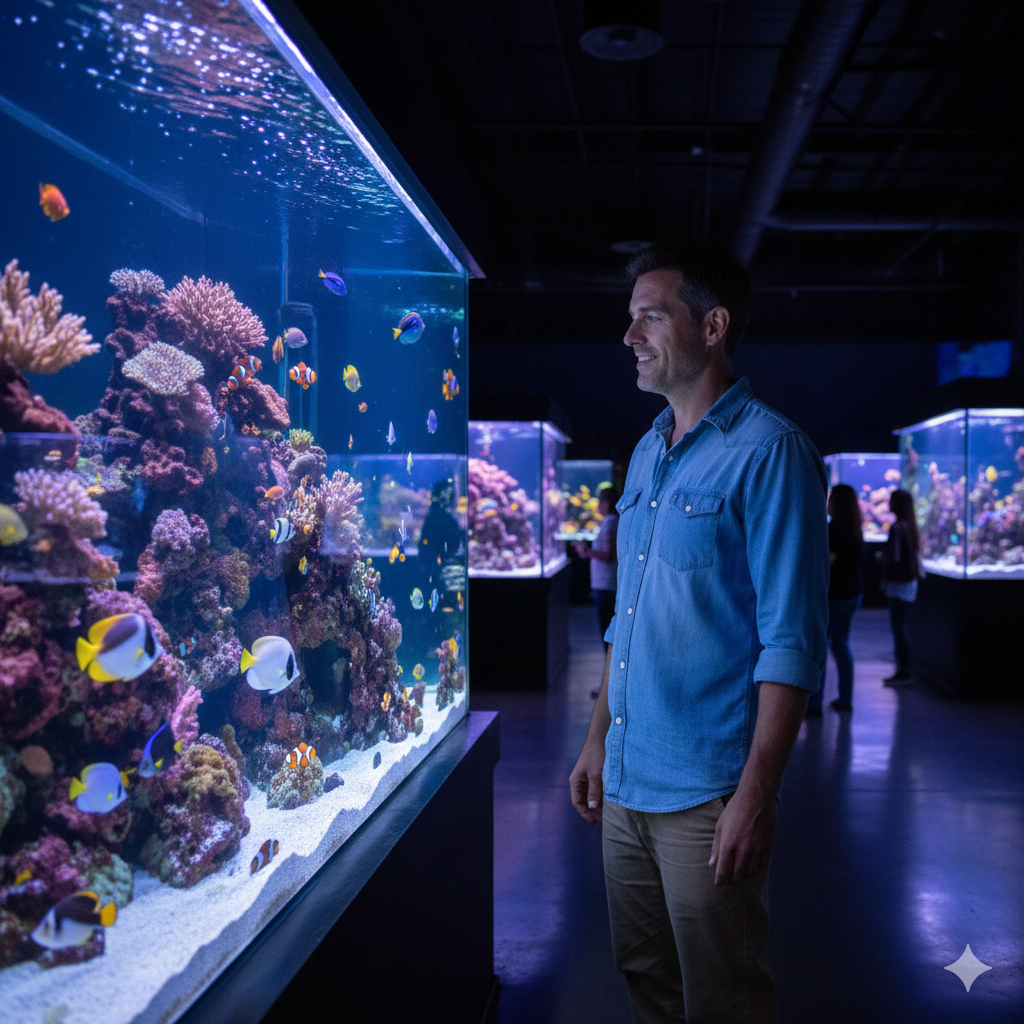
My name is Daniel Carter, I am 35 years old, and I live in the United States. I have been passionate about aquariums for many years, and what started as a simple hobby quickly became a lifelong interest in aquatic life, fish behavior, and responsible tank care.
Through TheBrightLance, I share real experiences, practical knowledge, and honest lessons learned from maintaining different types of aquariums. I enjoy testing equipment, studying fish behavior, improving maintenance routines, and helping beginners avoid common mistakes.
My goal is to make aquarism easier, more ethical, and more enjoyable for everyone — whether you are setting up your very first tank or looking to refine your techniques.